Escherichia coli bacteria that express type 1 fimbriae migrate along surfaces when pushed by a slow flow but stick more firmly when the flow increases. This and other examples of force-modulated biological binding are often described as due to lectin–glycan catch-bonds. Here we quantitatively track the 3D movements of fimbriated E. coli flowing over surfaces nanopatterned with mannose or hydrophobic binding sites. We reveal that flow-modulated surface adhesion and motion are consequences of bacteria adhering via polydisperse, elastic fimbriae, irrespective of binding affinity and specificity. The fimbria-mediated surface repulsion and the flow forces on tethered bacteria establish an equilibrium bacteria-surface separation. The separation controls the number of potential tethers between the bacterium and the surface. Combined with the individual fimbria affinity, this determines the surface avidity and surface motion. This provides a broadly applicable mechanism by which bacteria acquire adaptive surface avidity, responding super-selectively to different flow environments, concentration, and affinity of available binding sites, essential to explaining how fimbriae govern tropism and surface colonization.### Competing Interest StatementPvO and ER are co-founders and co-owners of the holographic microscopy company Holloid GmbH.
Rising antimicrobial resistance is a critical threat to worldwide public health. To address the increasing antibiotic tolerance, diverse antimicrobial agents are examined for their ability to decrease bacterial resistance. One of the most relevant and persistent human pathogens is Pseudomonas aeruginosa. Our study investigates the anti-biofilm and sensitizing activity of 12 morpholinium-based ionic liquids with herbicidal anions on four clinically relevant P. aeruginosa strains. Among all tested compounds, four ionic liquids prevented biofilm formation at sub-minimum inhibitory concentrations for all investigated strains. For the first time, we established a hormetic effect on biofilm formation for P. aeruginosa strains subjected to an ionic liquid treatment. Interestingly, while ionic liquids with 4,4-didecylmorpholinium [Dec2Mor]' are more efficient against planktonic bacteria, 4-decyl-4-ethylmorpholinium [DecEtMor]' showed more potent inhibition of biofilm formation. Ionic liquids with 4,4-didecylmorpholinium ([Dec2Mor]') cations even induced biofilm formation by strain 39016 at high concentrations due to flocculation. Morpholinium-based ionic liquids were also shown to enhance the efficacy of commonly used antibiotics from different chemical groups. We demonstrate that this synergy is associated with the mode of action of the antibiotics.
The collective self-assembly of colloidal particles can be influenced by the composition of the suspending medium, the bulk material of the particles themselves and, importantly, by their surface chemistry. This can be inhomogeneous or patchy to give an orientational dependence to the interaction potential between the particles. These additional constraints to the energy landscape then steer the self-assembly towards configurations of fundamental or applicational interest. We present a novel approach to modify the surface chemistry of colloidal particles to give them two polar patches, using gaseous ligands. In particular, we synthesize polar inverse patchy colloids, i.e., charged particles with two (fluorescent) patches of the opposite charge on their poles. We characterize the dependence of these charges on the pH of the suspending solution.
Many diseases, including cancer and covid, result in altered mechanical and electric properties of the affected cells. These changes were proposed as disease markers. Current methods to characterize such changes either provide very limited information on many cells or have extremely low throughput. We introduce electro-acoustic spinning (EAS). Cells were found to spin in combined non-rotating AC electric and acoustic fields. The rotation velocity in EAS depends critically on a cell's electrical and mechanical properties. In contrast to existing methods, the rotation is uniform in the field of view and hundreds of cells can be characterized simultaneously. We demonstrate that EAS can distinguish cells with only minor differences in electric and mechanical properties, including differences in age or the number of passages.
Core–shell superparamagnetic iron oxide nanoparticles hold great promise as a theranostic platform in biological systems. Herein, we report the biological effect of multifunctional cyclodextrin-appended SPIONs (CySPION) in mutant Npc1-deficient CHO cells compared to their wild type counterparts. CySPIONs show negligible cytotoxicity while they are strongly endocytosed and localized in the lysosomal compartment. Through their bespoke pH-sensitive chemistry, these nanoparticles release appended monomeric cyclodextrins to mobilize over-accumulated cholesterol and eject it outside the cells. CySPIONs show a high rate of transport across blood–brain barrier models, indicating their promise as a therapeutic approach for cholesterol-impaired diseases affecting the brain.
We report the synthesis at the gram scale of spherical silica particles bearing two organic patches made of grafted polystyrene chains at their poles. The patchy character of the particles is evidenced by combining transmission electron microscopy analysis and electron energy-loss spectroscopy. The multi-stage synthesis is based on the fabrication of silica/polystyrene bipods by dispersion polymerisation followed by the selective dissolution of the polymeric nodules, and leads to about 70% pure batches. The morphological purity is increased up to 98% by flow cytometry experiments. The polyethylenimine used as a stabiliser in the polymerisation step seems to play an important role in the detection of patches since the latter proved unsuccessful for particles obtained in the presence of polyvinylpyrrolidone.
We present a technique to swiftly change the contents of a small sample chamber using only a few times the chamber volume. Our design has no dead volume and functions as a manifold that minimizes mixing between consecutive liquids at one inlet. Thereby, it is ideal for minimizing sample consumption. In addition, our fluidic circuit works as an efficient bubble trap. These properties make our design an exciting alternative to standard solutions using multiple valves and junctions.
Pseudomonas aeruginosa is a multi-drug resistant (MDR) pathogen. It is classified by WHO as one of the most life-threatening pathogens causing nosocomial infections. Some of its clinical isolates and their subpopulations show high persistence to many antibiotics that are recommended by the European Committee on Antimicrobial Susceptibility Testing (EUCAST). Thus, there is a need for non-traditional classes of antibiotics to fight the increasing threat of MDR P. aeruginosa. Ionic liquids (IL) are one such promising class of novel antibiotics. We selected four strains of P. aeruginosa and studied the growth inhibition and other effects of 12 different ILs. We used the well-characterized P. aeruginosa PAO1 (ATCC 15692) as model strain and compared it to three other isolates from chronic lung infection (LES B58), skin burn infection (UCBPP-PA14) and keratitis infection (39016), respectively. The ILs consisted of either 4,4-didecylmorpholinium [Dec2Mor]+ or 4-decyl-4-ethylmorpholinium [DecEtMor]+ cations combined with different anions. We found that the ILs with 4,4-didecylmorpholinium [Dec2Mor]+ cations most effectively inhibited bacterial growth as well as reduced strain fitness and virulence factor production. Our results indicate that these ILs could be used to treat P. aeruginosa infections.
Limited bonding valence, usually accompanied by well-defined directional interactions and selective bonding mechanisms, is nowadays considered among the key ingredients to create complex structures with tailored properties: even though isotropically interacting units already guarantee access to a vast range of functional materials, anisotropic interactions can provide extra instructions to steer the assembly of specific architectures. The anisotropy of effective interactions gives rise to a wealth of self-assembled structures both in the realm of suitably synthesized nano- and micro-sized building blocks and in nature, where the isotropy of interactions is often a zero-th order description of the complicated reality. In this review, we span a vast range of systems characterized by limited bonding valence, from patchy colloids of new generation to polymer-based functionalized nanoparticles, DNA-based systems and proteins, and describe how the interaction patterns of the single building blocks can be designed to tailor the properties of the target final structures.
Inverse patchy colloids are nano- to micro-scale particles with a surface divided into differently charged regions. This class of colloids combines directional, selective bonding with a relatively simple particle design: owing to the competitive interplay between the orientation-dependent attraction and repulsion -- induced by the interactions between like/oppositely charged areas -- experimentally accessible surface patterns are complex enough to favor the stabilization of specific structures of interest. Most important, the behavior of heterogeneously charged units can be ideally controlled by means of external parameters, such as the pH and the salt concentration. We present a concise review about this class of systems, spanning the range from the synthesis of model inverse patchy particles to their self-assembly, covering their coarse-grained modeling and the related numerical/analytical treatments.
Crosslinked colloidal monolayers are promising as templates, lithographic masks, filtration membranes, or membranes for controlled release rates in drug delivery. We demonstrate assembly of monodisperse micron-sized polystyrene (PS) beads at an air/water interface, which are transformed into crystalline monolayers using addition of surface-active agents. Vapor annealing methods with solvents (toluene and xylene) and crosslinking agents (divinylbenzene) were investigated regarding their ability to crosslink these floating monolayers directly at the interface, generating crosslinked membranes with crystal size up to 44 cm2, domain size up to 1.9 mm2, and nano-sized pores (100–300 nm). The demonstrated fabrication method emphasizes short fabrication time using a simple setup.
The synthesis of iron oxide nanoparticles (NPs) by thermal decomposition of iron precursors using oleic acid as surfactant has evolved to a state-of-the-art method to produce monodisperse, spherical NPs. The principles behind such monodisperse syntheses are well-known: the key is a separation between burst nucleation and growth phase, whereas the size of the population is set by the precursor-to-surfactant ratio. Here we follow the thermal decomposition of iron pentacarbonyl in the presence of oleic acid via in situ X-ray scattering. This method allows reaction kinetics and precursor states to be followed with high time resolution and statistical significance. Our investigation demonstrates that the final particle size is directly related to a phase of inorganic cluster formation that takes place between precursor decomposition and particle nucleation. The size and concentration of clusters were shown to be dependent on precursor-to-surfactant ratio and heating rate, which in turn led to differences in the onset of nucleation and concentration of nuclei after the burst nucleation phase. This first direct observation of prenucleation formation of inorganic and micellar structures in iron oxide nanoparticle synthesis by thermal decomposition likely has implications for synthesis of other NPs by similar routes.
The promising applications of core–shell nanoparticles in the biological and medical field have been well investigated in recent years. One remaining challenge is the characterization of the structure of the hydrated polymer shell. Here we use small-angle X-ray scattering (SAXS) to investigate iron oxide core–poly(ethylene glycol) brush shell nanoparticles with extremely high polymer grafting density. It is shown that the shell density profile can be described by a scaling model that takes into account the locally very high grafting density near the core. A good fit to a constant density region followed by a star-polymer-like, monotonously decaying density profile is shown, which could help explain the unique colloidal properties of such densely grafted core–shell nanoparticles. SAXS experiments probing the thermally induced dehydration of the shell and the response to dilution confirmed that the observed features are associated with the brush and not attributed to structure factors from particle aggregates. We thereby demonstrate that the structure of monodisperse core–shell nanoparticles with dense solvated shells can be well studied with SAXS and that different density models can be distinguished from each other.
Inverse patchy colloids (IPC's) have recently been introduced as a conceptually simple model to study the phase-behavior of heterogeneously charged units. This class of patchy particles is referred to as inverse to highlight that the patches repel each other in contrast to the attractive interactions of conventional patches. IPCs demonstrate a complex interplay between attractions and repulsions that depend on their patch size and charge, their relative orientations as well as on charge of the substrate below; the resulting wide array of different types of aggregates that can be formed motivates their fabrication and use as model system. We present a novel method that does not rely on clean-room facilities and that is easily scalable to modify the surface of colloidal particles to create two polar regions with the opposite charge with respect to that of the equatorial region. The patch size is characterized by electron microscopy and fluorescently labeled to facilitate using confocal microscopy to study their phase behavior. We show that the pH can be used to tune the charges of the IPCs thus offering a tool to steer the self assembly.
The creation of functional nanoscale materials with complex 3D structures has been achieved by biological systems e.g. proteins, but remains a daunting challenge in materials science. Recent progress in this direction has been made with patchy particles, which can be made to self-assemble into specific structures by fine tuning the numbers, locations and interactions of the patches. Here, we present a different, bio-inspired approach to create 3D objects from chains of patchy particles that fold into structures determined by the particle sequence along the chain. The particles linked in the chains are spherical with homogeneous weak repulsive or attractive potentials and symmetry-breaking patches that provide attractive directional interactions. We show, using computer simulations, that particle sequences along the string can be designed to steer the folding into specific target structures. Moreover, we introduce a scheme to discriminate configurations that present a golf-hole like free energy landscape, which inhibits folding, from target structures that are easy to design.
 Erik Reimhult合作论文数Institut für Biologisch inspirierte Materialien, Department für Nanobiotechnologie, Universität für Bodenkultur Wien16
 Alfons Van Blaaderen合作论文数Debye Instituut voor Nanomaterialen, Utrecht University10
 Ahmet Faik Demirors合作论文数5
 Arnout Imhof合作论文数Debye Institute for Nanomaterials Science, Utrecht University5
 Barbara Capone合作论文数University Chemical Laboratory, Cambridge, United Kingdom4
 Tayebeh Saghaei合作论文数Department of Physics, University of Zanjan3
 Vutukuri Hanumantha Rao合作论文数Debye Institute for Nanomaterials Science, Utrecht University3
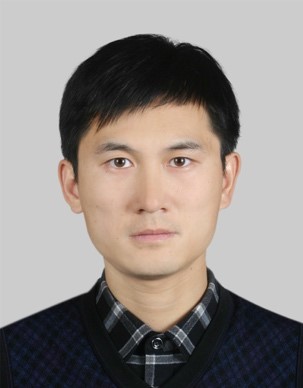 Bo Peng (彭勃)合作论文数Department of Materials Science, Fudan University3
 Ronald Zirbs合作论文数3
 Ivan Coluzza合作论文数Institute for Atomic and Molecular Physics, FOM3
 Anders Lundgren合作论文数SiTek Electro Optics3Andreas Weber合作论文数2Jakub Michalski合作论文数2
 Mudassar Mumtaz Virk合作论文数Univ Nat Resources & Life Sci2
 Andrea Lassenberger合作论文数2
 Tilman A Grünewald合作论文数Univ Nat Resources & Life Sci BOKU, Inst Phys & Mat Sci, Peter Jordan Str 82, A-1190 Vienna, Austria2
 Marjolein Dijkstra合作论文数Department of Physics, Utrecht University2
 Bianchi Emanuela合作论文数Dipartimento di Fisica and INFM-CRS-SMC, Università di Roma La Sapienza2
 Narożna Dorota合作论文数Department of Biochemistry and Biotechnology, Poznań University of Life Sciences2
 Tomasz Cłapa合作论文数Department of General and Environmental Microbiology, Poznan University of Life Sciences2
 Christoph Dellago合作论文数Faculty of Physics, University of Vienna2
 Heinz Amenitsch合作论文数Institute of Inorganic Chemistry, Graz University of Technology2
 Anita Jannasch合作论文数Biotechnology Center, TU Dresden2
 Erik Schäffer合作论文数Biotechnology Center, TU Dresden2Anna Syguda合作论文数2
 Helga C. Lichtenegger合作论文数2Astrid Van Der Horst合作论文数2Harald Rennhofer合作论文数2Gi-Ra Yi合作论文数1Michael Süß合作论文数1Sharvina Shanmugathasan合作论文数1Andrea Scheberl合作论文数1Sonia Buffière合作论文数1Noemi Bognanni合作论文数1Konstantin Nikolaus Beitl合作论文数1Mahtab Hejazifar合作论文数Institute of Applied Synthetic Chemistry, TU Wien1Gerhard Kahl合作论文数1
 Shin Hyun Kim合作论文数Department of Chemical and Biomolecular Engineering, Korea Advanced Institute of Science and Technology/Center for Campus Exchange, Korea Advanced Institute of Science and Technology1
 Alexander Moroz合作论文数European Space Research and Technology Centre, European Space Agency1
 Etienne Ducrot合作论文数UMR 7615, de la Ville de Paris (ESPCI) ParisTech;UMR 7615, CNRS;Sorbonne-Universités, Université Pierre et Marie Curie (UPMC) Université Paris 06;Université Pierre et Marie Curie, UPMC) Université Paris 061
 Ece Bayır合作论文数Department of Biomedical Technologies, Graduate School of Natural and Applied Sciences and.1
 Lorenzo Rovigatti合作论文数Dipartimento Fis, Univ Roma La Sapienza1
 A.Marileen Dogterom合作论文数Department of Bionanoscience, Faculty of Applied Sciences, Delft University of Technology/FOM institute AMOLF, Delft University of Technology/Leiden University1
 Frances Platt合作论文数Department of Pharmacology, Medical Sciences Division, University of Oxford1Graziella Vecchio合作论文数Dipartimento di Scienze Chimiche, Università di Catania Italy1Sang-Hyuk Lee合作论文数University of California1
 David Grier合作论文数Department of Physics, College of Arts & Science, New York University;Center for Soft Matter Research, New York University1
 Serge Ravaine合作论文数Centre de Recherches Paul Pascal, CNRS1
 Detlef Lohse合作论文数Max Planck-University of Twente Center for Complex Fluid Dynamics1




