For the past 50 years, the morphology of satellites has remained fundamentally unchanged, regardless of the evolutions happening in other industries in manufacturing, communications and software. Major systems and subsystems that provide the services of the spacecraft—such as power, attitude control, and others—are the same whether in the James Webb Space Telescope, a large communications satellite, the Mars Reconnaissance Orbiter, or today's small cubesats. The shrinking of the satellite has been driven by the need for lower-cost solutions, but performance measures such as reliability, life, resolution, and data rates have followed the trend in mass by decreasing accordingly. Satlets have been in development under the DARPA Phoenix program since 2012. A satlet is a cellularized satellite architectural unit, and the aim of the satlet construct is to break the massperformance relationship of traditionally architected space systems. When aggregated via hardware and software, satlets would provide the traditional spacecraft bus functions to a payload, but due to their modularity, they would reduce spacecraft design and integration time considerably and would provide redundancy and graceful degradation at a lower cost than would be required for the same redundancy in a traditionally architected space system. This new architecture solution would not be restricted to any particular spacecraft or payload size and would instead provide a means to scale the services provided by a spacecraft bus to its payload (such as power distribution, data processing, and attitude control) by simply adding more satlets to accommodate the payload requirements. The satlet development thrust of DARPA’s Phoenix program has progressed from Phase 1, when various satlet architectures and designs were considered, to Phase 2, which includes a scheduled flight experiment in Low Earth Orbit to test and validate the satlet architecture that was chosen for further development at the end of Phase 1. This will be the first flight of a small satellite with a satlet-based cellular aggregate bus. This paper will include a description of the configuration of the LEO flight experiment scheduled for early 2016 and outline the goals and objectives, as well as the associated tests that will be performed to evaluate the spacecraft’s aggregated subsystems. It will discuss the relevance of the satlet architecture to military and civilian missions and some examples 1 Senior Engineer, Space Systems Integration; Lecturer, University of Southern California Department of Astronautics; AIAA Member 2 Project Engineer, ManTech; AIAA Member 3 Founder and Chief Technologist, NovaWurks Inc 4 Program Manager, DARPA/TTO 5 Deputy Director, DARPA/TTO
For 50 years the morphology or internal makeup of satellites has not fundamentally changed. Major systems and subsystems are combined in the same way whether in the Hubble Space Telescope, a large geostationary communications satellite, or today's Cubesats. The size of elements, components and subsystems may change to accommodate the final satellite, but the fundamental makeup of spacecraft resources of power, propulsion, attitude control, etc. is no different. Today mass has become a proxy in the search for lower cost solutions to accommodate shrinking budgets, but that comes with a requisite consequent exchange of performance. The historical equation of cost as a direct function of mass drives this solution. However, what if this cost-mass-performance equation can be broken? What if these limitations in performance associated with size could be ameliorated or even avoided by the aggregation of elements? And, what if the aggregation could be done on orbit? DARPA's Phoenix program is examining the feasibility of a new construct in building satellites through the precept of cellularization. The Phoenix program proposes to tackle both the cost=f(mass) historical models and the fundamental morphology of a spacecraft. Phoenix is exploring mechanical and electrical aggregation of “satlets” on-orbit to create the necessary spacecraft performance to support the payload of any potential size, mass or configuration. Critical to the Phoenix program, this satlet is the first incarnation of a producible cell, which mimics traits found in single/multi-cell organisms in biology. This paper will delve into the details on how the aggregation of a new technology construct of “satlets” could change today’s satellites cost calculus and may allow on-orbit satellite repurposing and new construction methodology at a small fraction of current cost.
The Microsatellite Dynamic Test Facility is a joint venture by the University of Southern California's Information Science Institute and the Space Engineering Research Center. Located in Southern CA, the Facility allows multiple variable-scale satellites to practice complex spacecraft missions while floating on air bearings in a near-frictionless environment. Several prototype vehicles were developed to provide a research platform to users. The vehicles can levitate for hours and carry up to 50kg of external payload. They are guided by a suite of both inertial and relative navigation sensors, and include an application programming interface (API) through which users can develop and test software. Each prototype communicates wirelessly with the others and with a local ground station, and has micro-thrusters to provide motion with 3 degrees of freedom. The facility and prototype vehicles together allow for research on nearly all aspects of formation flight, autonomous rendezvous and proximity operations in space in a very low cost environment.
There is a known and documented national need for an experienced and educated workforce in aerospace and defense. A recent National Academy of Sciences study, “Workforce Needs for the National Vision for Space Exploration” commissioned by NASA, highlights a common NASA, DoD and aerospace industry need for system engineers and project managers. Additionally, the strong resurgence in, as an example, the desire to Return to the Moon, and the incredible burden of cost associated with complex space missions, is driving the aerospace industry to consider low cost risk reduction method developments prior to actual spaceflight. USC is addressing both of these in an innovative educational and prototyping forum through the use of “hands-on” training of students through flight dynamic systems. USC’s Astronautics and Space Technology Division of the Viterbi School of Engineering, and the Information Sciences Institute has teamed to provide a strong three part foundation of Education/Research/Build&Fly to train the next generation space leadership and workforce, through development of very low cost flight dynamics risk reduction platforms. The first example of this new and innovative methodology resulted in “LEAPFROG”, the Lunar Entry and Approach Platform For Research On Ground project, a multi-semester design-to-flight student activity. LEAPFROG is developing a test bed lunar prototype vehicle that can fly repeated times over the course of a single day in free flight to simulate a lunar descent and landing sequence. The vehicle has active onboard guidance, navigation and attitude control, and the “hover” propulsion is supplied by a 50lbf model aircraft jet turbine engine. The concept was inspired by the LLRV that was used to train the Apollo astronauts at Dryden Research Center and the hover flight tests at the National Hover Test Facility at Edwards AFB for SDIO KKV vehicle testing. LEAPFROG is a low cost risk reduction platform for high cost and complex sensors, which provide today’s students not only hands on flight test training and design implementation for next generation spacecraft, but a highly motivational educational project to sustain interest and enthusiasm for aerospace in general. This paper will outline the background, the overall USC strategy in educating next generation space leaders, the use of low cost dynamic flight platforms as risk reduction platforms for both technologies and system integration challenges for next generation space systems.
(HOMS). S. J. Lawrence, G. J. Taylor, R. C. F. Lentz, L. M. Martel, W.-M. Shen, P. M. Will, M. H. Sims, S. Colombano, D. Kortenkamp, B. Damer, W. Chun; HIGP, University of Hawaii at Manoa, Honolulu, HI 96822; slawrenc@hawaii.edu; ISI, University of Southern California, LA, CA; NASA Ames Research Center, Mountain View, CA; Metrica, Houston, TX; DigitalSpace, Santa Cruz, CA; Lockheed Martin, Denver, CO.
Introduction: Robotic systems are essential for space and lunar exploration. They perform tasks that range from inspection, maintenance, and assembly in space, to scientific exploration, transportation, habitat construction, resource utilization, and astronaut assistant on planetary surface. However, the traditional approach of building special robots for each of a large variety of tasks is not practical as it requires many specialized robots that are expensive and difficult to deploy from earth. This paper proposes a new Superbot robotic system that uses modularity and self-reconfiguration as an effective means to achieve low cost, multifunction, and adaptive capabilities. This approach has been partially realized under the support of NASA’s H&RT program. This paper describes the unique features and experimental results of the Superbot modules and systems, and highlights a set of space applications using Superbots. The details of applications are described in the companion abstracts. Superbot System Features: The Superbot system consists of a set of Lego-like but autonomous robotic modules that can self-reconfigure into different systems for different tasks. Examples of configurable systems include rolling tracks or wheels (for efficient travel), spiders or centipedes (for climbing), snakes (for burrowing in ground), long arms (for inspection and repair in space), and devices that can fly in micro-gravity environment.
Introduction: SuperBots are autonomous robotic modules that can self-reconfigure into different systems for different tasks [1]. An elegant example of "design for reuse" they can reduce cost and payload mass of a mission while enhancing performance, reliability, and safety. SuperBot modules and systems can be used to accomplish an enormous range of tasks [e.g. 2,3]. The Mini-MIS concept: One particularly appealing nearand long-term application is to use SuperBots as small, inexpensive, highly capable mobile platforms for science investigations. We call the concept Mini-Mobile Investigation System (MiniMIS). The fundamental idea is that sets of 8 to 10 SuperBot modules would reconfigure to form a mobile platform with a specialized science or exploration device included inside a module or attached as a separate specialized module. The module set (Mini-MIS) would be able to reconfigure itself depending on the mobility or instrument deployment needs: wheels (for efficient travel), spiders or centipedes (for climbing), snakes (for burrowing), towers for communications (Fig. 1).
Self-reconfigurable robots are valued for adaptive and fault-tolerant operation in unpredictable environments on wide range of tasks. Self-reconfiguration is the key ability in accomplishing such tasks with the same set of hardware. Distributed control of self-reconfiguration provides tolerance to failures of individual modules and ability to cope with changing environment conditions. This paper proposes distributed control architecture capable of producing locomotion and self-reconfiguration behaviors. We provide an example of using this control method to accomplish a 'snake to dragon' configuration change in simulation. To the best of our knowledge the problem of distributed self-reconfiguration for chain-based modular robots has not been addressed before.
The topology of a self-reconfigurable robot can change at anytime. This can be as a result of the failure of some modules of the robot, joining new modules to the robot, displacement of some modules from one location to another caused by the self-reconfiguration task or any combination of these cases. Considering that the process of selecting relevant behaviors to accomplish a given task is based on the current topology of the self-reconfigurable robot, modules must be able to detect and respond to any changes to the robot topology. When changes to the topology of the robot are detected, modules can investigate new ways of accomplishing the given task. This paper presents a distributed solution, FEATURE algorithm, to the problem of autonomous discovery and functional response to topology change. The result is experimentally verified and demonstrated on the CONRO self-reconfigurable robots.
The control of robot swarming in a distributed manner is a difficult problem because global behaviors must emerge as a result of many local actions. This paper uses a bio-inspired control method called the Digital Hormone Model (DHM) to control the tasking and executing of robot swarms based on local communication, signal propagation, and stochastic reactions. The DHM model is probabilistic, dynamic, fault-tolerant, computationally efficient, and can be easily tasked to change global behavior. Different from most existing distributed control and learning mechanisms, DHM considers the topological structure of the organization, supports dynamic reconfiguration and self-organization, and requires no globally unique identifiers for individual robots. The paper describes the DHM and presents the experimental results on simulating biological observations in the forming of feathers, and simulating wireless communicated swarm behavior at a large scale for attacking target, forming sensor networks, self-repairing, and avoiding pitfalls in mission execution.
This paper describes two contributions for chain typed self-reconfigurable robots: a very illustrative self-reconfiguration task changing from "I" shape to "T" shape, and a sensor-based distributed control method for automatic planning and execution of self-reconfiguration. In the "I-to-T" task, a snake robot is to reconfigure itself into a tripod by docking the tail to a target module in the body, releasing a portion of the connected mass as a new leg, and switching to a new gait automatically. We first accomplished this task using predetermined instructions for individual modules without considering sensor inputs. We then developed a sensor-based approach using our hormone-inspired distributed control to allow the robot to dynamically accept the point of connection at run-time, align the tail and the target using sensors, and select appropriate actions based on modules' location in the configuration. Compared to the standard inverse kinematics, this new control approach is sensor-based and can endure the limited computational resources and uncertainties in the connections. It can be applied to self-reconfigurations that are not designed by the programmers but triggered by the environment.
Pattern formation is a fundamental morphogenetic process. Models based on genetic and epigenetic control have been proposed but remain controversial. Here we use feather morphogenesis for further evaluation. Adhesion molecules and/or signaling molecules were first expressed homogenously in feather tracts (restrictive mode, appear earlier) or directly in bud or inter-bud regions (de novo mode, appear later). They either activate or inhibit bud formation, but paradoxically colocalize in the bud. Using feather bud reconstitution, we showed that completely dissociated cells can reform periodic patterns without reference to previous positional codes. The patterning process has the characteristics of being self-organizing, dynamic and plastic. The final pattern is an equilibrium state reached by competition, and the number and size of buds can be altered based on cell number and activator/inhibitor ratio, respectively. We developed a Digital Hormone Model which consists of (1) competent cells without identity that move randomly in a space, (2) extracellular signaling hormones which diffuse by a reaction-diffusion mechanism and activate or inhibit cell adhesion, and (3) cells which respond with topological stochastic actions manifested as changes in cell adhesion. Based on probability, the results are cell clusters arranged in dots or stripes. Thus genetic control provides combinational molecular information which defines the properties of the cells but not the final pattern. Epigenetic control governs interactions among cells and their environment based on physical-chemical rules (such as those described in the Digital Hormone Model). Complex integument patterning is the sum of these two components of control and that is why integument patterns are usually similar but non-identical. These principles may be shared by other pattern formation processes such as barb ridge formation, fingerprints, pigmentation patterning, etc. The Digital Hormone Model can also be applied to swarming robot navigation, reaching intelligent automata and representing a self-re-configurable type of control rather than a follow-the-instruction type of control.
The exponential growth of the Internet and increasing communication and computational power have created many opportunities for advancing engineering, manufacturing, and business activities. Among them are electronic catalogs. These have become basic information resources to a number of people, ranging from shoppers looking for personal items to engineers selecting electromechanical parts to build a product. Although rich in content, current catalog systems are limited both in search quality and in realizing the full potential of the retrieved information. The active catalog system brings a conceptually new idea to electronic commerce by providing a new, computationally usable, catalog information environment about components and their use in applications. It utilizes a rich body of domain knowledge to facilitate access and retrieval of component information. The utility of retrieved information is enhanced by using it to rapidly construct simulation programs and test alternatives, supporting a “try before you buy” paradigm in which users evaluate candidate components within simulations of their design. We describe services provided in the active catalog system to support engineers in selecting and evaluating electromechanical components and subsystems. The services include mechanisms for creating queries for parts based on their intended use rather than merely parametric specifications, refining those queries to take account of constraints imposed by domain knowledge, providing multimodal information to help engineers assess and compare candidate parts, and generating simulation models for candidate parts and integrating them to provide simulation models for candidate systems.
 Wei-Min Shen合作论文数Computer Science Department, University of Southern California;Polymorphic Robotics Laboratory, Information Sciences Institute, University of Southern California27
 Behnam Salemi合作论文数Information Sciences Institute, University of Southern California9David D. Grossman合作论文数8
 david barnhart合作论文数7
 Kasper Støy合作论文数Robotics, Evolution and Art Lab, IT University of Copenhagen7brook sullivan合作论文数6
 Lisa Hill合作论文数Chemistry Department, St. Francis Xavier University6erin fowler合作论文数5
 Bruce E. Koel合作论文数Department of Chemical and Biological Engineering, Princeton University5
 Anupam Madhukar合作论文数The Mork Family Department of Chemical Engineering and Materials Science, School of Engineering, University of Southern California;Alfred E. Mann Department of Biomedical Engineering, School of Engineering, University of Southern California;Ming Hsieh Department of Electrical and Computer Engineering, School of Engineering, University of Southern California5
 Aristides A. G. Requicha合作论文数Viterbi School of Engineering, University of Southern California5
 Jihie Kim合作论文数University of Southern California5
 David Kortenkamp合作论文数TRACLabs Inc.5
 Murilo Coutinho合作论文数5R. Resch合作论文数4
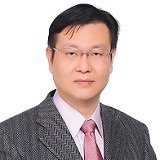 Fan-Gang Tseng (曾繁根)合作论文数Department of Engineering and System Science, National Tsing Hua University;Biomedical Technology Research Center, National Tsing Hua University4Alejandro Bugacov合作论文数4
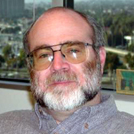 Robert T. Neches合作论文数Information Sciences Institute, Distributed Scalable Systems Division, School of Engineering, University of Southern California4C. Baur合作论文数3roger hunter合作论文数3Quan Zhu合作论文数3
 Bruce Damer合作论文数BIOTA Institute3
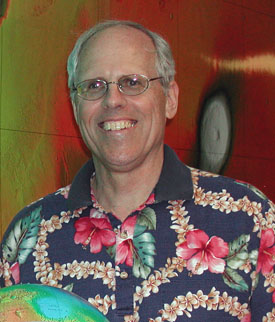 G. Jeffrey Taylor合作论文数Hawai‘i Institute of Geophysics and Planetology, School of Ocean and Earth Science and Technology, University of Hawai‘i at Manoa3S. Ringo Ling合作论文数3
 Cheng-Ming Chuong合作论文数Department of Pathology, Keck School of Medicine of USC3Adam L. Cohen合作论文数3Michael H. Sims合作论文数Department of Biomedical and Diagnostic Sciences, College of Veterinary Medicine, University of Tennessee3
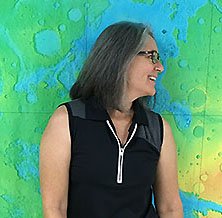 Linda M. V. Martel合作论文数Institute of Geophysics and Planetology3
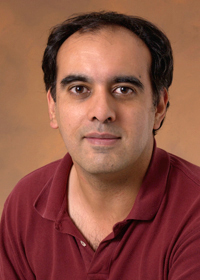 Andres Castano合作论文数Computer Vision Group
Machine Vision Group at NASA/JPL3wendell h chun合作论文数2Bob Neches合作论文数2R. C. F. Lentz合作论文数2Frodis U合作论文数2
Andres Castano合作论文数Computer Vision Group
Machine Vision Group at NASA/JPL3wendell h chun合作论文数2Bob Neches合作论文数2R. C. F. Lentz合作论文数2Frodis U合作论文数2 Florian B. Mansfeld合作论文数Viterbi School of Engineering, University of Southern California;Department of Chemical Engineering and Materials Science, University of Southern California2
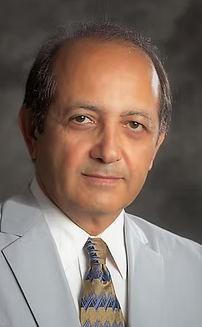 Behrokh Khoshnevis合作论文数Contour Crafting Corporation;Center for Rapid Automated Fabrication Technologies, University of Southern California;Sonny Astani Department of Civil and Environmental Engineering, Viterbi School of Engineering, University of Southern California2
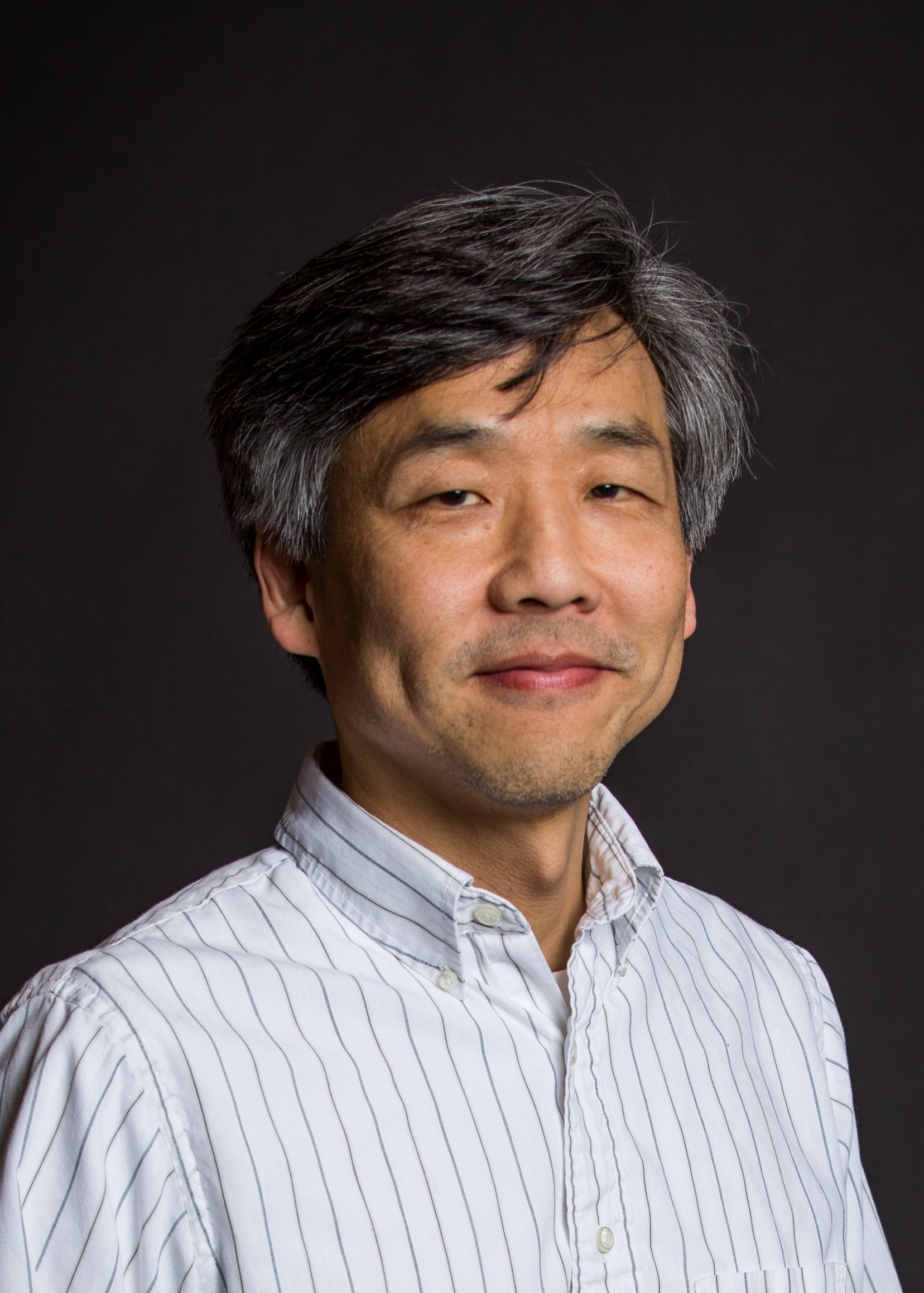 Mark Yim合作论文数General Robotics, Automation, Sensing & Perception Lab, School of Engineering and Applied Science, University of Pennsylvania2David Benjamin合作论文数2Curt Powley合作论文数abstract references cited by index terms collaborative colleagues2T. R. Ramachandran合作论文数2
 Peter A. Franaszek合作论文数2Uri Frodis合作论文数2
 Ernesto Brodersohn合作论文数2Lucy Hoag合作论文数2Roger C. Evans合作论文数2Paul Postel合作论文数2Ragy Eleish合作论文数2Rupal Fadia合作论文数2Wenheng Liu合作论文数2N. Montoya合作论文数2




