Artificial spiking neural networks have found applications in areas where the temporal nature of activation offers an advantage, such as time series prediction and signal processing. To improve their efficiency, spiking architectures often run on custom-designed neuromorphic hardware, but, despite their attractive properties, these implementations have been limited to digital systems. We describe an artificial quantum spiking neuron that relies on the dynamical evolution of two easy to implement Hamiltonians and subsequent local measurements. The architecture allows exploiting complex amplitudes and back-action from measurements to influence the input. This approach to learning protocols is advantageous in the case where the input and output of the system are both quantum states. We demonstrate this through the classification of Bell pairs which can be seen as a certification protocol. Stacking the introduced elementary building blocks into larger networks combines the spatiotemporal features of a spiking neural network with the non-local quantum correlations across the graph.
Solving optimization problems encoded in the ground state of classical-spin systems is a focus area for quantum computing devices, providing upper bounds to the unknown solution. To certify these bounds, they are compared to those obtained by classical methods. However, even if the quantum bound beats them, this says little about how close it is to the unknown solution. We consider the use of relaxations to the ground-state problem as a benchmark for the output of quantum optimizers. These relaxations are radically more informative because they provide lower bounds to the ground-state energy. The chordal branch and bound algorithm we present provides a series of systematically improving confidence regions where the ground-state energy provably lies. Interestingly, each step in the process requires only an effort polynomial in the system size. Additionally, the algorithm exploits the locality and sparsity of relevant Ising spin models in a systematic way. This yields certified solutions for many of the problems that are currently addressed by heuristic optimization algorithms more efficiently and for larger system sizes. We apply the method to verify the output of a D-Wave 2000Q device and identify instances where the annealer does not reach the ground-state energy and, more importantly, instances where it does, something impossible to do by means of standard variational approaches. Our work provides a flexible and scalable method for the verification of the outputs produced by quantum optimization devices.
Generating summary-sentences with preserved meaning is important for the summarization of longer documents. Length control of summary-sentences is challenging as sentences cannot simply be cut at the desired length; they must be complete and preserve input meaning. We propose a modular framework for length control of generated sentences: based on sequence-to-sequence models, powered by a two-stage training process involving a summarizer that is trained without explicit length control and a stylizer that is fine-tuned on the output of the summarizer. Our solution achieves the performance of existing models for controlling generated sentence length but light in implementation and model complexity. Automatically generated, accurate summaries are becoming critically important due to the sheer amount of information available on any given subject. Text summarization is a process to achieve this end by rewriting a sentence or a paragraph into a shorter one while retaining the meaning. Summarization is classified as either extractive, where the output sentence is comprised directly from fragments of the input, or as abstractive, where the generated output contains text that may not necessarily be present in the input. Abstractive summarization is more natural and closer to what a human would do: humans can paraphrase a story or an article and express it in their own words. A number of applications of summarization today impose a length limit on the desired output. For example, a reader may have very limited time and would prefer a shorter output. Or alternatively, the summary may be broadcast through a service with a hard character limit (e.g. Twitter, SMS). Summarization tasks can vary from the summary of a single document to the summary of multiple documents, with summaries varying in length. Our focus is on abstractive summarization at the sentence level. Neural sequence-to-sequence models have proven to be successful in abstractive summarization. Until recently, these methods have not offered any means of explicit length control; allowing the model to implicitly define the length through the decoding process (e.g. beam search). Recent works have shown that explicit length control is possible through different architectural modifications. In this ESANN 2020 proceedings, European Symposium on Artificial Neural Networks, Computational Intelligence and Machine Learning. Online event, 2-4 October 2020, i6doc.com publ., ISBN 978-2-87587-074-2. Available from http://www.i6doc.com/en/.
High-dimensional quantum systems are vital for quantum technologies and are essential in demonstrating practical quantum advantage in quantum computing, simulation and sensing. Since dimensionality grows exponentially with the number of qubits, the potential power of noisy intermediate-scale quantum (NISQ) devices over classical resources also stems from entangled states in high dimensions. An important family of quantum protocols that can take advantage of high-dimensional Hilbert space are classification tasks. These include quantum machine learning algorithms, witnesses in quantum information processing and certain decision problems. However, due to counter-intuitive geometrical properties emergent in high dimensions, classification problems are vulnerable to adversarial attacks. We demonstrate that the amount of perturbation needed for an adversary to induce a misclassification scales inversely with dimensionality. This is shown to be a fundamental feature independent of the details of the classification protocol. Furthermore, this leads to a trade-off between the security of the classification algorithm against adversarial attacks and quantum advantages we expect for high-dimensional problems. In fact, protection against these adversarial attacks require extra resources that scale at least polynomially with the Hilbert space dimension of the system, which can erase any significant quantum advantage that we might expect from a quantum protocol. This has wide-ranging implications in the use of both near-term and future quantum technologies for classification.
We provide a robust defence to adversarial attacks on discriminative algorithms. Neural networks are naturally vulnerable to small, tailored perturbations in the input data that lead to wrong predictions. On the contrary, generative models attempt to learn the distribution underlying a dataset, making them inherently more robust to small perturbations. We use Boltzmann machines for discrimination purposes as attack-resistant classifiers, and compare them against standard state-of-the-art adversarial defences. We find improvements ranging from 5 machines on the MNIST dataset. We furthermore complement the training with quantum-enhanced sampling from the D-Wave 2000Q annealer, finding results comparable with classical techniques and with marginal improvements in some cases. These results underline the relevance of probabilistic methods in constructing neural networks and highlight a novel scenario of practical relevance where quantum computers, even with limited hardware capabilites, could provide advantages over classical computers. This work is dedicated to the memory of Peter Wittek.
Bayesian methods in machine learning, such as Gaussian processes, have great advantages compared to other techniques. In particular, they provide estimates of the uncertainty associated with a prediction. Extending the Bayesian approach to deep architectures has remained a major challenge. Recent results connected deep feedforward neural networks with Gaussian processes, allowing training without backpropagation. This connection enables us to leverage a quantum algorithm designed for Gaussian processes and develop a new algorithm for Bayesian deep learning on quantum computers. The properties of the kernel matrix in the Gaussian process ensure the efficient execution of the core component of the protocol, quantum matrix inversion, providing at least a polynomial speedup over classical algorithms. Furthermore, we demonstrate the execution of the algorithm on contemporary quantum computers and analyze its robustness with respect to realistic noise models.
We identify a new "order parameter" for the disorder driven many-body localization (MBL) transition by leveraging artificial intelligence. This allows us to pin down the transition, as the point at which the physics changes qualitatively, from vastly fewer disorder realizations and in an objective and cleaner way than is possible with the existing zoo of quantities. Contrary to previous studies, our method is almost entirely unsupervised. A game theoretic process between neural networks defines an adversarial setup with conflicting objectives to identify what characteristic features to base efficient predictions on. This reduces the numerical effort for mapping out the phase diagram by a factor of ~100x. This approach of automated discovery is applicable specifically to poorly understood phase transitions and exemplifies the potential of machine learning assisted research in physics.
High-energy physics is replete with hard computational problems and it is one of the areas where quantum computing could be used to speed up calculations. We present an implementation of likelihood-based regularized unfolding on a quantum computer. The inverse problem is recast in terms of quadratic unconstrained binary optimization (QUBO), which has the same form of the Ising hamiltonian and hence it is solvable on a programmable quantum annealer. We tested the method using a model that captures the essence of the problem, and compared the results with a baseline method commonly used in precision measurements at the Large Hadron Collider (LHC) at CERN. The unfolded distribution is in very good agreement with the original one. We also show how the method can be extended to include the effect of nuisance parameters representing sources of systematic uncertainties affecting the measurement.
This article explores how probabilistic programming can be used to simulate quantum correlations in an EPR experimental setting. Probabilistic programs are based on standard probability which cannot produce quantum correlations. In order to address this limitation, a hypergraph formalism was programmed which both expresses the measurement contexts of the EPR experimental design as well as associated constraints. Four contemporary open source probabilistic programming frameworks were used to simulate an EPR experiment in order to shed light on their relative effectiveness from both qualitative and quantitative dimensions. We found that all four probabilistic languages successfully simulated quantum correlations. Detailed analysis revealed that no language was clearly superior across all dimensions, however, the comparison does highlight aspects that can be considered when using probabilistic programs to simulate experiments in quantum physics.
This article presents a framework for analysing contextuality in human information processing. In the quantum cognition community there has been ongoing speculation that quantum-like contextuality may be present in human cognition. The framework aims to provide a convenient means of designing experiments and performing contextuality analysis in order to ascertain whether this speculation holds. Experimental designs are expressed as probabilistic programs. The semantics of a program are composed from hypergraphs called contextuality scenarios, which, in turn, are used to determine whether the cognitive phenomenon being studied is contextual. Examples are provided illustrate the framework as well as some reflection about its broader application to quantum physics.
The resemblance between the methods used in quantum-many body physics and in machine learning has drawn considerable attention. In particular, tensor networks (TNs) and deep learning architectures bear striking similarities to the extent that TNs can be used for machine learning. Previous results used one-dimensional TNs in image recognition, showing limited scalability and flexibilities. In this work, we train two-dimensional hierarchical TNs to solve image recognition problems, using a training algorithm derived from the multi-scale entanglement renormalization ansatz. This approach introduces mathematical connections among quantum many-body physics, quantum information theory, and machine learning. While keeping the TN unitary in the training phase, TN states are defined, which encode classes of images into quantum many-body states. We study the quantum features of the TN states, including quantum entanglement and fidelity. We find these quantities could be properties that characterize the image classes, as well as the machine learning tasks.
T he qubits are replaced by qumodes, which take continuous values.Conceptually this paradigm is closer to the physics way of thinking about quantum mechanics, and quantum optics in particular.Most of the language that describes these circuits uses the terminology of quantum optics.We will refer to this model as the continuous gate model.
Evolutionary game theory has been widely used to study the evolution of cooperation in social dilemmas where imitation-led strategy updates are typically assumed. However, results of recent behavioral experiments are not compatible with the predictions based on the imitation dynamics, casting doubts on the assumption of the imitation-led updates and calling for alternative mechanisms of strategy updates. An aspiration-led update is often considered as an alternative to the imitation-led one. While details of update rules can have significant impacts on the evolutionary outcomes and many variations in imitation-led updates are thus studied, however, few variations exist in aspiration-led updates. We introduce an aspiration-led update mechanism ("Satisfied-Defect, Unsatisfied-Cooperate") that is psychologically intuitive and can yield a behavior richer than the conventional aspiration-led update does in Prisoner's Dilemma games. Using analytical and numerical methods, we study and link the stochastic dynamics of it in well-mixed finite populations and the deterministic dynamics of infinite populations.
Open source software is becoming crucial in the design and testing of quantum algorithms. Many of the tools are backed by major commercial vendors with the goal to make it easier to develop quantum software: this mirrors how well-funded open machine learning frameworks enabled the development of complex models and their execution on equally complex hardware. We review a wide range of open source software for quantum computing, covering all stages of the quantum toolchain from quantum hardware interfaces through quantum compilers to implementations of quantum algorithms, as well as all quantum computing paradigms, including quantum annealing, and discrete and continuous-variable gate-model quantum computing. The evaluation of each project covers characteristics such as documentation, licence, the choice of programming language, compliance with norms of software engineering, and the culture of the project. We find that while the diversity of projects is mesmerizing, only a few attract external developers and even many commercially backed frameworks have shortcomings in software engineering. Based on these observations, we highlight the best practices that could foster a more active community around quantum computing software that welcomes newcomers to the field, but also ensures high-quality, well-documented code.
The resemblance between the methods used in studying quantum-many body physics and in machine learning has drawn considerable attention. In particular, tensor networks (TNs) and deep learning architectures bear striking similarities to the extent that TNs can be used for machine learning. Previous results used one-dimensional TNs in image recognition, showing limited scalability and a request of high bond dimension. In this work, we train two-dimensional hierarchical TNs to solve image recognition problems, using a training algorithm derived from the multipartite entanglement renormalization ansatz (MERA). This approach overcomes scalability issues and implies novel mathematical connections among quantum many-body physics, quantum information theory, and machine learning. While keeping the TN unitary in the training phase, TN states can be defined, which optimally encodes each class of the images into a quantum many-body state. We study the quantum features of the TN states, including quantum entanglement and fidelity. We suggest these quantities could be novel properties that characterize the image classes, as well as the machine learning tasks. Our work could be further applied to identifying possible quantum properties of certain artificial intelligence methods.
The identification of phases of matter is a challenging task, especially in quantum mechanics, where the complexity of the ground state appears to grow exponentially with the size of the system. Traditionally, physicists have to identify the relevant order parameters for the classification of the different phases. We here follow a radically different approach: we address this problem with a state-of-the-art deep learning technique, adversarial domain adaptation. We derive the phase diagram of the whole parameter space starting from a fixed and known subspace using unsupervised learning. This method has the advantage that the input of the algorithm can be directly the ground state without any ad hoc feature engineering. Furthermore, the dimension of the parameter space is unrestricted. More specifically, the input data set contains both labeled and unlabeled data instances. The first kind is a system that admits an accurate analytical or numerical solution, and one can recover its phase diagram. The second type is the physical system with an unknown phase diagram. Adversarial domain adaptation uses both types of data to create invariant feature extracting layers in a deep learning architecture. Once these layers are trained, we can attach an unsupervised learner to the network to find phase transitions. We show the success of this technique by applying it on several paradigmatic models: the Ising model with different temperatures, the Bose-Hubbard model, and the Su-Schrieffer-Heeger model with disorder. The method finds unknown transitions successfully and predicts transition points in close agreement with standard methods. This study opens the door to the classification of physical systems where the phase boundaries are complex such as the many-body localization problem or the Bose glass phase.
somoclu is a massively parallel tool for training self-organizing maps on large data sets written in C++. It builds on OpenMP for multicore execution, and on MPI for distributing the workload across the nodes in a cluster. It is also able to boost training by using CUDA if graphics processing units are available. A sparse kernel is included, which is useful for high-dimensional but sparse data, such as the vector spaces common in text mining workflows. Python, R and MATLAB interfaces facilitate interactive use. Apart from fast execution, memory use is highly optimized, enabling training large emergent maps even on a single computer.
Reinforcement learning algorithms have been shown to generate procedures for executing quantum control tasks to desired performances. Although reinforcement learning has been effective, its robustness in generating quantum control procedures under general noise condition needs to be tested. Here we consider adaptive quantum-enhanced interferometric phase estimation as a case study in quantum feedback control. The algorithm is determined to deliver a robust quantum-metrological procedure under various phase-noise models when the imprecision surpasses the standard quantum limit. The robustness against unknown environmental variations positions the reinforcement learning as a practical approach for devising quantum control procedures.
Fuelled by increasing computer power and algorithmic advances, machine learning techniques have become powerful tools for finding patterns in data. Quantum systems produce atypical patterns that classical systems are thought not to produce efficiently, so it is reasonable to postulate that quantum computers may outperform classical computers on machine learning tasks. The field of quantum machine learning explores how to devise and implement quantum software that could enable machine learning that is faster than that of classical computers. Recent work has produced quantum algorithms that could act as the building blocks of machine learning programs, but the hardware and software challenges are still considerable.
 Sandor Daranyi合作论文数Faculty of Journalism, Library and Information Studies, Oslo College36
 Ik Soo Lim合作论文数Sch Comp Sci, Bangor Univ10
 Efstratios Kontopoulos合作论文数Department of Informatics, Aristotle University of Thessaloniki7
 Antonio Acín Dal Maschio合作论文数Catalan Institution for Research and Advanced Studies, The Institute of Photonic Sciences6
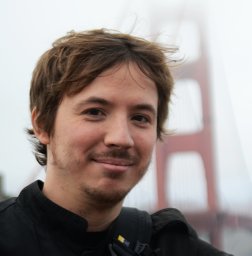 Xavier Rubio-Campillo合作论文数Computer Applications in Science & Engineering, Barcelona Supercomputing Centre Barcelona6
 Li Zhao (赵黎)合作论文数Beijing National Research Center for Information Science and Technology, Tsinghua University5
 Chew Lim Tan (陈树霖)合作论文数National University of Singapore5
 Milena Dobreva合作论文数University of Malta5
 Pantita Palittapongarnpim合作论文数Chulalongkorn University4
 Panagiotis Mitzias合作论文数Inst Informat Technol, CERTH, Thessaloniki 57001, Greece4Shi Chao Gao合作论文数4
 Anastasios Maronidis合作论文数Department of Informatics, Aristotle University of Thessaloniki4
 Marina Riga合作论文数Dept. of Electrical and Computer Engineering, Aristotle University of Thessaloniki4
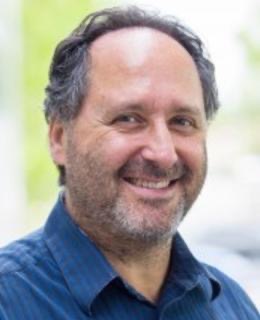 Barry Cyril Sanders合作论文数Department of Physics and Astronomy, Faculty of Science, University of Calgary;European Organization for Nuclear Research4
 Patrick Huembeli合作论文数Inst Phys, Ecole Polytech Fed Lausanne EPFL3
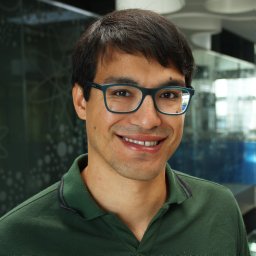 Alexandre Dauphin合作论文数Center for Nonlinear Phenomena and Complex Systems, Université Libre de Bruxelles;Departamento de Física Teórica I, Universidad Complutense;Université Libre de Bruxelles, Universidad Complutense3
 Stelios Andreadis合作论文数3
 Christian Gogolin合作论文数Dahlem Center for Complex Quantum Systems, Freie Universität Berlin3
 Fabio Corubolo合作论文数University of Liverpool3
 Anastasios Karakostas合作论文数Department of Informatics, Aristotle University of Thessaloniki3
 Alastair Gill合作论文数Centre for Research in Social Simulation, University of Surrey3Ying-Hsang Liu合作论文数Charles Sturt University3Cheng Peng (彭程)合作论文数Shanghai Institute of Applied Physics, Chinese Academy of Sciences;University of Chinese Academy of Sciences2
 Raul Blázquez García合作论文数Barcelona Inst Sci & Technol, ICFO Inst Ciencies Foton2
 Tomáš Babej合作论文数2
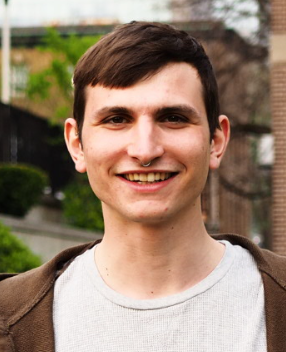 Mark Fingerhuth合作论文数ProteinQure Inc.2
 Alejandro Pozas-Kerstjens合作论文数UAM, UC3M2Ding Liu (刘丁)合作论文数2
 Theodoros Moysiadis合作论文数Ctr Res & Technol Hellas, Inst Appl Biosci2
 Baccari Flavio合作论文数Dipartimento di Fisica;Sapienza"Università di Roma;Dipartimento di Fisica, "Sapienza" Università di Roma2
 Sentís G合作论文数Física Teòrica: Informació i Fenòmens Quàntics, Universitat Autònoma de Barcelona2
 Ioannis Kompatsiaris合作论文数Multimedia Knowledge and Social Media Analytics Laboratory, Information Technologies Institute, Centre for Research and Technology– Hellas;Infalia2
 Remigiusz Augusiak合作论文数Center for Theoretical Physics, Polish Academy of Sciences2Markus Johansson合作论文数Department of Computer Science, University of Kuopio2
 Frank Patrick Rebentrost合作论文数Centre for Quantum Technologies;Department of Computer Science, School of Computing, National University of Singapore2
 Shiju Ran (冉仕举)合作论文数Department of Physics, Capital Normal University2
 Thanos G. Stavropoulos合作论文数Ctr Res & Technol Hellas, Inst Informat Technol2
 Alex Monras合作论文数2
 Vagia Kaltsa合作论文数Department of Electrical and Computer Engineering, Aristotle University of Thessaloniki2
 Stavros Tachos合作论文数2
 Peter Bruza合作论文数Centre for Data Science, School of Information Systems, Queensland University of Technology;Faculty of Science, School of Information Systems, Queensland University of Technology2
 Maciej Lewenstein合作论文数Instituciò Catalana de Recerca i Estudis Avancats;ICFO-Institut de Ciencies Fotoniques2
 Simon Waddington合作论文数Institute for Women's Health, University College London2Jean-pierre Chanod合作论文数1Florian J. Curchod合作论文数1
 Bevan R. Koopman合作论文数The University of Queensland;Health Search Team, Australian e-Health Research Centre, Commonwealth Scientific and Industrial Research Organisation1Kyle Cormier合作论文数1
 Abdul Karim Obeid合作论文数Sch Informat Syst, Queensland Univ Technol1Katya Kudashkina合作论文数Correspondence to: Toronto, ON, Canada.1




