Life cycle thinking (LCT) enables the identification of hotspots, or points in the life cycle where the greatest sustainability impact occurs, and helps to inform decisions about product design, production processes and end-of-life management. It also helps to promote more sustainable product design and development by encouraging the use of environmentally friendly materials and processes throughout the entire product life cycle. As such, LCT has gained more and more relevance throughout the last decades and serves nowadays as the basis for various sustainability methods, approaches, policies and regulations. This chapter traces the history of how LCT developed over time, provides an overview of a few key actors involved in the promotion of LCT in the past through to the present day, and lays the foundation for next steps and future actions to accelerate the application of LCT.
Purpose Globally, there is an increased demand for education on life cycle assessment (LCA). In response, there has been an increase in course availability, but also a lack of clarity on the comprehensiveness of these offerings and the resulting student competencies.Methods A global survey was conducted to obtain empirical evidence on teaching LCA. The survey explored the availability of LCA courses globally and the depth of the teaching, including expected core competencies and related teaching and learning workloads. A purposive sampling strategy was adopted wherein eligible participants were approached by the researchers.Results and discussion According to the survey, annually, over 10,000 students participate in more than 200 LCA courses. The results reflected the interdisciplinary nature of LCA with courses being taught across different disciplines, including engineering, chemical sciences, and economics. Estimated workload demands for achieving different competency levels were significantly lower than those estimated by an expert panel before. This may be attributed in part to respondents not accounting for the full workload beyond classroom interactions. Nonetheless, workload demands increased with competency levels.Conclusions and recommendations The results emphasize the need for a common understanding of LCA teaching with regard to content, literacy levels, and competencies to avoid false expectations of the labor and research markets in terms of available expertise. Therefore, LCA curriculum development and program planning remain significant challenges and essential tasks for the global LCA community.
Purpose Scientific Life Cycle Assessment (LCA) literature provides some examples of LCA teaching in higher education, but not a structured overview of LCA teaching contents and related competencies. Hence this paper aims at assessing and highlighting trends in LCA learning outcomes, teaching approaches and developed content used to equip graduates for their future professional practices in sustainability. Methods Based on a literature review on teaching LCA in higher education and a collaborative consensus building approach through expert group panel discussions, an overview of LCA learning and competency levels with related teaching contents and corresponding workload is developed. The levels are built on the European Credit Transfer and Accumulation System (ECTS) and Bloom’s taxonomy of learning. Results and discussion The paper frames five LCA learning and competency levels that differ in terms of study program integration, workload, cognitive domain categories, learning outcomes, and envisioned professional skills. It furthermore provides insights into teaching approaches and content, including software use, related to these levels. Conclusions and recommendations This paper encourages and supports higher educational bodies to implement a minimum of ‘life cycle literacy’ into students’ curriculum across various domains by increasing the availability, visibility and quality of their teaching on life cycle thinking and LCA.
The technique 'hotspots analysis' belongs to the toolbox life cycle management. 'Hotspotting' or 'hotspots analysis' is an emergent technique being used in a growing number of different analytical disciplines, so research disciplines and functions within organizations (e.g., R&D, new product development, procurement), and in diverse geographies, in support of the green economy and the United Nations post-2015 Sustainable Development Goals. It can be used to inform government policy priorities, drive growth and innovation in business and empower citizens.Due to the growing interest of various stakeholders in applying hotspot analysis methodologies, the UNEP/SETAC Life Cycle Initiative initiated the project "Global Principles and Practices for Hotspot Analysis". During the first phase of the project, a study was conducted to map existing hotspots analysis methodologies and studies world-wide, which culminated in the report: Hotspots Analysis: mapping of existing methodologies, tools and guidance and initial recommendations for the development of global guidance. This chapter draws on knowledge derived from this report and presents a number of relevant findings.
This chapter addresses two major challenges for mainstreaming life cycle management that are intrinsically linked: collaboration and communication. To this end it is argued that in order to radically increase the take up of life cycle based approaches in business and government, life cycle professionals need to enhance global collaboration among themselves, as well as with others and communicate to a wider set of stakeholders. The chapter makes the case that the life cycle community does not have a home, and thus currently does not exist as one coherent and clearly identifiable stakeholder. It concludes that successful communication on behalf of and with the community can only be achieved when the community is formally organized. To this end the newly established Forum for Sustainability through Life Cycle Innovation is presented as a possible way to overcome the outlined gaps and challenges.
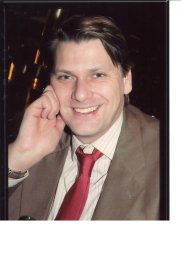 Guido Sonnemann合作论文数Division of Technology, Industry and Economics Tour, UNEP5
 Jim Fava合作论文数2
 Laurie Wright合作论文数Corresponding author.2Steffi Weyand合作论文数2
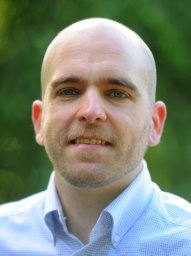 Tobias Viere合作论文数University of Lüneburg Centre for Sustainability Management (CSM)2Takunda Y. Chitaka合作论文数1Regula Keller合作论文数1Mark Barthel合作论文数1
 Rachel Horta Arduin合作论文数Bordeaux INP, Université de Bordeaux1Archana Datta合作论文数1
 Jodie Bricout合作论文数Lifecycles1
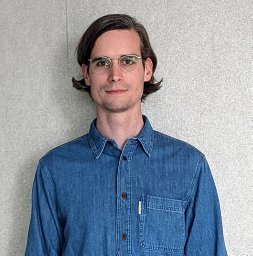 Nils Thonemann合作论文数Department of Environmental and Resource Engineering, Technical University of Denmark (DTU),1
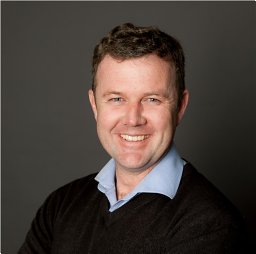 Kevin Graham Harding合作论文数Sch Chem & Met Engn, Univ Witwatersrand1
 Daniel Maga合作论文数UMSICHT, Fraunhofer Institute for Environmental-, Safety- and Energy Technology1
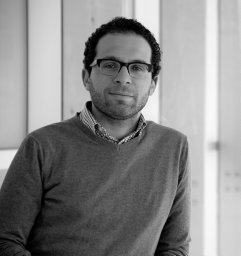 Ben Amor合作论文数Interdisciplinary Research Laboratory on Sustainable, Engineering and Ecodesign (LIRIDE),, University of Sherbrooke1
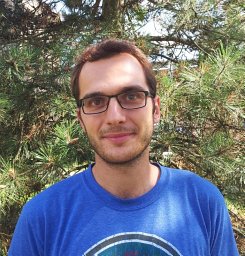 Loubet Philippe合作论文数UMR ITAP, Irstea1Sonia Valdivia合作论文数1Bruce Vigon合作论文数1
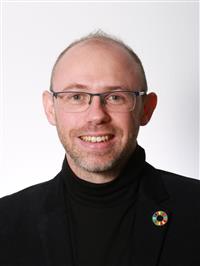 Alexis Laurent合作论文数Department of Environmental and Resource Engineering, Technical University of Denmark1




