“Organicism” often refers to the idea that ecosystems or communities are, or are like, organisms. Often implicit in early twentieth century, it has been theorized by Clements, relying on physiological and developmental concepts. I investigate the fate of this idea in major attempts of a theoretical synthesis of ecology in the first part of the twentieth century. I first consider Bioecology (1939), by Clements and Shelford, which elaborates clementsian organicism as a general framework for plant and animal ecology. Then I investigate the major animal ecology treatise of the Chicago school ecologists C. Allee, T. Park, O. Park, K. Schmidt and A. Emerson, Principles of animal ecology (1949). I show how they shifted organicism from physiology to evolution, synthesizing inspiration from both Clements and Sewall Wright, got their inspiration in evolutionary biology, and built a systematic correspondence between cells, organisms and communities. I claim that the focus on populations allowed them to apply Darwinian insights at the level of communities. Finally I argue that this theoretical synthesis fell apart in the next decade because of the rise of density-dependent accounts of population regulation.
En introduisant les notions de paradigme et de révolutions scientifiques comme « changements de paradigme », l’historien des sciences Thomas Kuhn mit en lumière une certaine incommensurabilité des théories scientifiques à travers le temps. L’opération superficiellement simple de traduire les énoncés d’une théorie ancienne dans la science présente s’avère alors plus difficile qu’une simple extraction des éléments déjà corrects dans la théorie précédente. Après avoir expliqué les conséquences de l’incommensurabilité pour la traduction inter-théorique, cet article examinera l’idée, partagée par d’autres historiens des sciences, de faire porter l’analyse historique sur des unités métathéoriques telles que l’épistémé (Foucault) ou les themata (Holton). Je conclurai que la traductibilité des sciences passées dans notre science dépend de l’unité d’analyse considérée, l’objection kuhnienne ne valant plus lorsqu’on considère des unités de niveau très élevé, ou au contraire infrathéoriques, comme les modèles.
How, when, and why organisms age are fascinating issues that can only be fully addressed by adopting an evolutionary perspective. Consistently, the main evolutionary theories of ageing, namely the Mutation Accumulation theory, the Antagonistic Pleiotropy theory, and the Disposable Soma theory, have formulated stimulating hypotheses that structure current debates on both the proximal and ultimate causes of organismal ageing. However, all these theories leave a common area of biology relatively under-explored. The Mutation Accumulation theory and the Antagonistic Pleiotropy theory were developed under the traditional framework of population genetics, and therefore are logically centred on the ageing of individuals within a population. The Disposable Soma theory, based on principles of optimising physiology, mainly explains ageing within a species. Consequently, current leading evolutionary theories of ageing do not explicitly model the countless interspecific and ecological interactions, such as symbioses and host-microbiomes associations, increasingly recognized to shape organismal evolution across the Web of Life. Moreover, the development of network modelling supporting a deeper understanding on the molecular interactions associated with ageing within and between organisms is also bringing forward new questions regarding how and why molecular pathways associated with ageing evolved. Here, we take an evolutionary perspective to examine the effects of organismal interactions on ageing across different levels of biological organisation, and consider the impact of surrounding and nested systems on organismal ageing. We also apply this perspective to suggest open issues with potential to expand the standard evolutionary theories of ageing.
Eco-evolutionary dynamics, or eco-evolution for short, are often thought to involve rapid demography (ecology) and equally rapid heritable phenotypic changes (evolution) leading to novel, emergent system behaviours. We argue that this focus on contemporary dynamics is too narrow: Eco-evolution should be extended, first, beyond pure demography to include all environmental dimensions and, second, to include slow eco-evolution which unfolds over thousands or millions of years. This extension allows us to conceptualise biological systems as occupying a two-dimensional time space along axes that capture the speed of ecology and evolution. Using Hutchinson's analogy: Time is the 'theatre' in which ecology and evolution are two interacting 'players'. Eco-evolutionary systems are therefore dynamic: We identify modulators of ecological and evolutionary rates, like temperature or sensitivity to mutation, which can change the speed of ecology and evolution, and hence impact eco-evolution. Environmental change may synchronise the speed of ecology and evolution via these rate modulators, increasing the occurrence of eco-evolution and emergent system behaviours. This represents substantial challenges for prediction, especially in the context of global change. Our perspective attempts to integrate ecology and evolution across disciplines, from gene-regulatory networks to geomorphology and across timescales, from today to deep time.
Throughout my university career, and since I began my Ph.D., Jean Gayon was there. Unlike many contributors to this volume, to the early or mid-career researchers who do French philosophy of biology today, I did not know Jean as a dissertation supervisor or a professor, but as a dissertation examiner, as expert witness to the beginning of my career and as indisputable scientific authority. For fifteen years I have been doing philosophy of evolutionary biology with Jean Gayon. In this chapter, I do not offer an analysis of “evolutionary biology according to Gayon” but I aim to pay tribute to a philosopher who was at once a “major contemporary”, a colleague, a friend, and an inspiration.
Insofar as in etiological theory, “the function of X is Z” means that X has been selected for Z, while evolutionary biology often defines adaptation as what results from natural selection, the concepts of adaptation and function overlap. Should we then finally eliminate the selection-related notion of function, replace it with that of adaptation and use “function” only when it is a question of functions sensu the causal-role theory? I examine two limit cases for the etiological theory, in which emerges a tension between the notions of function and adaptation. First, there are cases of superiority of heterozygotes, such as sickle cell anemia. Here, from an etiological point of view, the recessive allele seems to have a function (equal to its adaptive character), whereas it is at the same time dysfunctional. The other problem is the selfish genetic elements (e.g. “selfish DNA”,), which also raise the question of levels of functionality in reference to adaptations. The selfish genetic elements make visible a presupposition of the etiological theory of function, namely a homogeneity or alignment in the levels of selection. In this sense, the acknowledgment of levels of selection motivates a rethinking of the etiological notion of function.
 Marc Silberstein合作论文数6Guillaume Lecointre合作论文数Département « Systématique & Évolution » du Muséum national d’histoire naturelle, CP 26, 57, rue Cuvier, 75231 Paris cedex 05, France6Thomas Heams合作论文数6
 Hugh Desmond合作论文数Dept Philosophy, Univ Antwerp4
 Roger Pradel合作论文数Interactions Humains Animaux, Dynamique et Conservation de la Biodiversité, Centre D'ecologie Fonctionnelle & Evolutive4
 Vincent Devictor合作论文数Centre de Recherches sur la Biologie des Populations d’Oiseaux, Muséum National d’Histoire Naturelle4
 Frédéric Bouchard合作论文数DÉPARTEMENT DE PHILOSOPHIE;UNIVERSITÉ DE MONTRÉAL;DÉPARTEMENT DE PHILOSOPHIE, UNIVERSITÉ DE MONTRÉAL4
 Sonia Kéfi合作论文数Copernicus Institute, Utrecht University4Johannes Martens合作论文数3
 Dutreuil Sébastien合作论文数UMR 8590 IHPST - Institut d'Histoire et de Philosophie des Sciences et des Techniques, Université Paris 1 Panthéon-Sorbonne3
 Edouard Machery合作论文数Department of History and Philosophy of Science, University of Pittsburgh3Philippe Jarne合作论文数3
 Eric Bapteste合作论文数GenomeAtlantic;Department of Biochemistry & Molecular Biology, Dalhousie University;Department of Biochemistry & Molecular Biology, Dalhousie University3
 Andre Ariew合作论文数University of Rhode Island3
 Nathalie Niquil合作论文数2
 Dominique Joly合作论文数2laurence meslin合作论文数2
 Luc Doyen合作论文数GREThA, University of Bordeaux2
 Jean-Baptiste Andre合作论文数PSL Res Univ, CNRS, Inst Jean Nicod, Dept Etud Cognit,ENS,EHESS, Paris, France2
 Virginie Maris合作论文数Département Hommes Natures Sociétés, Museum National d'Histoire Naturelle2
 Matilda Haraldsson合作论文数Department of Biological and Environmental Sciences, University of Gothenburg2
 Kergoat Gael J合作论文数CBGP INRA IRD CIRAD Montpellier SupAgro, INRA2
 Eric Garnier合作论文数Centre d’Ecologie Fonctionnelle and Evolutive, Centre National de la Recherche Scientifique2
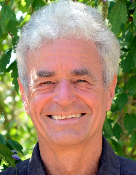 Michel Loreau合作论文数Theoretical and Experimental Ecology Station, National Centre for Scientific Research;Peking University;Institute for Advanced Study in Toulouse2
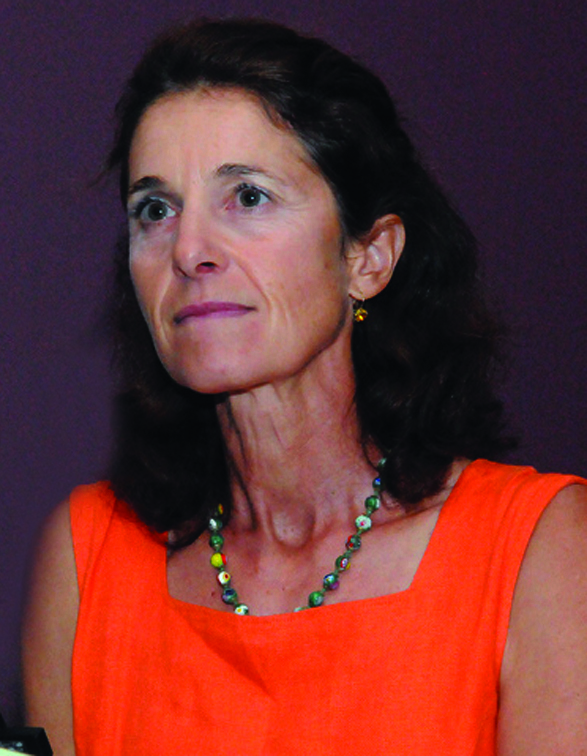 Sandra Lavorel合作论文数Laboratoire d'Ecologie Alpine, Centre National de la Recherche Scientifique;Institut écologie Et Environnement, Centre National de la Recherche Scientifique2
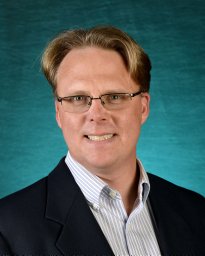 Stuart R Borrett合作论文数Department of Biology and Marine Biology, University of North Carolina Wilmington2
 Line Le Gall合作论文数UMR 7138, Muséum National d'Histoire Naturelle2
 Nicolas Mouquet合作论文数Department of Biological Science and School of Computational Science and Information Technology;Florida State University;Department of Biological Science and School of Computational Science and Information Technology, Florida State University2
 Audrey Coreau合作论文数2
 Télesphore Sime Ngando合作论文数French National Center for Scientific Research2
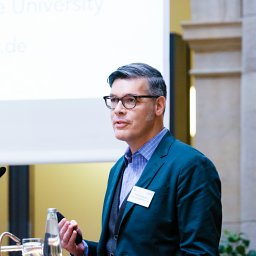 Thomas Reydon合作论文数Center for Philosophy and Ethics of Science (ZEWW), Leibniz University of Hannover2
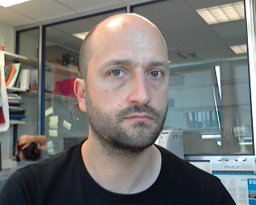 Philippe Lopez合作论文数UMR CNRS 7138 Systématique, Adaptation, Evolution, Université Pierre et Marie Curie2Franck Jabot合作论文数Laboratoire Evolution et DiversiteBiologique;UniversitePaul Sabatier;Laboratoire Evolution et DiversiteBiologique, UniversitePaul Sabatier2
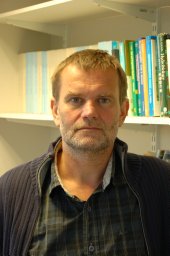 Gilles Pinay合作论文数CNRS OSUR ECOBIO, Univ Rennes 12
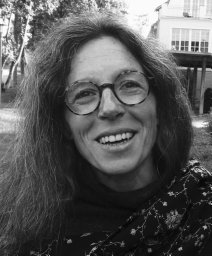 Silvia De Monte合作论文数Center for Quantum Protein;Dept . of Physics;Technical University of Denmark;Center for Quantum Protein, Technical University of Denmark2
 Xavier Morin合作论文数Centre d'Ecologie Fonctionnelle et Evolutive2Yvan Lagadeuc合作论文数Station Marine de Wimereux;Université des Sciences et Technologies;Institut Royal Météorologique;Section Climatologie Dynamique;Laboratoire de Modélisation en Mécanique;Université Pierre et Marie Curie;Physics Department;McGill University;Université Pierre et Marie Curie, McGill University2
 Damien Eveillard合作论文数CNRS, University of Nantes2Mikaël Cozic合作论文数Institut d'Histoire et de Philosophie des Sciences et des Techniques, (ENS Ulm),2
 Anne Duputie合作论文数Centre d'Écologie Fonctionnelle2
 Denis Faure合作论文数CNRS Institut des Sciences du Végétal2
 Frank M. Schurr合作论文数Plant Ecology and Nature Conservation;Institute of Biochemistry and Biology;University of Potsdam;Institute of Biochemistry and Biology, University of Potsdam2
 Charles T. Wolfe合作论文数Unit for History and Philosophy of Science;University of Sydney;Unit for History and Philosophy of Science, University of Sydney2
 Olivier Gimenez合作论文数Centre d’Ecologie Fonctionnelle et Evolutive, CNRS2Martina Valkovic合作论文数1
 Chloe Vigliotti合作论文数1María J. Ferreira Ruiz合作论文数1
 Jhelam N. Deshpande合作论文数EPHE, Univ Montpellier1
 Lynn Govaert合作论文数Leibniz Inst Gewasserokol & Binnenfischerei IGB1




