Extracting specific information, such as medication mentions, from large unstructured medical texts can be challenging, especially when no annotated corpus exists in the target language for training. To overcome this, leveraging existing machine learning models and datasets is essential, and since most pre-trained resources are in English, adopting multilingual approaches can help transferring between languages. In this work, we investigate the usage of a multi-lingual transformer model in a multi-lingual and cross-lingual setting to extract drug names from medical texts using named entity recognition in four European languages: German, English, French, and Spanish. We report the scores obtained by cross-lingual transfer with several published datasets after fine-tuning a multi-lingual model, aiming to create empirical evidence on how the transfer of "medical" knowledge between languages can be expected to benefit various language pairs. We further perform a qualitative error analysis and find that the performance on all languages achieves competitive levels. Conversely, erroneous prediction artifacts are introduced by annotation inconsistencies, differences in annotation guidelines and vague entity labels in general.
User-generated data sources have gained significance in uncovering Adverse Drug Reactions (ADRs), with an increasing number of discussions occurring in the digital world. However, the existing clinical corpora predominantly revolve around scientific articles in English. This work presents a multilingual corpus of texts concerning ADRs gathered from diverse sources, including patient fora, social media, and clinical reports in German, French, and Japanese. Our corpus contains annotations covering 12 entity types, four attribute types, and 13 relation types. It contributes to the development of real-world multilingual language models for healthcare. We provide statistics to highlight certain challenges associated with the corpus and conduct preliminary experiments resulting in strong baselines for extracting entities and relations between these entities, both within and across languages.
This survey analyses how external knowledge can be integrated into language models in the context of retrieval-augmentation. The main goal of this work is to give an overview of: (1) Which external knowledge can be augmented? (2) Given a knowledge source, how to retrieve from it and then integrate the retrieved knowledge? To achieve this, we define and give a mathematical formulation of retrieval-augmented knowledge integration (RAKI). We discuss retrieval and integration techniques separately in detail, for each of the following knowledge formats: knowledge graph, tabular and natural language.
Relation extraction (RE) is a fundamental task in information extraction, whose extension to multilingual settings has been hindered by the lack of supervised resources comparable in size to large English datasets such as TACRED (Zhang et al., 2017). To address this gap, we introduce the MultiTACRED dataset, covering 12 typologically diverse languages from 9 language families, which is created by machine-translating TACRED instances and automatically projecting their entity annotations. We analyze translation and annotation projection quality, identify error categories, and experimentally evaluate fine-tuned pretrained mono- and multilingual language models in common transfer learning scenarios. Our analyses show that machine translation is a viable strategy to transfer RE instances, with native speakers judging more than 83 of the translated instances to be linguistically and semantically acceptable. We find monolingual RE model performance to be comparable to the English original for many of the target languages, and that multilingual models trained on a combination of English and target language data can outperform their monolingual counterparts. However, we also observe a variety of translation and annotation projection errors, both due to the MT systems and linguistic features of the target languages, such as pronoun-dropping, compounding and inflection, that degrade dataset quality and RE model performance.
Mariana Neves, Antonio Jimeno Yepes, Aurélie Névéol, Rachel Bawden, Giorgio Maria Di Nunzio, Roland Roller, Philippe Thomas, Federica Vezzani, Maika Vicente Navarro, Lana Yeganova, Dina Wiemann, Cristian Grozea. Proceedings of the Eighth Conference on Machine Translation. 2023.
In this work, we present the first corpus for German Adverse Drug Reaction (ADR) detection in patient-generated content. The data consists of 4,169 binary annotated documents from a German patient forum, where users talk about health issues and get advice from medical doctors. As is common in social media data in this domain, the class labels of the corpus are very imbalanced. This and a high topic imbalance make it a very challenging dataset, since often, the same symptom can have several causes and is not always related to a medication intake. We aim to encourage further multi-lingual efforts in the domain of ADR detection and provide preliminary experiments for binary classification using different methods of zero- and few-shot learning based on a multi-lingual model. When fine-tuning XLM-RoBERTa first on English patient forum data and then on the new German data, we achieve an F1-score of 37.52 for the positive class. We make the dataset and models publicly available for the community.
In the seventh edition of the WMT Biomedical Task, we addressed a total of seven languagepairs, namely English/German, English/French, English/Spanish, English/Portuguese, English/Chinese, English/Russian, English/Italian. This year’s test sets covered three types of biomedical text genre. In addition to scientific abstracts and terminology items used in previous editions, we released test sets of clinical cases. The evaluation of clinical cases translations were given special attention by involving clinicians in the preparation of reference translations and manual evaluation. For the main MEDLINE test sets, we received a total of 609 submissions from 37 teams. For the ClinSpEn sub-task, we had the participation of five teams.
In the sixth edition of the WMT Biomedical Task, we addressed a total of eight language pairs, namely English/German, English/French, English/Spanish, English/Portuguese, English/Chinese, English/Russian, English/Italian, and English/Basque. Further, our tests were composed of three types of textual test sets. New to this year, we released a test set of summaries of animal experiments, in addition to the test sets of scientific abstracts and terminologies. We received a total of 107 submissions from 15 teams from 6 countries.
Machine translation of scientific abstracts and terminologies has the potential to support health professionals and biomedical researchers in some of their activities. In the fifth edition of the WMT Biomedical Task, we addressed a total of eight language pairs. Five language pairs were previously addressed in past editions of the shared task, namely, English/German, English/French, English/Spanish, English/Portuguese, and English/Chinese. Three additional languages pairs were also introduced this year: English/Russian, English/Italian, and English/Basque. The task addressed the evaluation of both scientific abstracts (all language pairs) and terminologies (English/Basque only). We received submissions from a total of 20 teams. For recurring language pairs, we observed an improvement in the translations in terms of automatic scores and qualitative evaluations, compared to previous years.
MOTIVATION:Much effort has been invested in the identification of protein-protein interactions using text mining and machine learning methods. The extraction of functional relationships between chemical compounds and proteins from literature has received much less attention, and no ready-to-use open-source software is so far available for this task.METHOD:We created a new benchmark dataset of 2,613 sentences from abstracts containing annotations of proteins, small molecules, and their relationships. Two kernel methods were applied to classify these relationships as functional or non-functional, named shallow linguistic and all-paths graph kernel. Furthermore, the benefit of interaction verbs in sentences was evaluated.RESULTS:The cross-validation of the all-paths graph kernel (AUC value: 84.6%, F1 score: 79.0%) shows slightly better results than the shallow linguistic kernel (AUC value: 82.5%, F1 score: 77.2%) on our benchmark dataset. Both models achieve state-of-the-art performance in the research area of relation extraction. Furthermore, the combination of shallow linguistic and all-paths graph kernel could further increase the overall performance slightly. We used each of the two kernels to identify functional relationships in all PubMed abstracts (29 million) and provide the results, including recorded processing time.AVAILABILITY:The software for the tested kernels, the benchmark, the processed 29 million PubMed abstracts, all evaluation scripts, as well as the scripts for processing the complete PubMed database are freely available at https://github.com/KerstenDoering/CPI-Pipeline.
Recent years showed a strong increase in biomedical sciences and an inherent increase in publication volume. Extraction of specific information from these sources requires highly sophisticated text mining and information extraction tools. However, the integration of freely available tools into customized workflows is often cumbersome and difficult. We describe SIA (Scalable Interoperable Annotation Server), our contribution to the BeCalm-Technical interoperability and performance of annotation servers (BeCalm-TIPS) task, a scalable, extensible, and robust annotation service. The system currently covers six named entity types (i.e., chemicals, diseases, genes, miRNA, mutations, and organisms) and is freely available under Apache 2.0 license at https://github.com/Erechtheus/sia .
Clinical notes and discharge summaries are commonly used in the clinical routine and contain patient related information such as well-being, findings and treatments. Information is often described in text form and presented in a semi-structured way. This makes it difficult to access the highly valuable information for patient support or clinical studies. Information extraction can help clinicians to access this information. However, most methods in the clinical domain focus on English data. This work aims at information extraction from German nephrology reports. We present on-going work in the context of detecting named entities and relations. Underlying to this work is a currently generated corpus annotation which includes a large set of different medical concepts, attributes and relations. At the current stage we apply a number of classification techniques to the existing dataset and achieve promising results for most of the frequent concepts and relations.
Monitoring mobility- and industry-relevant events is important in areas such as personal travel planning and supply chain management, but extracting events pertaining to specific companies, transit routes and locations from heterogeneous, high-volume text streams remains a significant challenge. This work describes a corpus of German-language documents which has been annotated with fine-grained geo-entities, such as streets, stops and routes, as well as standard named entity types. It has also been annotated with a set of 15 traffic- and industry-related n-ary relations and events, such as accidents, traffic jams, acquisitions, and strikes. The corpus consists of newswire texts, Twitter messages, and traffic reports from radio stations, police and railway companies. It allows for training and evaluating both named entity recognition algorithms that aim for fine-grained typing of geo-entities, as well as n-ary relation extraction systems.
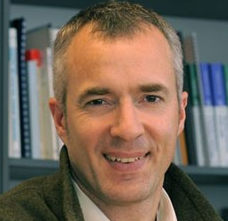 Ulf Leser合作论文数Institute for Computer Science, Humboldt-Universitat zu Berlin22
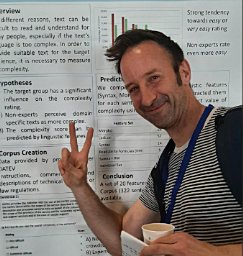 Roland Roller合作论文数University of Sheffield17
 Mariana Neves合作论文数Centre for Documentation and Evaluation of Alternative Methods to Animal Experiments, German Federal Institute for Risk Assessment8
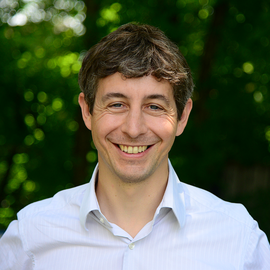 Leonhard Hennig合作论文数Speech & Language Technology Lab, Deutsches Forschungszentrum Für Künstliche Intelligenz8
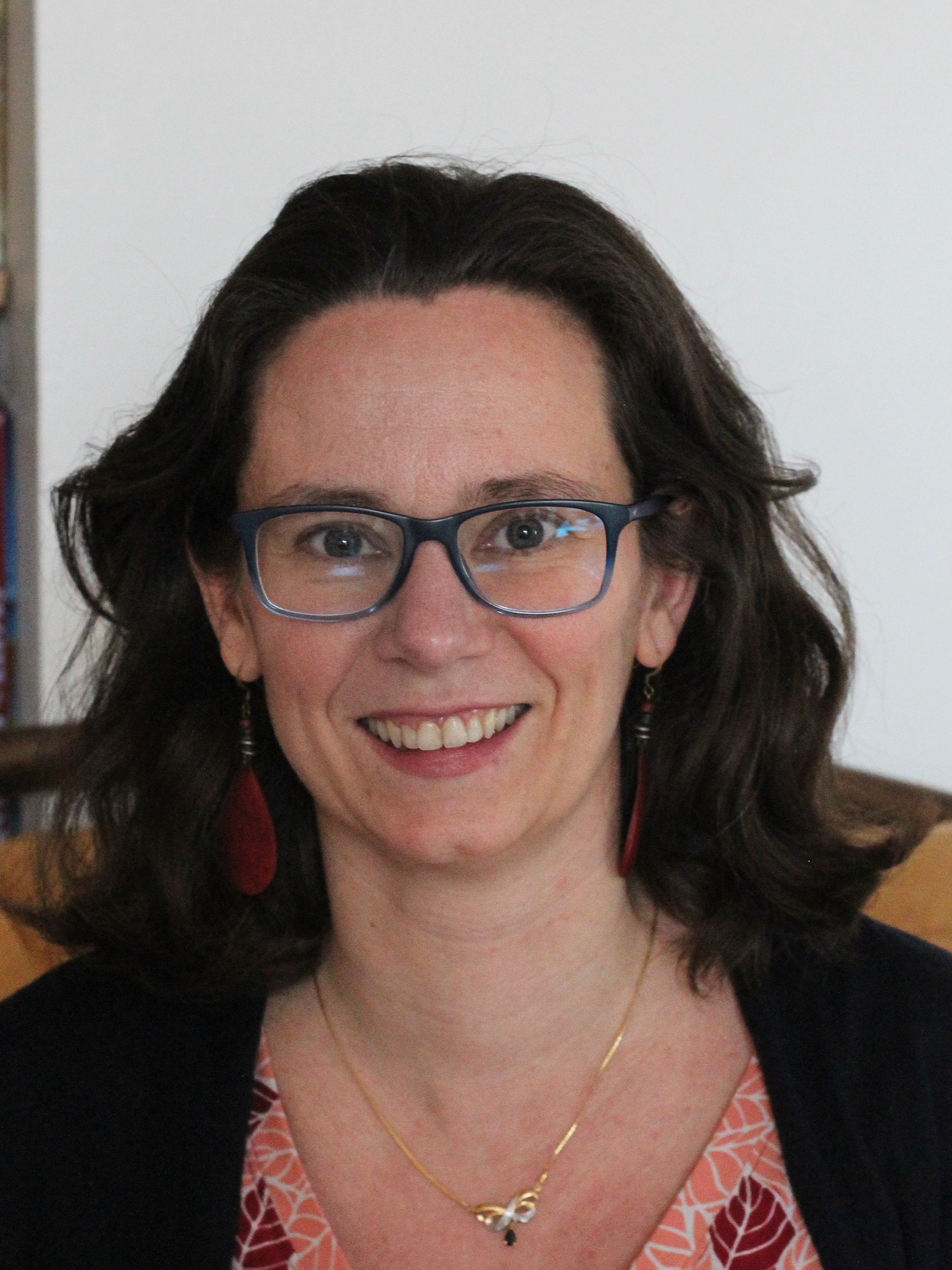 Aurélie Névéol合作论文数LISN-CNRS;Universite Paris Saclay7
 Lisa Raithel合作论文数6Cristian Grozea合作论文数Fraunhofer Institute FIRST6Illés Solt合作论文数Budapest University of Technology and Economics6
 Antonio Jose Jimeno Yepes合作论文数University of Melbourne6
 Pierre Zweigenbaum合作论文数Laboratoire D'Informatique Pour La Mécanique et Les Sciences de l'Ingénieur, Université Paris-Saclay6
 Sebastian Möller合作论文数Quality and Usability Lab, Technische Universitt Berlin5
 Domonkos Tikk合作论文数Taboola Budapest5
 Jörg Hakenberg合作论文数Illumina5
 Amy Siu合作论文数Berliner Hochschule für Technik5Maika Vicente Navarro合作论文数4Dina Wiemann合作论文数4
 Federica Vezzani合作论文数University of Padua4
 Rachel Bawden合作论文数Inria4
 Hans Uszkoreit合作论文数Amber Iris AI Consulting GmbH;UNICEPTA Corporate Intelligence;Deutsches Forschungszentrum für Künstliche Intelligenz;Acrolinx GmbH4
 Shuntaro Yada (矢田竣太郎)合作论文数Institute of Library, Information and Media Science, University of Tsukuba4Johannes Kirschnick合作论文数4
 Eiji Aramaki (荒牧英治)合作论文数Social Computing Lab, Graduate School of Science and Technology, Nara Institute of Science and Technology4
 Sven Schmeier合作论文数Deutsches Forschungszentrum für Künstliche Intelligenz4
 Giorgio Maria Di Nunzio合作论文数Information Management System Group Department of Information Engineering University of Padua4
 Roman Klinger合作论文数Faculty Information Systems and Applied Computer Science, University of Bamberg4Yvonne Lichtblau合作论文数3Fabienne Teike Luthi合作论文数3Gueniat Christophe合作论文数3
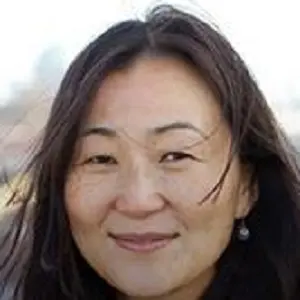 Feiyu Xu (徐飞玉)合作论文数Nyonic3
 Tim Rocktäschel合作论文数Department of Computer Science, University College London;Google DeepMind3
 Anne Ramelet合作论文数3
 Lana Yeganova合作论文数National Center for Biotechnology Information3
 Shoko Wakamiya (若宮翔子)合作论文数Social Computing Laboratory, Division of Information Science, Graduate School of Science and Technology, Nara Institute of Science and Technology3
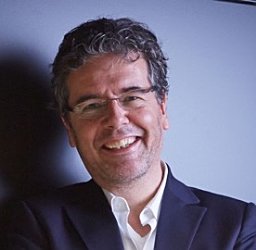 Martin Hofmann-Apitius合作论文数Bonn-Aachen International Center for IT, University of Bonn;Department of Bioinformatics, Fraunhofer Institute for Algorithms and Scientific Computing3
 Renlong Ai合作论文数3
 Nils Rethmeier合作论文数Language Technol Lab, DFKI2F NICOLAS合作论文数2
 Hui-Syuan Yeh合作论文数Saarland University2Madeleine Kittner合作论文数2Saskia Trescher合作论文数Knowledge Management in Bioinformatics, Computer Science Department, Humboldt-Universität zu Berlin, Berlin, Germany2
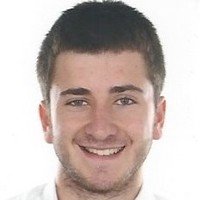 Inigo Jauregi Unanue合作论文数Cooperative Research Centre2
 David Martinez合作论文数Doctor Evidence LLC2
 Hanspeter Herzel合作论文数Institute for Theoretical Biology, Charite and Humboldt University Berlin2
 Kiran K. Telukunta合作论文数2
 Angela Relogio合作论文数Institute for Theoretical Biology (ITB),, Charité-Universitätsmedizin Berlin and Humboldt-Universität zu Berlin;Molekulares Krebsforschungszentrum (MKFZ),, Charité-Universitätsmedizin Berlin;Charité-Universitätsmedizin Berlin, Charité-Universitätsmedizin Berlin2
 He Wang合作论文数2
 Martin Krallinger合作论文数Barcelona Supercomputing Center2
 Aleksandra Gabryszak合作论文数German Research Center for Artificial Intelligence2
 Karin Verspoor合作论文数School of Computing Technologies, RMIT University;School of Computing and Information Systems, University of Melbourne;BioGrid Australia Ltd2




