Current morphological palynological methods for taxonomic discrimination of wild Poaceae versus domesticated cereals result in high levels of uncertainty. This uncertainty complicates the use of pollen records when investigating changes in historical landscapes managed by communities since the first evidence of cereal cultivation. To improve taxonomic resolution in the Poaceae family, we applied a chemotaxonomic approach using pollen chemical traits measured by Fourier-transform infrared (FTIR) microspectroscopy. Predictive classifier models trained on the pollen-derived chemotaxonomic data of 22 modern grass taxa yielded an accuracy of 87.4%, indicating a strong taxonomic signal. Next, subfossil pollen from Nar G & ouml;l & uuml;, in Cappadocia, T & uuml;rkiye, was classified according to the closest match from modern pollen chemistry reference library. Our study shows that such subfossil pollen classification, although challenging, is possible when the chemistry of the subfossils lies within the modern reference range, and therefore exhibit chemical signatures comparable to extant pollen. For this reason, novelty detection techniques were employed to distinguish subfossil spectra non-existent (novel) to the modern dataset and reject their classifications. This study represents the first attempt to use chemotaxonomy to classify subfossil pollen. We provide an assessment of the potential of such methods for future applications, such as palaeoecological research to classify cryptic pollen assemblages and further unpack ancient agricultural systems.
Elevated levels of surface ultraviolet-B (UV-B) irradiance can have a negative impact on different aspects of ecosystem functioning. Our understanding of spatial and temporal variations in surface UV-B in the past is limited, mainly due to the challenges of reconstructing and modelling surface UV-B prior to the instrumental record. Here, we reconstruct surface UV-B irradiance for the Southern South Island of New Zealand, on sub-decadal resolution over the past 60 years and during the Maunder Minimum, using Pinus and Prumnopitys taxifolia sporopollenin chemistry from the Lake Ohau sediment sequence. We show a statistically significant positive relationship between UV-absorbing compounds (UACs) recorded in both taxa. These results indicate that different taxa show similar trends in UAC production in response to short-term variations in UV-B radiation. We further observe strong anticorrelation between the Pinus record and total column ozone, and strong positive correlation with annually estimated erythemally weighted and surface UV-B in the area. This demonstrates that variations in ozone thickness and cloud cover are the main regulators on sub-decadal changes in surface level UV-B flux, rather than solar output. The strong correlations were not observed with the Prumnopitys taxifolia UAC data, which can be ascribed to a lack of high-resolution data for the distal areas where the pollen grains were sourced from rather than the taxon not responding to UV-B induced stress. These results are consistent with our sub-decadal observations over the Maunder Minimum, a period of lower solar activity. We found no evidence for the 11-year solar cycle or a relationship with TSI or UV-B for the UAC data spanning the Maunder Minimum. The lack of a relationship can be explained by population-level factors influencing the relationship, with presumably cloud cover being the most dominant factor. A comparison of broad trends shows that the mean UAC values during the Maunder Minimum are lower than those from the period just before and after. Mean values from the satellite era are lower than those of the Maunder Minimum, which can be explained by Maunder Minimum Prumnopitys taxifolia trees experiencing higher annual sunshine hours due to different source locations than those of the satellite era. The biochemical responses in both Pinus and Prumnopitys taxifolia recorded here show the potential for local to regional surface UV-B reconstructions using the UAC proxy over both short-term and long-term temporal resolutions.
Genome size (GS) is thought to be a key life-history trait and important for controlling plant distributions and evolutionary dynamics, but a full understanding of GS variation through evolutionary history requires proxy measurements from fossils. Here, we compare two potential GS proxies: guard cell length (GCL) and sporomorph size. We generated GCL and pollen size data from angiosperms growing in the University of Münster Botanical Garden, compiled sporomorph size data from the literature, and related these to GS using phylogenetic regression models. We also fit evolutionary models to the botanical garden data and used a published dataset to validate GCL as a GS proxy. The majority of the analyses conducted revealed a positive relationship between GS and sporomorph size, but in most cases, the explanatory power of the regressions was low. GCL showed a stronger and more consistent relationship with GS, and independent validation of the relationship showed a generally good match between predicted and observed GS. Sporomorph size is not suitable as a cross-taxon GS proxy, but some specific taxa (e.g., Pinus ) may contain useful GS information. GCL has much more potential for measuring paleo-GS, but requires further research for us to better understand possible environmental controls on cell size variation.
Jardine and El Atfy introduce the discipline of palynology.
The fossil pollen and spore (sporomorph) record includes occurrences of darkened grains typically attributed to thermal maturation from geological processes. However, zones of sporomorph darkening and colour variability within samples sometimes coincide with mass extinction events. Although bimodal sporomorph coloration is relatively common, its abundance often increases markedly during such intervals. These observations have prompted alternative explanatory hypotheses suggesting either environmental stresses on parent plants or possibly reworking of sporomorphs. Here, we propose another explanation: variation in sporomorph colour and darkness may result from combustion in wildfires during large-scale ecological disturbances prior to fossilisation. To test this hypothesis, we investigate how pyrolysis might impact Lycopodium spore colour and darkness. Untreated, intact spores were combusted at temperature increments from 150 to 800 degrees C. We quantified spore colour by measuring red, green and blue (RGB) intensities and by converting them to Palynomorph Darkness Index (PDI) values. As well as measuring various physical attributes, we used Fourier-transform infrared (FTIR) spectroscopy to determine spore chemistry. As pyrolysis temperature increased, spores darkened, lost mass, and shrank. FTIR analysis revealed three distinct chemical states between non-pyrolysed spores and those heated to 375 degrees C. Physical changes correlated more strongly with temperature, forming different groupings than those of the chemical data, both partially explaining colour change due to pyrolysis. With these data, we establish a baseline for comparison in a future artificial thermal maturation study, which will help determine whether prediagenetic combustion could influence, and be preserved in, the physical and chemical properties of fossil sporomorphs.
Based on palynological data from a section in the Dead Sea region (Jordan), AHMAD et al. (2024) recently published an article in which the Umm Irna Formation was dated as Triassic. We strongly doubt that the studied samples are indeed from the Umm Irna Formation. Moreover, several of the identifications in AHMAD et al. cannot be confirmed. Some of the illustrated palynomorphs were clearly misidentified, while others were very poorly preserved and unidentifiable. A correct age assessment of the Umm Irna Formation is of crucial importance because of the unique composition of the macroflora.
Palynological analysis based on spore and pollen morphology is well established in the field of palaeo-environmental reconstruction but is currently not fully exploited for understanding the history and development of cereal cultivation due to difficulties in visually differentiating between grass species (Poaceae). Here we employ a chemotaxonomic approach, by examining the chemical differences among Poaceae taxa, based on Fourier-transform infrared (FTIR) microspectroscopy data to overcome problems associated with morphological similarities across the Poaceae family. FTIR spectra of untreated and acetolysed pollen from 19 Poaceae taxa were used in our study. We used both populations and individual pollen grains to explore how we can minimise the effect of Mie scattering (spectral distortions caused by scattering of the incident IR beam) on spectra from individuals. Random forest classification algorithms were applied to explore our ability to differentiate taxa at the species level. We found that pollen grains treated with acetolysis yield better classification results (86% for individuals and 97% for populations) compared to untreated samples (65.7% for individuals and 83% for populations), since they are less affected by Mie scattering. The high classification success at species level on acetolysed individual pollen grains suggests that our chemotaxonomic method holds substantial promise in numerous areas of grass and in particular cereal pollen research, including elucidating the history of agriculture.
The Paleocene-Eocene thermal maximum (PETM; ca. 56 Ma) geological interval records a marked decline in calcium carbonate (CaCO3) in seafloor sediments, potentially reflecting an episode of deepand possibly shallow-water ocean acidification. However, because CaCO3 is susceptible to postburial dissolution, the extent to which this process has influenced the PETM geological record remains uncertain. Here, we tested for evidence of postburial dissolution by searching for imprint fossils of nannoplankton preserved on organic matter. We studied a PETM succession from the South Dover Bridge (SDB) core, Maryland, eastern United States, and compared our imprint record with previously published data from traditionally sampled CaCO3-preserved nannoplankton body fossils. Abundant imprints through intervals devoid of CaCO3 would signify that postburial dissolution removed much of the CaCO3 from the rock record. Imprints were recorded from most samples but were rare and of low diversity. Body fossils were substantially more numerous and diverse, capturing a more complete record of the living nannoplankton communities through the PETM. The SDB succession records a dissolution zone/low-carbonate interval at the onset of the PETM, through which nannoplankton body fossils are rare. No nannoplankton imprints were found from this interval, suggesting that the rarity of body fossils is unlikely to have been the result of postburial dissolution. Instead, our findings suggest that declines in CaCO3 through the PETM at the SDB location were the result of: (1) biotic responses to changes that were happening during this event, and/or (2) CaCO3 dissolution that occurred before lithification (i.e., in the water column or at the seafloor).
The Permian (Changhsingian) Umm Irna Formation (Jordan) yields important plant fossils that have influenced our understanding of the early evolution of plants that later dominated the vegetation of the Mesozoic. The formation was deposited in a fluvial regime characterised by the co-occurrence of stacked small-scale braided channels and of larger, higher-sinuosity channels with deposition on point bars, all intercalated into a heterogeneous background sedimentation of finer-grained floodplain deposits, including stacked crevasse-splay deposits, interspersed abandoned-channel and oxbow-lake fills, and lenses of peaty back-swamp deposits. Here, we document the remarkable compositional variability expressed in 124 palynomorph assemblages that were recovered from different argillaceous deposits in the Umm Irna Formation within a similar to 2 km2 outcrop area around a major meandering channel. Our results reveal lateral and vertical variation within individual argillaceous units, as well as lateral variation between different argillaceous units in the same sedimentary complex at similar stratigraphic levels. When combined with plant macrofossil data, the results show that variability in the palynological content may be influenced mainly by two factors. The first is connectedness to the major channel; the drainage system carried a mixture of palynomorphs from across the floodplain but also from a large hinterland of tributaries draining higher parts of the floodplain and uplands beyond to the south and east. The second is the influence of local vegetation communities on the floodplain which would likely be more marked in less connected parts of the floodplain. These findings have implications for the palynological study of alluvial sequences of the Palaeozoic and Mesozoic, and for understanding the ability to identify mudstone units via palynological fingerprinting. Such individual units are of great importance as baffles to fluid flow in reservoirs that might be used for oil and gas, low-temperature geothermal energy storage, carbon capture and storage, and hydrogen storage in alluvial successions.
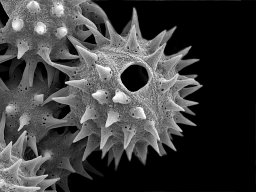
The grasses are one of the most diverse plant families on Earth, however, their classification and evolutionary history are obscured by their pollen stenopalynous (similar) morphology. A combination of high-resolution imaging of pollen surface ornamentation and computational analysis has previously been proposed as promising tool to classify grass taxonomic boundaries. In this study, we test this hypothesis by studying Poaceae pollen across the phylogeny from plants collected in northern South America, but also from published literature across the globe. We assessed if morphotypes that we establish using descriptive terminology are supported by computational analysis, if they vary along six (a)biotic variables and how vary across the phylogeny. Based on this analysis, we constructed a reference framework for pollen surface ornamentation morphotypes. Our results showed that there is a very wide variation of grass pollen surface ornamentation. We identified nine new and six known morphotypes and established our dataset of 223 species (243 individual plant specimens) from 11 subfamilies. Computational analysis showed that our morphotypes are well-supported by two quantitative features of pollen sculptural elements (size and density). The specific dataset and mapping of the phylogeny confirmed that pollen morphological sculpture is unrelated to (a)biotic variables but is diverse across through the phylogeny.
Grass-dominated biomes in South America comprise c. 20 million years of history, yet their evolution and underlying drivers remain poorly understood. Here we apply a novel approach that combines scanning electron microscopy imaging with computational analysis to quantify the morphometrics of grass (Poaceae) pollen micro-ornamentation from the Neotropics since the Early Miocene (23 million years ago). Three spatial-temporal pollen sets were assembled to further elucidate the variation and evolutionary traits of grasses through space and time. Our results reveals that three spatial-temporal pollen groups occupy unique, partially overlapping regions of their exine morphospace. The direction of this shift is consistent over time, progressing towards less dense ornamentation. Interestingly, the extent of the occupied morphospace did not vary significantly. This is the first time that the true morphological variation in Poaceae pollen micro-ornamentation becomes apparent through time. We hypothesize that changes in grass pollen exine since the Early Miocene were driven by evolutionary processes (evolutionary drift and/or directional selection), and potentially migration at the continental scale. The high diversity in pollen micro-ornamentation is likely related to their evolutionary success in the Neogene.
Pollen and spores were recovered from the Paleocene Fort Union Formation and Paleocene–Eocene Willwood Formation of the Bighorn Basin (BHB), northwestern Wyoming, USA. In many local stratigraphic sections in the BHB, the base of the Eocene has been identified by the characteristic negative carbon isotope excursion (CIE) that marks the beginning of the Paleocene–Eocene Thermal Maximum (PETM). The palynotaxa from outcrop samples were examined using light microscopy (LM) and scanning electron microscopy (SEM). Seven new species are formally described (Tricolpites vegrandis, Rousea spatium, Striatricolporites astutus, Striatopollis calidarius, Friedrichipollis geminus, Retistephanocolporites modicrassus and Retistephanocolporites pergrandis). The temporal and geographic distributions of many of these palynotaxa suggest that hotter and more seasonally dry climates facilitated their northward range shifts during the PETM from the tropics or subtropics of the USA. For the temperate palynotaxa, the hotter and seasonally dry conditions resulted in local extirpation. A re-evaluation of the palynostratigraphic schemes established for the Paleocene–Eocene boundary confirms that the first appearance of Platycarya platycaryoides denotes the Paleocene–Eocene boundary in the Rocky Mountains region. A new Striatopollis calidarius Subzone, associated with early Wasatchian (Wa) Wa-0 and Wa-R faunas, is also recognized for CIE body localities in the BHB.
The end-Permian mass extinction (EPME) is the largest extinction event of the Phanerozoic, but the specific causal pathways, especially in the terrestrial realm, are unresolved. Malformed pollen and spores recovered from the EPME interval have been taken as indicators of extreme environmental stress in terrestrial ecosystems. However, whether they relate to volcanism-driven ozone-layer deterioration and enhanced ultraviolet-B (UV-B) flux, or volcanogenic toxic pollutants including mercury and acid rain, or some combination of the two, remains unclear. Here, we take advantage of a novel palynological proxy, which utilises the ability of land plants to adjust the concentration of protective UV-B-absorbing compounds (UACs) in the outer wall of their reproductive propagules in response to changes in ambient UV-B flux. We analysed UAC abundances in ca. 800 pollen grains from an independently-dated Permian-Triassic boundary section in southern Tibet, in order to infer changes in UV-B-radiation flux at the Earth’s surface during the EPME. Our data reveal an excursion in UACs that coincides with a spike in mercury concentration and a negative carbon-isotope excursion in the latest Permian deposits, suggesting a close temporal link between large-scale volcanic eruptions, global carbon- and mercury-cycle perturbations, and ozone-layer disruption. Because enhanced UV-B radiation can exacerbate the environmental deterioration induced by massive magmatism, ozone depletion is considered a compelling ecological driver for the terrestrial mass extinction.
Land plants can adjust the concentration of protective ultraviolet B (UV-B)–absorbing compounds (UACs) in the outer wall of their reproductive propagules in response to ambient UV-B flux. To infer changes in UV-B radiation flux at Earth’s surface during the end-Permian mass extinction, we analyze UAC abundances in ca. 800 pollen grains from an independently dated Permian-Triassic boundary section in Tibet. Our data reveal an excursion in UACs that coincide with a spike in mercury concentration and a negative carbon-isotope excursion in the latest Permian deposits, suggesting a close temporal link between large-scale volcanic eruptions, global carbon and mercury cycle perturbations, and ozone layer disruption. Because enhanced UV-B radiation can exacerbate the environmental deterioration induced by massive magmatism, ozone depletion is considered a compelling ecological driver for the terrestrial mass extinction.
Pollen morphology has proven to be particularly informative for elucidating the evolutionary relationships within Asteraceae (or Compositae). However, very few studies have attempted to reconstruct the character states across the family based on pollen data. Here, we mapped pollen characters onto a recent phylogenomic tree of Asteraceae based on new and published observations. We also revised the pollen morphology of selected lineages of the family largely distributed in South America, including living representatives of the oldest fossils of Asteraceae. By mapping the three selected pollen characters onto a recent phylogenomic framework, we detected shifts and trends across the evolution of the family. Our study showed that Asteraceae pollen grains ancestrally possessed microspines and a nonlayered ecaveate exine. The morphology of this reconstructed ancestor agrees with that of the oldest extinct fossil pollen grains assigned to Barnadesieae discovered in late Cretaceous sediments from Antarctica and New Zealand. The presence of a layered sexine with stout columellae characterizes the most recent common ancestor of all Asteraceae, except for the sister clade Barnadesieae. This extinct ancestor also appears to be represented in the fossil record with morphologically related species of Mutisiapollis, distributed in Paleogene sediments across Patagonia, Africa, and Australia. Taken together, our work supports previous studies, indicating that the range of variation in pollen morphology across Asteraceae is wide yet phylogenetically structured. However, pollen characters (and character states) fail to support the unequivocal recognition of the selected monophyletic South American groups. Although preliminary, our results highlight the importance of scoring pollen characters to identify fossil specimens, explore character evolution, and reconstruct ancestral forms.
Poaceae (the grass family) is highly diverse, geographically widespread, and an important component of many terrestrial ecosystems. Poaceae pollen size has previously been suggested as a proxy to reconstruct the past vegetation and climates in the Amazon area, but it is still unclear if this variable can be used at broader spatial and deep-time scales. Here we set out to perform a comprehensive assessment and to test the robustness of this proxy. We generated pollen size data, as well as associated measurements of the pollen wall and pore, using 127 plant specimens from 58 species across the Poaceae phylogeny from the Amazon drainage basin (ADB). We tested the relationship between pollen size and a range of abiotic and biotic variables (vegetation type, soil composition, climate conditions, photosynthetic pathway and genome size), and fitted models using phylogenetic generalized least squares (P-GLS) and linear mixed models (LMM). Our measurement data shows that Poaceae pollen size presents a very wide range (18.77–71.62 μm), and varies not only among genera and species but also within species. There is no obvious relationship between pollen size and the explanatory variables considered here. We suggest that pollen size cannot be used as generally applicable proxy to reconstruct past vegetation and climate.
Sporomorphs (pollen and spores) are a mainstay of research into past vegetation, and increasingly sporomorph chemistry is being used as a palaeoecological tool. To make extant sporomorphs directly comparable to fossil specimens, fresh material is processed to remove labile compounds and isolate the sporopollenin wall. A range of processing approaches are currently in use, but the chemistries produced by these different techniques have not yet been compared across a range of taxa. It is therefore not clear how they compare in terms of efficiently isolating sporopollenin without changing its chemical structure, and what impact they have on relative chemical similarities and differences among taxa (i.e. whether more closely related species will always appear chemically more similar, regardless of how they have been processed). Here, we test this by applying five different processing approaches to sporomorphs from 15 taxa from across the vascular plant phylogeny. We show that each approach has its own idiosyncrasies in terms of impacts on sporomorph chemistry. For the most part a common pattern of among-taxon chemical variability is uncovered, and a phylogenetic signal within sporopollenin chemistry is supported. Working with spectral derivatives generally increases agreement among the different processing approaches, but decreases the strength of the phylogenetic signal. No one processing approach is ideal, and the choice of which to use is likely to depend on the goal of the study, the type and quantity of material being processed, and the laboratory facilities available for processing.
The transition from a greenhouse to an icehouse world at the Eocene-Oligocene Transition (EOT) coincided with a large decrease of pollen from the steppe-adapted genus Nitraria. This genus, now common along the Mediterranean coast, Asia and Australia, has a proposed coastal origin and a geographically widespread fossil record. Here we investigated the evolution, taxonomic diversity and morphological disparity of Nitraria throughout the Cenozoic by integrating extant taxa and fossil palynological morphotypes into a unified phylogenetic framework based on both DNA sequences and pollen morphological data. We present the oldest fossil pollen grain of Nitraria, at least 53 Myr old. This fossil was found in Central Asian deposits, providing new evidence for its origin in this area. We found that the EOT is an evolutionary bottleneck for Nitraria, coinciding with retreat of the proto-Paratethys Sea, a major global cooling event and a turnover in Central Asian steppe vegetation. We infer the crown age of modern Nitraria spp. to be significantly younger (Miocene) than previously estimated (Palaeocene). The diversity trajectory of Nitraria inferred from extant-only taxa differs markedly from one that also considers extinct taxa. Our study demonstrates it is therefore critical to apply an integrative approach to fully understand the plant evolutionary history of Nitrariaceae.
 Barry H. Lomax合作论文数Department of Animal and Plant Sciences, University of Sheffield, Sheffield, UK24
 Wesley T. Fraser合作论文数Department of Environment, Earth and Ecosystems, The Open University18
 William D. Gosling合作论文数Department of Biological Sciences;Florida Institute of Technology;Department of Biological Sciences, Florida Institute of Technology15
 Guy J. Harrington合作论文数School of Geography Earth and Environmental Sciences, University of Birmingham9
 Carina Hoorn合作论文数Institute for Biodiversity and Ecosystem Dynamics, Faculty of Science, University of Amsterdam8
 Adele CM Julier合作论文数5
 Benjamin Bomfleur合作论文数Department of Ecology and Evolutionary Biology and Biodiversity Institute, University of Kansas;Department of Ecology and Evolutionary Biology and Biodiversity Institute, University of Kansas5
 Raúl Giovanni Bogotá-Ángel合作论文数4
 Scott Wing合作论文数Department of Paleobiology, National Museum of Natural History, Smithsonian Institution4
 Guillaume Dupont-Nivet (纪尧姆·杜邦-尼韦)合作论文数CNRS - Géosciences Rennes;Potsdam University4Matthew Kent合作论文数3Amber Woutersen合作论文数Institute for Biodiversity and Ecosystem Dynamics (IBED), University of Amsterdam3
 Caixia Wei (魏彩霞)合作论文数Institute for Biodiversity and Ecosystem Dynamics, University of Amsterdam3
 Huiping Peng合作论文数3
 Huasheng Huang (黄华生)合作论文数School of Geography and Planning, Sun Yat-Sen University3Moore Sam合作论文数3
 Yadvinder Malhi合作论文数Oxford Martin School, University of Oxford;School of Geography and the Environment, University of Oxford3
 Maria Cristina Telleria合作论文数3
 Luis Palazzesi合作论文数División Paleobotánica, CONICET-Museo Argentino de Ciencias Naturales “B. Rivadavia”,3
 Angela L. Coe合作论文数Centre for Earth, Planetary, Space and Astronomical Research, Open University3
 Hans Kerp合作论文数Institut fur Geologie und Palaontologie, Westfalische Wilhelms-Universitat Munster3
 Viviana D. Barreda合作论文数División Paleobotánica, Museo Argentino de Ciencias Naturales “Bernardino Rivadavia”,3
 S. Adu-Bredu合作论文数Graduate School of Bioagricultural Sciences, Nagoya University3Bianca J. Maibauer合作论文数2
 Emily A. Roberts合作论文数2
 Alexander Farnsworth合作论文数Senior Research Associate, School of Geographical Sciences
Cabot Institute for the Environment
The Bristol Research Initiative for the Dynamic Global Environment (BRIDGE)2Mao Li合作论文数2
Alexander Farnsworth合作论文数Senior Research Associate, School of Geographical Sciences
Cabot Institute for the Environment
The Bristol Research Initiative for the Dynamic Global Environment (BRIDGE)2Mao Li合作论文数2 Patrick Blomenkemper合作论文数Univ Munster, Inst Geol & Palaeontol, Palaeobot Res Grp, Munster, Germany2
 Natasha Barbolini合作论文数Dept Ecosyst & Landscape Dynam, Univ Amsterdam2
 Mark Sephton合作论文数Department of Earth Science & Engineering, Faculty of Engineering, Imperial College London2
 Gordon Inglis合作论文数School of Ocean and Earth Science, National Oceanography Centre Southampton, Faculty of Environmental and Life Sciences, University of Southampton2
 Robert J. Morley合作论文数Palynova Limited;Department of Earth Sciences, University of London;Institute for Geosciences, Christian-Albrechts-Universitat;Christian-Albrechts-Universitat, Palynova Limited2
 Denis Elizabeth H合作论文数Department of Geosciences, Penn State University2Limi Mao (毛礼米)合作论文数Nanjing Institute of Geology and Palaeontology, Chinese Academy of Sciences;University of Chinese Academy of Sciences2
 Hongxiang Zhang (张宏祥)合作论文数Xinjiang Institute of Ecology and Geography, Chinese Academy of Sciences;University of Chinese Academy of Sciences2
 Alexandre Antonelli合作论文数Department of Biological & Environmental Sciences, Faculty of Science and Technology, University of Gothenburg2
 Katherine H. Freeman合作论文数Department of Chemistry, Eberly College of Science, Pennsylvania State University;Department of Geosciences, College of Earth and Mineral Sciences, The Pennsylvania State University2
 Melanie Jane Leng (Melanie Leng)合作论文数British Geological Survey;School of Biosciences, Faculty of Science, University of Nottingham;Centre of Environmental Geochemistry, University of Nottingham2
 Alexander R. Schmidt合作论文数Museum fur Naturkunde, Humboldt-Universitat zu Berlin;Florida Museum of Natural History;University of Florida;Humboldt-Universitat zu Berlin, University of Florida2
 Charlotte S Miller合作论文数Institute for the Environment, Brunel University2
 Daniele Silvestro合作论文数and Biodiversity and Climate Research Center, Senckenberg Research Institute2Leyla Seyfullah合作论文数Universit?t G?ttingen, University of G?ttingen2
 Margret Steinthorsdottir合作论文数Department of Geological Sciences, Stockholm University;Swedish Museum of Natural History & Bolin Centre for Climate Research, Stockholm University;Department of Palaeobiology, Swedish Museum of Natural History2
 Gabriel J. Bowen (Gabriel Bowen)合作论文数Department of Geology & Geophysics, University of Utah2
 Luke Mander合作论文数Department of Earth Sciences;University of Bristol;Department of Earth Sciences, University of Bristol2
 Dan Lunt合作论文数School of Geographical Sciences, University of Bristol2
 Richard D. Pancost合作论文数Organic Geochemistry Unit, Bristol Biogeochemistry Research Centre, School of Chemistry, University of Bristol2
 Chris Hollis合作论文数Field-Based STEM2
 Francesca A. Mcinerney合作论文数Department of Geological Sciences, Northwestern University2




