For phase retrieval in a coherent beam combining of 7 fiber amplifiers arranged in a tiled aperture experiment, we demonstrate the feasibility of direct implementation of a light-weight deep-learning model trained on simulated data only. Deep-learning-assisted phase control performs efficiently with lower than λ/30 residual phase error. The use of simulation-trained neural networks allows for fast training (<10 min), a priori optimization, without the need for experimental data acquisition, and easier experimental portability.
Coherent beam combining (CBC) by active phase control has strong potential to go beyond current fiber laser limitations for power scaling by coherently adding the power of multiple emitters. However current methods are limited by the electronics' bandwidth. In simulated environments, deep-learning techniques have proven their potential to improve the bandwidth of phase control by compensating the phase errors in one step while maintaining excellent CBC efficiency. To work toward an experimental application, we present in this paper a new tool to optimize the imaging camera position. We also present another new tool to design and test neural networks for CBC by comparing training duration and size of the training-data space on CBC performance. This tool can also be used to predict CBC speed and efficiency in an active phase loop allowing to tailor the neural network to fit CBC specifications. Finally, we observe a mismatch between real experimental interference pattern images and simulations. This mismatch might be due to defects such as tip-tilt or other beam aberrations. Since then, we have significantly improved the similarity between experiment and simulation and managed to perform a successful experimental test of AI-enhanced CBC.
Coherent beam combining (CBC) by active phase control is an efficient way to power scale fiber amplifiers. Most often, CBC operates from assessing the phase differences between the lasers at their outputs, resulting in efficient combination of the beams in the near-field. We developed a laser setup coherently combining seven 1.5-mu m fiber lasers through active phase control and capable of operating in a target-in-the-loop (TIL) configuration, through analysis of the optical signal back-scattered by a remote target. In 2021, we demonstrated efficient TIL-CBC up to 1 km using this setup, confirming that TIL-CBC could be achieved even under extremely detrimental turbulence conditions. In this paper, we present the improvements made to the TIL-CBC setup, as we added closed-loop individual tip-tilt control capability to complement the active phase control. We present the results of an experimental campaign where the improved setup was tested, operating in a TIL-CBC configuration with simultaneous phase and tip-tilt closed-loop controls. Comparison between phase-control-only and simultaneous tip-tilt and phase control proved the capability of compensating for turbulence induced beam deviation thanks to the additional tip-tilt control. Measurements of TIL-CBC efficiency versus target range for various levels of turbulence strength are presented, to investigate the limitations of the setup performances. When facing very strong turbulence conditions, the tip-tilt control loop can critically fail due to its much lower bandwidth when compared with the phase control loop's. However, even in these detrimental turbulence conditions, TIL-CBC can still be locked and provide slightly increased power density on the remote target.
For the purpose of engine ignition, we previously developed and numerically modelled a diode-pumped Yb:YAG passively Q-switched laser oscillator delivering short bursts of 300-mu J and 5-ns pulses with an intra-burst repetition rate tunable from 1 kHz to 20 kHz by increasing the pump power. Due to its low average power, this laser oscillator doesn't require active cooling and operates in a heat-capacity configuration. If the numerical model delivered close-enough results in terms of energy per pulse, duration and repetition rate for the main level of pump power we used, it presented large discrepancies in terms of variations of these characteristics with the pump power. We present here the changes we made to the numerical model. We first added Nd:YAG passively Q-switched laser modelling capability as Nd:YAG is intrinsically 4-level and less sensitive to temperature variations of the laser medium than Yb:YAG. We also used a larger set of experimental results to compare with numerical modelling, taking into account various results reported in the literature, for both Yb:YAG and Nd:YAG lasers. We focused the study on the impact of pump and laser beams spatial overlap and of laser medium temperature on the laser emission characteristics. Improvements made to the model after this study to better fit experimental results are detailed.
Coherent beam combining (CBC) by active phase control is an efficient way to power scale fiber amplifiers but its bandwidth of operation of CBC can be limited. Deep-learning techniques offer some capability for fast retrieval of the laser phases from the shape of the interference pattern generated through combining, in order to increase the speed and bandwidth of operation of CBC. In this paper, we present the development and numerical tests of a Convolutional Neural Network (CNN) used for such fast phase retrieval. After numerically generating tens of thousands of interference patterns corresponding to different phase sets for the combined lasers, we learned the CNN to retrieve the phase set corresponding to a given shape of interference pattern. Unfortunately, due to the central symmetry of the tiled-aperture hexagonal geometry of the array of fiber outputs, there’s not a unique set of phases for the combined lasers that can lead to a given shape of interference pattern. We demonstrate that acquiring the image of the interference pattern in a plane that is not perfectly located in the far-field offers a simple solution to get rid of this non-uniqueness ambiguity. After demonstrating numerically that with this addition, the CNN learning approach operates well resulting in low values for the CBC residual phase error, we explain how it’s possible to transfer this learning that has been done numerically to a real experiment.
We recently developed a holmium-doped triple-clad fiber (Ho-3CF) for laser emission beyond 2.1 µm.In a clad-pumped fiber laser oscillator emitting at 2.12 µm, we obtained an optical efficiency of 73 % with respect to the absorbed pump power at 1.94 µm, and a maximum signal power of 62 W. We present here the comparison between the laser measurements and a numerical simulation, together with the measurements of the required physical parameters (crosssections, attenuations…).The alumino-silicate core composition of our initial Ho-3CF samples required the introduction of a pedestal to preserve the single spatial-mode guiding.We also present our preliminary results on a new aluminophospho-silicate core composition, in order to suppress the initial pedestal and simplify the fabrication process.Both samples were also analyzed in core-pumped laser configuration.
Some applications like range finding, optical counter measures or engine ignition, require lasers capable of delivering high repetition rate bursts of nanosecond pulses with hundreds of microjoules to a few millijoules in terms of energy per pulse.We previously developed such a diode-pumped Yb:YAG micro-laser with an oscillator delivering 250 µJ to 300 µJ per pulse, with a 3 -5 ns pulse duration, with an intra-burst pulse repetition frequency that can be tuned continuously from 1 kHz to 20 kHz by increasing the pump power.This oscillator had been amplified to the mJ level by an additional laser module.But there is a large choice of possible dopant concentration and thickness for the Yb:YAG laser crystal, of low power transmittance value for the Cr:YAG passive Q-switching crystal and of pump power and burst duration, and we want to be sure the choice of design we make is the best one.In order to optimize this choice of design for the micro-laser, this paper, we developed a numerical model of laser amplification and passive Q-switch.After presenting the model, we describe how it compares with previous results from our own experimental results, in terms of energy per pulse, pulse duration and repetition frequency of the laser and how we managed to obtain good agreement with the experiments by optimizing the numerical modelling of the overlap between the laser and pump beams in the amplifying medium.Finally, future work to verify the reliability of the numerical model and to use it for optimization of the architecture of the passively Q-switched laser is presented.
We developed a new holmium-doped triple-clad fiber (Ho-3CF), reducing the clad diameter to improve the overlap between pump and doped-core, and the holmium concentration to reduce the influence of ion clustering on the laser efficiency. We illustrate here the performance of this fiber in a laser oscillator configuration. The laser emission is centered at 2.12 $\mu \mathrm{m}$ by a fiber Bragg grating, and the active fiber is pumped in the clad by a 1.94 $\mu \mathrm{m}$ thulium-doped fiber laser. The slope efficiency reaches 73 % with respect to absorbed power (60% considering coupled power), for a maximum signal power of 62 W delivered on a quasi single spatial mode (M$^{2}$=1.2). To the best of our knowledge, this slope efficiency is the highest reported for a high power clad-pumped fiber laser emitting at a wavelength higher than 2.1 $\mu \mathrm{m}$. We also analyze experimentally the impact of the pump Numerical Aperture (NA), at the input of the Ho-3CF, on the laser efficiency. Finally, we use our numerical simulation to comment on the best choice of pump wavelength.
Incoherent beam combination consists of superposing several laser beams on a target. This technique is relatively simple to implement and uses "off-the-shelf" optical components, without active control of the phase or polarization of the input sources. With the Multi-plane Light Conversion (MPLC) technique, tailored and multi-reflective phase element, enabling to obtain an optimal beam quality in terms of divergence for a given number of input beams, we present non-coherent beam combiner of 4 Fibered high power input beams at 1µm with a total M² close to 2,5 and a combining efficiency around 92%.
Coherent beam combining (CBC) by active phase control is an efficient technique to power scale fiber laser sources emitting in the near-infrared, between 1 and 2 μm, up to the multi-kilowatt level. Interestingly, it has been demonstrated by our team that CBC could also be used to power scale mid-infrared sources, frequency converters, generating a wavelength between 3 and 5 μm. We present our latest results on coherent combining of continuous-wave highefficiency mid-infrared sources: optical parametric oscillators (OPOs) and detail the difficulties encountered to achieve this combining, as well as the main limitations to efficient operation of CBC in this case. In a second part of this talk, we also present recent results on coherent combining of seven 1.5-μm fiber lasers through active phase control, using frequency-tagging, and operating efficiently on a remote target. A testbed has been designed to combine these 7 lasers on a remote surface, with phase-locking operating through analysis of the optical signal backscattered by the target, in a so-called target-in-the-loop (TIL) experiment. In such TIL configuration, CBC mitigates both laser-amplification-induced and atmospheric turbulence-induced phase fluctuations simultaneously. CBC demonstrated proper operation outdoors, on a target located up to 1 km from the laser and the results from this experimental campaign will be described.
A laser testbed based on active coherent combination (CBC) of seven 1.5 µm fiber amplifiers has been developed for applications requiring high power such as power density deposition on target or free space laser communication. The seven 3W fiber amplifiers are combined using the frequency-tagging LOCSET technique in a Target-in-the-loop (TIL) configuration [1] as shown in fig. 1 . In situ Piston and Tilt (PISTIL) interferometer provides the relative phase of each emitter in the emitter plane [2] . Successful combination has been achieved after a 300m horizontal propagation, 1.5m above the ground, with low wind velocity and an average estimated turbulence strength $C_n^2 = {10^{ - 13}}{m^{ - 2/3}}$ .
Coherent beam combining (CBC) by active phase control is an efficient way to power scale fiber amplifiers. Most often, CBC operates from measuring the phase differences between the lasers at their outputs, hence resulting in efficient combination of the laser beams in the very near-field. We developed a laser testbed coherently combining seven 1.5-µm fiber lasers through active phase control, using frequency-tagging to assess the phase fluctuations to be compensated for. The testbed can operate in a target-in-the-loop (TIL) configuration, with a detection sub-system designed to analyse the optical signal back-scattered by a remote target, in order to achieve coherent combining on the target rather than at the output of the lasers. In this paper, we present the testbed and its components, as well as the results obtained in direct coherent combining, operated at the output of the lasers, during the preliminary tests of the setup. Then, we present the results of the outdoor experimental campaign where the testbed is operated in a TIL-CBC configuration. Measurement of TIL-CBC efficiency when distance to the target is progressively increased from 15 meters to 1 km is detailed. As the experimental campaign took place in hot weather, with a close to the ground horizontal path of propagation for the laser beams, very strong turbulence conditions were encountered. However, efficient atmospheric turbulence compensation was demonstrated, confirming that TIL-CBC can be achieved, even under such detrimental turbulence conditions.
A laser testbed based on active coherent beam combination (CBC) of seven 1.5 µm, 3 W fiber amplifiers was developed for applications requiring high power such as power density deposition on targets or free space laser communication. For the first time to our knowledge, the frequency-tagging locking of optical coherence by single-detector electronic-frequency tagging technique was implemented in the field in real atmospheric turbulence conditions in a target-in-the-loop configuration. Successful combination was achieved after horizontal propagation of 311 m and 1 km, at 1.5 m above the ground, while the estimated average turbulence strength was Cn2∼4.10-14m-2/3. We present the CBC laser bench and an embedded near-field interferometer called PISTIL (PISton and TILt) able to measure the relative phase shift of each emitter. We show that this measurement can provide information on relative turbulence-induced phase variation of the combined laser beams. In particular, the far-field beam envelope wandering can be estimated through this diagnosis. Results are supported by an analytical model and confirmed by numerical post-analysis of measured far-field interference. This additional interferometer may improve CBC beam pointing through turbulence.
An experimental demonstration of laser beam coherent combining with active phase control has been performed using for the first time a Multi-Plane Light Converter device (MPLC). The MPLC as a beam combiner is designed as a spatial multiplexer which output modes form a Gaussian beam when superimposed constructively, reaching theoretically 100% efficiency. Moreover, reflective free-space design allows for handling high power. The experiment combines seven 1.5 μm continuous wave fiber lasers operated at a low power level in the tens of milliwatt range using the frequencytagging LOCSET technique (Locking of Optical Coherence by Single-detector Electronic-frequency Tagging) for the phase locking. 72-% power efficiency MPLC CBC is achieved with an output combined beam close to a Gaussian beam profile. M² is lower than 1.8 depending on the transverse direction, revealing an excellent quality for the combined beam. The output beam is more than 94 % linearly polarized. Simulation of the impact of atmospheric turbulence on the propagation of the seven laser beams up to 1 km is performed. We demonstrate that it is possible to compensate for most of the atmospheric propagation detrimental effects and to perform efficient MPLC CBC through strong turbulence.
We developed a laser testbed coherently combining seven 1.5-µm fiber lasers through active phase control, using frequency-tagging to assess the phase fluctuations to be compensated for. In this paper, we present the testbed and its components as well as the results obtained in direct coherent combining, operated at the output of the lasers, without target-in-the-loop feedback. We then introduce the basic principle and show the first indoor results of target-in-the-loop coherent beam combining experiments at a shorter distance of 15 meters. We then describe the outdoor facility that was chosen for longer range experiments and show qualitative results and qualitative comparisons of the target-in-the-loop coherent beam combining challenge when the target is moved farther away, increasing the range from 15 meters to up to 1 km.
Coherent beam combining (CBC) by active phase control could be useful for power scaling fiber-laser-pumped optical frequency converters like optical parametric oscillators (OPOs). We developed an indirect phase control approach based on the phase matching relation intrinsic to efficient nonlinear processes. Previously, we demonstrated coherent combining of difference frequency generation through real time active control of the phases of the pump waves, using high bandwidth fibered electro-optic phase modulators. The straightforward follow-up is the application of such process to OPOs, higher efficiency frequency converters when compared to DFGs. In this paper, we present an experimental demonstration of coherent OPOs emitting tunable idler wave in the mid-infrared. We present the architectures of continuous wave OPOs we are working on, their pros and cons and threshold properties, and the first results of coherent combining. We detail how the cavity modes of the OPOs are overlapped and how the active phase control used for DFG combining can be implemented in this case.
We report on our realization of a high-power holmium doped fiber laser, together with the validation of our numerical simulation of the laser. We first present the measurements of the physical parameters that are mandatory to model accurately the laser-holmium interactions in our silica fiber. We then describe the realization of the clad-pumped laser, based on a triple-clad large mode area holmium (Ho) doped silica fiber. The output signal power is 90 W at 2120 nm, with an efficiency of about 50% with respect to the coupled pump power. This efficiency corresponds to the state of the art for clad-pumped Ho-doped fiber lasers in the 100 W power class. By comparing the experimental results to our simulation, we demonstrate its validity and use it to show that the efficiency is limited, for our fiber, by the non-saturable absorption caused by pair-induced quenching between adjacent holmium ions.
In optical sensing applications, the laser sources are strongly constrained by the sensing system requirements. In the case of coherent LIDARs, that measure wind speed thanks to the Doppler shift (by means of a coherent detection), highly coherent high power pulsed lasers with good output beam quality are necessary to guarantee a proper measurement over long distances. The pulsed emission ensures the spatial resolution along the line of sight whereas the high coherence accounts for the wind speed resolution (measured in the frequency domain). Thus, the challenge when designing laser sources for such instruments resides in the difficulty of improving the output power while not altering the other characteristics.
Coherent beam combining (CBC) by active phase control could be useful for power scaling fiber-laser-pumped optical frequency converters like optical parametric oscillators (OPOs). We developed an indirect phase control approach based on the phase matching relation intrinsic to efficient nonlinear processes. Previously, we demonstrated coherent combining of second harmonic waves through real time active control of the phases of the fundamental waves, using high bandwidth fibered electro-optic phase modulators. In the case of this 2- wavelength process, it was possible to simultaneously combine both the fundamental and the second harmonic waves. In this paper, we present an experimental demonstration of coherent combining of difference frequency generators emitting an idler wave at 3400 nm. We confirm experimentally the theoretical prediction that through active phase control of the sole 1064 nm pump waves, it’s possible to coherently combine the idler waves efficiently. A residual phase error of 1/28th wave at 3400 nm is achieved, corresponding to an excellent combining efficiency. However, in such a 3-wavelength process, simultaneous combination of the signal and idler waves is not always feasible. This demonstration opens the way to mid-infrared OPO combining. We present the architectures of continuous wave OPOs we are working on.
 Laurent Lombard合作论文数Thales Research and Technology – France63
 Guillaume Canat合作论文数ONERA – DOTA40Anne Durecu合作论文数37
 Julien Le Gouet合作论文数Department of Theoretical and Applied Optics, Office National d'Études et de Recherches Aérospatiales21
 Didier Goular合作论文数20Olivier Vasseur合作论文数20Veronique Jolivet合作论文数18
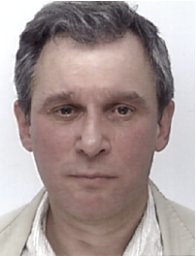 Yves Jaouen合作论文数telecom paristech12François Gustave合作论文数Inst. Non-Lineaire de Nice, Univ. de Nice;c;Inst. Non-Lineaire de Nice, Univ. de Nice11C. Planchat合作论文数10Renard, W.合作论文数10Adrian Azarian合作论文数9Christophe Planchat合作论文数9Baya Bennai合作论文数8Anasthase Liméry合作论文数6Sylvia Jetschke合作论文数6M. Valla合作论文数5Hermance Jacqmin合作论文数5Rodwane Chtouki合作论文数5
 Agnes dolfi-bouteyre合作论文数5m duhant合作论文数4D. Fleury合作论文数4
 Bastien Rouze合作论文数Univ Paris Saclay4Cadoret, K.合作论文数4Augère B合作论文数4Beatrice Augere合作论文数ONERA4
 Johann Troles合作论文数Institut des Sciences Chimiques de Rennes, University of Rennes 14
 Thierry Robin合作论文数Centre de Physique Théorique, Ecole Polytechnique4claire alhencgelas合作论文数3C. Besson合作论文数3H. Jacqmin合作论文数3
 Benoit Cadier合作论文数3Gilles Renversez合作论文数3Q. Coulombier合作论文数3
 Antoine Godard合作论文数Department of Physics and Instrumentation, Office National d'Études et de Recherches Aérospatiales3Laurent Brilland合作论文数Perfos3
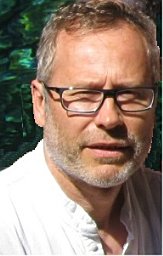 Frederic Smektala合作论文数Laboratoire des Verres et Céramiques, Université de Rennes 13
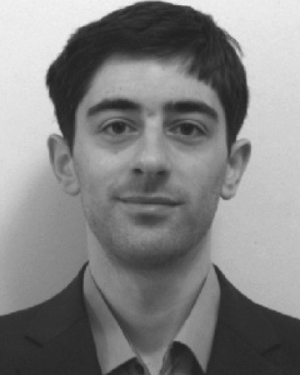 Jean-Michel Melkonian合作论文数3Michel Lefebvre合作论文数3Roland Domel合作论文数2P Toupin合作论文数2agnes dolfi合作论文数2A. Dolfi-Bouteyre合作论文数2Louanne Kervella合作论文数2
 Alexandre Barnini合作论文数2Didier Fleury合作论文数2Bastien Beaumont合作论文数2Tangi le Guennic合作论文数2
 Arnaud Laurent合作论文数2




