Neurosensory retinal detachment (NRD) is a separation of the neurosensory retina from the retinal pigment epithelium (RPE) because of the subretinal fluid that can result in significant vision loss. The detachment of the neurosensory retina is known to alter the topology as well as the intensity continuity of the retinal layers. This nature of NRD makes the layer segmentation of NRD affected eyes difficult. In this paper, we presented a fully automated three-dimensional (3D) method to segment the retinal layers and NRD associated subretinal fluid from a spectral domain optical coherence tomography (SD-OCT) image. The proposed method has three phases, including a prior information model; an NRD associated subretinal fluid segmentation; and layer segmentation. The graph search and graph cut techniques were employed to segment the retinal layers and NRD associated sub-retinal fluid, respectively. To reduce the computational cost of graph-based optimization, the `divide and merge' approach was introduced. The experiment shows that while maintaining the segmentation accuracy, the `divide and merge' approach considerably decreases the computational cost. Our method was evaluated on 20 SD-OCT cubes diagnosed with NRD, and the results were compared with the manual segmentation results from experts. The layer evaluation showed an overall absolute surface position difference of 6.34 ± 2.6μm, which is comparable with the inter-expert variability of 6.39 ± 5.9 μm. The segmentation result of the NRD associated sub-retinal fluid was assessed in terms of the dice coefficient and achieved means of 90.78% and 92.04% in comparison to two experts.
•propose a non-parametric metric learning approach (GP-Metric) based on Gaussian Process (GP).•use GP to extend the bilinear similarity into a non-parametric form.•develop an efficient algorithm to learn the non-parametric metric.•demonstrate the performance of GP-Metric on real-world datasets.
These days, many multiview learning methods have been proposed by integrating the complementary information of multiple views and can significantly improve the performance of machine learning tasks comparing with single-view learning methods. However, most of these methods fail to learn better models when the multiview data are unpaired (or partially paired) or incomplete (or partially complete). Although some previous attempts have been made to address these problems, these methods often lead to poor results when dealing with incomplete multiview data that contain a relatively large number of missing instances. In fact, this incomplete problem is more challenging than the unpaired problem since less shared information can be caught by the model in the former case. In this paper, we propose a shared Gaussian process (GP) latent variable model for incomplete multiview clustering to gain the merits of two worlds (i.e., GP and multiview learning). Specifically, it learns a set of intentionally aligned representative auxiliary points in individual views jointly to not only compensate for missing instances but also implement the group-level constraint. Thus, the shared information among these views can be explicitly built into the model. All of the hyper-parameters and auxiliary points are simultaneously learned by variational inference. Compared with the existing methods, our method naturally inherits the advantages of GP. Furthermore, it is also straightforwardly extended to cases with more than two views without adding any complexity in formulation. In the experiments, we compare it with the state-of-the-art methods for incomplete multiview data clustering to demonstrate its superiorities.
•A Hierarchical Gaussian Process Multi-task Learning (HGPMT) method.•Effectively utilizing the explicit correlation prior information among tasks.•A much lower computational complexity than the cross-covariance-based methods.•A multi-kernel learning method for learning non-stationary function.•Experiment on both toy and real-world datasets for demonstrating its superiority.
Disease diagnosis and treatment are often supported by multiple images acquired from the same patient. Multimodal retinal fundus image registration techniques are fundamental to integrate the information gained from several fundus images for a comprehensive understanding. In this paper, we proposed an algorithm for registration of OCT fundus images (OFIs) with color fundus photographs (CFPs) based on invariant features. The local similarity function is defined based on the blood vessel ridges of retinal fundus images. According to the local maximum similarity function, we can extract effective image blocks and then acquire the feature matching points. We can finally achieve the registration by utilizing the quadratic surface model to calculate the transformation matrix parameters. The proposed algorithm was tested on a sample set containing 3 normal eyes and 18 eyes with age-related macular degeneration. The experiment demonstrates that the proposed method has high accuracy (root mean square error is 111.06 μm) in different qualities for both of color fundus images and OCT fundus images.
Objective: Accurate segmentation of neurosensory retinal detachment (NRD) associated subretinal fluid in spectral domain optical coherence tomography (SD-OCT) is vital for the assessment of central serous chorioretinopathy (CSC). A novel two-stage segmentation algorithm was proposed, guided by Enface fundus imaging. Methods: In the first stage, Enface fundus image was segmented using thickness map prior to detecting the fluid-associated abnormalities with diffuse boundaries. In the second stage, the locations of the abnormalities were used to restrict the spatial extent of the fluid region, and a fuzzy level set method with a spatial smoothness constraint was applied to subretinal fluid segmentation in the SD-OCT scans. Results: Experimental results from 31 retinal SD-OCT volumes with CSC demonstrate that our method can achieve a true positive volume fraction (TPVF), false positive volume fraction (FPVF), and positive predicative value (PPV) of 94.3%, 0.97%, and 93.6%, respectively, for NRD regions. Our approach can also discriminate NRD-associated subretinal fluid from subretinal pigment epithelium fluid associated with pigment epithelial detachment with a TPVF, FPVF, and PPV of 93.8%, 0.40%, and 90.5%, respectively. Conclusion: We report a fully automatic method for the segmentation of subretinal fluid. Significance: Our method shows the potential to improve clinical therapy for CSC.
Gaussian Process Latent Variable Model (GPLVM), as a flexible bayesian non-parametric modeling method, has been extensively studied and applied in many learning tasks such as Intrusion Detection, Image Reconstruction, Facial Expression Recognition, Human pose estimation and so on. In this paper, we give a review and analysis for GPLVM and its extensions. Firstly, we formulate basic GPLVM and discuss its relation to Kernel Principal Components Analysis. Secondly, we summarize its improvements or variants and propose a taxonomy of GPLVM related models in terms of the various strategies that be used. Thirdly, we provide the detailed formulations of the main GPLVMs that extensively developed based on the strategies described in the paper. Finally, we further give some challenges in next researches of GPLVM.
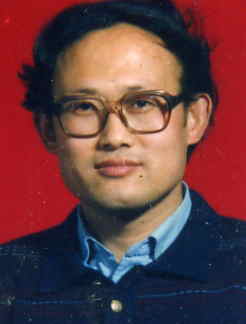 Songcan Chen (陈松灿)合作论文数College of Computer Science & Technology, Nanjing University of Aeronautics & Astronautics5
 Wen Fan合作论文数Chang'an University, Chang'an University3
 Song-Tao Yuan (袁松涛)合作论文数南京医科大学附属眼科医院3
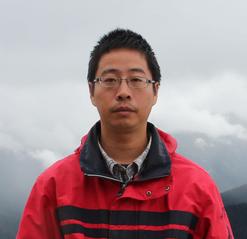 Qiang Chen (陈强)合作论文数School of Computer Science and Engineering, Nanjing University of Science & Technology3
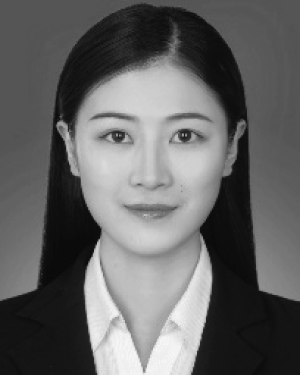 XiaoJun He合作论文数2
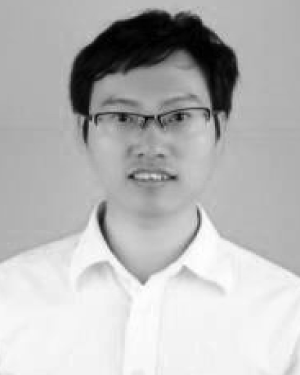 Menglin Wu合作论文数1
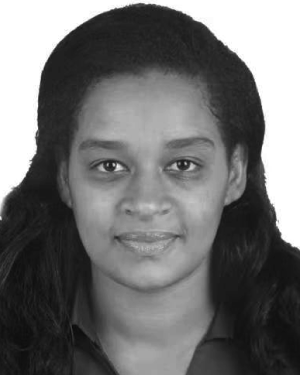 Loza Bekalo合作论文数1
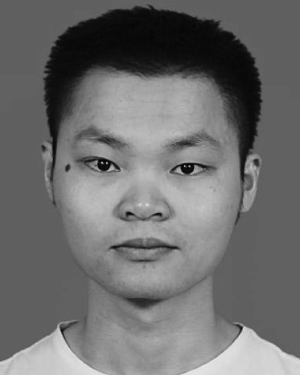 Chenchen Yu合作论文数1
 Idowu Paul Okuwobi合作论文数Nanjing Univ Aeronaut & Astronaut, Coll Mech & Elect Engn, Nanjing 211106, Jiangsu, Peoples R China1
 Sijie Niu (牛四杰)合作论文数School of Information Science and Engineering, University of Jinan1
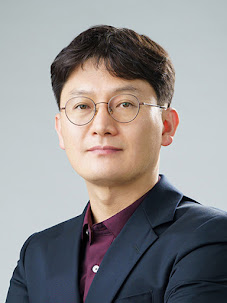 Hyunjin Park合作论文数Medical Image Processing Lab, Department of Biomedical Engineering, School of Electronic and Electrical Engineering, Sungkyunkwan University;Center for Neuroscience Imaging Research, Department of Artificial Intelligence, Sungkyunkwan University1




