Drawing on the ecological systems perspective, we examine how basic values of future business leaders evolve across gender and historical time. Utilizing two parallel datasets collected approximately two decades apart, around 2003 and 2023, we study 3,306 business students from 13 societies as two temporally distinct cohorts: Generation Y (Gen Y) and Generation Z (Gen Z). Specifically, we examine similarities and differences across four groups, namely Gen Y men, Gen Y women, Gen Z men, and Gen Z women, on three core business values dimensions: collectivism, individualism, and universalism. We further unpack individualism into three subdimensions, ethical achievement, power, and innovation, to assess how these distinct facets contribute to the formation and evolution of individualistic orientations across cohorts and gender. We then extend the analysis to the societal level to examine whether the observed findings reflect a broader cross-societal shift or whether important society-specific differences remain. Results from our multilevel, multi-society models show that, for all three higher-order values dimensions--collectivism, individualism and universalism--Gen Z men and women scored significantly higher than their Gen Y counterparts. However, within each cohort, there were minimal significant gender differences.
We assess the impact of organizational culture on employees' psychological safety using data from 2451 employees across 18 societies. Our multi-level structural equation models reveal that organizations that emphasize a clan culture foster significantly higher psychological safety than those that emphasize a hierarchy culture, and trust in top management mediates the effect of organizational culture on psychological safety. Additionally, macro-environmental factors, specifically a society's cultural context and governance quality, moderate the effect of trust in top management, explaining variance in psychological safety globally. Our findings make a novel contribution to the literature on psychological safety, international management, and organizational behavior. We outline vital implications for managers and provide directions for future research.
Repurposing management for the public good involves realizing alternative ideas to serve societal interests. Humanistic management is centred on such ideas as human dignity and well‐being. Realization refers to the generation and maintenance of social realities corresponding to these ideas. The conceptual lens of performativity is uniquely suited for studying realization but requires broadening to capture the wider set of practices involved. Accordingly, we explore the wider performative practices that realize humanistic management ideas and how they do so. We studied three cases through a thematic analysis of 165 interviews, secondary sources, and observations. Our framework explains how humanistic management ideas were realized through performative fabrics of practices, interwoven heterogeneous practices that make and keep the embedded humanistic management ideas real. Performing, interweaving, and reweaving dynamics continuously shape these fabrics of interrelated humanizing, seeding, and nurturing practices. The fabrics generated four types of realizations of humanistic management ideas: potentialities, anomalies, normalities, and transferabilities. We prime a change in the conversation from studies of individual performative practices to relational studies of performative fabrics of practices. We also advance the performativity discussion to understand generativity, stabilization, defence, and reformativity. Our framework contributes theoretically and practically to repurposing management for the public good and offers insight into desirable future making.
While business studies on gender have increased, they continue to adopt traditional approaches with limited samples drawn from general populations (e.g., students and teachers). In contrast, we investigate gender differences with our focus solely on business professionals. Specifically, we study 40 societies using the four dimensions of subordinate influence ethics (SIE) behaviors: pro-organizational behaviors, image-management behaviors, self-serving behaviors, and maliciously intended behaviors. We employed crossvergence theory as our theoretical foundation, with its two competing forces, sociocultural (gender differences) and business-ideological ( no gender differences), which translates to a global-business-subculture effect. We found no gender differences for three of the four SIE behaviors and minimal differences for the fourth for our sample of business professionals. Thus, our findings differ significantly from those of previous general-population samples. We also tested for societal-level moderating effects of collectivism and individualism using the business values dimensions (BVD) measure. Our individualism findings, the primary values dimension associated with business success, in conjunction with findings from other studies, support our nonsignificant SIE differences findings. In sum, the truly minimal gender differences that we found provide strong support for the perspective that there is a global-business-subculture effect. Our findings also suggest that ethical differences between gen-ders are minimal across the global workforce. We discuss the implications for inter-national business. 2025 Kelley School of Business, Indiana University. Published by Elsevier Inc. All rights are reserved, including those for text and data mining, AI training, and similar technologies.
Drawing from status characteristics theory, we develop a multilevel model to explain the relationships between gender composition (e.g., female-female supervisor-subordinate dyads, a female majority at the next higher level, and a female majority at the same job level) in the workplace and women's career satisfaction. We hypothesise that working with a female supervisor and a female majority at the same level will be negatively related to women's career satisfaction, while a female majority at the next higher level will be positively related to women's career satisfaction. Moreover, we propose that formal societal (gender-equality) institutions and informal cultural (gender-egalitarian) values, each has a moderating effect on the impact of gender compositions on women's career satisfaction. Our results from a multilevel analysis of 2291 women across 35 societies support the three hypothesised main effects. Whereas institutions that support gender equality weaken the positive effect of working with a female majority at the next higher level, they amplify the negative effect of a female majority at the same hierarchical level. Our findings highlight the complex and paradoxical nature of gender composition effects on women's career satisfaction. We discuss the theoretical contributions of our findings and their implications for the diversity management practices of multinational enterprises.
PurposeWe examined the attitudes of millennial-aged business students toward economic, social and environmental corporate responsibility (CR). Currently, these individuals are of an age that they have entered the workforce and are now ascending or have ascended into roles of leadership in which they have decision-making power that influences their company's CR agenda and implementation. Thus, following the ecological systems perspective, we tested both the macro influence of cultural values (survival/self-expression and traditional/secular-rational values) and structural forces (income inequality, welfare socialism and environmental vulnerability) on these individuals' attitudes toward CR.Design/methodology/approachThis is a multilevel study of 3,572 millennial-aged students from 28 Asian, American, Australasian and European societies. We analyzed the data collected in 2003-2009 using hierarchical linear modeling.FindingsIn our multilevel analyses, we found that survival/self-expression values were negatively related to economic CR and positively related to social CR while traditional/secular-rational values was negatively related to social CR. We also found that welfare socialism was positively related to environmental CR but negatively related to economic CR while environmental vulnerability was not related to any CR. Lastly, income equality was positively related to social CR but not economic or environment responsibilities. In sum, we found that both culture-based and structure-based macro factors, to varying extents, shape the attitudes of millennial-aged students on CR in our sample.Originality/valueOur study is grounded in the ecological systems theory framework, combined with research on culture, politico-economics and environmental studies. This provides a multidisciplinary perspective for evaluating and investigating the impact that societal (macro-level) factors have on shaping attitudes toward businesses' engagement in economic, social and environmental responsibility activities. Additionally, our multilevel research design allows for more precise findings compared to a single-level, country-by-country assessment.
This chapter introduces how the humanistic leader Mao Zhongqun, founder and Chairman of the Board of Directors of Fotile Group, creates an organizational culture of high engagement by cultivating employees’ behaviours. Fotile produces kitchen appliances and has almost 20,000 employees. The company promotes a humanistic culture by encouraging employees to practice self-reflection on the “Five Ones” practices to achieve the Fotile culture. This chapter introduces the practices and explains how they help guide employees’ behaviours. We also explore how they have made the company a role model for thousands of other companies in China to learn from Fotile. The results have been very positive. Our work adds to previous literature by showing that a strong company culture is a determinant of employee engagement. It also promotes healthy performance and social development of the enterprise. This research explores how humanistic leaders can increase employee engagement through the company culture. This chapter provides insights for business leaders who are interested in enhancing employee engagement and promoting a positive company culture by cultivating humanitarian behaviours.
Many business companies have responded to UNSDG Goals since they were announced in 2016. However, most of the studies talked in principle or theory. Few have presented specific practices to fulfil the goals. Given the fact that business organizations are the backbones of the society, the chapter introduces the specific practices a Chinese company developed to build itself into a happy enterprise, as an example to show how an individual company can help directly contribute to the fulfilment of the 17 SDG Goals. Good-Ark Electronics Corp. Ltd. set up its mission to benefit mankind in 2009. It was to fulfil its mission; the company developed the eight modules and later realized that they could be directly related to the 17 SDGs. The chapter also explains the critical role the company’s family-like company culture played in designing humanistic practices, as well as the specific ways the eight modules are implemented. We hope the chapter will offer inspiration for sustainability research as well as insights for business leaders who are interested in contributing to the fulfilment of the UNSDG goals.
AbstractResponsible leadership (RL) has become a buzz word in the current lexicon of business and politics, but there is still limited agreement on the components, scope, and characteristics. The confusion is rooted, in part, in the dominance of normative perspectives that take RL as a universal phenomenon. However, embedded in a specific culture, RL cannot be understood fully without understanding the moral traditions of that culture. In this article, we used a case study method to explore how RL is understood and practiced in China. Taking the role theory perspective, we conducted in-depth interviews with 9 highly regarded responsible executive leaders and 92 stakeholders in and outside of their companies who were well acquainted with the leaders. Our findings reveal that in China, the moral character of leaders guides them to define and take responsibility for themselves, their employees, companies, and external stakeholders. The five dimensions of RL we identified and the relationships among the dimensions include characteristics that reflect Chinese culture, such as strong sentiment for the nation, self-discipline, developing employees philosophically, and ‘jun zi wu ben’ (a gentleman should focus on fundamental matters). We conclude by discussing the implications of our study for RL research and practice.
Humanistic management, a form of management focusing on the welfare of the people, is directly affected by the culture of the society in which it is practiced more than in most other forms of management because societies have different perspectives of people’s welfare and fundamental purposes of businesses. Taking humanity as its core, Confucianism has established deep, historic roots in the Chinese society and hence has the potential for persuading Chinese companies to adopt humanistic management. This chapter explores this contention through two case studies. Both companies have benefited significantly by following Confucian virtues and by providing humanistic care and humanistic education to their employees. Based on their practices and a review of humanistic literature, we develop a conceptual model of what may be called the process of Chinese humanistic management with propositions on the key variables in the model, including Confucianism, humanistic leadership, the process of humanistic management, hedonic and eudemonic outcomes for the employees, and certain sustainable outcomes for the company.
A leader's traits evolve over time and are expressed differently under different situations. Based on Xu et al.' (Leadersh Q 25(6):1095–1119, 2014) research, this study focuses on the dynamic view on the leader trait theory in the Chinese context to explore the distinctive characteristics. There are three patterns (homological, converse, and composite) by which leader traits evolve. The essential feature of the Chinese culture that affects the Chinese thinking the most is the notion of "Yin-Yang." The composite evolution is distinctive in the Chinese context. The traits leaders demonstrated under specific situations are composite in nature, which also supports the notion that traits evolve.
We investigate the relationships between gender-role-orientation (i.e., androgynous, masculine, feminine and undifferentiated) and subjective career success among business professionals from 36 societies. Drawing on the resource management perspective, we predict that androgynous individuals will report the highest subjective career success, followed by masculine, feminine, and undifferentiated individuals. We also postulate that meso-organizational culture and macro-societal values will have moderating effects on gender role's impact on subjective career success. The results of our hierarchical linear models support the hypothesized hierarchy of the relationships between gender-role-orientations and subjective career success. However, we found that ethical achievement values at the societal culture level was the only variable that had a positive moderating impact on the relationship between feminine orientation and subjective career success. Thus, our findings of minimal moderation effect suggest that meso- and macro-level environments may not play a significant role in determining an individual's perception of career success.
Journal of Leadership StudiesVolume 14, Issue 2 p. 58-62 Symposium Global Leadership: An Asian Perspective Melody P. M. Chong, Corresponding Author Melody P. M. Chong ctchong@cityu.edu.hk orcid.org/0000-0001-8817-5072 Department of Asian and International Studies, City University of Hong Kong, Kowloon, Hong KongMelody P. M. Chong, City University of Hong Kong, Kowloon, Hong Kong. E-mail: ctchong@cityu.edu.hkSearch for more papers by this authorPingping Fu, Pingping Fu Nottingham University Business School, Ningbo, ChinaSearch for more papers by this author Melody P. M. Chong, Corresponding Author Melody P. M. Chong ctchong@cityu.edu.hk orcid.org/0000-0001-8817-5072 Department of Asian and International Studies, City University of Hong Kong, Kowloon, Hong KongMelody P. M. Chong, City University of Hong Kong, Kowloon, Hong Kong. E-mail: ctchong@cityu.edu.hkSearch for more papers by this authorPingping Fu, Pingping Fu Nottingham University Business School, Ningbo, ChinaSearch for more papers by this author First published: 13 August 2020 https://doi.org/10.1002/jls.21702Citations: 4Read the full textAboutPDF ToolsRequest permissionExport citationAdd to favoritesTrack citation ShareShare Give accessShare full text accessShare full-text accessPlease review our Terms and Conditions of Use and check box below to share full-text version of article.I have read and accept the Wiley Online Library Terms and Conditions of UseShareable LinkUse the link below to share a full-text version of this article with your friends and colleagues. Learn more.Copy URL Share a linkShare onFacebookTwitterLinkedInRedditWechat Citing Literature Volume14, Issue2Summer 2020Pages 58-62 RelatedInformation
This chapter urges academics to examine the nature of responsible management from a cultural perspective, linking the normative values of a society with the ultimate purpose of responsible management. Using the responsible management practices of a few Chinese firm leaders who have been applying the classic ideologies to management as examples, we exemplify how the responsibility construct is interpreted differently in China, as compared to the West. We also show the approaches Chinese business leaders take to engage employees, which is very different from Western performance-driven approaches. We anticipate that this chapter will inspire researchers to delve into their emic societal values to examine the meaning of responsibility and inspire practitioners to connect responsible practices with their own cultural values. It will also enable Chinese people to better realize the close connection between responsible management and Chinese traditional values, and eventually contribute to the sustainability of nature and society.
Purpose Previous research on influence strategies has almost exclusively indicated negative relationships between assertive influence and employee work outcomes; the purpose of this study is to argue that an assertive influence strategy can also lead to both positive and negative work outcomes, when subordinates hold different attributions towards the leaders’ motive of using assertive influence (hereafter “the cause”). Design/methodology/approach The empirical study was based on data collected from 930 employees in China. The authors developed hypotheses to test the mediating effects of three types of perception in the relationship between an assertive influence strategy and five outcomes, and additional analyses on persuasive and relational influence strategies are also conducted. Findings Results show that when subordinates attribute the cause to their ability (internal attribution), an assertive influence has indirect positive effect on felt obligation, organizational commitment, job performance and organizational citizenship behavior; when subordinates attribute the cause to the poor relationship with their superiors (relational attribution), an assertive influence has indirect negative impact on most outcomes except for job performance; when subordinates perceive that the cause is to the superiors, such as authoritarian leadership (external attribution), an assertive influence has indirect positive effect on job performance. Practical implications The study highlights the importance of subordinates’ perceptions during the leadership influence processes. Originality/value This study was the first to examine the mediation relationship between three types of influence strategies and five organizational outcomes based on a large sample of front-line staff in China. The findings of the study also enrich the literature of leadership and attribution theories.
 Jun Liu (刘军)合作论文数School of Management, Wuhan University of Technology23
 David A. Ralston合作论文数University Fellow International Research Consortium11
 Qing Qu (曲庆)合作论文数Department of Leadership and Organization Management, School of Economics and Management, Tsinghua University8
 Narasimhan Srinivasan合作论文数Post Graduate Institute of Basic Medical Sciences, University of Madras8
 Yongjuan Li (李永娟)合作论文数中国科学院心理研究所7
 Ian Palmer合作论文数7Mario Molteni合作论文数7
 Olivier Furrer合作论文数Institute for Management Research, Radboud University Nijmegen7
 Arif Nazir Butt合作论文数7
 Fidel León Darder合作论文数University of Valencia7Erna Szabo合作论文数Institute for International Management Studies, Johannes Kepler University7
 Maria Teresa de la Garza Carranza合作论文数Tecnol Nacl Mexico Celaya6
 Jane Terpstra-Tong合作论文数Monash University6Malika Richards合作论文数6
 Marina Dabic合作论文数University of Dubrovnik;Dpartmetn of Management, School of Economics and Business, University of Ljubljana;Faculty of Economics and Business, University of Zagreb6
 Tania Casado合作论文数University of Sao Paulo6Yong-lin Moon合作论文数5Ruth Alas合作论文数Management, Estonian Business School5Chay Hoon Lee合作论文数5
 Weiku Wu (吴维库)合作论文数Department of Leadership and Organization Management, School of Economics and Management, Tsinghua University5Jaime Ruiz-Gutiérrez合作论文数4
 a s dharmasiri合作论文数University of Sri Jayewardenepura4
 Liguo Xu合作论文数4Florian von Wangenheim合作论文数Department of Management, Technology, and Economics,Eidgenössische Technische Hochschule Zürich4
 Mengtao Wu (吴孟涛)合作论文数天津巴莫科技股份有限公司4
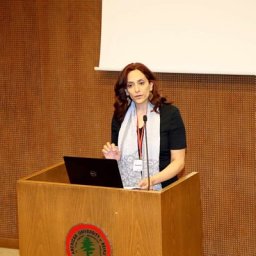 Charlotte M. Karam合作论文数American University of Beirut, American University of Beirut4
 Philip Hallinger合作论文数College of Management, Mahidol University4
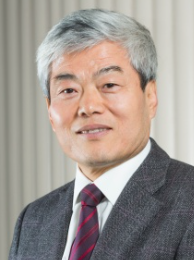 Youmin Xi (席酉民)合作论文数Xi'an Jiaotong-Liverpool University;The School of Management, Xi'an Jiaotong University4
 Huabin Yang (杨化滨)合作论文数Institute of New Energy Material Chemistry, School of Materials Science and Engineering, Nankai University4
 Guangtao Yu (于广涛)合作论文数Bussiness School, Central University of Finance and Economics4
 Andre A. Pekerti合作论文数UQ Business Sch, Univ Queensland4
 Vojko / Potocan合作论文数4Gary Yukl合作论文数Department of Psychology, The University of Akron4
 Brian Tjemkes合作论文数4
 Irina Naoumova合作论文数University of Hartford4
 Gabrielle Poeschl合作论文数Faculdade de Psicologia e de Ciências da Educação, Universidade do Porto4
 Calvin Burns合作论文数4Laihe Huang合作论文数4
 Carolyn P. Egri合作论文数4
 Emmanuelle Reynaud合作论文数IAE d’Aix-en-Provence4T. K. Peng合作论文数4
 Marian Crowley-Henry合作论文数4
 Tevfik Dalgic合作论文数IAE Aix-en-Provence4
 Len J. Trevino合作论文数The University of Southern Mississippi4Zuoxiang Zhou合作论文数4
 Wade M. Danis合作论文数Institute of International Business Atlanta, Georgia State University4Yongqing Fang (房永青)合作论文数4
 Dong Liu合作论文数Scheller College of Business, Georgia Institute of Technology4
 Longzeng Wu (吴隆增)合作论文数School of Management, Xiamen University4




