Enterprise modelling is an essential component in defining an enterprise, such as a manufacturing facility, an end-item distribution company, a financial institution, or a university department. The goal of our enterprise modelling research is to create generic representations of enterprise knowledge that can be reused across a variety of enterprises. Towards this end, we have been developing the TOVE (TOronto Virtual Enterprise) ontology [Fox and Griininger 94]. TOVE provides a rich and precise representation of generic knowledge, such as activities, resources, time, and of more enterprise oriented knowledge such as cost, quality, products, and organization structure. In this paper, we present enterprise modelling as a new area of application for theoretical work in reasoning about action. We give an overview of the problems encountered in enterprise modelling and the requirements that they impose on any theory of action. We outline our approach to these problems using an extension to the situation calculus.
In this article we propose a Probabilistic Situation Calculus logical language to represent and reason with knowledge about dynamical worlds in which actions have uncertain effects. Two essential tasks are addressed when reasoning about change in worlds: Probabilistic Temporal Projection and Probabilistic Belief Update. Uncertain effects are modeled by dividing an action into two subparts: a deterministic input (agent produced) and a probabilistic reaction (nature produced). The probability distributions of the reactions are assumed to be known. Our logical language is an extension to Situation Calculae in the style proposed by Raymond Reiter. There are three aspects to this work. First, we extend the language to accommodate terms dealing with belief and probability. Second, we provide a operational semantics based on Randomly Timed Automata. Finally, we develop Monte-Carlo algorithms to efficiently interpret the probability and belief terms. With the framework proposed we discuss how to develop a reasoning system in Mathematica capable of performing temporal projection and belief update in the Probabilistic Situation Calculus. Finally, we present a sound basis to set rewards and observation planning. (1) Center for Logic and Computation, Departamento de Matemática, IST, Av. Rovisco Pais, 1049-001 Lisboa, Portugal. email: pmat@math.ist.utl.pt. Supported by FCT SFRH/BPD/5625/2001 and the FibLog initiative. (2) Applied Mathematics Center, Departamento de Matemática, IST, Av. Rovisco Pais, 1049-001 Lisboa, Portugal. email: apacheco@math.ist.utl.pt (3) Unfortunately J. Pinto passed away in an accident while this paper was being prepared. Formerly, he was at Bell Labs, Database Systems Research Dept., 600 Mountain Ave., New Jersey 07974, U.S.A. OBSERVATIONS AND THE PROBABILISTIC SITUATION CALCULUS Background and Objectives Lately, there has been increasing interest in improving the expressive power of logical languages for representing knowledge about dynamic worlds with nondeterminism and uncertainty (e.g., [9, 1, 10, 4, 2]). In this article, we extend previous work on the Probabilistic Situation Calculus [9, 6], a logical language for knowledge representation and reasoning about dynamic worlds in which actions have uncertain effects. In this article, we: • Show how to represent knowledge about actions that have uncertain effects by exploiting the separation between agent initiated actions and nature’s random reaction, first introduced in [8]. • Introduce observations as agent actions with uncertain effects. Thus, as in [1] observations are noisy; e.g., we may observe that the outside temperature is 25 degrees, but the reading may have an error with a Gaussian distribution. As discussed in [5], there at least two essential tasks to be addressed when reasoning about change in worlds in which there are uncertain actions and noisy observations: [a] Probabilistic Temporal Projection: Given an initial state, a sequence of uncertain actions (an uncertain plan) and some fluent, determine the probability that the fluent will hold after the actions are executed in the initial state. [b] Probabilistic Belief Update: Given an initial state, a sequence of uncertain actions (an uncertain plan), an observation, and some fluent, determine the probability that the fluent will hold after the uncertain actions are executed in the initial state, and an uncertain (or noisy) observation is performed. An important characteristic of the language of the probabilistic situation calculus is the hybrid nature of its semantics. In particular the logic includes the reals, and its usual operators, without axiomatizing them. Thus, we assume, at the semantic level, a fixed interpretation for them, and the satisfaction relation has to take this into account. When reasoning with such a theory, logical reasoning has to be combined with reasoning about the reals. The latter is done by appealing to an oracle (in our case, we implement this oracle using MATHEMATICA).
Causality plays an essential role in reasoning about actions, and much of the research on the area deals with the problem of formalizing causality. In this article we pursue the idea that causality can be understood as an abstraction, and that one can write theories in which causality can be left implicit in the formalization of dynamic worlds. In particular, we identify one form of causality, which we call triggered causality, and illustrate it with a simple standard example taken from the literature on causation. Later, we relate our approach to causality to the one proposed by Lin in his recent research. We establish the proposition that, for a restricted class of theories based on explicit causation, it is possible to find a translation of a causal theory into a theory with embedded causa-
Automated support for proving integrity constraints (ICs) on deductive database update specifications is developed using an induction theorem prover, Rewrite Rule Laboratory (RRL) [6]. The approach proposed by Reiter [9, 11, 10] for solving the frame problem for such applications in a language of the situation calculus is used as a basic framework. Integrity constraints are propositions that are expected to be true in every accessible state of a database, and they should be provable from the specification of the evolution of the database. Accessible states are defined by induction [12] as those reachable from the initial state by update actions whose execution is possible. Induction theorem provers can only reason about quantifier-free formulas (i.e., universally quantified formulas) whereas in order to express integrity constraints, quantifiers may be used. It is shown that by making use of the fact that in relational data base applications, domain of objects under consideration is finite, such ICs expressed using quantifiers can be mechanically translated into quantifier-free formulas by introducing new predicates and by explicitly building domains of objects involved in updates. Bridge lemmas connecting the semantics of the new predicates to the fluents used to express integrity constraints can be mechanically generated and automatically proved in RRL. An interesting feature of the proposed approach is that mechanically generated proofs of integrity constraints have a structure similar to manually-generated proofs.
In this article we present an approach to integrate observations in theories of action written in the Situation Calculus, a state-based, branching temporal language. In our approach, observations are added as dynamic constraints on valid histories. We describe two applications of these dynamic constraints, namely the representation of observations of action occurrences as well as observations of truth values of fluents.An important novelty of our proposal is that we do not need to make unnecessary assumptions regarding the occurrence or non-occurrence of events. Furthermore, by virtue of exploiting the branching nature of time in the Situation Calculus, we can reason, within the logic, about all possible ways in which the world can evolve; i.e., without having to appeal to meta-theoretic constructs.
A number of logical languages have been proposed to represent the dynamics of the world. Among these languages, the Situation Calculus (McCarthy and Hayes 1969) has gained great popularity. The GOLOG programming language (Levesque et al. 1997, Giacomo et al. 2000) has been proposed as a high-level agent programming language whose semantics is based on the Situation Calculus. For efficiency reasons, high-level agent programming privileges programs over plans; therefore, GOLOG programs do not consider planning. This article presents algorithms that generate conditional GOLOG programs in a Situation Calculus extended with uncertainty of the effects of actions and complete observability of the world. Planning for contingencies is accomplished through two kinds of plan refinement techniques. The refinement process successively increments the probability of achievement of candidate plans. Plans with loops are generated under certain conditions.
In this article we propose a Probabilistic Situation Calcul us logical language to represent and reason with knowledge about dynamica l worlds in which actions have uncertain effects. Two essential tasks a re addressed when reasoning about change in worlds: Probabilistic Tempo ral Projection and Probabilistic Belief Update. Uncertain effects are mod ele by dividing an action into two subparts: a deterministic input (agent pr oduced) and a probabilistic reaction (nature produced). The probabilit y distributions of the reactions are assumed to be known. Our logical language is an extension to Situation Calculae i n the style proposed by Raymond Reiter. There are three aspects to this w ork. First, we extend the language to accommodate terms dealing with bel ef and probability. Second, we provide a operational semantics based o n Randomly Timed Automata. Finally, we develop Monte-Carlo algorithm s to efficiently interpret the probability and belief terms. With the framework proposed we discuss how to develop a reaso ning system in Mathematica capable of performing temporal proje ction and belief update in the Probabilistic Situation Calculus. Finally, w e present a sound basis to set rewards and observation planning. (1) Center for Logic and Computation, Departamento de Matemát ica, IST, Av. Rovisco Pais, 1049-001 Lisboa, Portugal. email: pmat@math.ist.utl.pt. Supported by FCT SFRH/BPD/5625/2001 and the FibLog initiative. (2) Applied Mathematics Center, Departamento de Matemática, IST, Av. Rovisco Pais, 1049-001 Lisboa, Portugal. email: apacheco@math.ist.utl.pt (3) Unfortunately J. Pinto passed away in an accident while this paper was being prepared. Formerly, he was at Bell Labs, Database Systems Research Dep t., 600 Mountain Ave., New Jersey 07974, U.S.A. OBSERVATIONS AND THEPROBABILISTIC SITUATION CALCULUS Background and Objectives Lately, there has been increasing interest in improving the expressive power of logical languages for representing knowledge about dynami c worlds with nondeterminism and uncertainty (e.g., [9, 1, 10, 4, 2]). In this article, we extend previous work on theProbabilistic Situation Calculus [9, 6], a logical language for knowledge representation and reasoning about dynamic worl ds in which actions have uncertain effects. In this article, we: • Show how to represent knowledge about actions that have unce rtain ffects by exploiting the separation between agent initiated actionsand nature’s random reaction, first introduced in [8]. • Introduce observations as agent actions with uncertain eff ects. Thus, as in [1] observations are noisy; e.g., we may observe that the o utside temperature is 25 degrees, but the reading may have an error with a Gaussian distribution. As discussed in [5], there at least two essential tasks to be a ddressed when reasoning about change in worlds in which there are uncertai n actions and noisy observations: [a] Probabilistic Temporal Projection: Giv en an initial state, a sequence of uncertain actions (an uncertain plan) and some flue nt, d termine the probability that the fluent will hold after the actions are ex ecuted in the initial state. [b] Probabilistic Belief Update: Given an initial st ate, a sequence of uncertain actions (an uncertain plan), an observation, and some fl uent, determine the probability that the fluent will hold after the uncertain act ions are executed in the initial state, and an uncertain (or noisy) observation is performed. An important characteristic of the language of the probabil istic situation calculus is the hybrid nature of its semantics. In particular th e logic includes the reals, and its usual operators, without axiomatizing them. Thus, we assume, at the semantic level, a fixed interpretation for them, and the s atisfaction relation has to take this into account. When reasoning with such a theory, l gical reasoning has to be combined with reasoning about the reals. The latter is done by appealing to an oracle (in our case, we implement this oracle using M ATHEMATICA ).
In this article we propose a Probabilistic Situation Calculus logical language to represent and reason with knowledge about dynamic worlds in which actions have uncertain effects. Uncertain effects are modeled by dividing an action into two subparts: a deterministic (agent produced) input and a probabilistic reaction (produced by nature). We assume that the probabilities of the reactions have known distributions. Our logical language is an extension to Situation Calculae in the style proposed by Raymond Reiter. There are three aspects to this work. First, we extend the language in order to accommodate the necessary distinctions (e.g., the separation of actions into inputs and reactions). Second, we develop the notion of Randomly Reactive Automata in order to specify the semantics of our Probabilistic Situation Calculus. Finally, we develop a reasoning system in MATHEMATICA capable of performing temporal projection in the Probabilistic Situation Calculus.
The purpose of this article is to extend the situation calculus, a logical framework for the specification of theories of action and change, with actions that have a non-deterministic or uncertain nature. Our approach is based upon the idea that actions may have a deterministic component, and a probabilistic component. For example, the act of flipping a coin has a deterministic component (the actual coin toss) and an uncertain component (the outcome). We extend the language of the situation calculus in order to make explicit this distinction between these two action components. Furthermore, we provide means to reason about the outcomes of processes specified only in terms of deterministic action components (which we call behaviors). In particular, we show how one can compute the probability that some fluent will hold after specific behavior is realized. An important feature of our approach is that the syntactic and semantic structure of actions and situations is independent of the decomposition of actions into deterministic and uncertain components. Thus, we inherit solutions to the frame problem, ramification problem, etc.
In this article we extend previous work on the development of logical foundations for the specification of the dynamics of databases. In particular, we deal with two problems. Firstly, the derivation of active rules that maintain the consistency of the database by triggering repairing actions. Secondly, we deal with the correct integration of the specification of the derived rules into the original specification of the database dynamics. In particular, we show that the expected results are achieved. For instance, the derived axiomatization includes, at the object level, the specification that repairing action executions must be enforced whenever necessary.
This paper provides a predicate logic based semantics for active rules in active databases [18], [9]. Our main contribution is a proposal to integrate the specification of active rules with the specification of the dynamics of transaction based change in relational databases. Our approach extends previous work in which the situation calculus, a language of many sorted predicate logic, is used to specify updates in databases [14]. To achieve this, we first specify database transactions in the situation calculus, and then active rules using the notion of occurrence as proposed in [13].
Research in knowledge representation and theories of action has led to the development of several logical languages to describe the dynamics of the world. One of the most influential languages developed is the situation calculus. Stemming from this research, the situation calculus based programming language, GOLOG, has been proposed as a tool for implementing simulators and controllers of dynamical systems using a repertoire of user specified primitive actions. Lately, this language has been extended in order to incorporate the notion of concurrent action execution, leading to the dialect CONGOLOG, where an interleaving view of concurrent execution is considered. We take this work one step further by introducing true concurrency, defining the language TCONGOLOG. In our view, true concurrency arises when primitive actions can be taken to be executed at the same instant.
We present a method to derive a solution to the combined frame and ramification problems for certain classes of theories of action written in the situation calculus. The theories of action considered include the causal laws of the domain, in the form of a set of effect axioms, as well as a set of ramification state constraints. The causal laws state the direct effects that actions have on the world, and ramification state constraints allow one to derive indirect effects of actions on the domain. To solve the combined frame and ramification problems, the causal laws and ramification state constraints are replaced by a set of successor state axioms . Given a state of the world, these axioms uniquely determine the truth value of dynamic properties after an action is performed. In this article, we extend previous work by formulating an approach for the mechanical generation of these successor state axioms. We make use of the notions of implicate and support that have been developed in the context of propositional theories. The approach works for classes of syntactically restricted sets of ramification state constraints.
In this article we deal with the problem of using temporal kno wledge in the specification of the dynamics of a database. Temporal knowledge is formali zed with formulas that refer to the evolution of the database. In the article we analyze seve ral problems involving temporal knowledge: (1) Specification of complex temporal preconditions for databa se transactions. (2) Specification and maintenance of integrity constraints. (3) Posing and answering temporal queries about the real or hypothetical evolution of the data b se. Our research is based on two logical languages that have been dev loped in parallel: The Situation Calculus, a logical language developed to repres nt knowledge about action and change [8]. The Situation Calculus has been used as a medium f or the specification of database updates [14], and our work is a further development of this ap proach. The Metric Time Temporal Logic, a first order modal temporal l ogic, has been used ... Subject Category: Knowledge Representation in Databases.
The Situation Calculus is a logic of time and change in which there is a distinguished initial situation, and all other situations arise from the different sequences of actions that might be performed starting in the initial one. Within this framework, it is difficult to incorporate the notion of an occurrence, since all situations after the initial one are hypothetical. These occurrences are important, for instance, when one wants to represent narratives. There have been proposals to incorporate the notion of an action occurrence in the language of the Situation Calculus, namely Miller and Shanahan's work on narratives and Pinto and Reiter's work on actual lines of situations. Both approaches have in common the idea of incorporating a linear sequence of situations into the tree described by theories written in the Situation Calculus language. Unfortunately, several advantages of the Situation Calculus are lost when reasoning with a narrative line or with an actual line of occurrences. In this paper we propose a different approach to dealing with action occurrences and narratives, which can be seen as a generalization of narrative lines to narrative trees. In this approach we exploit the fact that, in the discrete Situation Calculus, each situation base unique history, and interpret occurrences as constraints on valid histories. We argue that this new approach subsumes the linear approaches of Miller and Shanahan, and Pinto and Reiter. In this framework, we are able to represent various kinds of occurrences; namely, conditional, preventable and non-preventable occurrences. Other types of occurrences, not discussed in this article, can also be accommodated.
The paper provides a predicate logic based semantics for active rules in active databases. Previous work has been done to provide the semantics of execution of active rules. In part, this work has been directed towards providing a unifying criteria regarding the meaning of active rules, and to provide a framework for comparing different proposals for active database systems. The main contribution of the article is a proposal to integrate the specification of active rules with the specification of the dynamics of change (based on transactions) in relational databases. The approach extends previous work in which the situation calculus, a language of many sorted predicate logic, is used to specify updates in databases. To achieve this, the authors specify first the notion of database transaction in a situation calculus extended with the notion of occurrence, as proposed by Pinto. They concentrate mostly on the execution semantics of Starburst.
 Leopoldo Bertossi合作论文数School of Computer Science, Carleton University5
 Paulo Mateus合作论文数Departamento de Matemática, Instituto Superior Técnico, Universidade de Lisboa5
 Antonio Pacheco合作论文数Instituto Superior Técnico4
 Cristina Sernadas合作论文数Instituto Superior Tecnico Lisbon Portugal3
 Raymond Reiter合作论文数Dept. of Computer Science, University of Toronto2
 Ricardo Valdivia Pinto合作论文数2Amilcar Sernadas合作论文数Logic and Computation at IST2am lcar sernadas合作论文数1
 Deepak Kapur合作论文数Department of Computer Science, School of Engineering, University of New Mexico1
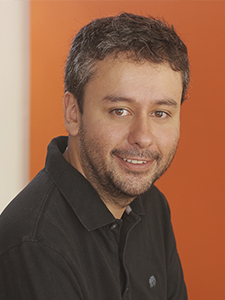 Marcelo Arenas合作论文数Department of Computer Science, School of engineering, Pontificia Universidad Católica de Chile;Institute for Mathematical and Computational Engineering, Pontificia Universidad Católica de Chile1Pablo Sáez合作论文数1
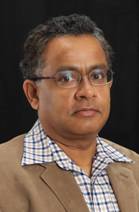 Mahadevan Subramaniam合作论文数Compute Science Department
University of Nebraska at Omaha1
Mahadevan Subramaniam合作论文数Compute Science Department
University of Nebraska at Omaha1




