The suggested system will include a smart urine bag with a set of sensors and IoT (Internet of Things) devices, a microcontroller, and an online monitoring platform. The sensor in the IoT is precise to travel and record real-time data regarding the urine level in the bag to central database. This database is interacted with by a user-friendly web or mobile application that will offer caretakers, staff, and healthcare professionals with real-time access to replace it with a new one. There is an alert system that is smart enough to alert the healthcare provider and caretaker during an emergency, like a full urine bag or abrupt alterations in the urine flow. This makes it possible to have prompt intervention and lessen surplus of the urine in the bag. By implementing this IoT-based urine level monitoring system, healthcare facilities can enhance patient care, improve resource efficiency, and reduce the repeated checking of urine bags. Alerts and notifications are obtained when this urine bag has to be filled at a fixed threshold value of 1500 and above, which can be set according to convenience. This notifying mechanism of the circuit will notify healthcare personnel to replace the filled urine bag with a new one. This paper also focuses on providing automation in the healthcare sector, and this work can also be utilized in such cases where there is a lack of healthcare professionals. The manufacturing cost of this device is very economical, i.e., 18 USD.
For short to moderate-length block codes, neural belief propagation (NBP) decoders are developed to ameliorate the performance of the belief propagation algorithm (BPA). The core concept underlying these decoders is to model belief propagation (BP) as a neural network, allowing adaptable decoding through trainable weights. The article proposes a novel Gated neural min-sum (GNMS) decoding technique with learnable parameters as a more hardware-efficient substitute for conventional NBP decoders. By using parameterised updates and gating techniques, our approach reformulates the min-sum (MS) algorithm, which is an approximation of BP, while preserving the flexibility of neural approaches and drastically lowering computing overhead. Additionally, we develop an autoencoder-assisted framework that supports flexible, learning-based optimisation for GNMS and Gated Neural Offset Min-Sum (GNOMS) decoders. The suggested decoders achieve error-correction performance at par with the most advanced NBP decoders by evaluating them on a variety of short to moderate-length block codes. Notably, when compared to traditional BP, the suggested approach lowers the bit error rate (BER) 10-fold for signal-to-noise ratio (SNR) greater than 3 dB. Furthermore, the efficacy of the proposed work is exhibited by comparing the computational complexity of the neural network-based decoders, highlighting the advantages in terms of practical implementation and hardware feasibility. The simulation results demonstrate that GNMS decoding with learnable parameters offers a convincing trade-off between complexity and performance, offering a potential path for future decoder design in contemporary communication systems.
Swin Transformers, a powerful deep learning architecture can effectively extract global information and are capable for computer vision tasks. With the paradigm of selfattention mechanism for feature extraction, Swin can be finetuned for large datasets. Standard Convolution Neural Networks (CNNs) work on local information and can be finetuned for new datasets. To move one step further in Biometrics Recognition System (BRS), a hybrid model is proposed for Fingerprint Recognition that hybrids pretrained CNN models with fine-tuned Swin (ViT) transformer, having the fusion of local and global features. FVC2000 DB4, dataset is split into 7 5% - 2 5% for training-testing process. The promising classification results are achieved with 96% of accuracy, which surpasses the performance of the standard deep learning models in terms of accuracy and time efficiency.
Fingerprint recognition has become a cornerstone technology in various applications, ranging from law enforcement to smartphone security. However, the quality of fingerprint images can significantly affect the performance of recognition systems. Traditional methods of assessing fingerprint image quality (FIQ) often rely on handcrafted features and simplistic models, which cannot capture the complexity of real-world scenarios. This research proposes an enhanced machine learning- based approach for fingerprint image quality assessment (FIQA) to address this limitation. Collecting and pre-processing a dataset of 6,000 fingerprint images from 600 individuals, each with varying clarity, contrast, illumination, and noise levels, from the Sokoto Coventry Fingerprint (SOCOFing) dataset. Apply image enhancement techniques such as Gabor filtering for texture feature enhancement and minutiae extraction to extract distinctive features. Authors perform feature extraction using the histogram of oriented gradients (HOG) descriptors. Next, divide the dataset into training and testing sets, and design and train various machine learning models such as convolutional neural networks (CNN), support vector machines (SVM), and multi-layer perceptron's (MLP) for the proposed model classification. Evaluate the performance of model on the testing dataset using accuracy and other relevant metrics to ensure robust performance estimation. Implementation results shows that the proposed model has higher accuracy in comparison to the existing conventional methods.
Researchers are focusing on improving time series forecasting methods to address real-world problems like COVID-19. Current methods show de-creased accuracy due to unpredictable seasonality, and enhancing models to handle long-term dependencies is crucial for better forecasting accuracy. This paper presents a Transformer self-attention based novel approach for infec-tious disease time series forecasting, specifically for COVID-19. The proposed method utilizes the Ensemble Empirical Mode Decomposition (EEMD) and Local Outlier Factor (LOF) methods for data pre-processing and to detect outliers. Next, a modified self-attention model based on Transformer neural network is introduced for predicting COVID-19 time series forecasting for the first time. The research specifically investigates the application of encod-er/decoder networks with an enhanced Positional Encoding approach. This involves using a novel time encoding technique on the input pattern to achieve more precise intended output. Consequently, the parameters in the Transformer model are adjusted using the Arithmetic Optimization Algorithm (AOA) to enhance the accuracy of the prediction. The model generates more accurate predictions over broader time intervals, with the lowest MAE of 371.92 and RMSE of 674.61, indicating superior predictive accuracy by ap-proximately 30% compared to other state-of-the-art methods. The proposed Transformer model has demonstrated significant improvements in robustness and forecasting accuracy compared to standard approaches such as LSTM, RNN, Exponential Smoothing, AutoARIMA, and TBATS for the COVID-19 time series of India, USA, and Brazil. The suggested model, due to its superior predictive accuracy, is applicable in diverse time series forecasting domains such as stock market trends, sales, and industrial consumption forecasting etc.
Biometric recognition systems have become a vital component of modern security and identity management infrastructures. Multimodal biometric systems integrate multiple biometric traits for identification or verification, offer notable advantages over unimodal biometric systems such as improved accuracy, enhanced security, and greater robustness. Among individual modalities, fingerprint recognition is widely adopted for its reliability and ease of use; iris recognition is renowned for its high accuracy and stability; and electrocardiogram (ECG) signals present a unique, behaviour-based biometric trait that is difficult to replicate. This study highlights the importance of live biometric ECG signals to enhance the security of existing multimodal recognition systems against spoofing attacks. It introduces a novel feature extraction approach that simultaneously processes spatial (position-based) features and attention-based features in parallel. This work also proposes a novel fusion of fingerprint, iris, and ECG modalities to exploit their complementary strengths and mitigate spoofing risks. A convolutional Swin Transformer architecture is introduced for effective feature extraction from each modality. For evaluation, a custom multimodal biometric dataset was created by combining the IITD iris database, the HEARTPRINT ECG dataset, and the SOCOfing fingerprint dataset. The proposed model was first applied individually to each modality, achieving recognition accuracies of 96 % for fingerprints, 97 % for iris, and 71 % for ECG. Subsequently, the model was evaluated on the fused multimodal dataset, yielding a recognition accuracy of 99 %. A p-value of 0.01 from the Chi-Square test provides strong evidence that the model's performance is statistically significant. These results underscore the robustness and effectiveness of the proposed system in resisting spoofing attacks and ensuring secure biometric recognition. This study contributes to the advancement of multimodal biometric systems by demonstrating the efficacy of advanced feature extraction techniques and robust fusion strategies.
Occlusion plays a critical role in accurate image analysis and feature identification in face recognition. Occlusions caused by random objects on an image can make it challenging to match the occluded image with the registered image in a database. To the best of the authors' knowledge, all well-known methods have focused on the problem of single occlusion in biometrics. To address the issue of multi-level occlusion, a novel feature-oriented GAN-based multi-occlusion removal framework (GMORF) is proposed. It consists of four components: face alignment using a spatial transformer network, a binary map generation with QUnet++, multi-occlusion removal through pixel-level similarity, and feature-level similarity enforcement using ResNet for improved inpainting. All components are integrated into an end-to-end network, and extensive experiments demonstrate GMORF's effectiveness in biometric verification with occluded faces.
This paper makes a literature survey on biometric image quality assessment (BIQA) techniques focusing on physiological traits. It covers a wide range of methodologies, metrics and evaluation techniques. Objective image quality assessment (IQA) methods primarily focus on quantifying image quality using computational algorithms, while subjective IQA methods rely on human observers to provide quality ratings based on visual perception. The paper categorises the existing IQA techniques based on their characteristics and applications. It explores different types of distortion models, such as noise, blur, compression artefacts, and colour inconsistencies that are commonly encountered in digital images. Additionally, it investigates the influence of various factors on image quality, including image content, context and viewer preferences. The survey concludes by summarising the key findings and identifying the current trends and future directions in BIQA research.
Introduction: The COVID-19 pandemic is being regarded as a worldwide public health issue. The virus has disseminated to 228 nations, resulting in a staggering 772 million global infections and a significant death toll of 6.9 million. Since its initial occurrence in late 2019, many approaches have been employed to anticipate and project the future spread of COVID-19. This study provides a concentrated examination and concise evaluation of the forecasting methods utilised for predicting COVID-19. To begin with, A comprehensive scientometric analysis has been conducted using COVID-19 data obtained from the Scopus and Web of Science databases, utilising bibliometric research. Subsequently, a thorough examination and classification of the existing literature and utilised approaches has been conducted. First of its kind, this review paper analyses all kinds of methodologies used for COVID-19 forecasting including Mathematical, Statistical, Artificial Intelligence - Machine Learning, Ensembles, Transfer Learning and hybrid methods. Data has been collected regarding different COVID-19 characteristics that are being taken into account for prediction purposes, as well as the methodology used to develop the model. Additional statistical analysis has been conducted using existing literature to determine the patterns of COVID-19 forecasting in relation to the prevalence of methodologies, programming languages, and data sources. This review study may be valuable for researchers, specialists, and decision-makers concerned in administration of the Corona Virus pandemic. It can assist in developing enhanced forecasting models and strategies for pandemic management.
Advanced healthcare monitoring devices that improve patient care through real-time data collecting, remote monitoring, and individualized therapy have been developed as a result of the integration of IoT technology in the healthcare industry. Vital indications including heart rate, blood pressure, glucose levels, and oxygen saturation may be continuously monitored thanks to these IoT-enabled gadgets, which include wearable sensors, smart implants, and remote monitoring systems. These devices assist in the early detection of potential health issues, enabling timely intervention. They help reduce hospital readmission rates by monitoring patients remotely. Additionally, they enhance chronic disease management by transmitting real-time data to healthcare specialists. Furthermore, by providing feedback and reminders, IoT-based healthcare devices encourage patient participation and adherence to treatment programs. Despite the many advantages, IoT technology's role in healthcare monitoring is about to change patient outcomes as it develops. The progress in technology over the years has made it possible to use smaller devices, such as smartwatches mobiles, for health monitoring and disease detection.
Objectives People with epilepsy (PWE) continue to suffer from discrimination and often bear the negative attitudes surrounding this condition. The aim of the study was to assess the frequency of perceived stigma and factors associated with it among PWE in tertiary care centre. Material and methods A hospital-based, cross-sectional study was conducted using the Kilifi Stigma Scale of Epilepsy (KSSE) to assess the stigma associated with epilepsy and factors related to stigma. Results A total of 260 consecutive PWE were recruited, with a mean age of 28.12±9.96 years. The majority of subjects had primarily or secondarily generalized seizures (85 %), and most of PWE don’t know the cause of epilepsy (79.2 %) and feel that epilepsy is a contagious disease. Those with contagious beliefs felt more stigma (27.7 %). Stigma was perceived by 28.5 % of subjects using KSSE. Stigma was more perceived in those who had primarily or secondarily generalized seizures (23.9 %) and longer durations of anti-seizure medication (ASM) (24.4 %). Injury during a seizure was reported in 30 % of subjects and were more stigmatized (p<.01). Conclusion Perceived stigma in PWE was found to be correlated with contagious beliefs. There is a need for awareness and educational programs by healthcare professionals at different levels to support and encourage positive beliefs, dispel myths about epilepsy, and inform PWEs of the fact that it is not a contagious disease.
Face recognition system have gained significant attention from last few years due to its applications in several domains such as security, authentication, and surveillance. The performance of face recognition is affected by analysing facial quality with a single property. However, there are still some attributes, such as occlusion and entropy, that are not well studied but play a significant role in face recognition. Measuring the quality of images is likely to filter out poor-quality images, which can improve the performance of downstream tasks. This paper presents a comparative study of various face image quality assessment (FIQA) techniques to select the best image for better recognition. In this study, the author’s measure some image quality factors to estimate the technique in the context of a face recognition system, which is followed by proposing an efficient fusion technique to combine all these factors to get a single face image quality index. The proposed technique has been tested statistically to obtain the confidence level between the FIQA technique and human observers, and it has demonstrated better performance in face recognition techniques.
Multiplexer is a basic block of many processors or ready to use board like FPGA’s. This work explores multiplexer design with different technology and logic style for improvement in performance. Conventional CMOS technology is useful at 45nm and above technology due to low power consumption and perfect logic zero and logic transition. Advantage multiple gates in FinFET technology makes it more suitable for high-speed logic transitions. Use of FinFET increases drive current and improves the circuit speed at compromise in term of power. FinFET technology with logic style improves power overhead on IC per unit area. In this paper, a multiplexer is designed using 18nm FinFET and result are compared with CMOS technology for similar operating conditions. Also, FinFET is explored with different logic style for the optimization in delay and power calculations. All the design and simulations are performed on Cadence Virtuoso.
Early diagnosis of cancers is a major requirement for patients and a complicated job for the oncologist. If it is diagnosed early, it could have made the patient more likely to live. For a few decades, fuzzy logic emerged as an emphatic technique in the identification of diseases like different types of cancers. The recognition of cancer diseases mostly operated with inexactness, inaccuracy, and vagueness. This paper aims to design the fuzzy expert system (FES) and its implementation for the detection of prostate cancer. Specifically, prostate-specific antigen (PSA), prostate volume (PV), age, and percentage free PSA (%FPSA) are used to determine prostate cancer risk (PCR), while PCR serves as an output parameter. Mamdani fuzzy inference method is used to calculate a range of PCR. The system provides a scale of risk of prostate cancer and clears the path for the oncologist to determine whether their patients need a biopsy. This system is fast as it requires minimum calculation and hence comparatively less time which reduces mortality and morbidity and is more reliable than other economic systems and can be frequently used by doctors.
This research study investigates the selection of the most suitable wireless network technology among various options, including Wireless Local Area Networks (WLANs) and Wireless Metropolitan Area Networks (WMANs). The study utilizes the PROMETHEE (Preference Ranking Organization Method for Enrichment Evaluation) method to evaluate the performance of different wireless technologies based on criteria such as bandwidth, security, cost, and reliability. By comparing the performance of each technology across these criteria, the PROMETHEE method helps identify the most suitable solution for specific applications and deployment scenarios. The findings of this research provide valuable insights for selecting the most appropriate wireless technology for various applications, such as home networks, enterprise networks, and public Wi-Fi hotspots.
Forecasting time series data over extended periods remains a formidable task in practical scenarios, such as the ongoing COVID-19 epidemic. The current variant of concern, JN.1, has increased transmissibility and reduced susceptibility to vaccinations in comparison to previous strains. As a result, there is an urgent requirement to forecast the daily incidence of COVID-19 in the near future. While deep learning models have demonstrated potential in predicting time series, they lack effectiveness in forecasting over long durations. This study seeks to fill the current gap by implementing a novel ensemble-based approach that incorporates two highly promising deep learning models: Time series Dense Encoder (TiDE) and Self attention-based Transformer model. The TiDEFormer, which combines TiDE and Transformer models using a heterogenous stacking ensemble technique, has exhibited greater accuracy in comparison to other proficient algorithms. The work employs the Blocked Time Series Cross validation technique to build distinct accurate models. In addition, the models are subjected to hyper-parameter tuning using the Grid Search Algorithm. The test results of TiDEFormer on the COVID-19 Dataset show a significant improvement in the Mean Absolute Error (MAE) and Root Mean Squared Error (RMSE) by around 22
Background: As the HR+/HER2 − EBC adjuvant therapy landscape evolves, treatment decisions are increasingly complex and need to incorporate patient (pt) perspectives. This study quantified the trade-offs that pts are willing to make when presented with a choice of adjuvant therapy.
Abstract: -The Internet of Things (IoT) has revolutionized various field, and its application in the healthcare sector has shown immense potential in improving patient care and operational efficiency. This abstract explores the implementation of an IoT-based oxygen level monitoring system in healthcare facilities, addressing the critical need for efficient oxygen supply management, especially during times of increased demand such as the COVID-19 pandemic. The proposed system leverages IoT technologies to monitor and manage the lifecycle of oxygen cylinders, ensuring their availability, proper functioning, and timely replacing with new one. Each oxygen cylinder is equipped with sensors and communication devices that enable real-time data acquisition and transmission. The data collected from these sensors include the cylinder’s current oxygen levels. The proposed design of circuit will be deployed in hospitals to minimize manual work in monitoring the cylinder. This IoT-based oxygen cylinder management system holds great potential in transforming healthcare delivery by ensuring the availability and efficient utilization of a critical resource, ultimately contributing to improved patient outcomes and healthcare facility operations.
Low-density parity check (LDPC) codes are employed for data channels due to their capability of achieving high throughput and good performance. However, the belief propagation decoding algorithm for LDPC codes has high computational complexity. The min-sum approach reduces decoding complexity at the expense of performance loss. In this paper, we investigate the performance of LDPC codes using interleaving. The codes are investigated using BPSK modulation for short to moderate message lengths for various numbers of iterations using the min-sum decoding algorithm. The paper aims to improve the block error rate (BLER) and bit error rate (BER) for short to moderate block lengths required for massive machine-type communications (mMTC) supporting numerous IoT devices with short data packets, and ultra-reliable low-latency communications (URLLC) for delay-sensitive services of 5G. By incorporating interleaving alongside min-sum decoding, the performance is not only improved but also reaches a level of comparability with established algorithms such as the belief propagation algorithm (BPA) and the sum-product algorithm (SPA). LDPC coding with interleaving and subsequent min-sum decoding is a promising approach for improving the performance metrics of codes for short to moderate block length without incurring a significant increase in decoding complexity.
Convolutional Neural Network in Deep learning is a type of deep neural networks, generally put in an application to analyze visual images. The project name entitled “Devnagari Lipi Recognition using Deep Learning Techniques” is a machine learning-based project in which we are recognizing Hindi characters by gesticulating a Hindi “Akshar” or alphabet in front of our webcam the machine will recognize which letter is being completed. For the project, we will train our machine with all the Devanagari alphabets and after the training, our machine will get expertise in recognizing Hindi alphabets in no time. Not only the machine will recognize the character but it will tell the user how to pronounce it in English by writing its English pronunciation on the screen.
 Parul Choudhary合作论文数BVICAM, New Delhi, India;c;BVICAM11
 Anand Singh Jalal合作论文数Dept Comp Engn & Applicat, GLA Univ10
 Vijay Dwivedi合作论文数9
 Vijay Pathak合作论文数6
 Neha Bansal合作论文数Deptt. of ECE, GLA University6
 Shekhar Kunal合作论文数Department of Cardiology, ESIC Medical College and Hospital5
 Richa Bhatia合作论文数Dept. of Electron. & Commun. Eng., Ambedkar Inst. of Adv. Commun., Technol. & Res.;c;Dept. of Electron. & Commun. Eng., Ambedkar Inst. of Adv. Commun., Technol. & Res.5
 D. Chandiwana合作论文数4C. Biswas合作论文数4Atul Bansal合作论文数4
 Bamanikar Sunita A合作论文数Department of Pathology, Padm. Dr. D. Y. Patil Medical College4
 Phalguni Gupta合作论文数National Institute of Technical Teachers' Training and Research;Department of Computer Science and Engineering, Indian Institute of Technology Kanpur4
 dr dilip kumar Sharma合作论文数Shobhit University4
 Vinay Kumar Deolia合作论文数4
 Nadia Harbeck合作论文数Department of Obstetrics & Gynecology, University of Munich4Sayalee Lahane合作论文数3Cathy Clarke合作论文数3Anushree Gambhir合作论文数3Anamika Yadav合作论文数3Deepak Chandrasekhar合作论文数3Leonhard Schaetz合作论文数3
 Amit Kumar合作论文数GLA University3J. Fang合作论文数3Pritam Bawankar合作论文数3
 Peter A. Fasching合作论文数Universitätsklinikum Erlangen3
 David Cameron合作论文数Cancer Research UK Edinburgh Centre, Institute of Genetics and Cancer, University of Edinburgh3C. Ammendolea合作论文数2Piyusha Naragude合作论文数2Rohit Agrawal合作论文数2
 Ashutosh Mishra合作论文数2Sina Haftchenary合作论文数2Himanshu Gangwar合作论文数2Abhinav Shetty合作论文数2
 Vishal Sharma合作论文数2
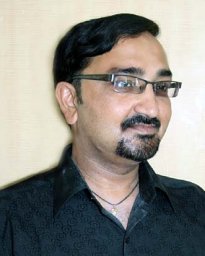 Sandip Kumar合作论文数2Vartika Bhadana合作论文数2
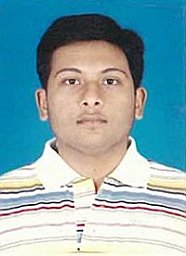 Jay Sheth合作论文数Department of Pathology, Hospital and Research Center, Dr. D. Y. Patil Medical College2
 Vikash Sharma合作论文数2S. Heidenreich合作论文数2J. Mueller合作论文数2Bbl Saxena合作论文数2C. Thomas合作论文数2
 Suman Lata Tripathi合作论文数Lovely Professional University2
 Prashant Kumar Bajpai合作论文数Dept Community Med, Uttar Pradesh Univ Med Sci2
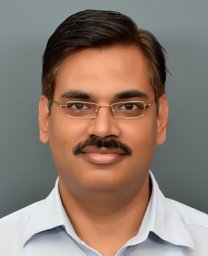 Sobhit Saxena合作论文数Lovely Profess Univ, Sch Elect & Elect Engn, Phagwara, Punjab, India2
 Frances Boyle合作论文数School of Medicine, Faculty of Medicine and Health, The University of Sydney;Northern Clinical School, Faculty of Medicine and Health, The University of Sydney;The Patricia Ritchie Centre for Cancer Care and Research, Mater Hospital;Department of Cancer Medicine, Mater Hospital;Royal North Shore Hospital;North Shore Private Hospital;Melanoma Institute of Australia;Sydney Vital Translational Cancer Research Centre;University of Newcastle2Dhiraj Kumar Srivastava合作论文数2
 Andreas R Gantenbein合作论文数2
 Archana Buch合作论文数2




