We introduce a novel variational framework for the regularized reconstruction of time-resolved volumetric flow fields. Our objective functional takes the physical characteristics of the underlying flow into account in both the spatial and the temporal domains. For an efficient minimization of the objective functional, we apply a proximal-splitting algorithm and perform parallel computations. To demonstrate the utility of our variational method, we first denoise a simulated flow-field in the human aorta and show that our method outperforms spatial-only regularization in terms of signal-to-noise ratio (SNR). We then apply the scheme to a real 3D+time phase-contrast MRI dataset and obtain high-quality visualizations.
We present a variational framework, and an algorithm based on the alternating method of multipliers (ADMM), for the problem of decomposing a vector field into its curl- and divergence-free components (Helmholtz decomposition) in the presence of noise. We provide experimental confirmation of the effectiveness of our approach by separating vector fields consisting of a curl-free gradient field super-imposed on a divergence-free laminar flow corrupted by noise, as well as suppressing non-zero divergence distortions in a computational fluid dynamics simulation of blood flow in the thoracic aorta. The methods developed and presented here can be used in the analysis of flow-field images and in their correction and enhancement by enforcing suitable physical constraints such as zero divergence.
Recent advances in vector-field imaging have brought to the forefront the need for efficient denoising and reconstruction algorithms that take the physical properties of vector fields into account and can be applied to large volumes of data. With these requirements in mind, we propose a computationally efficient algorithm for variational de-noising and reconstruction of vector fields. Our variational objective combines rotation- and scale-invariant regularization functionals that permit one to tune the algorithm to the physical characteristics of the underlying phenomenon. In addition, these regularization terms involve L1 norms in the spirit of total-variation (TV) regularization, which, as in the scalar case, leads to better preservation of discontinuities and superior SNR performance compared to its quadratic alternative. Some experimental results are provided to illustrate and verify the proposed scheme.
In this work we propose a variational reconstruction algorithm for enhancement and denoising of flow fields that is reminiscent of total-variation (TV) regularization used in image processing, but which also takes into account physical properties of flow such as curl and divergence. We point out the invariance properties of the scheme with respect to transformations of the coordinate system such as shifts, rotations, and changes of scale. To demonstrate the utility of the reconstruction method, we use it first to denoise a simulated phantom where the scheme is found to be superior to its quadratic (L 2 ) variant both in terms of SNR and in preservation of discontinuities. We then use the scheme to enhance the quality of pathline visualizations in an application to 4D (3D+time) flow-sensitive magnetic resonance imaging of blood flow in the aorta.
We introduce an extended family of continuous-domain stochastic models for sparse, piecewise-smooth signals. These are specified as solutions of stochastic differential equations, or, equivalently, in terms of a suitable innovation model; the latter is analogous conceptually to the classical interpretation of a Gaussian stationary process as filtered white noise. The two specific features of our approach are 1) signal generation is driven by a random stream of Dirac impulses (Poisson noise) instead of Gaussian white noise, and 2) the class of admissible whitening operators is considerably larger than what is allowed in the conventional theory of stationary processes. We provide a complete characterization of these finite-rate-of-innovation signals within Gelfand's framework of generalized stochastic processes. We then focus on the class of scale-invariant whitening operators which correspond to unstable systems. We show that these can be solved by introducing proper boundary conditions, which leads to the specification of random, spline-type signals that are piecewise-smooth. These processes are the Poisson counterpart of fractional Brownian motion; they are nonstationary and have the same 1/ω-type spectral signature. We prove that the generalized Poisson processes have a sparse representation in a wavelet-like basis subject to some mild matching condition. We also present a limit example of sparse process that yields a MAP signal estimator that is equivalent to the popular TV-denoising algorithm.
In this paper, we give a general characterization of regularization functionals for vector field reconstruction, based on the requirement that the said functionals satisfy certain geometric invariance properties with respect to transformations of the coordinate system. In preparation for our general result, we also address some commonalities of invariant regularization in scalar and vector settings, and give a complete account of invariant regularization for scalar fields, before focusing on their main points of difference, which lead to a distinct class of regularization operators in the vector case. Finally, as an illustration of potential, we formulate and compare quadratic (L2) and total-variation-type (L1) regularized denoising of vector fields in the proposed framework.
We introduce stochastic models for flow fields with parameters that dictate the scale-dependent (self-similar) character of the field and control the balance between its rotational vs compressive behaviour. The development of our models is motivated by the availability of imaging modalities that measure flow vector fields (flow-sensitive MRI and Doppler ultrasound). To study such data, we formulate estimators of the model parameters, and use them to quantify the Hurst exponent and directional properties of synthetic and real-world flow fields (measured by means of phase-contrast MRI) in 3D.
This work puts forward an extended definition of vector fractional Brownian motion (fBm) using a distribution theoretic formulation in the spirit of Gel'fand and Vilenkin's stochastic analysis. We introduce random vector fields that share the statistical invariances of standard vector fBm (self-similarity and rotation invariance) but which, in contrast, have dependent vector components in the general case. These random vector fields result from the transformation of white noise by a special operator whose invariance properties the random field inherits. The said operator combines an inverse fractional Laplacian with a Helmholtz-like decomposition and weighted recombination. Classical fBm's can be obtained by balancing the weights of the Helmholtz components. The introduced random fields exhibit several important properties that are discussed in this paper. In addition, the proposed scheme yields a natural extension of the definition to Hurst exponents greater than one.
In this note we introduce a vector generalization of fractional Brownian motion. Our definition takes into account directional properties of vector fields-such as divergence, rotational behaviour, and interactions with coordinate transformations-that have no counterpart in the scalar setting. Apart from the Hurst exponent which dictates the scale-dependent structure of the field, additional parameters of the new model control the balance between solenoidal and irrotational behaviour. This level of versatility makes these random fields potentially interesting candidates for the stochastic modelling of physical phenomena in various fields of application such as fluid dynamics, field theory, and medical image processing.
This paper is concerned with the mathematical characterization and wavelet analysis of self-similar random vector fields. The study consists of two main parts: the construction of random vector models on the basis of their invariance under coordinate transformations, and a study of the consequences of conducting a wavelet analysis of such random models. In the latter part, after briefly examining the effects of standard wavelets on the proposed random fields, we go on to introduce a new family of Laplacian-like vector wavelets that in a way duplicate the covariant-structure and whitening relations governing our random models.
We provide an extension of the L 2 -spline pyramid (Unser et al., 1993) using polyharmonic splines. We analytically prove that the corresponding error pyramid behaves exactly as a multi-scale Laplace operator. We use the multiresolution properties of polyharmonic splines to derive an efficient, non-separable filterbank implementation. Finally, we illustrate the potentials of our pyramid by performing an estimation of the parameters of multivariate fractal processes.
In this contribution, we study the notion of affine invariance (specifically, invariance to the shifting, scaling, and rotation of the coordinate system) as a starting point for the development of mathematical tools and approaches useful in the characterization and analysis of multivariate fractional Brownian motion (fBm) fields. In particular, using a rigorous and powerful distribution theoretic formulation, we extend previous results of Blu and Unser (2006) to the multivariate case, showing that polyharmonic splines and fBm processes can be seen as the (deterministic vs stochastic) solutions to an identical fractional partial differential equation that involves a fractional Laplacian operator. We then show that wavelets derived from polyharmonic splines have a behavior similar to the fractional Laplacian, which also turns out to be the whitening operator for fBm fields. This fact allows us to study the probabilistic properties of the wavelet transform coefficients of fBm-like processes, leading for instance to ways of estimating the Hurst exponent of a multiparameter process from its wavelet transform coefficients. We provide theoretical and experimental verification of these results. To complement the toolbox available for multiresolution processing of stochastic fractals, we also introduce an extended family of multidimensional multiresolution spaces for a large class of (separable and nonseparable) lattices of arbitrary dimensionality.
Our aim is to propose a multi-dimensional operator framework that provides a bridge between approximation theory (in particular, the construction of polyharmonic splines and wavelets) and the investigation of self-similar stochastic processes. Our investigation starts with the identification of the linear dierential operators that are translation-, scale- and rotation-invariant; these are the fractional Laplacians ( ) 2 with 2 R + , which are best specified as Fourier-domain multipliers (Duchon, 1977). The corresponding family is endowed with a semi-group property. To make this statement precise, we must characterize the action of the fractional operators (boundedness, decay properties) on appropriate function spaces and also unambiguously specify the inverse operators. The mathematical diculty
Growth and form in biology are often associated with some level of fractality. Fractal characteristics have also been noted in a number of imaging modalities. These observations make fractal modelling relevant in the context of bio-imaging. In this paper, we introduce a simple and yet rigorous innovation model for multi-dimensional fractional Brownian motion (fBm) and provide the computational tools for the analysis of such processes in a multi-resolution framework. The key point is that these processes can be whitened by application of the appropriate fractional Lapla-cian operator which has a corresponding polyharmonic wavelet. We examine the case of MRI and mammography images through comparison with theoretical results, which underline the suitability of fractal models in the study of bio-textures.
When producing a mosaic of multiple multi-spectral images one needs to harmonize the colours so that the tone transition is smooth from one image to the other. Given two images Ima and Imb, a transform T is sought to map Imb to an image that is harmonious in multi-spectral appearance to Ima. We give the above problem of tonal harmonization an analytical framework, in which both ideal and practical solutions of the problem are studied. Using a physically motivated image formation model, we prove that a perfect tonal harmonizing operator cannot in general be found, but that whenever such an operator exists it is linear. In the latter case, finding the optimal harmonizing transformation can be cast as a linear programme (LP), which is a type of problem that can be efficiently solved using known techniques. Finally, strong empirical evidence is provided for the efficacy of the proposed solution.
This letter introduces a new representation of discrete signals based on the mathematical notions of functionals and continuous dual spaces. A new and more general sampling theorem is also suggested. Next, the problems of interpolating and resampling discrete signals are addressed; and a general solution using functional interpolation-which is applicable to many different settings-is proposed. Families of resampling filters dubbed de Boor-Ron filters that use de Boor-Ron interpolation are introduced, and their numerical realization is discussed. Some applications of this research are suggested
Multi-dimensional datasets containing local averages of a function arise in many applications such as processing of CCD captures and medical images. Motivated by this fact we introduce multi-dimensional average-interpolating refinement on arbitrary lattices in arbitrary dimensions. Our refinement algorithm results in smooth scaling functions of compact support. This method forms a basis for multi-dimensional multi-resolution analysis and subdivision on datasets obtained by locally averaging a smooth function. As an example, we present two-dimensional polynomial average-interpolating subdivision on the quincunx lattice and show that the resulting scaling functions are highly regular in the sense of Sobolev.
 Michael Unser合作论文数School of Engineering, Ecole Polytechnique Federale de Lausanne;Biomedical Imaging Laboratory, Institute of Imaging and Applied Optics, École polytechnique fédérale de Lausanne;Institute of Electrical and Micro Engineering, Ecole Polytechnique Federale de Lausanne14
 Ricard Delgado合作论文数Biomed Imaging Grp, Ecole Polytech Fed Lausanne4
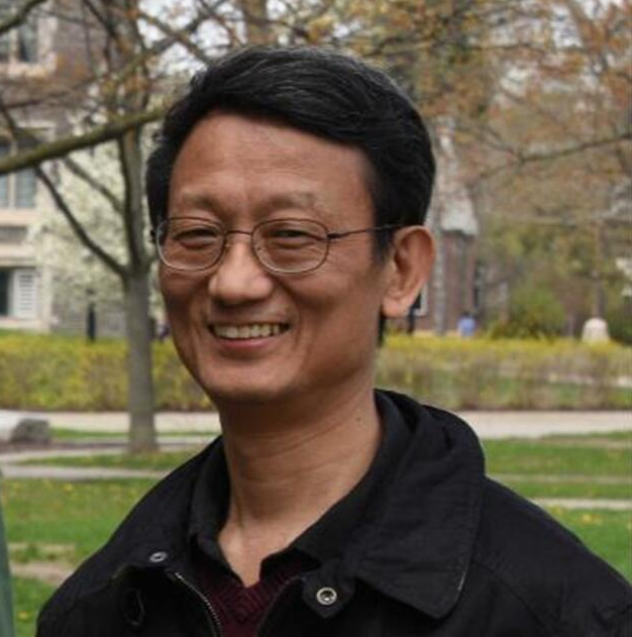 Xiaolin Wu合作论文数Department of Electrical & Computer Engineering, Faculty of Engineering, McMaster University3
 Emrah Bostan合作论文数3
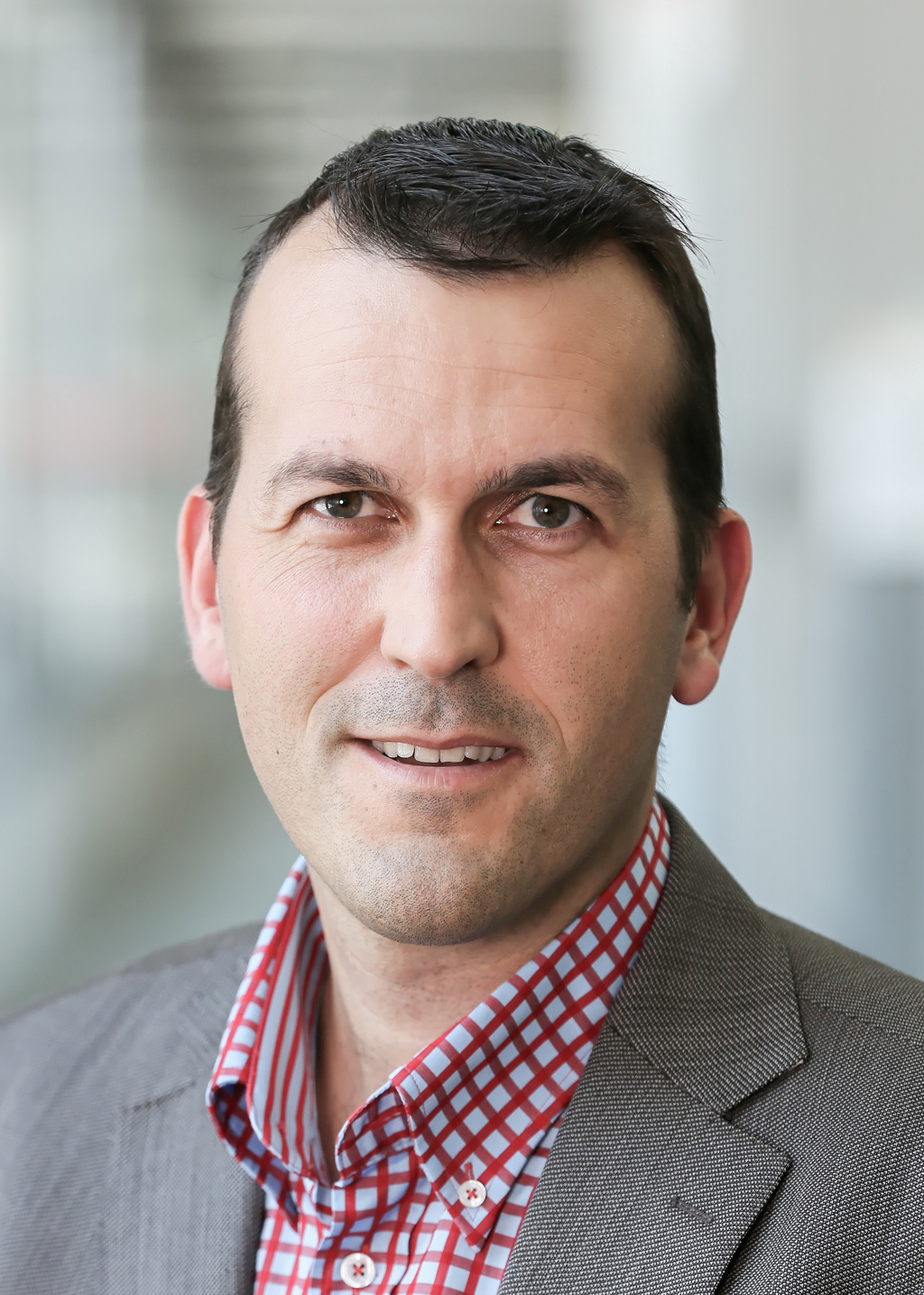 Dimitri Van De Ville合作论文数Neuro-X Institute, School of Engineering, École Polytechnique Fédérale de Lausanne;Department of Radiology and Medical Informatics, Faculty of Medicine, University of Geneva2
 Aurelien F. Stalder合作论文数Department of Diagnostic Radiology, University Hospital Freiburg2
 Shahram Shirani合作论文数Professional Engineers Ontario;The Institute of Electrical and Electronics Engineers (IEEE);UBC Alumni Association2
 Christophe Rabut合作论文数1
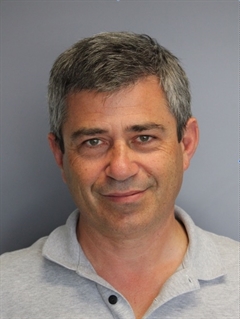 Nikolaos Stergiopoulos合作论文数School of Life Sciences, Ecole Polytechnique Federale de Lausanne;Rheon Medical SA;Comphya;RTsafe1
 Piccini Davide合作论文数University Hospital (CHUV), University of Lausanne (UNIL),1
 Orestis Vardoulis合作论文数1




