This summary of the second Terrestrial Very-Long-Baseline Atom Interferometry (TVLBAI) Workshop provides a comprehensive overview of our meeting held in London in April 2024 (Second Terrestrial Very-Long-Baseline Atom Interferometry Workshop, Imperial College, April 2024), building on the initial discussions during the inaugural workshop held at CERN in March 2023 (First Terrestrial Very-Long-Baseline Atom Interferometry Workshop, CERN, March 2023). Like the summary of the first workshop (Abend et al. in AVS Quantum Sci. 6:024701, 2024), this document records a critical milestone for the international atom interferometry community. It documents our concerted efforts to evaluate progress, address emerging challenges, and refine strategic directions for future large-scale atom interferometry projects. Our commitment to collaboration is manifested by the integration of diverse expertise and the coordination of international resources, all aimed at advancing the frontiers of atom interferometry physics and technology, as set out in a Memorandum of Understanding signed by over 50 institutions (Memorandum of Understanding for the Terrestrial Very Long Baseline Atom Interferometer Study).
This document presents a summary of the 2023 Terrestrial Very-Long-Baseline Atom Interferometry Workshop hosted by CERN. The workshop brought together experts from around the world to discuss the exciting developments in large-scale atom interferometer (AI) prototypes and their potential for detecting ultralight dark matter and gravitational waves. The primary objective of the workshop was to lay the groundwork for an international TVLBAI proto-collaboration. This collaboration aims to unite researchers from different institutions to strategize and secure funding for terrestrial large-scale AI projects. The ultimate goal is to create a roadmap detailing the design and technology choices for one or more km-scale detectors, which will be operational in the mid-2030s. The key sections of this report present the physics case and technical challenges, together with a comprehensive overview of the discussions at the workshop together with the main conclusions.
We summarise the discussions at a virtual Community Workshop on Cold Atoms in Space concerning the status of cold atom technologies, the prospective scientific and societal opportunities offered by their deployment in space, and the developments needed before cold atoms could be operated in space. The cold atom technologies discussed include atomic clocks, quantum gravimeters and accelerometers, and atom interferometers. Prospective applications include metrology, geodesy and measurement of terrestrial mass change due to, e.g., climate change, and fundamental science experiments such as tests of the equivalence principle, searches for dark matter, measurements of gravitational waves and tests of quantum mechanics. We review the current status of cold atom technologies and outline the requirements for their space qualification, including the development paths and the corresponding technical milestones, and identifying possible pathfinder missions to pave the way for missions to exploit the full potential of cold atoms in space. Finally, we present a first draft of a possible road-map for achieving these goals, that we propose for discussion by the interested cold atom, Earth Observation, fundamental physics and other prospective scientific user communities, together with the European Space Agency (ESA) and national space and research funding agencies.
 Mattia Fanì合作论文数3Farida Fassi合作论文数3Petruta Stefanescu合作论文数3Michele Barone合作论文数3Quentin Beaufils合作论文数3Elizabeth Pasatembou合作论文数3Leonie Hawkins合作论文数3Vishnupriya Puthiya-Veettil合作论文数3Gedminas Elertas合作论文数3Giannis Drougakis合作论文数3
 Thomas Hird合作论文数3Jonathan N. Tinsley合作论文数3Ekim Taylan Hanımeli合作论文数3Charles F. A. Baynham合作论文数Natl Phys Lab, Hampton Rd, Teddington TW11 0LW, Middx, England3Peter Dornan合作论文数3Jeremiah Mitchell合作论文数3Ian Shipsey合作论文数3Giuseppe Gaetano Luciano合作论文数3
 Andrea Richaud合作论文数Politecn Torino, Dept Appl Sci & Technol, I-10129 Turin, Italy3Ville Vaskonen合作论文数NICPB, Tallinn, Estonia3
 Joshua Eby合作论文数Corresponding author.3Matthias Meister合作论文数German Aerosp Ctr DLR, Inst Quantum Technol3
 Milan Milosevic合作论文数Dept Phys, Univ Nis3
 Marek Lewicki合作论文数Fac Phys, Univ Warsaw3
 Emmanuel Zambrini Cruzeiro合作论文数Univ Geneva, Grp Phys Appl, CH-1211 Geneva, Switzerland3
 Aleksandar Belic合作论文数3a hees合作论文数Université Paris-Sciences-et-Lettres, Sorbonne Universite3
 Tim Kovachy合作论文数Department of Physics and Astronomy, Weinberg College of Arts and Sciences, Northwestern University3
 Christopher McCabe合作论文数Department of Physics, Faculty of Natural, Mathematical & Engineering Sciences, King’s College London3
 John Ellis合作论文数Department of Physics, Faculty of Natural, Mathematical and Engineering Sciences, King’s College London3
 Diego Blas Temiño合作论文数Institució Catalana de Recerca i Estudis Avançats;The Barcelona Institute of Science and Technology;Department of Theoretical Physics, CERN3
 Oliver Buchmueller合作论文数Department of Physics, Faculty of Natural Sciences, Imperial College London3
 Mukesh Kumar合作论文数3
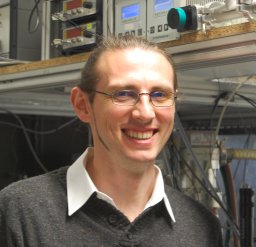 Brand Christian合作论文数Institut für Physikalische Chemie I, Heinrich-Heine-Universität3
 Kai Bongs合作论文数School of Physics and Astronomy, College of Engineering and Physical Sciences, University of Birmingham3
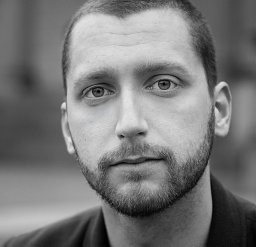 Peter Millington合作论文数Sch Phys & Astron, Univ Nottingham3
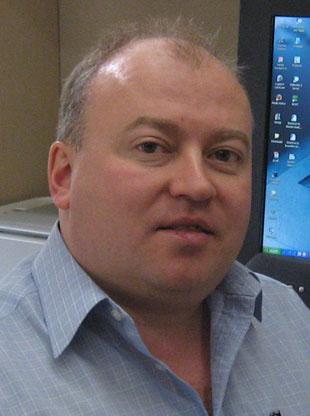 Greg Landsberg合作论文数Department of Physics, Brown University3
 Dylan O Sabulsky合作论文数Enrico Fermi Institute, The University of Chicago3
 Jonathon Coleman合作论文数University of Liverpool3
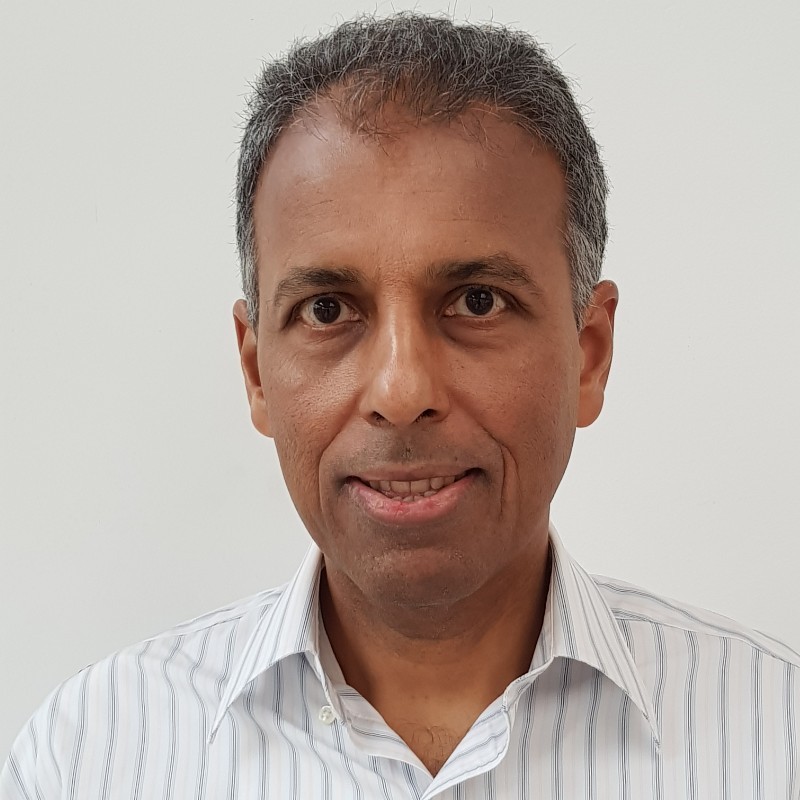 Sajan Easo合作论文数Science and Technology Facilities Council;CERN3
 Michael Doser合作论文数European Organization for Nuclear Research3
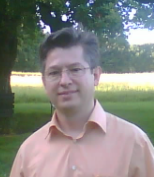 Apostolos Pilaftsis合作论文数Department of Physics & Astronomy, University of Manchester3
 Barry M. Garraway合作论文数School of Mathematical and Physical Sciences, University of Sussex3
 Carlos F. Sopuerta合作论文数ICE, CSIC-IEEC3
 Manuel E. Schilling合作论文数Facultad de Ciencias Fisicas y Matematicas, Universidad de Chile3
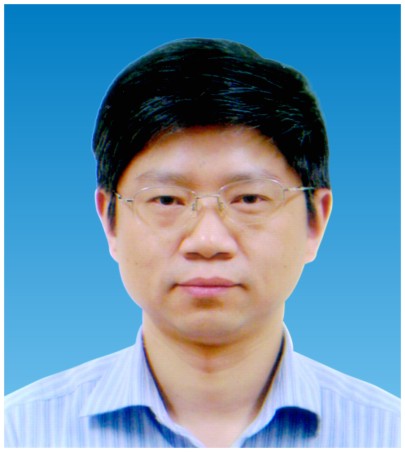 Mingsheng Zhan (詹明生)合作论文数Wuhan Institute of Physics and Mathematics, Chinese Academy of Sciences3
 Martin Haehnelt合作论文数Institute of Astronomy, University of Cambridge;Kavli Institute for Cosmology, University of Cambridge3
 Philipp Treutlein合作论文数Max-Planck-Institut fur Quantenoptik und Sektion Physik der3
 Antun Balaz合作论文数Scientific Computing Laboratory;Institute of Physics Pregrevica;Scientific Computing Laboratory, Institute of Physics Pregrevica3




