Complex noun sequences in Hindi can be formed by the sequences of nouns and genitives. In Hindi, the genitive marker is “kā”, and its allomorphic variations are “ke” and “kī”. When two or more nouns occur without any intervening post-positions, it is known as compound noun. Following are some examples of complex noun sequences: (1) “jilā cunāva adhikārī” (district election officer), (2) “tila kī mit.hāī kī dukāna” (shop of sweets made with sesame) and (3) “upabhoktā adālata ke vakīla” (consumer court’s lawyer). The rightmost noun is the head of the whole construction. The inner structure of the sequence can be quite complex. In it, (a) nouns within the sequence can modify the rightmost head or (b) the local head can modify another local head or the head of the complex noun sequence. For example, in (1), “adhikārī” is the head and both “jilā” and “cunāva” are modifying “adhikārī” thus having a structure (jilā (cunāva adhikārī)). But, the complex sequence in (2) has a structure where “tila” modifies “mit.hāī” and “mit.hāī” in turn modifies “dukāna”. So the structure is ((tila kī mit.hāī) kī dukāna). More number of nouns within a sequence, more complex is the structure. From the Hindi Treebank data, we have obtained 85.37%, 12.54% and 1.80% of the sequences having three, four and five nouns respectively. In this thesis, we attempt to bracket the local sub-structure of a complex noun sequence which is termed as constituency parsing. Constituency parsing recursively builds the inner structure of the complex noun sequence. It is a very significant NLP task because the interpretation of sequence depends on the correct identification of its inner structure. We explore both syntactic and statistical method for predicting the bracketing of the complex noun sequences. In Hindi, the genitive marker agrees with the head of the sub-sequence modified by it. This clue has been used in our syntactic approach. In statistical approach, we have mainly exploited the affinity factor of a head and its modifier based on the frequency of occurring together in the corpus. The method has been augmented by introducing the semantic class information for the head and modifier nouns from Hindi WordNet. Finally, we combine the two methods and implement a hybrid approach for bracketing complex noun sequences. Using this, we have obtained 85.85% accuracy. In this thesis, we show that the identification of the inner structure of complex noun sequence helps in determining the translation. For this experiment, we take three-word noun compounds of English and translate them into Hindi. The strategy of the translation is determined by our observation of EnglishHindi parallel corpora where we observe (and others have reported also) that English licenses multiword noun compound more frequently than what Hindi does. Hindi prefers syntactic phrases where a genitive post-position is inserted between the head and the modifier. In the case of compounds with three
Easy-first, a search-based structured prediction approach, has been applied to many NLP tasks including dependency parsing and coreference resolution. This approach employs a learned greedy policy (action scoring function) to make easy decisions first, which constrains the remaining decisions and makes them easier. We formulate greedy policy learning in the Easy-first approach as a novel non-convex optimization problem and solve it via an efficient Majorization Minimizatoin (MM) algorithm. Results on within-document coreference and cross-document joint entity and event coreference tasks demonstrate that the proposed approach achieves statistically significant performance improvement over existing training regimes for Easy-first and is less susceptible to overfitting.
Chao Ma, Janardhan Rao Doppa, J. Walker Orr, Prashanth Mannem, Xiaoli Fern, Tom Dietterich, Prasad Tadepalli. Proceedings of the 2014 Conference on Empirical Methods in Natural Language Processing (EMNLP). 2014.
This paper revisits the work of (Malladi and Mannem, 2013) which focused on building a Statistical Morphological Analyzer (SMA) for Hindi and compares the performance of SMA with other existing statistical analyzer, Morfette. We shall evaluate SMA in various experiment scenarios and look at how it performs for unseen words. The later part of the paper presents the effect of the predicted morph features on dependency parsing and extends the work to other morphologically rich languages: Hindi and Telugu, without any language-specific engineering.
In this paper we use statistical dependency parsing techniques to detect NULL or Empty categories in the Hindi sentences. We have currently worked on Hindi dependency treebank which is released as part of COLINGMTPIL 2012 Workshop. Earlier Rule based approaches are employed to detect Empty heads for Hindi language but statistical learning for automatic prediction is not explored. In this approach we used a technique of introducing complex labels into the data to predict Empty categories in sentences. We have also discussed about shortcomings and difficulties in this approach and evaluated the performance of this approach on different Empty categories.
Automatically generating meaningful descriptions for images has recently emerged as an important area of research. In this direction, a nearest-neighbour based generative phrase prediction model (PPM) proposed by (Gupta et al. 2012) was shown to achieve state-of-the-art results on PASCAL sentence dataset, thanks to the simultaneous use of three different sources of information (i.e. visual clues, corpus statistics and available descriptions). However, they do not utilize semantic similarities among the phrases that might be helpful in relating semantically similar phrases during phrase relevance prediction. In this paper, we extend their model by considering inter-phrase semantic similarities. To compute similarity between two phrases, we consider similarities among their constituent words determined using WordNet. We also re-formulate their objective function for parameter learning by penalizing each pair of phrases unevenly, in a manner similar to that in structured predictions. Various automatic and human evaluations are performed to demonstrate the advantage of our "semantic phrase prediction model" (SPPM) over PPM.
Morphology is the study of internal structure of words and is an essential early step in many NLP applications such as parsing and machine translation. Researchers working in Hindi NLP have either used the widely popular paradigm based analyzer (PBA) or extensions of it. In this work, we undertook a comprehensive evaluation of PBA using the data from the Hindi Treebank (HTB) and presented a new morphological analyzer trained on the HTB. Our morphological analyzer has better coverage and accuracy when compared to the existing analyzers for Hindi. An oracle system that takes the best values from the PBA’s output achieves only 63.41% for lemma, gender, number, person and case. Our statistical analyzer has an accuracy of 84.16% for these morphological attributes when evaluated on the test section of the Hindi Treebank.
In this paper, we address the problem of automatically generating a description of an image from its annotation. Previous approaches either use computer vision techniques to first determine the labels or exploit available descriptions of the training images to either transfer or compose a new description for the test image. However, none of them report results on the effect of incorrect label detection on the quality of the final descriptions generated. With this motivation, we present an approach to generate image descriptions from image annotation and show that with accurate object and attribute detection, human-like descriptions can be generated. Unlike any previous work, we perform an extensive task-based evaluation to analyze our results.
We discuss several improvements to the Question Generation Shared Task Evaluation Challenge (QGSTEC) system developed at the University of Pennsylvania in 2010. In addition to enhancing the question generation rules, we have implemented two new components to improve the ranking process. We use topic scoring, a technique developed for summarization, to identify important information for questioning, and language model probabilities to measure grammaticality. Preliminary experiments show that our approach is feasible.
Recent work has shown how a parallel corpus can be leveraged to build syntactic parser for a target language by projecting automatic source parse onto the target sentence using word alignments. The projected target dependency parses are not always fully connected to be useful for training traditional dependency parsers. In this paper, we present a greedy non-directional parsing algorithm which doesn't need a fully connected parse and can learn from partial parses by utilizing available structural and syntactic information in them. Our parser achieved statistically significant improvements over a baseline system that trains on only fully connected parses for Bulgarian, Spanish and Hindi. It also gave a significant improvement over previously reported results for Bulgarian and set a benchmark for Hindi.
In this paper, we present an automatic question generation system that can generate gap-fill questions for content in a document. Gap-fill questions are fill-in-the-blank questions with multiple choices (one correct answer and three distractors) provided. The system finds the informative sentences from the document and generates gap-fill questions from them by first blanking keys from the sentences and then determining the distractors for these keys. Syntactic and lexical features are used in this process without relying on any external resource apart from the information in the document. We evaluated our system on two chapters of a standard biology textbook and presented the results.
In this paper, we first analyze and classify the empty categories in a Hindi dependency tree-bank and then identify various discovery procedures to automatically detect the existence of these categories in a sentence. For this we make use of lexical knowledge along with the parsed output from a constraint based parser. Through this work we show that it is possible to successfully discover certain types of empty categories while some other types are more difficult to identify. This work leads to the state-of-the-art system for automatic insertion of empty categories in the Hindi sentence.
In this paper, we present a system that automatically generates questions from natural language text using discourse connectives. We explore the usefulness of the discourse connectives for Question Generation (QG) that looks at the problem beyond sentence level. Our work divides the QG task into content selection and question formation. Content selection consists of finding the relevant part in text to frame question from while question formation involves sense disambiguation of the discourse connectives, identification of question type and applying syntactic transformations on the content. The system is evaluated manually for syntactic and semantic correctness.
Various works have used word alignments in parallel corpora to transfer information like POS tags, syntactic trees and word senses from source to target sentences. In this paper, we work on the problem of projecting syntactic relations from English to morphologically rich Hindi parallel text. We show the effectiveness of Local Word Groups (LWGs) in simplifying alignments as well as in transferring syntactic dependencies by building an alignment model with LWGs as base units and training a dependency parser on the relations projected using these LWGs. The LWG alignment model using GIZA++ scores decreases the Alignment Error Rate by 1.16 points when compared to the best GIZA++ model trained on lemmas. We also show that a dependency parser trained on the syntactic relations projected using LWGs obtained statistical significant improvements over the relations projected using lemmas by a margin of 3.49%.
The ICON10 tools contest was dedicated to the task of dependency parsing for Indian languages (IL). Three languages namely, Hindi, Telugu and Bangla, were explored. The motivation behind the task was to investigate and solve the challenges in IL parsing by making annotated data available to the larger community.
The ICON10 tools contest was dedicated to the task of dependency parsing for Indian languages (IL). Three languages namely, Hindi, Telugu and Bangla, were explored. The motivation behind the task was to investigate and solve the challenges in IL parsing by making annotated data available to the larger community.
In this paper, we apply bidirectional dependency parsing algorithm for parsing Indian languages such as Hindi, Bangla and Telugu as part of NLP Tools Contest, ICON 2010. The parser builds the dependency tree incrementally with the two operations namely proj and non-proj. The complete dependency tree given by the unlabeled parser is used by SVM (Support Vector Machines) classifier for labeling. The system achieved Labeled Attachment Score (LAS) of 84.79%, 69.09%, 68.95% for Hindi, Bangla and Telugu. While using fine-grained dependency labels, it achieved LAS of 83.12%, 65.97%, 67.45% respectively.
This paper describes the question generation system devel- oped at UPenn for QGSTEC, 2010. The system uses predicate argument structures of sentences along with semantic roles for the question gener- ation task from paragraphs. The semantic role labels are used to identify relevant parts of text before forming questions over them. The generated questions are then ranked to pick nal six best questions.
This paper describes the dependency parser we used in the NLP Tools Contest, 2009 for parsing Hindi, Bangla and Telugu. The parser uses a bidirectional parsing algorithm with two operations proj and non-proj to build the dependency tree. The parser obtained Labeled Attachment Score of 71.63%, 59.86% and 67.74% for Hindi, Telugu and Bangla respectively on the treebank with fine-grained dependency labels. With coarse-grained labels the dependency parser achieved 76.90%, 70.34% and 65.01% respectively.
 Samar Husain合作论文数Department of Humanities and Social Sciences, Indian Institute of Technology Delhi4
 Aswarth Abhilash Dara合作论文数4Manish Agarwal合作论文数2
 Lucas Champollion合作论文数Department of Linguistics, College of Arts & Science, New York University2
 Ankush Gupta合作论文数IBM Research2
 Xiaoli Z. Fern合作论文数School of Electrical Engineering and Computer Science, Oregon State University2
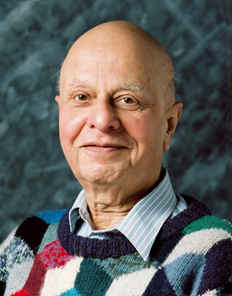 Aravind K. Joshi合作论文数Department of Computer and Information Science, University of Pennsylvania2
 Prasad Tadepalli合作论文数College of Engineering, Oregon State University;Department of Computer Science, Oregon State University2Livio Robaldo合作论文数Univ Luxembourg2
 Dipti Misra Sharma合作论文数International Institute of Information Technology2
 Rashmi Prasad合作论文数2Akshar Bharati合作论文数2
 Bharat Ram Ambati合作论文数IIIT-Hyderabad2
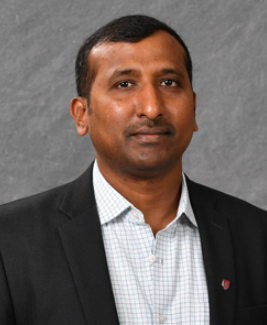 Janardhan Rao ( Jana ) Doppa合作论文数School of Electrical Engineering & Computer Science, Voiland College of Engineering and Architecture, Washington State University2
 Deepak Malladi合作论文数2Tom Dietterich合作论文数1Ankush Soni合作论文数1Sruti Rallapalli合作论文数1
 Rishabh Srivastava合作论文数1
 Chao Ma合作论文数Microsoft Research Cambridge1rahul sharma合作论文数1
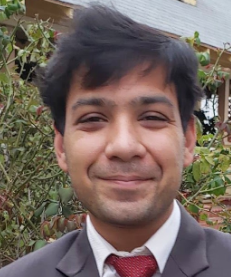 Karan Singla合作论文数Whissle1Kshitij Mishra合作论文数1John Walker Orr合作论文数1Jun Xie合作论文数1Naman Jain合作论文数1
 Rajeev Sangal合作论文数Language Technologies Research Centre;Indian Institute of Information Technology1
 C. V. Jawahar合作论文数Centre for Visual Information Technology, International Institute of Information Technology1
 Thomas G. Dietterich合作论文数School of Electrical Engineering and Computer Science, Oregon State University;Institute for Collaborative Robotics and Intelligence Systems, College of Engineering, Oregon State University;BigML1Claire Cooper Mcconnell合作论文数1Hemanth Sagar Bayyarapu合作论文数1
 Rafiya Begum合作论文数Language Technologies Research Centre1Bhasha Agrawal合作论文数IIIT-Hyderabad1
 Himani Chaudhry合作论文数International Institute of Information Technology1
 Ashwini Vaidya合作论文数Department of Humanities and Social Sciences, Indian Institute of Technology Delhi1Rakshit Shah合作论文数1Puneeth Kukkadapu合作论文数1Chaitanya Gsk合作论文数Intl Institute of Info. Technology1
 Avinesh PVS合作论文数Language Technologies Research Centre, IIIT Hyderabad1Praveen Dakwale合作论文数LTRC, IIIT-Hyderabad1Akshar Bharathi合作论文数1
 Sambhav Jain合作论文数Language Technologies Research Center;International Institute;Information Technology, of;Language Technologies Research Center, International Institute|of Information Technology1
 Phani Gadde合作论文数Language Technologies Research Centre, IIIT-Hyderabad1Lakshmi Bai合作论文数1
 Kunal Sachdeva合作论文数University of Duisburg;Faculty of Engineering, Essen;Institute for Computer Science and Interactive Systems;Institute for Computer Science and Interactive Systems, University of Duisburg1Yashaswi Verma合作论文数CVIT, IIIT Hyderabad1




