The Golgi apparatus, the main glycosylation station of the cell, consists of a stack of discontinuous cisternae. Glycosylation enzymes are usually concentrated in one or two specific cisternae along the cis-trans axis of the organelle. How such compartmentalized localization of enzymes is achieved and how it contributes to glycosylation are not clear. Here, we show that the Golgi matrix protein GRASP55 directs the compartmentalized localization of key enzymes involved in glycosphingolipid (GSL) biosynthesis. GRASP55 binds to these enzymes and prevents their entry into COPI-based retrograde transport vesicles, thus concentrating them in the trans-Golgi. In genome-edited cells lacking GRASP55, or in cells expressing mutant enzymes without GRASP55 binding sites, these enzymes relocate to the cis-Golgi, which affects glycosphingolipid biosynthesis by changing flux across metabolic branch points. These findings reveal a mechanism by which a matrix protein regulates polarized localization of glycosylation enzymes in the Golgi and controls competition in glycan biosynthesis.
Glycosphingolipids are important components of the plasma membrane where they modulate the activities of membrane proteins including signalling receptors. Glycosphingolipid synthesis relies on competing reactions catalysed by Golgi-resident enzymes during the passage of substrates through the Golgi cisternae. The glycosphingolipid metabolic output is determined by the position and levels of the enzymes within the Golgi stack, but the mechanisms that coordinate the intra-Golgi localisation of the enzymes are poorly understood. Here, we show that a group of sequentially-acting enzymes operating at the branchpoint among glycosphingolipid synthetic pathways binds the Golgi-localised oncoprotein GOLPH3. GOLPH3 sorts these enzymes into vesicles for intra-Golgi retro-transport, acting as a component of the cisternal maturation mechanism. Through these effects, GOLPH3 controls the sub-Golgi localisation and the lysosomal degradation rate of specific enzymes. Increased GOLPH3 levels, as those observed in tumours, alter glycosphingolipid synthesis and plasma membrane composition thereby promoting mitogenic signalling and cell proliferation. These data have medical implications as they outline a novel oncogenic mechanism of action for GOLPH3 based on glycosphingolipid metabolism.
Glycans are important regulators of cell and organismal physiology. This requires that the glycan biosynthesis be controlled to achieve specific cellular glycan profiles. Glycans are assembled in the Golgi apparatus on secretory cargoes that traverse it. The mechanisms by which the Golgi apparatus ensures cell- and cargo-specific glycosylation remain obscure. We investigated how the Golgi apparatus regulates glycosylation by studying biosynthesis of glycosphingolipids, glycosylated lipids with critical roles in signalling and differentiation. We identified the Golgi matrix protein GRASP55 as a controller of sphingolipid glycosylation by regulating the compartmentalized localization of key sphingolipid biosynthetic enzymes in the Golgi. GRASP55 controls the localization of the enzymes by binding to them and regulating their entry into peri-Golgi vesicles. Impairing GRASP55-enzyme interaction decompartmentalizes these enzymes, changes the substrate flux across competing glycosylation pathways that results in alteration of the cellular glycosphingolipid profile. This GRASP55 regulated pathway of enzyme compartmentalization allows cells to make cell density-dependent adaptations in glycosphingolipid biosynthesis to suit cell growth needs. Thus, the Golgi apparatus controls the cellular glycan (glycosphingolipid) profile by governing competition between biosynthetic reactions through regulated changes in enzyme compartmentalization.
Glycans are one of the four biopolymers of the cell and they play important roles in cellular and organismal physiology. They consist of both linear and branched structures and are synthesized in a nontemplated manner in the secretory pathway of mammalian cells with the Golgi apparatus playing a key role in the process. In spite of the absence of a template, the glycans synthesized by a cell are not a random collection of possible glycan structures but a distribution of specific glycans in defined quantities that is unique to each cell type (Cell type here refers to distinct cell forms present in an organism that can be distinguished based on morphological, phenotypic and/or molecular criteria.) While information to produce cell type-specific glycans is encoded in the genome, how this information is translated into cell type-specific glycome (Glycome refers to the quantitative distribution of all glycan structures present in a given cell type.) is not completely understood. We summarize here the factors that are known to influence the fidelity of glycan biosynthesis and integrate them into known glycosylation pathways so as to rationalize the translation of genetic information to cell type-specific glycome.
Glycans are one of the four biopolymers of the cell and they play important roles in cellular and organismal physiology. They consist of both linear and branched structures and are synthesized in a nontemplated manner in the secretory pathway of mammalian cells with the Golgi apparatus playing a key role in the process. In spite of the absence of a template, the glycans synthesized by a cell are not a random collection of possible glycan structures but a distribution of specific glycans in defined quantities that is unique to each cell type (Cell type here refers to distinct cell forms present in an organism that can be distinguished based on morphological, phenotypic and/or molecular criteria.) While information to produce cell type-specific glycans is encoded in the genome, how this information is translated into cell type-specific glycome (Glycome refers to the quantitative distribution of all glycan structures present in a given cell type.) is not completely understood. We summarize here the factors that are known to influence the fidelity of glycan biosynthesis and integrate them into known glycosylation pathways so as to rationalize the translation of genetic information to cell type-specific glycome.
Glycans are ubiquitous sugar polymers with major biological functions that are assembled by glyco-enzymes onto cargo molecules during their transport through the Golgi complex. How the Golgi determines glycan assembly is poorly understood. By relying on the Golgi cisternal maturation model and using the glyco-enzyme adaptor and oncoprotein GOLPH3 as a molecular tool, we define the first example of how the Golgi controls glycosylation and associated cell functions. GOLPH3, acting as a component of the cisternal maturation mechanism, selectively binds and recycles a subset of glyco-enzymes of the glycosphingolipid synthetic pathway, hinders their escape to the lysosomes and hence increases their levels through a novel lysosomal degradation-regulated mechanism. This enhances the production of specific growth-inducing glycosphingolipids and reprograms the glycosphingolipid pathway to potentiate mitogenic signaling and cell proliferation. These findings unravel unforeseen organizing principles of Golgi-dependent glycosylation and delineate a paradigm for glycan assembly by the Golgi transport mechanisms. Moreover, they indicate a new role of cisternal maturation as a regulator of glycosylation, and outline a novel mechanism of action for GOLPH3-induced proliferation.
The presence of a functional protein at the appropriate location in the cell is the result of the processes of transcription, translation, folding and trafficking to the correct destination. There are numerous diseases that are caused by protein misfolding, mainly due to mutations in the respective gene. The consequences of this misfolding may be that proteins effectively lose their function, either by being removed by the cellular quality control machinery or by accumulating at the incorrect intracellular or extracellular location. A number of mutations that lead to protein misfolding and affect trafficking to the final destination, e.g. Cystic fibrosis, Wilson's disease, and Progressive Familial Intrahepatic 1 cholestasis, result in proteins that retain partial function if their folding and trafficking is restored either by molecular or pharmacological means. In this review, we discuss several mutant proteins within this class of misfolding diseases and provide an update on the status of molecular and therapeutic developments and potential therapeutic strategies being developed to counter these diseases.
We have investigated how glycans, ubiquitous polysaccharides endowed with major biological functions, are assembled by glyco-enzymes on cargo proteins/ lipids during their transport through the Golgi complex. We have manipulated glyco-enzymes retrotransport, a core process in intra-Golgi trafficking, through controlled alterations of the levels of GOLPH3, a coatomer adaptor that drives the retrograde movement of glyco-enzymes and shows oncogenic properties in humans, and examined glycan assembly. We find that: a) GOLPH3 is part of the cisternal maturation mechanism, yet it specifically binds and sorts for recycling a subset of enzymes involved in glycan assembly on sphingolipids, while other enzymes recycle independently of GOLPH3. This indicates that cisternal maturation is an ensemble of enzyme-recycling modules; b) GOLPH3 increases the levels of its client enzymes via a regulated-degradation mechanism based on delaying their escape from the Golgi into the lysosomes; and, c) by changing the levels of key enzymes, GOLPH3 alters the glycan patterns assembled on sphingolipids, to produce more proliferation-inducing glycosphingolipid metabolites. These findings unravel organizing principles of intra-Golgi traffic and of glycan assembly that might have general applicability and broad pathophysiological implications, and outline a novel mechanism for GOLPH3-induced proliferation based on glycosphingolipid biosynthesis.
 Seetharaman Parashuraman合作论文数National Institute of Immunology10
 Riccardo Rizzo合作论文数ICAR-CNR, Consiglio Nazionale delle Ricerche8
 Domenico Russo合作论文数Cattedra di Ematologia e Unità Trapianti di Midollo Osseo per Adulti, Spedali Civili di Brescia8
 Giovanni D'Angelo合作论文数School of Life Sciences, École Polytechnique Fédérale de Lausanne7
 Laura Capolupo合作论文数6
 Alberto Luini合作论文数Institute of Protein Biochemistry, National Research Council6
 Yusuf Hannun合作论文数Department of Biochemistry and Cell Biology, College of Arts and Sciences, Stony Brook University;Stony Brook Cancer Center6Petra Henklein合作论文数6Ulla Mandel合作论文数Department of Odontology, Faculty of Health and Medical Sciences, University of Copenhagen5
 Bernadette Lombardi合作论文数Institute of Biochemistry and Cell Biology, National Research Council Naples5Domenico Supino合作论文数5Boncompain Gaelle合作论文数5
 Henrik Clausen合作论文数Copenhagen Center for Glycomics, Department of Cellular and Molecular Medicine, Faculty of Health and Medical Sciences, University of Copenhagen;ZymeQuest Inc5
 Franck Perez合作论文数CNRS UMR144, 26 rue d'Ulm, F75248 Paris Cedex 05, France;Research Center, Institut Curie;France|Research Center, Institut Curie5
 Pranoy Sahu合作论文数4Carlo Vitagliano合作论文数4Ilenia Agliarulo合作论文数Department of Molecular Medicine and Medical Biotechnology, University of Naples Federico II4Toshiyuki Yamaji合作论文数4
 Kazuo Kurokawa合作论文数Department of Tumor Virology;Research Institute for Microbial Diseases;Osaka University;Research Institute for Microbial Diseases, Osaka University4
 Lina Obeid合作论文数Renaissance School of Medicine, Stony Brook University4
 Alfredo Budillon合作论文数IRCCS Istituto Nazionale dei Tumori G. Pascale4
 Mikhail A Zhukovsky合作论文数3Aquino Gabriella合作论文数3
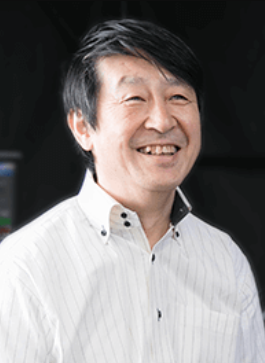 Akihiko Nakano (中野明彦)合作论文数Live Cell Super-Resolution Imaging Research Team, RIKEN Center for Advanced Photonics3
 Kentaro Hanada (花田賢太郎)合作论文数National Institute of Infectious Diseases3
 Francesco Russo合作论文数Institute of Informatics and Telematics (IIT) and Institute of Clinical Physiology (IFC),, National Research Council (CNR),;Department of Computer Science, University of Pisa;Institute of Informatics and Telematics (IIT) and Institute of Clinical Physiology (IFC),, University of Pisa3
 Kunnathully Vidya合作论文数Department of Medicine, University of Verona3
 Federica Zito Marino合作论文数3Nina Dathan合作论文数3Gabriele Turacchio合作论文数3
 Luigi Mandrich合作论文数Institute of Protein Biochemistry, C.N.R.3Jin-ichi Inokuchi合作论文数2Giovanna Vanacore合作论文数2María José Hernández-Corbacho合作论文数2Anthony Vocat合作论文数2Daniela Montariello合作论文数2Takahiro Nitta合作论文数2
 Biswas Ansuman合作论文数2
 Charlotte Gehin合作论文数School of Chemistry and Biochemistry, University of Geneva2
 Julian Nuchel合作论文数2
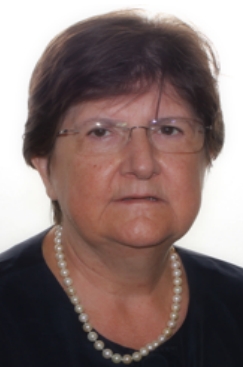 Daniela Corda合作论文数Institute for Endocrinology and Experimental Oncology "G. Salvatore", National Research Council2Gerardo Botti合作论文数Istituto Nazionale Tumori Napoli2Markus Plomann合作论文数2
 Marinella Pirozzi合作论文数Collaboratore Esterno dell'Istituto di Analisi dei Sistemi ed Informatica del CNR, Via Buonarroti 12, 00815 Rome, Italy2Jia-Shu Yang合作论文数2Victor W. Hsu合作论文数2
 Mukund Thattai合作论文数Department of Physics, Massachusetts Institute of Technology2G Turacchio合作论文数1




