Emerging research suggests a large portion of extreme weather events can be attributed to climate change and the frequency of such events is increasing. Extreme weather can significantly impact plant reproduction with consequences that extend from the molecular through the landscape scale. We asked if facilitation by nurse shrubs might serve as a mechanism to mitigate negative impacts of extreme weather on floral production. Our question was tested via a replicated full-factorial experiment across two sites in the Northern Great Basin Experimental Range in eastern Oregon. Sagebrush (Artemisia spp.) served as the nurse shrub and 6 dominant perennial bunchgrasses common to that region served as the beneficiaries. Shrub canopy removal, extreme precipitation and extreme drought simulations were crossed for 6 total treatments: Canopy Intact (control), Canopy Intact + Water, Canopy Intact + Drought, Canopy Removed, Canopy Removed + Water and Canopy Removed + Drought. Simulated drought and precipitation events were actively manipulated in the field through the use of irrigation and rain-out shelters. We predicted that Canopy Removal and Canopy Intact + Water would yield the greatest floral production; Canopy Intact + Drought and Canopy Removed + Water would yield similar floral production as Control; and Canopy Removal + Drought would yield the least floral production. Our key finding was in the Canopy Removed + Drought treatment, where floral production was on average 53% less than most other treatments in Site A and on average 70.8% less than all other treatments in Site B. We found that beyond the significance of the Canopy Removal + Drought treatment, all other results were largely species-specific. Our findings illustrate how shrubs can act as a buffer, facilitating floral yield among plant community members in extreme weather years. With this study, we add support to growing research on fecundity facilitation as a mechanism for mitigating short and long-term impacts on plant population persistence and species range conservation.
Sagebrush steppe ecosystems in the United States currently (2015) occur on only about one-half of their historical land area because of changes in land use, urban growth, and degradation of land, including invasions of non-native plants. The existence of many animal species depends on the existence of sagebrush steppe habitat. The greater sage-grouse (Centrocercus urophasianus) is a landscape-dependent bird that requires intact habitat and combinations of sagebrush and perennial grasses to exist. In addition, other sagebrush-obligate animals also have similar requirements and restoration of landscapes for greater sage-grouse also will benefit these animals. Once sagebrush lands are degraded, they may require restoration actions to make those lands viable habitat for supporting sagebrush-obligate animals. Land managers do not have resources to restore all locations because of the extent of the restoration need and because some land uses are not likely to change, therefore, restoration decisions made at the landscape to regional scale may improve the effectiveness of restoration to achieve landscape and local restoration objectives. We present a landscape restoration decision tool intended to assist decision makers in determining landscape objectives, to identify and prioritize landscape areas where sites for priority restoration projects might be located, and to aid in ultimately selecting restoration sites guided by criteria used to define the landscape objectives. The landscape restoration decision tool is structured in five sections that should be addressed sequentially. Each section has a primary question or statement followed by related questions and statements to assist the user in addressing the primary question or statement. This handbook will guide decision makers through the important process steps of identifying appropriate questions, gathering appropriate data, developing landscape objectives, and prioritizing landscape patches where potential sites for restoration projects may be located. Once potential sites are selected, land managers can move to the site-specific decision tool to guide restoration decisions at the site level.
Seedling recruitment is a critical driver of population dynamics and community assembly, yet we know little about functional traits that define different recruitment strategies. For the first time, we examined whether trait relatedness across germination and seedling stages allows the identification of general recruitment strategies which share core functional attributes and also correspond to recruitment outcomes in applied settings. We measured six seed and eight seedling traits (lab- and field-collected, respectively) for 47 varieties of dryland grasses and used principal component analysis (PCA) and cluster analysis to identify major dimensions of trait variation and to isolate trait-based recruitment groups, respectively. PCA highlighted some links between seed and seedling traits, suggesting that relative growth rate and root elongation rate are simultaneously but independently associated with seed mass and initial root mass (first axis), and with leaf dry matter content, specific leaf area, coleoptile tissue density and germination rate (second axis). Third and fourth axes captured separate tradeoffs between hydrothermal time and base water potential for germination, and between specific root length and root mass ratio, respectively. Cluster analysis separated six recruitment types along dimensions of germination and growth rates, but classifications did not correspond to patterns of germination, emergence or recruitment in the field under either of two watering treatments. Thus, while we have begun to identify major threads of functional variation across seed and seedling stages, our understanding of how this variation influences demographic processes-particularly germination and emergence-remains a key gap in functional ecology.
Seeding native plants is a key management practice to counter land degradation across the globe, yet the majority of seeding efforts fail, limiting our ability to accelerate ecosystem recovery. Recruitment requires transitions through several seed and seedling stages, some of which may have overriding influences on restoration outcomes. We lack, however, a general framework to understand and predict differences in these critical demographic processes across species. Functional traits influence fitness, and consequently, trait variation could provide the basis for a framework to explain and predict variation in life stage transition probabilities. We used seed and seedling traits, and field probabilities of germination, emergence, seedling establishment, and survival for 47 varieties of drylands grasses under two watering treatments to identify critical life stage transitions and quantify the effect of traits on cumulative survival through the first growing season. Variation in germination and emergence probabilities explained over 90% of the variation in cumulative survival regardless of seedling survival probabilities or watering treatment, with emergence probability being the strongest predictor of cumulative survival. Coleoptile tissue density and seed mass had significant effects on emergence and germination, respectively, explaining 10-23% of the variation in transition probabilities. Synthesis and applications. While the majority of functional trait work has centred on linking leaf and root traits to resource acquisition and utilization, our study demonstrates that traits associated with germination and emergence may have prevailing influences on restoration outcomes. A portion of these traits have been examined, but there is substantial opportunity to identify other key traits driving these demographic processes. These advancements will underpin our ability to develop trait-based frameworks for overcoming recruitment barriers and facilitating recovery of degraded systems across the globe. While the majority of functional trait work has centred on linking leaf and root traits to resource acquisition and utilization, our study demonstrates that traits associated with germination and emergence may have prevailing influences on restoration outcomes. A portion of these traits have been examined, but there is substantial opportunity to identify other key traits driving these demographic processes. These advancements will underpin our ability to develop trait-based frameworks for overcoming recruitment barriers and facilitating recovery of degraded systems across the globe.
Questions: (1) What combinations of overlapping water and heat stress and herbivory disturbance gradients are associated with shifts in interactions between Artemisia tridentata subsp. wyomingensis (Artemisia) and herbaceous beneficiary species? (2) Do interactions between Artemisia and beneficiaries shift from competition to facilitation with increasing stress-disturbance where facilitation and competition are most frequent and strongest at the highest and lowest levels, respectively? (3) Do such relationships differ for native and non-native beneficiaries? (4) What are the implications of any observed shifts in interactions between community compositional stability in space and susceptibility to invasion?Location: North American Artemisia communities.Methods: We tested the stress-gradient hypothesis (SGH) in an observational study consisting of 75 sites located along overlapping water and heat stress and disturbance gradients. We used spatial patterns of association among Artemisia and six native and two non-native beneficiary species; including the invasive annual grass Bromus tectorum, representing a diverse array of life history strategies, to infer whether the net outcome of interactions was facilitation or competition. We assessed implications for community stability by examining shifts in community composition in space and resistance to invasion.Results/Conclusions: Cattle herbivory, a novel disturbance and selective force, was a significant component of two overlapping stress gradients most strongly associated with observed shifts in interactions. Facilitation and competition were strongest and most frequent at the highest and lowest stress levels along both gradients, respectively. Contrasting ecological optima among native and non-native beneficiaries led to strikingly different patterns of interactions. The four native bunchgrasses with the strongest competitive response abilities exhibited the strongest facilitation at their upper limits of stress tolerance, while the two non-natives exhibited the strongest competition at the highest stress levels, which coincided with their maximum abundance. Artemisia facilitation enhanced stability at intermediate stress levels by providing a refuge for native bunchgrasses, which in turn reduced the magnitude of B. tectorum invasion. However, facilitation was a destabilizing force at the highest stress levels when native bunchgrasses became obligate beneficiaries dependent on facilitation for their persistence. B. tectorum dominated these communities, and the next fire may convert them to annual grasslands.
First posted October 26, 2015 For additional information, contact: Director, Forest and Rangeland Ecosystem Science CenterU.S. Geological Survey777 NW 9th St., Suite 400Corvallis, Oregon 97330http://fresc.usgs.gov Sagebrush steppe ecosystems in the United States currently occur on only about one-half of their historical land area because of changes in land use, urban growth, and degradation of land, including invasions of non-native plants. The existence of many animal species depends on the existence of sagebrush steppe habitat. The greater sage-grouse (Centrocercus urophasianus) is a landscape-dependent bird that requires intact habitat and combinations of sagebrush and perennial grasses to exist. In addition, other sagebrush-obligate animals also have similar requirements and restoration of landscapes for greater sage-grouse also will benefit these animals. Once sagebrush lands are degraded, they may require restoration actions to make those lands viable habitat for supporting sagebrushobligate animals. This restoration handbook is the first in a three-part series on restoration of sagebrush ecosystems. In Part 1, we discuss concepts surrounding landscape and restoration ecology of sagebrush ecosystems and greater sage-grouse that habitat managers and restoration practitioners need to know to make informed decisions regarding where and how to restore specific areas. We will describe the plant dynamics of sagebrush steppe ecosystems and their responses to major disturbances, fire, and defoliation. We will introduce the concepts of ecosystem resilience to disturbances and resistance to invasions of annual grasses within sagebrush steppe. An introduction to soils and ecological site information will provide insights into the specific plants that can be restored in a location. Soil temperature and moisture regimes are described as a tool for determining resilience and resistance and the potential for various restoration actions. Greater sage-grouse are considered landscape birds that require large areas of intact sagebrush steppe; therefore, we describe concepts of landscape ecology that aid our decisions regarding habitat restoration. We provide a brief overview of restoration techniques for sage-grouse habitat restoration. We conclude with a description of the critical nature of monitoring for adaptive management of sagebrush steppe restoration at landscape- and project-specific levels.
First posted December 7, 2015 For additional information, contact: Director, Forest and Rangeland Ecosystem Science CenterU.S. Geological Survey777 NW 9th St., Suite 400Corvallis, Oregon 97330http://fresc.usgs.gov Sagebrush steppe ecosystems in the United States currently (2015) occur on only about one-half of their historical land area because of changes in land use, urban growth, and degradation of land, including invasions of non-native plants. The existence of many animal species depends on the existence of sagebrush steppe habitat. The greater sage-grouse (Centrocercus urophasianus) is a landscape-dependent bird that requires intact habitat and combinations of sagebrush and perennial grasses to exist. In addition, other sagebrush-obligate animals also have similar requirements and restoration of landscapes for greater sage-grouse also will benefit these animals. Once sagebrush lands are degraded, they may require restoration actions to make those lands viable habitat for supporting sagebrush-obligate animals. Land managers do not have resources to restore all locations because of the extent of the restoration need and because some land uses are not likely to change, therefore, restoration decisions made at the landscape to regional scale may improve the effectiveness of restoration to achieve landscape and local restoration objectives. We present a landscape restoration decision tool intended to assist decision makers in determining landscape objectives, to identify and prioritize landscape areas where sites for priority restoration projects might be located, and to aid in ultimately selecting restoration sites guided by criteria used to define the landscape objectives. The landscape restoration decision tool is structured in five sections that should be addressed sequentially. Each section has a primary question or statement followed by related questions and statements to assist the user in addressing the primary question or statement. This handbook will guide decision makers through the important process steps of identifying appropriate questions, gathering appropriate data, developing landscape objectives, and prioritizing landscape patches where potential sites for restoration projects may be located. Once potential sites are selected, land managers can move to the site-specific decision tool to guide restoration decisions at the site level.
Current paradigm suggests that spatial and temporal competition for resources limit an exotic invader, cheatgrass (Bromus tectorum L.), which once established, alters fire regimes and can result in annual grass dominance in sagebrush steppe. Prescribed fire and fire surrogate treatments (mowing, tebuthiuron, and imazapic) are used to reduce woody fuels and increase resistance to exotic annuals, but may alter resource availability and inadvertently favor invasive species. We used four study sites within the Sagebrush Steppe Treatment Evaluation Project (SageSTEP) to evaluate 1) how vegetation and soil resources were affected by treatment, and 2) how soil resources influenced native herbaceous perennial and exotic annual grass cover before and following treatment. Treatments increased resin exchangeable NH4+, NO3-, H2PO4-, and K+, with the largest increases caused by prescribed fire and prolonged by application of imazapic. Burning with imazapic application also increased the number of wet growing degree days. Tebuthiuron and imazapic reduced exotic annual grass cover, but imazapic also reduced herbaceous perennial cover when used with prescribed fire. Native perennial herbaceous species cover was higher where mean annual precipitation and soil water resources were relatively high. Exotic annual grass cover was higher where resin exchangeable H2PO4- was high and gaps between perennial plants were large. Prescribed fire, mowing, and tebuthiuron were successful at increasing perennial herbaceous cover, but the results were often ephemeral and inconsistent among sites. Locations with sandy soil, low mean annual precipitation, or low soil water holding capacity were more likely to experience increased exotic annual grass cover after treatment, and treatments that result in slow release of resources are needed on these sites. This is one of few studies that correlate abiotic variables to native and exotic species cover across a broad geographic setting, and that demonstrates how soil resources potentially influence the outcome of management treatments.
The Sagebrush Steppe Treatment Evaluation Project (SageSTEP) is an integrated long-term study that evaluates ecological effects of alternative treatments designed to reduce woody fuels and to stimulate the herbaceous understory of sagebrush steppe communities of the Intermountain West. This synopsis summarizes results through 3 yr posttreatment. Woody vegetation reduction by prescribed fire, mechanical treatments, or herbicides initiated a cascade of effects, beginning with increased availability of nitrogen and soil water, followed by increased growth of herbaceous vegetation. Response of butterflies and magnitudes of runoff and erosion closely followed herbaceous vegetation recovery. Effects on shrubs, biological soil crust, tree cover, surface woody fuel loads, and sagebrush-obligate bird communities will take longer to be fully expressed. In the short term, cool wet sites were more resilient than warm dry sites, and resistance was mostly dependent on pretreatment herbaceous cover. At least 10 yr of posttreatment time will likely be necessary to determine outcomes for most sites. Mechanical treatments did not serve as surrogates for prescribed fire in how each influenced the fuel bed, the soil, erosion, and sage-obligate bird communities. Woody vegetation reduction by any means resulted in increased availability of soil water, higher herbaceous cover, and greater butterfly numbers. We identified several trade-offs (desirable outcomes for some variables, undesirable for others), involving most components of the study system. Trade-offs are inevitable when managing complex natural systems, and they underline the importance of asking questions about the whole system when developing management objectives. Substantial spatial and temporal heterogeneity in sagebrush steppe ecosystems emphasizes the point that there will rarely be a "recipe" for choosing management actions on any specific area. Use of a consistent evaluation process linked to monitoring may be the best chance managers have for arresting woodland expansion and cheatgrass invasion that may accelerate in a future warming climate.
If arid sagebrush ecosystems lack resilience to disturbances or resistance to annual invasives, then alternative successional states dominated by annual invasives, especially cheatgrass (Bromus tectorum L.), are likely after fuel treatments. We identified six Wyoming big sagebrush (Artemisia tridentata ssp. wyomingensis Beetle & Young) locations (152-381 mm precipitation) that we believed had sufficient resilience and resistance for recovery. We examined impacts of woody fuel reduction (fire, mowing, the herbicide tebuthiuron, and untreated controls, all with and without the herbicide imazapic) on short-term dominance of plant groups and on important land health parameters with the use of analysis of variance (ANOVA). Fire and mowing reduced woody biomass at least 85% for 3 yr, but herbaceous fuels were reduced only by fire (72%) and only in the first year. Herbaceous fuels produced at least 36% more biomass with mowing than untreated areas during posttreatment years. Imazapic only reduced herbaceous biomass after fires (34%). Tebuthiuron never affected herbaceous biomass. Perennial tall grass cover was reduced by 59% relative to untreated controls in the first year after fire, but it recovered by the second year. Cover of all remaining herbaceous groups was not changed by woody fuel treatments. Only imazapic reduced significantly herbaceous cover. Cheatgrass cover was reduced at least 63% with imazapic for 3 yr. Imazapic reduced annual forb cover by at least 45%, and unexpectedly, perennial grass cover by 49% (combination of tall grasses and Sandberg bluegrass [Poa secunda J. Presl.]). Fire reduced density of Sandberg bluegrass between 40% and 58%, decreased lichen and moss cover between 69% and 80%, and consequently increased bare ground between 21% and 34% and proportion of gaps among perennial plants > 2 m (at least 28% during the 3 yr). Fire, mowing, and imazapic may be effective in reducing fuels for 3 yr, but each has potentially undesirable consequences on plant communities.
Federal policies in the US strongly emphasize reducing hazardous fuels at the Wildland Urban Interface (WUI). However, these areas present restoration challenges as they often have exotic weeds, frequent human disturbance, and the presence of roads. Understanding seed banks is important in planning for desirable post-disturbance community conditions, developing integrated weed management programs, and complying with State and Federal regulations. We characterized the aboveground vegetation and seed bank in a WUI composed of mixed age dry-mixed conifer forest stands in central Washington State, and examined patterns and relationships between aboveground vegetation and seed bank germinant abundance in relation to distance to road, seed bank layer, and herbicide treatments. Noxious weed frequency, as well as exotic weed and annual native forb cover, significantly decreased with distance from road, while native graminoid cover increased, declining beyond 20 m. Herbicides did not affect composition of the aboveground community in the short term. Six hundred and thirty seeds germinated from litter and mineral soil samples over a 5 month trial, and 43 species were identified. Most germinants (77%) and species (36 species) emerged from the litter layer compared to mineral soil, and the majority were annual forbs, followed by perennial forbs, native graminoids and exotic species. Little similarity was found between the extant vegetation and seed bank floras. Fourteen percent of germinants were exotic species, and were found in similar abundances regardless of proximity to road or herbicide treatment. Findings from our study suggest that (1) roads strongly influenced aboveground vegetative cover and species composition; (2) seed bank contributions to desirable post-disturbance understory development may be relatively low, especially if activities remove the litter layer; (3) weed populations were largely confined to near road environments, but the weed seed bank, which is a substantial part of the total seed bank, was not; and (4) herbicide treatments were ineffective and did not impact seed banks in the short term. (C) 2013 Elsevier B.V. All rights reserved.
While fire is widely recognized as an important factor shaping sagebrush ( Artemisia spp.) ecosystems, little is known about the role other natural events play in these systems. Using a state-and-transition modeling framework in conjunction with the scientific literature and data for climate (temperature, precipitation, and snow), soils (soil surveys and ecological site descriptions), and modern fire occurrence records, we explored how fire and various other natural events might shape sagebrush ecosystems in eastern Oregon, USA, and whether those events could affect fire rotation. Model results suggested other disturbance events were important in shaping all but the most productive sagebrush communities and influenced fire rotation in drier sagebrush communities. Insects and pronghorn browsing may have been as important as fire in shaping sagebrush-steppe landscapes with freezekill and snow mold locally important. Our study also demonstrated the use of climate, soils, ecological site, and fire occurrence data to derive probabilities of several natural events, providing a more objective approach to estimating reference conditions.
Disturbances and their interactions play major roles in sagebrush (Artemisia spp. L.) community dynamics. Although impacts of some disturbances, most notably fire, have been quantified at the landscape level, some have been ignored and rarely are interactions between disturbances evaluated. We developed conceptual state-and-transition models for each of two broad sagebrush groups-a warm-dry group characterized by Wyoming big sagebrush (Artemisia tridentata Nutt. subsp. wyomingensis Beetle & Young) communities and a cool-moist group characterized by mountain big sagebrush (Artemisia tridentata Nutt. subsp. vase yana [Rydb.] Beetle) communities. We used the Vegetation Dynamics Development Tool to explore how the abundance of community phases and states in each conceptual model might be affected by fire, insect outbreak, drought, snow mold, voles, sudden drops in winter temperatures (freeze-kill), livestock grazing, juniper (Juniperus occidentalis var. occidentalis Hook.) expansion, nonnative annual grasses such as cheatgrass (Bromus tectorum L.), and vegetation treatments. Changes in fuel continuity and loading resulted in average fire rotations of 12 yr in the warm-dry sagebrush group and 81 yr in the cool-moist sagebrush group. Model results in the warm-dry sagebrush group indicated postfire seeding success alone was not sufficient to limit the area of cheatgrass domination. The frequency of episodes of very high utilization by domestic livestock during severe drought was a key influence on community phase abundance in our models. In the cool-moist sagebrush group, model results indicated at least 10% of the juniper expansion area should be treated annually to keep juniper in check. Regardless, juniper seedlings and saplings would remain abundant.
Summary Ecosystem invasibility is determined by combinations of environmental variables, invader attributes, disturbance regimes, competitive abilities of resident species and evolutionary history between residents and disturbance regimes. Understanding the relative importance of each factor is critical to limiting future invasions and restoring ecosystems. We investigated factors potentially controlling Bromus tectorum invasions into Artemisia tridentata ssp. wyomingensis communities across 75 sites in the Great Basin. We measured soil texture, cattle grazing intensity, gaps among perennial plants and plant cover including B. tectorum, biological soil crusts (BSCs) and bare soil. Using a priori knowledge, we developed a multivariate hypothesis of the susceptibility of Artemisia ecosystems to B. tectorum invasion and used the model to assess the relative importance of the factors driving the magnitude of such invasions. Model results imply that bunchgrass community structure, abundance and composition, along with BSC cover, play important roles in controlling B. tectorum dominance. Evidence suggests abundant bunchgrasses limit invasions by limiting the size and connectivity of gaps between vegetation, and BSCs appear to limit invasions within gaps. Results also suggest that cattle grazing reduces invasion resistance by decreasing bunchgrass abundance, shifting bunchgrass composition, and thereby increasing connectivity of gaps between perennial plants while trampling further reduces resistance by reducing BSC. Synthesis and applications. Grazing exacerbates Bromus tectorum dominance in one of North America's most endangered ecosystems by adversely impacting key mechanisms mediating resistance to invasion. If the goal is to conserve and restore resistance of these systems, managers should consider maintaining or restoring: (i) high bunchgrass cover and structure characterized by spatially dispersed bunchgrasses and small gaps between them; (ii) a diverse assemblage of bunchgrass species to maximize competitive interactions with B. tectorum in time and space; and (iii) biological soil crusts to limit B. tectorum establishment. Passive restoration by reducing cumulative cattle grazing may be one of the most effective means of achieving these three goals.
Annual grass invasion into shrub-dominated ecosystems is associated with changes in nutrient cycling that may alter nitrogen (N) limitation and retention. Carbon (C) applications that reduce plant-available N have been suggested to give native perennial vegetation a competitive advantage over exotic annual grasses, but plant community and N retention responses to C addition remain poorly understood in these ecosystems. The main objectives of this study were to (1) evaluate the degree of N limitation of plant biomass in intact versus B. tectorum-invaded sagebrush communities, (2) determine if plant N limitation patterns are reflected in the strength of tracer (15)N retention over two growing seasons, and (3) assess if the strength of plant N limitation predicts the efficacy of carbon additions intended to reduce soil N availability and plant growth. Labile C additions reduced biomass of exotic annual species; however, growth of native A. tridentata shrubs also declined. Exotic annual and native perennial plant communities had divergent responses to added N, with B. tectorum displaying greater ability to use added N to rapidly increase aboveground biomass, and native perennials increasing their tissue N concentration but showing little growth response. Few differences in N pools between the annual and native communities were detected. In contrast to expectations, however, more (15)N was retained over two growing seasons in the invaded annual grass than in the native shrub community. Our data suggest that N cycling in converted exotic annual grasslands of the northern Intermountain West, USA, may retain N more strongly than previously thought.
Use of reference conditions to compare current conditions what managers believed represented healthy and functioning systems has become a common approach to evaluate vegetation and habitat conditions and aid development of land management plans. Often reference conditions attempt to describe landscapes as they existed and functioned prior to about 1850, and often largely rely on expert opinion. We developed reference conditions for sagebrush (Artemisia spp. L.) ecosystems in eastern Oregon based on ecological site descriptions, soil surveys, climate data, wildfire records, expert opinion, and literature using a state-and-transition (STM) modeling framework. Using ecological site descriptions for the Malheur High Plateau Major Land Resource Area (MHP), we divided sagebrush communities into four groups based on grass productivity in low, average and high productivity years. Literature helped us determine which disturbance factors to include, the community phases for each model, and associated seasonal habitat for greater sage-grouse (Centrocercus urophasianus). We developed successional timelines in the absence of disturbance, and determined the probable outcomes of a given type of disturbance event. We used fire records and climate data to develop disturbance event probabilities and periodicities. Contrary to our expectations, fire did not appear to be the most important factor influencing sagebrush ecosystems under reference conditions in our models. The modeled historical abundance of sage-grouse breeding and brood-rearing habitat was within range of or greater than the amount recommended by sage-grouse biologists, but the abundance of wintering habitat was less. By using objective criteria as much as possible, our approach should also be repeatable in other locations. Since we used climate criteria to define most disturbance probabilities, our models provide an opportunity to examine how changes in climate could affect plant communities, disturbance regimes, and the quality and quantity of sage-grouse habitat in future modeling efforts. ____________________________________ In Monaco, T.A. et al. comps. 2011. Proceedings – Threats to Shrubland Ecosystem Integrity; 2010 May 18-20; Logan, UT. Natural Resources and Environmental Issues, Volume XVII. S.J. and Jessie E. Quinney Natural Resources Research Library, Logan Utah, USA.
Resource availability and propagule supply are major factors influencing establishment and persistence of both native and invasive species. Increased soil nitrogen (N) availability and high propagule inputs contribute to the ability of annual invasive grasses to dominate disturbed ecosystems. Nitrogen reduction through carbon (C) additions can potentially immobilize soil N and reduce the competitiveness of annual invasive grasses. Native perennial species are more tolerant of resource limiting conditions and may benefit if N reduction decreases the competitive advantage of annual invaders and if sufficient propagules are available for their establishment. Bromus tectorum, an exotic annual grass in the sagebrush steppe of western North America, is rapidly displacing native plant species and causing widespread changes in ecosystem processes. We tested whether nitrogen reduction would negatively affect B. tectorum while creating an opportunity for establishment of native perennial species. A C source, sucrose, was added to the soil, and then plots were seeded with different densities of both B. tectorum (0, 150, 300, 600, and 1,200 viable seeds m−2) and native species (0, 150, 300, and 600 viable seeds m−2). Adding sucrose had short-term (1 year) negative effects on available nitrogen and B. tectorum density, biomass and seed numbers, but did not increase establishment of native species. Increasing propagule availability increased both B. tectorum and native species establishment. Effects of B. tectorum on native species were density dependent and native establishment increased as B. tectorum propagule availability decreased. Survival of native seedlings was low indicating that recruitment is governed by the seedling stage.
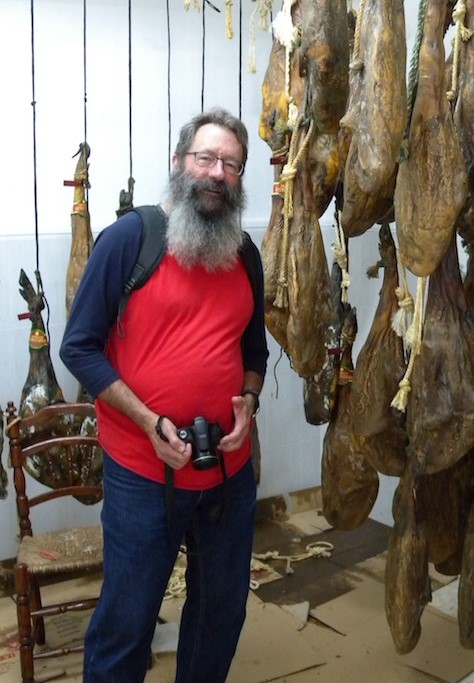 Eugene W. Schupp合作论文数Department of Wildland Resources, S. J. & Jessie E. Quinney College of Natural Resources, Utah State University20
 David A Pyke合作论文数Forest and Rangeland Ecosystem Science Center, U.S. Geological Survey, US. Department of the Interior16
 Jeanne C. Chambers合作论文数Rocky Mountain Research Station, Forest Service, United States Department of Agriculture14
 Richard F. Miller合作论文数10
 Mike Pellant合作论文数9Steven T. Knick合作论文数7
 Bruce Roundy合作论文数7
 Mark W Brunson合作论文数Department of Forest Resources, Oregon State University;Department of Forest Resources, Utah State University;Oregon State University, Utah State University7
 James Mc Iver (James Mciver)合作论文数Eastern Oregon Agricultural Research Center, Agricultural Experiment Station, College of Agricultural Sciences, Oregon State University6Lee E. Eddleman合作论文数5
 Scott E. Shaff合作论文数US Geol Survey, US Dept Interior5Robert S. Nowak合作论文数5Kimberly G. Allcock合作论文数5richard f miller合作论文数4Jr Goodwin合作论文数4michael d reisner合作论文数4
 Andrew Lindgren合作论文数4
 James Grace合作论文数Wetland and Aquatic Research Center, U.S. Geological Survey, U.S. Department of the Interior4Rg. Jaindl合作论文数4j s burnham合作论文数3Kim Rollins合作论文数3Le Eddleman合作论文数3louisa b evers合作论文数3
 Dale W. Johnson合作论文数Department of Natural Resources and Environmental Science, College of Agriculture, Biotechnology and Natural Resources, University of Nevada, Reno3Alma H. Winward合作论文数3Robin J. Tausch合作论文数3Stephen C. Bunting合作论文数3Roger L. Sheley合作论文数3
 Jeffrey L. Beck合作论文数Department of Ecosystem Science and Management, College of Agriculture and Natural Resources, University of Wyoming3Robert R. Blank合作论文数USDA-ARS Exotic and Invasive Weeds Unit, Reno, NV 89512, USA3n devoe合作论文数2s d tesch合作论文数2Ah Winward合作论文数2Rf Miller合作论文数2Fred Pierson合作论文数2
 Julie Larson合作论文数Inst Alpine & Arctic Res, Univ Colorado2Jeremy J. James合作论文数2Monica B. Mazzola合作论文数2
 Sherman Swanson合作论文数Dept of Environmental Resource Science;University of Nevada;Dept of Environmental Resource Science, University of Nevada2
 Benjamin M. Rau合作论文数2
 Ronald P. Neilson合作论文数USDA Forest Service, Pacific Northwest Research Station2
 Tony Svejcar合作论文数Eastern Oregon Agricultural Research Center2Dan Ogle合作论文数2Miles a Hemstrom合作论文数2Stuart P. Hardegree合作论文数USDA Agricultural Research Service;Northwest Watershed Research Center;USDA Agricultural Research Service, Northwest Watershed Research Center2John D. Bailey合作论文数1carla m dantonio合作论文数1JD WALSTAD合作论文数1chris call合作论文数1




