Large Language Models (LLM) are increasingly trained on data generated by other LLMs, either because generated text and images become part of the pre-training corpus, or because synthetized data is used as a replacement for expensive human-annotation. This raises concerns about *model collapse*, a drop in model performance when their training sets include generated data. Considering that it is easier for both humans and machines to tell between good and bad examples than to generate high-quality samples, we investigate the use of verification on synthesized data to prevent model collapse. We provide a theoretical characterization using Gaussian mixtures, linear classifiers, and linear verifiers to derive conditions with measurable proxies to assess whether the verifier can effectively select synthesized data that leads to optimal performance. We experiment with two practical tasks -- computing matrix eigenvalues with transformers and news summarization with LLMs -- which both exhibit model collapse when trained on generated data, and show that verifiers, even imperfect ones, can indeed be harnessed to prevent model collapse and that our proposed proxy measure strongly correlates with performance.
As AI model size grows, neural scaling laws have become a crucial tool to predict the improvements of large models when increasing capacity and the size of original (human or natural) training data. Yet, the widespread use of popular models means that the ecosystem of online data and text will co-evolve to progressively contain increased amounts of synthesized data. In this paper we ask: How will the scaling laws change in the inevitable regime where synthetic data makes its way into the training corpus? Will future models, still improve, or be doomed to degenerate up to total (model) collapse? We develop a theoretical framework of model collapse through the lens of scaling laws. We discover a wide range of decay phenomena, analyzing loss of scaling, shifted scaling with number of generations, the ”un-learning" of skills, and grokking when mixing human and synthesized data. Our theory is validated by large-scale experiments with a transformer on an arithmetic task and text generation using the large language model Llama2.
Magnetic Resonance Imaging (MRI) is a widely used medical imaging technique, but its long acquisition time can be a limiting factor in clinical settings. To address this issue, researchers have been exploring ways to reduce the acquisition time while maintaining the reconstruction quality. Previous works have focused on finding either sparse samplers with a fixed reconstructor or finding reconstructors with a fixed sampler. However, these approaches do not fully utilize the potential of joint learning of samplers and reconstructors. In this paper, we propose an alternating training framework for jointly learning a good pair of samplers and reconstructors via deep reinforcement learning (RL). In particular, we consider the process of MRI sampling as a sampling trajectory controlled by a sampler, and introduce a novel sparse-reward Partially Observed Markov Decision Process (POMDP) to formulate the MRI sampling trajectory. Compared to the dense-reward POMDP used in existing works, the proposed sparse-reward POMDP is more computationally efficient and has a provable advantage. Moreover, the proposed framework, called L2SR (Learning to Sample and Reconstruct), overcomes the training mismatch problem that arises in previous methods that use dense-reward POMDP. By alternately updating samplers and reconstructors, L2SR learns a pair of samplers and reconstructors that achieve state-of-the-art reconstruction performances on the fastMRI dataset. Codes are available at \url{https://github.com/yangpuPKU/L2SR-Learning-to-Sample-and-Reconstruct}.
 Elvis Dohmatob合作论文数Concordia University;Mila - Quebec Artificial Intelligence Institute2
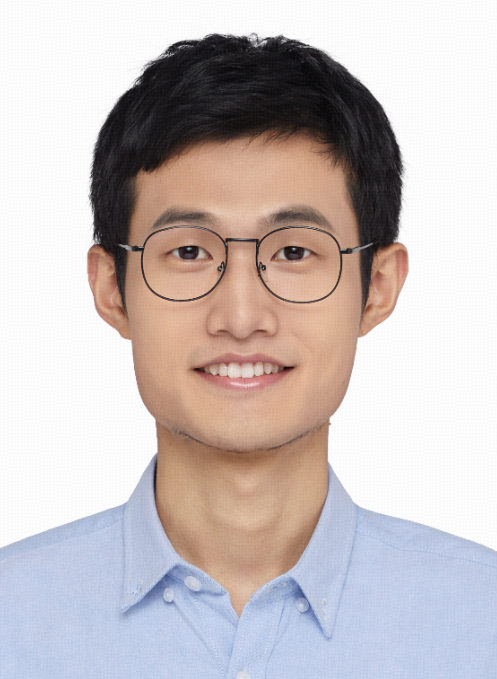 Yunzhen Feng (冯韫禛)合作论文数Center for Data Science, New York University2
 Julia Kempe合作论文数Center for Data Science, New York University;Meta FAIR Paris;CNRS2
 Francois Charton合作论文数Facebook AI Research;Meta AI2
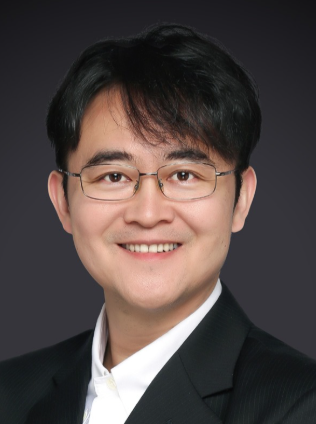 Bin Dong (董彬)合作论文数Beijing International Center for Mathematical Research, Peking University;Center for Machine Learning Research, Peking University;National Engineering Laboratory for Big Data Analysis and Applications, Peking University1




