Image anomaly detection holds significant potential across various domains. The scarcity of anomaly samples in real-world scenarios makes unsupervised anomaly detection more practical, as acquiring a substantial number of anomaly samples is often challenging. Despite the progress made by image reconstruction-based methods in this task, their reliance on fuzzy reconstruction images and the complexity of post-processing have posed challenges to the overall performance of anomaly detection. To address this issue, this paper proposes a novel Enhanced Reverse Distillation Guided Segmentation Network(ERDS-Net). Unlike conventional approaches, this network consolidates the image reconstruction and anomaly detection into a unified process, leveraging feature maps from the intermediate layers of both the encoder and decoder for segmentation. In addition, our model fully leverages a batch-wise attention mechanism, focusing on more challenging samples. This method aims to enhance overall performance by simplifying the process and mitigating the adverse effects of blurriness and complex post-processing. Moreover, this paper utilizes a self-supervised approach for training in order to extract additional information from unlabeled data. Experimental results demonstrate the outstanding effectiveness of the proposed Enhanced Reverse Distillation Guided Segmentation Network on the MVTec dataset. In comparison to traditional image reconstruction-based methods, the new approach exhibits superior performance in anomaly detection and localization tasks, demonstrating enhanced robustness with various metrics.
Hybrid precoding in cell-free massive MIMO (CF-mMIMO) faces many challenges, e.g., large cascaded beamspace and high signaling overhead. In this letter, we propose a two-stage distributed beam selection for CF- mMIMO hybrid precoding. Each base station (BS) first learns an efficient beamspace compression with a deep neural network (DNN) from the local received signal strength indicator (RSSI), based on which good beam-selection labels are obtained with a proposed potential game algorithm. By learning the mapping from local RSSI to the corresponding label, a DenseNet-based online local beam selection can be realized at each BS. Simulations verify the effectiveness of our proposed scheme.
With the increasing sensing and computing power of vehicles, beam selection solutions based on deep learning (DL) and sensor data have attracted attention in vehicle-to-infrastructure (V2I) scenarios. The existing DL-based beam selection solutions generally provide a single global model for all vehicles. However, since the data distributions across vehicles are generally different in practice, the single model may not be suitable for all vehicles. In this letter, we propose a novel personalized beam selection solution, in which each user has a tailored model. Furthermore, we propose a mask-based pre-training and fine-tuning algorithm to accomplish the personalization for beam selection. Simulation results demonstrate that the proposed personalized solution has better performance than the conventional baselines.
Side information, like light detection and ranging data, is promising to help the millimeter wave (mmWave) system achieve efficient link configuration through machine learning methods. However, collecting and using this information may violate user privacy. In this letter, we propose a novel privacy-preserved split learning (SL) solution for the beam selection problem, in which the raw data is not uploaded during training and inference. In particular, it uses the proposed feature mix method to get better generalization performance and robustness to non-independently identically distribution (non-iid) data. Extensive experiments demonstrate that the proposed method outperforms learning-based baselines (e.g. the original SL and federated learning) in a variety of settings.
Ultra-Dense Network (UDN) has become a key technology in 5G communication systems. By deploying low power micro base stations (BSs) densely and flexibly to reduce the distance between access nodes and user equipments (UEs), the spectrum efficiency and energy efficiency of the network can be improved effectively. But at the same time, it also poses new challenges for power control and user association. In this paper, the joint optimization problem of user association and power control of the downlink in a UDN scenario is considered. To make full use of channel information, we build a graph model with UEs as nodes and leverage the Spectral Clustering algorithm for user association. Then we build a graph model with BSs as nodes for the UDN scenario and train an unsupervised graph neural network to achieve power allocation. The analysis of the simulation results verifies the convergence of the proposed scheme which is effective in achieving user association and power control in UDN.
Salient object detection is a fundamental computer vision task. The majority of current algorithms focus on the use of edge information. However, these algorithms are limited to one-way auxiliary training or feature fusion to improve salient features. In this paper, we propose a novel framework for salient object detection, called Bi-Directional Selectivity Refinement Network (BSRN). Our framework aims to simultaneously refine salient features and perfect edge features through a Bi-directional Selectivity Refinement Module (BSRM). In this process, we innovatively combine short connections and attention mechainsm to fully use multi-scale features, selectively enhance features, reduce redundancy and suppress distractors. Besides, in order to improve the adaptability to detect multi-scale objects and achieve better result, we also propose a Multi-scale Feature Extraction Module (MFEM) to capture global contextual information. Extensive experiments conducted on four benchmark datasets demonstrate that our method outperforms 10 similar methods.
The beamforming technology of the new fifth generation (5G) communication technology, different from the conventional ones, is updated by millimeter-wave technology, which makes the modeling of transmission behavior more difficult. In this paper, we propose a more accurate model of 5G transmission behavior, considering a complex transmission environment with randomly distributed interferences. Moreover, based on the proposed model, we give a method of estimating the optimal density of the base stations, distributed in the certain environment. Monte Carlo Simulations in this paper support the validity of our estimation model.
There emerges an increasing need to stimulate trustworthy computer-aided authentication to provide solid technical support in commerce. Recently, remarkable advances have been made in text recognition, primarily driven by the success of Faster R-CNN [1] and DenseNet [2]. However, these networks failed to realize superb identification of business license, exposing accurate object detection as a bottleneck. In this work, we have introduced the multi-thread business license identification system based on modified DenseNet that achieves improvement of precision, simultaneously enabling specific management of license number. Experimental results validate that our system surpasses the original result by a relatively large margin in accuracy, further emphasizing the significance of the independent branch for license number.
Recently, convolutional neural networks (CNNs) have made a big splash in the field of semantic segmentation, achieving very high segmentation accuracy. In order to meet the requirement of real-time inference, existing methods increase inference speed by reducing the image resolution, leading to lower segmentation performance. We propose in this work a multi-level feature fusion network referred to as MLFFNet that utilizes a novel deep neural network architecture for efficient and real-time semantic segmentation. To strike a balance between speed and performance, MLFFNet substantially reduces the computational complexity by using a lightweight feature extraction network to implement feature reuse through multi-level feature fusion. In addition, MLFFNet targets at excellent segmentation performance through a channel attention mechanism and dilated convolutions with different rates. Specifically, MLFFNet achieves 72.6% mIoU on Cityscapes with the speed of 68.3 FPS on one NVIDIA Titan X card, which is significantly faster than the existing methods with comparable performance.
Fine-grained visual recognition is challenging since the inter-category differences are more subtle compared with the conspicuous intra-category variations. Bilinear pooling that captures the second-order statistics of convolutional features has proved to be effective in such tasks. Since common bilinear methods neglect the original shallow feature information extracted from basic convolutional neural networks, we introduce a novel weakly supervised Hybrid-order and Multi-stream Convolutional Neural Network (HM-CNN) to address this problem. The model applies multi-scale fusion to integrate feature maps at all scales, and then employs hybrid-order pooling to combine the first-order statistics with the second-order bilinear features across spatial locations. Additionally, a cross multi-stream framework built on three basic networks is utilized to enhance the robustness of our model. Results demonstrate that the HM-CNN significantly improves the accuracy by 1-3% than the state-of-the-art models on three popular fine-grained recognition datasets.
Different from the conventional receive scheme for millimetre wave (mmWave) communication, this study proposes a multi-beam receive scheme to improve the quality of the received signal and enhance the robustness of the system. The authors proposal is firstly formulated as an optimisation problem, where each signal received by different beams is combined through phase compensation to harvest more transmission energy. Then the original problem is divided into a series of sub-problems and an analytical solution is further obtained for each sub-problem. Furthermore, considering the spatial sparsity of the mmWave channel, they propose further a low-computational complexity algorithm by choosing a few candidate codewords with non-negligible receive signal power. Numerical results show that their proposal achieves remarkable performance improvements even with a small size codebook and is more robust for different scenarios, especially for a non-line of sight scenario. Compared with doubling receive antennas to obtain diversity gain, their proposal obtains larger signal-to-noise ratio gain while using fewer hardware resources.
激励更多用户参与感知任务并提供高质量数据是移动群智感知研究的热点问题之一.针对在线到达的激励机制场景中,参与用户提供数据的质量以及其信誉值没有得到足够重视等问题,本文提出用户在线参与感知任务的信誉评价方法并构建其信誉评价模型.综合考虑用户历史和现实的信誉记录,建立信誉更新算法模型,设计基于信誉更新的多阶段在线激励机制(Reputation-updated online mechanism,ROM).仿真结果表明,该算法能够帮助平台获得更好的效用,提高收集数据的质量从而提高雇佣效率.
Millimeter wave (mmWave) massive multiple-input single-output (MISO) technologies provide a possibility for using the available wireless communication infrastructure to realize full dimension (FD) positioning. In this paper, we propose a novel beam training based positioning and angle of departure (AoD) estimation algorithm. The positioning process is formulated as a minimization problem of the sum distance square between the position of the user equipment (UE) and a point on each ray of access points. By solving the minimization problem, an analytical solution of the position of the UE is derived. Since the direction vector, i.e., AoD information, is the core of positioning algorithm, we propose a beam training based AoD estimation method which consists of coarse and fine estimation phases to obtain the AoD of the propagation path. Numerical results show that the proposed AoD estimation algorithm achieves satisfactory performance when 3 dB beamwidth cover all the direction of the paths and has relative high accuracy even all direction is not completely covered. Compared with least square estimation for FD positioning, our approach estimates the position of the UE more accurate.
为了增强毫米波传输的系统性能及扩大其覆盖范围,数模混合(大规模)多输入多输出(MIMO)传输技术得到了广泛关注.本文针对分离型子阵列混合波束成型架构的毫米波通信系统,研究了基于码本的低复杂度优化子阵列波束控制矢量算法.采用交替优化方法及干扰对齐思想,本文提出了一种双向交替优化设计各收发子阵列的波束控制矢量算法.所提出的算法具有收敛速度快,计算复杂度低的特点.数值仿真结果表明,基于该算法设计的分离型子阵列混合波束成型传输方案的有效性及复杂度低的优越性.
Low Rank Matrix Factorization (LRMF) is a classical problem that arises in a wide range of practical contexts, especially in collaborative filtering, dimension reduction, etc. In this paper, a stochastic alternating minimization approach applied to LRMF problem is proposed. The main idea of the approach is to randomly sample partial rows of the matrix to perform parameter update during training using alternating minimization, which not only reduces the computational requirements but also declines the over-fitting risk. The simulation results on synthetic datasets show that both alternating minimization-based algorithm and the proposed stochastic variant are applicable for LRMF task, while the proposed algorithm is more competitive for large-scale datasets due to its low-complexity and scalability.
In this paper, we investigate the channel estimation and time synchronization problem based on the zero correlation zone (ZCZ) sequence set for single carrier multiple-input multiple-output frequency domain equalization (SC-MIMO-FDE). A factorized construction of ZCZ sequence set considering the properties of both ZCZ and nonzero correlation zone (NCZ) is proposed with efficient generator and correlator, which can be in favor of timing synchronization and channel estimation both in performance and computation complexity. Using the ZCZ sequence set, a new algorithm called twice section-maximum algorithm is put forward to eliminate energy interference among channels from different transmitting antennas to the same receiving antenna. The performance achieved by the developed algorithm which performs joint timing synchronization and channel estimation with lower computational cost is better than that of the conventional method.
This paper studies a method of using pilot to do sampling frequency synchronization and residual phase tracking to optimize pilot location for IEEE 802.1 1 OFDM system,which is considered in the respect of using pilot interval.Based on the IEEE 802.1 1 standard frame format,using the method of numerical simulation method to make performance analysis of the identified position of pilot and frequency offset estimation compensation algorithm.Numerical simulation results show that the proposed method of optimizing pilot location and frequency offset estimation and compensation algorithm,under the condition of without raising system complexity,can significantly improve the system performance.
In this paper, an enhanced power-save multi-poll (PSMP) combining conventional PSMP with Downlink Multiuser Multiple Input Multiple Output (MU-MIMO) is proposed to further improve the energy efficiency of wireless local area network (WLAN) communication system, especially for multiuser WLAN system. The energy consumption in PSMP downlink transmission time (DTT) of the conventional PSMP and the proposed enhanced PSMP scheme are compared via extensive numerical simulation. Numerical analysis results show that the proposed enhanced PSMP scheme consumes less energy than the conventional PSMP when each station (STA) only has one spatial stream to receive. As the number of spatial streams of STAs in conventional PSMP increases, the energy consumption of our proposed enhanced PSMP is still lower than conventional PSMP for short PSDU.
The training mode of innovative talents requests that the teachers should develop the students' creative talents as well as the professional knowledge and skills in their teaching program.For this purpose,focusing on the teaching process of the Basis of Computer Science course,this paper probes to a teaching mode combining what to do it with how to do it.That is to say,it is of great importance for teachers to prompt students to think for themselves how to do it,rather than tell students what to do it all along.The teaching practices have verified that the proposed teaching mode is effective and practical.
 Luxi Yang (杨绿溪)合作论文数School of Information Science and Engineering, Southeast University33
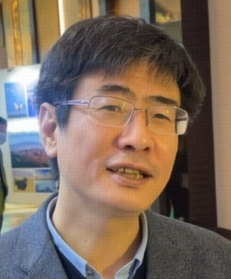 Wenjiang Pei (裴文江)合作论文数School of Information Science and Engineering, Southeast University12
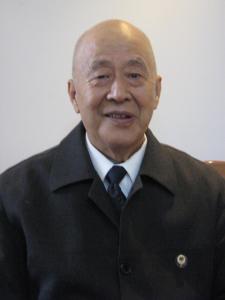 Zhenya He (何振亚)合作论文数School of Information Science and Engineering, Southeast University11
 Shiwen He (何世文)合作论文数School of Computer Science and Engineering, Central South University7
 Pinzheng Zhang (章品正)合作论文数School of Computer Science and Engineering, Southeast University5
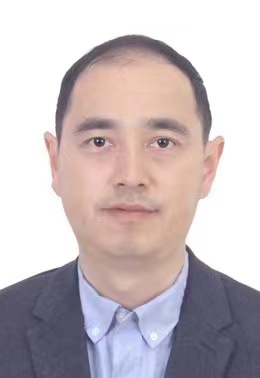 Yongming Huang (黄永明)合作论文数School of Information Science and Engineering, Southeast University;Purple Mountain Laboratories4
 Qiangfu Zhao (赵强福)合作论文数Department of Computer Science and Engineering, University of Aizu4
 Huazhong Shu (舒华忠)合作论文数School of Artificial Intelligence, Southeast University3
 Suiren Wan合作论文数2
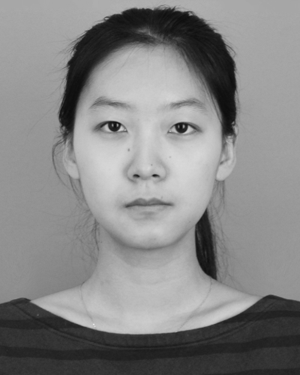 Muchen Tian合作论文数2
 Yang Liu (刘洋)合作论文数School of Vehicle and Mobility, Tsinghua University2
 Chunlin Xue合作论文数2Fei-fei OU (欧飞飞)合作论文数2
 Weicong Chen合作论文数Microsoft2
 Zhimao Bai (白志茂)合作论文数School of Public Health, Southeast University2
 Zhengming Zhang合作论文数School of Information Science and Engineering, Southeast University2
 Chunguo Li (李春国)合作论文数School of Information Science and Engineering, Southeast University2Yu Wang合作论文数1Wentao Shao合作论文数1Peiting Li合作论文数1Zhenyang Lin合作论文数1Junbin Yuan合作论文数1Hengrui Gu合作论文数1SUN Qing-qing (孙庆庆)合作论文数1Wang Zheng合作论文数1Yu Sun合作论文数1LI Juan (李娟)合作论文数1Zhe Yang (杨哲)合作论文数1
 Xiangyu Zhang合作论文数School of Information Science and Engineering, the National Mobile Communications Research Laboratory, and the Frontiers Science Center for Mobile Information Communication and Security,, Southeast University, Nanjing, China1Lin TIAN (田琳)合作论文数1
 Wen Yan合作论文数Southeast Univ, Sch Informat Sci & Engn, Nanjing 210096, Jiangsu, Peoples R China1
 Rui Pu合作论文数South China Normal Univ, South China Acad Adv Optoelect, Ctr Opt & Electromagnet Res, Guangzhou 510006, Guangdong, Peoples R China1Chunli Ma合作论文数1Feng CHEN (陈峰)合作论文数1
 Ju Ren (任炬)合作论文数Department of Computer Science and Technology, Tsinghua University1Su Gao合作论文数1
 Haiming Wang (王海明)合作论文数School of Information Science and Engineering, Southeast University1
 Zheng Wang (王征)合作论文数School of New Media and Communication, Tianjin University1
 Lu Wang (王璐)合作论文数Qinghai University1
 Jiantao Zhou (周建濤)合作论文数Department of Computer and Information Science, Faculty of Science;and Technology, University of Macau1
 Wenyuan Li (李文渊)合作论文数School of Information Science and Engineering, Southeast University1Yanfen Guo (郭延芬)合作论文数1
 Cheng Zhang (张铖)合作论文数School of Information Science and Engineering, Southeast University1
 Feng He (何峰)合作论文数School of Information Science and Engineering, Southeast University1
 Xu Li (李旭)合作论文数School of Instrument Science and Engineering, Southeast University1
 Aiguo Song (宋爱国)合作论文数School of Instrument Science and Engineering, Southeast University1
 Zixiang Xiong合作论文数Department of Electrical and Computer Engineering, College of Engineering, Texas A&M University1




