On-device inference offers privacy, offline use, and instant response, but consumer hardware restricts large language models (LLMs) to low throughput and capability. To overcome this challenge, we present prima.cpp, a distributed on-device inference system that runs 30-70B LLMs on consumer home clusters with mixed CPUs/GPUs, insufficient RAM/VRAM, slow disks, Wi-Fi links, and heterogeneous OSs. We introduce pipelined-ring parallelism (PRP) to overlap disk I/O with compute and communication, and address the prefetch-release conflict in mmap-based offloading. We further propose Halda, a heterogeneity-aware scheduler that co-optimizes per-device CPU/GPU workloads and device selection under RAM/VRAM constraints. On four consumer home devices, a 70B model reaches 674 ms/token TPOT with <6% memory pressure, and a 32B model with speculative decoding achieves 26 tokens/s. Compared with llama.cpp, exo, and dllama, our proposed prima.cpp achieves 5-17× lower TPOT, supports fine-grained model sizes from 8B to 70B, ensures broader cross-OS and quantization compatibility, and remains OOM-free, while also being Wi-Fi tolerant, privacy-preserving, and hardware-independent. The code is available at https://anonymous.4open.science/r/prima-cpp.
Training large language models requires jointly configuring two interdependent aspects of the system: the global batch size, which governs statistical efficiency, and the 3D parallelism strategy, which governs hardware throughput. Existing approaches make these decisions independently: optimization work adapts the batch size to track the evolving critical batch size while keeping parallelism fixed, and systems work selects the fastest parallelism for a given fixed batch size without anticipating that the optimal batch size could change. We show that these decisions are tightly coupled: the throughput-optimal parallelism strategy may shift as the global batch size changes, so any method that fixes one while adapting the other operates with a suboptimal configuration for part of the training run. We present COPUS, a system that adaptively tunes the global batch size, parallelism strategy, and micro-batch size as training evolves. COPUS is guided by Goodput, the product of throughput and statistical efficiency, which models both hardware and statistical effects jointly and directly measures useful convergence per unit of wall-clock time. The system combines online gradient noise scale estimation under 3D parallelism with throughput-aware evaluation of candidate configurations, and supports efficient reconfiguration of both batch size and parallelism during training. We evaluate COPUS on LLM pre-training workloads across 1-4 nodes of 8xH100 and 8xMI210 GPUs and model sizes from 3B to 32B parameters, demonstrating average time-to-convergence speedups of 3.9-8.0
LAPS identifies and disaggregates requests with different prompt lengths in LLM serving to reduce TTFT latency. While recent systems have decoupled the prefill and decode stages to improve throughput, they still rely on unified scheduling policies that fail to adapt to heterogeneous workload characteristics. We observe that prompt-length variations lead to distinct performance bottlenecks, motivating an adaptive scheduling strategy. LAPS disaggregates multi-turn long-prefill requests from short-prefill ones and introduces a length-aware smart batching mechanism for short-prefill workloads. It adopts a dual-queue design that supports temporal disaggregation on a single prefill instance or spatial disaggregation across multiple instances. For short-prefill batches, a batch waiting window and CUDA Graph-based clustering mitigate interference from heterogeneous computation, reducing batching delay and lowering average latency. In real multi-turn workloads, LAPS reduces prefill latency by over 30% compared to vanilla SGLang under prefill-decode disaggregation, and further decreases SLO violations by 28% in multi-instance deployments with vanilla data-parallel configuration. Compared to the SGLang router with load balancing, it further lowers SLO violations by 12% in multi-GPU settings. Under high concurrency and mixed-request scenarios, LAPS improves request throughput by 35% serving Qwen2.5-32B model for prefill instance, demonstrating its effectiveness in optimizing heterogeneous LLM serving workloads.
Short-form video platforms are major channels for news but also fertile ground for multimodal misinformation where each modality appears plausible alone yet cross-modal relationships are subtly inconsistent, like mismatched visuals and captions. On two benchmark datasets, FakeSV (Chinese) and FakeTT (English), we observe a clear asymmetry: real videos exhibit high text-visual but moderate text-audio consistency, while fake videos show the opposite pattern. Moreover, a single global consistency score forms an interpretable axis along which fake probability and prediction errors vary smoothly. Motivated by these observations, we present MAGIC3 (Modal-Adversarial Gated Interaction and Consistency-Centric Classifier), a detector that explicitly models and exposes cross-tri-modal consistency signals at multiple granularities. MAGIC3 combines explicit pairwise and global consistency modeling with token- and frame-level consistency signals derived from cross-modal attention, incorporates multi-style LLM rewrites to obtain style-robust text representations, and employs an uncertainty-aware classifier for selective VLM routing. Using pre-extracted features, MAGIC3 consistently outperforms the strongest non-VLM baselines on FakeSV and FakeTT. While matching VLM-level accuracy, the two-stage system achieves 18-27x higher throughput and 93
Language models can be steered by modifying their internal representations to control concepts such as emotion, style, or truthfulness in generation. However, the conditions for an effective intervention remain unclear and are often validated through heuristics and trial-and-error. To fill this gap, we demonstrate that intervention efficacy, measured by linear steerability (i.e., the ability to adjust output via linear transformations of hidden states), emerges during intermediate stages of training. Moreover, even closely related concepts (e.g., anger and sadness) exhibit steerability emergence at distinct stages of training. To better interpret the dynamics of steerability during training, we adapt existing intervention techniques into a unified framework, referred to as the "Intervention Detector" (ID), which is designed to reveal how linear steerability evolves over the course of training through hidden state and representation analysis. ID reveals that concepts become increasingly linearly separable in the hidden space as training progresses, which strongly correlates with the emergence of linear steerability. We further introduce ID-based metrics, such as heatmaps, entropy trends, and cosine similarity, to help interpret how linear steerability evolves throughout training. In addition, we apply ID across different model families to ensure the generality of our findings on steerability dynamics.
Chain-of-Thought (CoT) reasoning has demonstrated remarkable effectiveness in enhancing the reasoning abilities of large language models (LLMs). However, its efficiency remains a challenge due to the generation of excessive intermediate reasoning tokens, which introduce semantic redundancy and overly detailed reasoning steps. Moreover, computational expense and latency are significant concerns, as the cost scales with the number of output tokens, including those intermediate steps. In this work, we observe that most CoT tokens are unnecessary, and retaining only a small portion of them is sufficient for producing high-quality responses. Inspired by this, we propose HAWKEYE, a novel post-training and inference framework where a large model produces concise CoT instructions to guide a smaller model in response generation. HAWKEYE quantifies redundancy in CoT reasoning and distills high-density information via reinforcement learning. By leveraging these concise CoTs, HAWKEYE is able to expand responses while reducing token usage and computational cost significantly. Our evaluation shows that HAWKEYE can achieve comparable response quality using only 35
Language models can be steered by modifying their internal representations to control concepts such as emotion, style, or truthfulness in generation. However, the conditions for an effective intervention remain unclear and are often validated through heuristics and trial-and-error. To fill this gap, we demonstrate that intervention efficacy, measured by linear steerability (i.e., the ability to adjust output via linear transformations of hidden states), emerges during intermediate stages of training. Moreover, even closely related concepts (e.g., anger and sadness) exhibit steerability emergence at distinct stages of training*.To better interpret the dynamics of steerability during training, we adapt existing intervention techniques into a unified framework, referred to as the “Intervention Detector” (ID), which is designed to reveal how linear steerability evolves over the course of training through hidden state and representation analysis. ID reveals that concepts become increasingly linearly separable in the hidden space as training progresses, which strongly correlates with the emergence of linear steerability. We further introduce ID-based metrics, such as heatmaps, entropy trends, and cosine similarity, to help interpret how linear steerability evolves throughout training. In addition, we apply ID across different model families to ensure the generality of our findings on steerability dynamics.
Node and link churn in multi-party, cross-region clusters over wide-area networks (WANs) often disrupts distributed training. However, checkpoint-based recovery and cloud-centric autoscaling react slowly and assume centralized control, which is misaligned with the self-governed setup where institutions can freely join and leave. This paper proposes Chaos, a multi-party distributed training system with self-healing and autoscaling, enabling robust and elastic training under churn. It speeds up autoscaling via multi-neighbor state replication and model sharding. We formalize the sharding and assignment as a MINLP that captures WAN heterogeneity, and reduce it to a tractable MILP by analyzing its monotonicity on a divisibility chain. By establishing an equivalence, we derive a greedy algorithm that follows optimality rules and yields the optimal solution in polynomial time. Chaos uses a cluster monitor to track resource and topology changes, and handles scaling events through peer negotiation protocols, enabling fully self-governed autoscaling among institutions. Experiments show that Chaos has substantially lower scale-out delay than Pollux, Elan, and Autoscaling, and handles scale-in, connect-link, and disconnect-link events within 20ms. It also delivers the lowest idle time, showing superior resource use and scalability as the cluster grows.
The computational complexity of large language model (LLM) inference significantly constrains their deployment efficiency on edge devices. In contrast, small language models offer faster decoding and lower resource consumption but often suffer from degraded response quality and heightened susceptibility to hallucinations. To address this trade-off, collaborative decoding, in which a large model assists in generating critical tokens, has emerged as a promising solution. This paradigm leverages the strengths of both model types by enabling high-quality inference through selective intervention of the large model, while maintaining the speed and efficiency of the smaller model. In this work, we present a novel collaborative decoding inference system that allows small models to perform on-device inference while selectively consulting a cloud-based large model for critical token generation. Remarkably, the system achieves a 60% performance gain on CommonsenseQA using only a 0.5B model on an M1 MacBook, with under 7% of tokens generation uploaded to the large model in the cloud.
Rapid LLM advancements heighten fake news risks by enabling the automatic generation of increasingly sophisticated misinformation. Previous detection methods, including fine-tuned small models or LLM-based detectors, often struggle with its dynamically evolving nature. In this work, we propose a novel framework called the Symbolic Adversarial Learning Framework (SALF), which implements an adversarial training paradigm by an agent symbolic learning optimization process, rather than relying on numerical updates. SALF introduces a paradigm where the generation agent crafts deceptive narratives, and the detection agent uses structured debates to identify logical and factual flaws for detection, and they iteratively refine themselves through such adversarial interactions. Unlike traditional neural updates, we represent agents using agent symbolic learning, where learnable weights are defined by agent prompts, and simulate back-propagation and gradient descent by operating on natural language representations of weights, loss, and gradients. Experiments on two multilingual benchmark datasets demonstrate SALF’s effectiveness, showing it generates sophisticated fake news that degrades state-of-the-art detection performance by up to 53.4% in Chinese and 34.2% in English on average. SALF also refines detectors, improving detection of refined content by up to 7.7%. We hope our work inspires further exploration into more robust, adaptable fake news detection systems.
Cryo-Electron Tomography (Cryo-ET) enables detailed 3D visualization of cellular structures in near-native states but suffers from low signal-to-noise ratio due to imaging constraints. Traditional denoising methods and supervised learning approaches often struggle with complex noise patterns and the lack of paired datasets. Self-supervised methods, which utilize noisy input itself as a target, have been studied; however, existing Cryo-ET self-supervised denoising methods face significant challenges due to losing information during training and the learned incomplete noise patterns. In this paper, we propose a novel self-supervised learning model that denoises Cryo-ET volumetric images using a single noisy volume. Our method features a U-shape J-invariant blind spot network with sparse centrally masked convolutions, dilated channel attention blocks, and volume unshuffle/shuffle technique. The volume-unshuffle/shuffle technique expands receptive fields and utilizes multi-scale representations, significantly improving noise reduction and structural preservation. Experimental results demonstrate that our approach achieves superior performance compared to existing methods, advancing Cryo-ET data processing for structural biology research
Grounding external knowledge can enhance the factuality of responses in dialogue generation. However, excessive emphasis on it might result in the lack of engaging and diverse expressions. Through the introduction of randomness in sampling, current approaches can increase the diversity. Nevertheless, such sampling method could undermine the factuality in dialogue generation. In this study, to discover a solution for advancing creativity without relying on questionable randomness and to subtly reconcile the factuality and diversity within the source-grounded paradigm, a novel method named DoGe is proposed. DoGe can dynamically alternate between the utilization of internal parameter knowledge and external source knowledge based on the model's factual confidence. Extensive experiments on three widely-used datasets show that DoGe can not only enhance response diversity but also maintain factuality, and it significantly surpasses other various decoding strategy baselines.
The training or fine-tuning of machine learning, vision, and language models is often implemented as a pipeline: a sequence of stages encompassing data preparation, model training and evaluation. In this paper, we exploit pipeline structures to reduce the cost of hyperparameter tuning for model training/fine-tuning, which is particularly valuable for language models given their high costs in GPU-days. We propose a "memoization-aware" Bayesian Optimization (BO) algorithm, EEIPU, that works in tandem with a pipeline caching system, allowing it to evaluate significantly more hyperparameter candidates per GPU-day than other tuning algorithms. The result is better-quality hyperparameters in the same amount of search time, or equivalently, reduced search time to reach the same hyperparameter quality. In our benchmarks on machine learning (model ensembles), vision (convolutional architecture) and language (T5 architecture) pipelines, we compare EEIPU against recent BO algorithms: EEIPU produces an average of 103% more hyperparameter candidates (within the same budget), and increases the validation metric by an average of 108% more than other algorithms (where the increase is measured starting from the end of warm-up iterations).
Bayesian optimization (BO) is an effective approach for optimizing expensive black-box functions via potentially noisy function evaluations. However, few BO techniques address the cost-aware setting, in which different samples impose different costs on the optimizer, particularly when costs are initially unknown. This cost-aware BO setting is of special interest in tuning multi-stage AI pipelines, in which we could apply caching techniques to store and reuse early-stage outputs in favor of optimizing later stages, without incurring the costs of re-running the full pipeline. In this paper, we propose the Expected-Expected Improvement Per Unit Cost (EEIPU), a novel extension to the Expected Improvement (EI) acquisition function that adapts to unknown costs in multi-stage pipelines. EEIPU fits individual Gaussian Process (GP) models for each stage's cost data and manages the different cost regions of the search space, while balancing exploration-exploitation trade-offs. Additionally, EEIPU incorporates early-stage memoization, reducing redundant computations and costs by reusing the results of earlier stages, allowing for more iterations than existing approaches within the specified budget. In the cost-aware setting, EEIPU significantly outperforms comparable methods when tested on both synthetic and real pipelines, returning higher objective function values at lower total execution costs. This offers a significant advancement in cost-aware BO for optimizing multi-stage machine learning pipelines.
Unsupervised identification of disentangled representations remains a challenging problem. Recent progress in nonlinear Independent Component Analysis (ICA) provides a promising causal representation learning framework by separating latent sources from observable nonlinear mixtures. However, its identifiability hinges on the incorporation of side information, such as time or domain indexes, which are challenging to obtain adequately offline in real-world scenarios. In this paper, we develop a novel approach for nonlinear ICA that effectively accommodates continually arriving domains. We first theoretically demonstrate that model identifiability escalates from subspace to component-wise identifiability as new domains are involved. It motivates us to maintain prior knowledge and progressively refine it using new arriving domains. Upon observing a new domain, our approach optimizes the model by satisfying two objectives: (1) reconstructing the observations within the current domain, and (2) preserving the reconstruction capabilities for prior domains through gradient constraints. Experiments demonstrate that our method achieves performance comparable to nonlinear ICA methods trained jointly on multiple offline domains, demonstrating its practical applicability in continual learning scenarios.
Identifying the causal relations between interested variables plays a pivotal role in representation learning as it provides deep insights into the dataset. Identifiability, as the central theme of this approach, normally hinges on leveraging data from multiple distributions (intervention, distribution shift, time series, etc.). Despite the exciting development in this field, a practical but often overlooked problem is: what if those distribution shifts happen sequentially? In contrast, any intelligence possesses the capacity to abstract and refine learned knowledge sequentially -- lifelong learning. In this paper, with a particular focus on the nonlinear independent component analysis (ICA) framework, we move one step forward toward the question of enabling models to learn meaningful (identifiable) representations in a sequential manner, termed continual causal representation learning. We theoretically demonstrate that model identifiability progresses from a subspace level to a component-wise level as the number of distributions increases. Empirically, we show that our method achieves performance comparable to nonlinear ICA methods trained jointly on multiple offline distributions and, surprisingly, the incoming new distribution does not necessarily benefit the identification of all latent variables.
Knowledge-grounded dialogue generation aims to mitigate the issue of text degeneration by incorporating external knowledge to supplement the context. However, the model often fails to internalize this information into responses in a human-like manner. Instead, it simply inserts segments of the provided knowledge into generic responses. As a result, the generated responses tend to be tedious, incoherent, and in lack of interactivity which means the degeneration problem is still unsolved. In this work, we first find that such copying-style degeneration is primarily due to the weak likelihood objective, which allows the model to "cheat" the objective by merely duplicating knowledge segments in a superficial pattern matching based on overlap. To overcome this challenge, we then propose a Multi-level Adaptive Contrastive Learning (MACL) framework that dynamically samples negative examples and subsequently penalizes degeneration behaviors at both the token-level and sequence-level. Extensive experiments on the WoW dataset demonstrate the effectiveness of our approach across various pre-trained models.
Weight decay is a standard technique to improve generalization performance in modern deep neural network optimization, and is also widely adopted in federated learning (FL) to prevent overfitting in local clients. In this paper, we first explore the choices of weight decay and identify that weight decay value appreciably influences the convergence of existing FL algorithms. While preventing overfitting is crucial, weight decay can introduce a different optimization goal towards the global objective, which is further amplified in FL due to multiple local updates and heterogeneous data distribution. To address this challenge, we develop {\it Federated optimization with Normalized Annealing Regularization} (FedNAR), a simple yet effective and versatile algorithmic plug-in that can be seamlessly integrated into any existing FL algorithms. Essentially, we regulate the magnitude of each update by performing co-clipping of the gradient and weight decay. We provide a comprehensive theoretical analysis of FedNAR's convergence rate and conduct extensive experiments on both vision and language datasets with different backbone federated optimization algorithms. Our experimental results consistently demonstrate that incorporating FedNAR into existing FL algorithms leads to accelerated convergence and heightened model accuracy. Moreover, FedNAR exhibits resilience in the face of various hyperparameter configurations. Specifically, FedNAR has the ability to self-adjust the weight decay when the initial specification is not optimal, while the accuracy of traditional FL algorithms would markedly decline. Our codes are released at \href{https://github.com/ljb121002/fednar}{https://github.com/ljb121002/fednar}.
Unpaired image-to-image translation aims to translate an input image to another domain such that the output image looks like an image from another domain while important semantic information are preserved. Inferring the optimal mapping with unpaired data is impossible without making any assumptions. In this paper, we make a density changing assumption where image patches of high probability density should be mapped to patches of high probability density in another domain. Then we propose an efficient way to enforce this assumption: we train the flows as density estimators and penalize the variance of density changes. Despite its simplicity, our method achieves the best performance on benchmark datasets and needs only $56-86\%$ of training time of the existing state-of-the-art method. The training and evaluation code are avaliable at $$\url{https://github.com/Mid-Push/Decent}.$$
We study a novel and important communication pattern in large-scale model-parallel deep learning (DL), which we call cross-mesh resharding. This pattern emerges when the two paradigms of model parallelism - intra-operator and inter-operator parallelism - are combined to support large models on large clusters. In cross-mesh resharding, a sharded tensor needs to be sent from a source device mesh to a destination device mesh, on which the tensor may be distributed with the same or different layouts. We formalize this as a many-to-many multicast communication problem, and show that existing approaches either are sub-optimal or do not generalize to different network topologies or tensor layouts, which result from different model architectures and parallelism strategies. We then propose two contributions to address cross-mesh resharding: an efficient broadcast-based communication system, and an "overlapping-friendly" pipeline schedule. On microbenchmarks, our overall system outperforms existing ones by up to 10x across various tensor and mesh layouts. On end-to-end training of two large models, GPT-3 and U-Transformer, we improve throughput by 10% and 50%, respectively.
 Eric P. Xing合作论文数Computer Science Department, School of Computer Science, Carnegie Mellon University;Mohamed bin Zayed University of Artificial Intelligence;Petuum56
 Jin Kyu Kim合作论文数14
 Wei Dai合作论文数Stealth Startup14
 Garth Gibson合作论文数Department of Computer Science, Carnegie Mellon University;Department of Electrical and Computer Engineering, Carnegie Mellon University;School of Computer Science, Carnegie Mellon University13
 Jinliang Wei (韦金良)合作论文数Google10
 Seunghak Lee合作论文数Department of Computer Science, University of Toronto10
 Xun Zheng合作论文数Waymo9
 Abhimanu Kumar合作论文数University of Texas at Austin7
 Hao Zhang (张昊)合作论文数Halıcıoğlu Data Science Institute, School of Computing, Information and Data Sciences, University of California, San Diego;Department of Computer Science and Engineering, Jacobs School of Engineering, University of California, San Diego6
 Gregory R. Ganger合作论文数Computer Science Department, Carnegie Mellon University;Electrical and Computer Engineering, College of Engineering, Carnegie Mellon University6
 Pengtao Xie (谢澎涛)合作论文数Department of Electrical and Computer Engineering, Jacobs School of Engineering, University of California San Diego;Division of Biomedical Informatics, Department of Medicine, University of California San Diego6
 Kun Zhang合作论文数Department of Philosophy, Dietrich College of Humanities and Social Sciences, Carnegie Mellon University;Center for Integrative Artificial Intelligence, Mohamed bin Zayed University of Artificial Intelligence5
 Henggang Cui合作论文数5
 Phillip B. Gibbons合作论文数Department of Computer Science, School of Computer Science, Carnegie Mellon University;Department of Electrical and Computer Engineering, College of Engineering, Carnegie Mellon University5
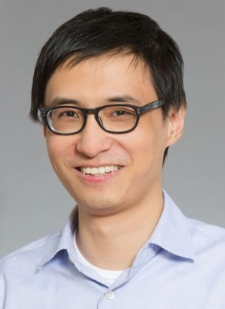 Junming Yin合作论文数Department of Management Information Systems, Eller College of Management, University of Arizona5
 Aurick Qiao合作论文数Snowflake AI Research5
 Zhengzhong Liu合作论文数Petuum4
 Willie Neiswanger合作论文数Thomas Lord Department of Computer Science, Viterbi School of Engineering, University of Southern California;School of Advanced Computing, University of Southern California4
 Chenxu Yang (杨晨旭)合作论文数Institute of Information Engineering, Chinese Academy of Sciences3
 Zheng Lin (林政)合作论文数Institute of Information Engineering, Chinese Academy of Sciences;University of Chinese Academy of Sciences3
 Shonali Krishnaswamy合作论文数Institute for Infocomm Research3
 Yaoliang Yu (于耀亮)合作论文数David R. Cheriton School of Computer Science, University of Waterloo;Vector Institute3James Cipar合作论文数3
 Jianshu She合作论文数Mohamed bin Zayed University of Artificial Intelligence2Boyang Sun合作论文数Mohamed Bin Zayed University of Artificial Intelligence2Chong Tian合作论文数2
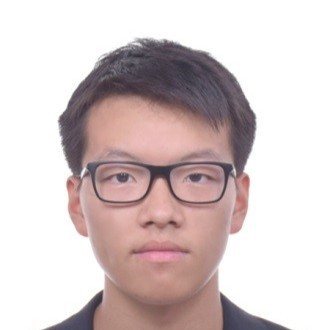 Yifan Shen合作论文数Mohamed bin Zayed University of Artificial Intelligence2
 Yanan Cao (曹亚男)合作论文数ASCII Lab, Institute of Information Engineering, Chinese Academy of Sciences;University of Chinese Academy of Sciences2Lanrui Wang合作论文数2
 Ali Zonoozi合作论文数2
 Zonghang Li合作论文数Univ Elect Sci & Technol China, Minist Educ, Key Lab Opt Fiber Sensing & Commun, Chengdu 611731, Sichuan, Peoples R China2
 Zhiting Hu (胡志挺)合作论文数Amazon;Halicioglu Data Science Institute, University of California, San Diego2
 Zhijie Deng (邓志杰)合作论文数2
 Mohsen Guizani合作论文数Mohamed bin Zayed University of Artificial Intelligence2
 Weiping Wang (王伟平)合作论文数Institute of Information Engineering, Chinese Academy of Sciences;University of Chinese Academy of Sciences2
 Guangyi Chen (陈广义)合作论文数Mohamed Bin Zayed University of Artificial Intelligence;Carnegie Mellon University2
 Liang Pang (庞亮)合作论文数Data Intelligence System Research Center, Institute of Computing Technology, Chinese Academy of Sciences2
 Hongyi Wang合作论文数Machine Learning Department, Carnegie Mellon University2
 Hongfang Yu (虞红芳)合作论文数Yingcai Honors College, University of Electronic Science and Technology of China2
 Jacob Eisenstein合作论文数Google2
 Gao Cong (丛高)合作论文数Division of Data Science, College of Computing & Data Science, Nanyang Technological University2
 Graham Neubig合作论文数Language Technologies Institute, School of Computer Science, Carnegie Mellon University2
 Alex Smola合作论文数Boson AI2Shizhen Xu (徐世真)合作论文数清华大学2
 Amr Ahmed合作论文数Google Research2
 Kumar Avinava Dubey合作论文数Google Research2
 Le Song合作论文数Mohamed Bin Zayed University of Artificial Intelligence;GenBio AI2
 Huaxiu Yao (姚骅修)合作论文数Department of Computer Science, School of Data Science and Society, University of North Carolina at Chapel Hill2




