Objectives Hospital-to-home transitions are high-risk periods, especially for Latinos living with dementia. Cultural differences may exacerbate role ambiguity—unclear patient/caregiver/provider roles. The objective was to elicit views on role ambiguity and care quality during hospital-to-home transitions of older Latinos with dementia and categorize factors shaping healthcare-related task distribution. Methods Qualitative study using semi-structured interviews with caregivers of older Latinos with dementia. Results Interviews with 21 caregivers indicated 1) concern about over-medication, 2) resignation over limited medication effectiveness, 3) scarcity of culturally specific resources, 4) wariness to trust medical institutions, and 5) aversion to institutional care. Factors shaping healthcare-related tasks were geographic proximity, gender roles, relationship to patient, English fluency, and work schedules. Discussion Caregivers felt disillusioned and unsupported during care transitions. Findings suggest healthcare professionals and advocacy organizations should carefully consider efforts to connect caregivers to sources of culturally tailored, home-based support, and they could engage in concerted efforts to earn trust.
In a country with a growing Latin American and Spanish-speaking population, the health care system is tasked with providing care across changing landscapes of culture and language. Specifically, the hospital-to-home transition is a high-risk period for medication errors and adverse events for older adults with Alzheimer’s Disease and Related Dementias (ADRD), and the older Latino population is widely understudied. Family caregiver perspectives are especially important in Latino populations. The field of human factors engineering, which studies the interactions among people and systems, can be useful to understand complex phenomena. Our objective was to elicit and categorize family caregivers’ cultural perceptions of ADRD and views on medication use during the hospital-to-home transition of Latino older adults with ADRD. Qualitative study using semi-structured interviews and participant solicited diaries with family caregivers of older Latino adults with ADRD after hospital discharge. We used the human factors engineering-informed Systems Ambiguity Framework to guide data analysis. At least two researchers independently coded each transcript using a content analysis approach. We identified recurring cultural perceptions of medication use and resource accessibility. We used Atlas.ti software to facilitate data analysis. We interviewed 11 caregivers of older Latino adults with moderate-to-severe ADRD. We elicited caregivers’ cultural perceptions of medication management, medication purpose, and available resources. Recurring themes expressed by caregivers indicate 1) Concern about over-medication, 2) Resignation over limited medication effectiveness for treating ADRD, 3) Scarcity of culturally specific and appropriately translated resources, and 4) Wariness to trust providers and medical institutions based on negative experience. Multiple caregivers experienced initially incorrect diagnoses or contradictory information from multiple providers, contributing to a sense of resignation regarding treatment options and a lack of trust in providers and institutional resources. We identified four cultural perceptions of medication use and resource accessibility. The elicited themes point to a need for culturally tailored care instructions for family caregivers, appropriate language services across the care continuum, and a concerted outreach effort to form trusted relationships among Latino communities and health care providers.
Informal dementia caregivers are the largest providers of dementia care and it is necessary to provide them with effective support and skills. We describe how much informal dementia family caregivers are willing-to-pay (WTP) for a tailored nondrug support program that provides skills to manage dementia related symptoms before and after participating in a nondrug support program. Caregiver and person with dementia dyads (n=223) were recruited to participate in a randomized controlled trial evaluating a nonpharmacologic intervention that provides caregivers with strategies to minimize behavioral symptoms through the use of meaningful activities compared to attention control. At baseline, 3-months, and 6-months, a contingent valuation payment card method was used to assess how much caregivers would be WTP per session for an 8-session 3-month nonpharmacologic program delivered in-home to address behavioral problems. We calculated unadjusted WTP at each time point and estimated a linear mixed-effects model to evaluate WTP between treatment groups at 3 and 6 months. The model controlled for baseline covariates that predicted attrition from the trial including age, gender, race, and cognition of the person with dementia and the relationship between the caregiver and person with dementia. At baseline, mean WTP was $35.34 (SD=56.29) per session. Mean per session WTP at 3-months ($34.87 SD=61.34) and 6-months ($26.59 SD=37.06) were consistent. At 3-months, caregivers in the intervention group were WTP $2.20 (95% CI: -$-6.7, $2.2) less than caregivers in the control group. At 6-months, caregivers in the intervention group were WTP $4.60 (95% CI: -$8.5, -$0.80) less per session than caregivers in the control group. Informal family caregivers are consistent in their assessment of WTP before and after exposure to a nonpharmacologic intervention. The amount caregivers are WTP for in-home skills interventions is important to informing payment models for these programs.
The purpose of this paper is to examine mental health issues of residents of Assisted Living Facilities (ALFs) using data from key stakeholders including direct care staff, family, facility administrators and members from advocacy and policy groups. Six focus (n=57) groups were held and the four stakeholder groups identified depression, anxiety and many of the neuropsychiatric symptoms of dementia (i.e. aggression, paranoia, agitation) as behaviors of most concern. To address these concerns the groups universally identified several key areas of focus: (1) better communication between ALF staff, treating health care providers, residents and families, (2) person-centered care principles and respect of resident personhood and individuality, (3) improved ALF staff training and training opportunities, (4) judicious use of psychotropic medications, and (5) better management of co-morbid medical problems. Finding ways to act on these five focus areas may improve mental health care quality for residents and improve staff burnout and turnover.
It is necessary to provide informal dementia caregivers, the largest providers of dementia care, with effective support and skills. Tailored nonpharmacologic interventions reduce behavioral symptoms, caregiver stress, and time spent caregiving. To facilitate the translation of a nonpharmacologic intervention, we evaluated how much caregivers were willing to pay (WTP) to learn strategies to manage behavioral symptoms. Caregiver/person with dementia dyads (n=223) were recruited to participate in a randomized controlled trial evaluating a nonpharmacologic intervention to minimize behavioral symptoms through the use of meaningful activities compared to attention control. At baseline, 3-months, and 6-months, a contingent valuation payment card method was used to assess how much caregivers would be WTP per session for an 8-session 3-month nonpharmacologic program delivered in-home to address behavioral problems. We calculated unadjusted WTP at each time point. A linear mixed-effects model was used to evaluate WTP within and between treatment groups WTP over time. The model controlled for key baseline covariates including age, gender, race, and cognition of the person with dementia and the relationship between the caregiver and person with dementia. At baseline, mean WTP was $35.34 (SD=56.29) per session. Mean per session WTP at 3-months ($34.87 SD=61.34) and 6-months ($26.59 SD=37.06) were consistent. In the linear mixed-effects model, no significant within or between group differences were observed. Informal family caregivers are consistent in their assessment of WTP before and after exposure to a nonpharmacologic intervention. The monetary value that caregivers place on in-home skills interventions is important to informing payment models for these programs.
Development and evaluation of nonpharmacologic interventions for neuropsychiatric symptoms (NPS) in dementia is critically needed but has been significantly limited methodologically by reliance on proxy rated behavioral measures. We conducted a pilot study (n=10) to evaluate feasibility and acceptability of a video monitoring system to capture video and audio behavioral data of persons with dementia and their family caregivers living in the home setting over a 1 week period. This presentation will described the methods of the pilot and will discuss feasibility and participant acceptability of the system. We will also present quantitative summary data on the type and frequency of agitation and other behavioral symptoms, their correlation with “gold standard” proxy rated measures over the same timeframe and consider overall learnings from this pilot including human subjects and privacy protections considerations, technical challenges, and data analytic considerations.
The ProblemMental health issues such as depression and neuropsychiatric symptoms (NPS) (e.g. agitation, aggression, rejection of care, wandering) are prevalent among residents in Assisted Living Facilities (ALF). Historically, these issues have only been treated with medications that can have a high risk of adverse effects in this population. This paper presents a scoping review of nonpharmacological interventions tested in ALFs for two of the most prevalent mental health issues: depression and NPS.Key FindingsThirteen studies met inclusion criteria. Of those, eight (61.5%) found positive outcomes. Activity based and music therapy that utilize customization to interests and abilities showed the most promise.Tips for SuccessBased on findings we offer five recommendations: 1) adopt evidence-based or evidence-informed interventions; 2) use tailored activity as a therapeutic modality; 3) adopt new training approaches for staff; 4) use emerging technologies for training and intervention; and 5) participate in practice based research.
 C Lyketsos合作论文数22
 Peter V. Rabins合作论文数School of Medicine, Johns Hopkins University;School of Nursing, Johns Hopkins University16A Rosenblatt合作论文数15
 Jason Brandt合作论文数Department of Mental Health, Bloomberg School of Public Health, Johns Hopkins University;School of Medicine, Johns Hopkins University15A Baker合作论文数10
 Deirdre Johnston合作论文数Dept Psychiat & Behav Sci, Johns Hopkins Sch Med10Hafiza nabia Amjad合作论文数10
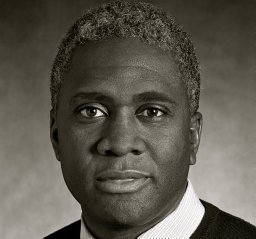 Onyike Chiadi U合作论文数Johns Hopkins Sch Med9
 Betty S. Black合作论文数The Johns Hopkins Berman Institute of Bioethics7C Steele合作论文数6
 Laura N. Gitlin合作论文数Psychiatry and Behavioral Sciences, School of Medicine, Johns Hopkins University6
 Constantine Lyketsos合作论文数Department of Psychiatry and Behavioral Sciences, Johns Hopkins Bayview;School of Medicine, Johns Hopkins University;Johns Hopkins Hospital6
 Matthew K Mcnabney合作论文数5M. Blinka合作论文数4
 Maura J McGuire合作论文数Department of Otolaryngology-Head and Neck Surgery, School of Medicine, Johns Hopkins University4
 Cynthia M. Boyd合作论文数Department of Health Policy and Management, Johns Hopkins Bloomberg School of Public Health;Division of Geriatric Medicine and Gerontology, Department of Medicine, Johns Hopkins University School of Medicine4Lawrence D. Mayer合作论文数4Vani Rao合作论文数4K. Marx合作论文数3M Harper合作论文数3
 David L. Roth合作论文数School of Medicine, Johns Hopkins University3D Scerpella合作论文数2S. Greyson合作论文数2Cd Steele合作论文数2Daniel L Scerpella合作论文数2M. Keita合作论文数2Y. Lee合作论文数2Paul Brian Rosenberg合作论文数Department of Medicine, School of Medicine, Duke University School of Medicine2
 Amber Willink合作论文数Menzies Centre for Health Policy, The University of Sydney/School of Public Health, Johns Hopkins Bloomberg2Alicia Arbaje合作论文数Health Policy and Management, Bloomberg School of Public Health, Johns Hopkins University2
 Katherine A. Marx合作论文数School of Nursing, Johns Hopkins University2
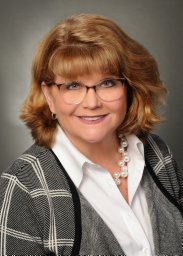 Piersol Catherine Verrier合作论文数2Davis Karen合作论文数2M. Bertrand合作论文数2
 Rajiv Kumar Sharma合作论文数2
 Ann Morrison合作论文数Aalborg University2
 Laura Pizzi合作论文数School of Pharmacy, Thomas Jefferson University2J Spiro合作论文数2
 Eric Jutkowitz合作论文数Department of Health Services, Policy and Practice, Brown University2E. Oh合作论文数1A. M. Kueider合作论文数1J. M. Parisi合作论文数1Michael Harper合作论文数1JME Sheppard合作论文数1Naomi Duffort合作论文数1Jianye Huang合作论文数1O. Salaami合作论文数1B Robbins合作论文数1
 Adam P. Spira合作论文数Mental Health, Bloomberg School of Public Health, Johns Hopkins University1




