Cold fluid injection in various subsurface applications may induce thermal fracturing, which is a coupled process of fracture propagation, heat conduction and convection, and fluid flow in the fractures and reservoir. While most existing studies employ a thermoelastic model, their accuracy may be compromised by thermoporoelastic effects. This study aims to systematically investigate the thermoporoelastic effects in thermal fracturing using numerical models of varying complexity. We first developed a fully coupled model incorporating all relevant physical processes including fracture propagation and arrest, heat and fluid transport in fractures and reservoir. A novel dimensionless framework with five key parameters is introduced to elucidate the thermo-hydromechanical coupling. Additionally, three partially coupled models are developed to isolate the effects of diffusion- and deformation-induced back stress, pore water contraction, and heat convection. Extensive numerical simulations indicate that (1) diffusion-induced back stress minimally impedes the fracture propagation in case of nonnegligible permeability and pressure differential, (2) deformation-induced back stress and pore water contraction primarily affect fracture growth in low-permeability rock, reducing and increasing fracture length by 3.81 %- 18.61 % and 15.51 %-49.99 %, respectively, under undrained condition, (3) heat convection is the dominant thermoporoelastic effect under high permeability and pressure differential, significantly promoting fracture propagation, and (4) thermoporoelastic effects have negligible influence on thermal fracturing for permeability between 10-18 m2 and 10-15 m2.
The increase in CO2 injectivity and shifting of CO2-absorbing layers in multilayered geological CO2 sequestration (GCS) reservoirs in Ordos, China indicate significant permeability variations in certain layers. To capture these system changes, a numerical model incorporating all 21 aquifers and internal aquitards was developed. The monitored pressure was well matched through multiphase and thermal-hydraulic-mechanical (THM) coupling numerical simulations by introducing permeability variations. The results revealed that the permeability in the second layer increased on approximately day 13 due to the abrupt pressure buildup and temperature decrease. Even such a low rate of CO2 (2.8 kg/s) injected into the low permeability system initiated some fractures and the permeability in the second layer around the wellbore increased by 722 times. The second critical system change occurred on approximately day 386. As demonstrated in the numerical simulation, the substantial injection of cold CO2 induced strong thermal stress, leading to rock contraction and the initiation of several cracks. The permeability of the first layer around the wellbore unexpectedly increased by 4 orders of magnitude. Since no additional pressure could drive the CO2 into the remaining 17 layers, the total storage capability of the multilayered system was reduced. A whole picture of the system variation is fully presented and the underlying mechanisms are analyzed. It is believed that the phenomenon of thermal-hydraulic fracturing observed in this field and the simulation procedures will benefit other fluid injection and production works in various geotechnical settings.
Transverse thermal fractures in horizontal wells can be induced by cold fluid injection into high-temperature formations during drilling, geothermal production, CO2 storage, etc. As these fractures propagate, some are arrested due to stress interaction, resulting in a hierarchical fracture pattern. This study investigates the propagation and arrest of radial transverse thermal fractures in a horizontal well driven by 1-D radial heat conduction using an axisymmetric model. We derived a new elasticity equation for multiple radial thermal fractures in a horizontal well, and developed the dimensionless governing equations, in terms of dimensionless fracture penetration depth L, spacing D, aperture Omega, time z, and two model parameters (dimensionless net confining stress T and wellbore radius A) through parameter scaling. Displacement discontinuity method was employed to discretize the governing equations and the dimensionless solutions [L(z, T , A ), D (z, T , A ), Omega(z, T , A )] for the critical states at fracture arrests were solved through stability analysis. The fully transient solutions with stepwise fracture spacing were then obtained to predict the hierarchical fracture pattern. Our findings indicate that the solutions for the radial transverse fractures are asymptotic to those for half-plane thermal fractures at early time and the evolution of fracture penetration depth approaches to a scaling lawL = f (T , A)tau((1-T)/2) at late time. Application to a real geothermal site showed that thermal fractures reach depths of 0.48, 3.48, and 28.29 m, spacings of 0.46, 2.34, and 13.20 m, and apertures (at the wellbore wall) of 0.37, 1.53, and 6.15 mm at 1, 100 and 10,000 days of cooling, respectively.
Fluid injection via a vertical well into a high-temperature formation may induce multiple longitudinal thermal fractures, which may eventually transition to two-wing fractures during fracture propagation, depending on horizontal stress ratio kappa. In this study, we develop a plane strain model with radial heat conduction to investigate either two-wing fractures under highly anisotropic stresses kappa(ha)>> 1 or multiple fractures under isotropic stresses kappa=1. The coupled dimensionless elasticity equation and criteria of fracture propagation (and arrest) are formulated, discretized, and solved iteratively (with two special algorithms). Two additional critical model parameters are dimensionless effective confining stress T and wellbore radius A. The multiple-fracture solution of dimensionless fracture length L, angular spacing D, and aperture consists of solutions for competitive propagation of fractures with arrests in the near-wellbore region and the subsequent stable propagation of fractures away from the wellbore. Both the multiple-fracture and two-wing-fracture solutions accurately capture the early-time transient and late-time power-law changes with dimensionless time tau, as verified numerically. The late-time fracture propagation follows scaling law L=fT,A,D tau(1-2T/2). These solutions and scaling laws can be used to well bound a general solution with 1<kappa<kappa(ha) as demonstrated numerically for a geothermal site, for which the maximum fracture length reaches 0.45, 2.71, and 16.42 m in 1, 100 and 10,000 days of cooling, respectively. The applicability of the assumptions used in the theoretical and numerical analysis is discussed.
Monitoring, verification, and accounting (MVA) are crucial to ensure safe and long-term geologic carbon storage. Seismic monitoring is a key MVA technique that utilizes seismic data to infer elastic properties of CO2-saturated rocks. Reliable accounting of CO2 in subsurface storage reservoirs and potential leakage zones requires an accurate rock physics model. However, the widely used CO2 rock physics model based on the conventional Biot-Gassmann equation can substantially underestimate the influence of CO2 saturation on seismic waves, leading to inaccurate accounting. We develop an accurate CO2 rock physics model by accounting for both effects of the stress dependence of seismic velocities in porous rocks and CO2 weakening on the rock framework. We validate our CO2 rock physics model using the Kimberlina-1.2 model (a previously proposed geologic carbon storage site in California) and create time-lapse elastic property models with our new rock physics method. We compare the results with those obtained using the conventional Biot-Gassmann equation. Our innovative approach produces larger changes in elastic properties than the Biot-Gassmann results. Using our CO2 rock physics model can replicate shear-wave speed reductions observed in the laboratory. Our rock physics model enhances the accuracy of time-lapse elastic-wave modeling and enables reliable CO2 accounting using seismic monitoring.
Purpose Thermal fractures initiated under cooling at the surfaces of a 2-D or 3-D structure propagate, arrest and coalesce, leading to its structural failure and material-property changes, while the same processes can happen in the rock mass between parallel hydraulic fractures filled with cold fluid, leading to enhanced fracture connectivity and permeability. Design/methodology/approach This study used a 2-D plane strain fracture model for mixed-mode thermal fractures from two parallel cooling surfaces. Fracture propagation was governed by the theory of linear elastic fracture mechanics, while the displacement and temperature fields were discretized using the adaptive finite element method. This model was validated using two numerical benchmarks with strong fracture curvature and then used to simulate the propagation and coalescence of thermal fractures in a long rock mass. Findings Modeling results show two regimes: (1) thermal fractures from a cooling surface propagate and arrest by following the theoretical solutions of half-plane fractures before the unfractured portion decreases to 20% rock-mass width and (2) some pairs of fractures from the opposite cooling surfaces tend to eventually coalesce. The fracture coalescence time is in a power law with rock-mass width. Originality/value These findings are relevant to both subsurface engineering and material engineering: structure failure is a key concern in the latter, while fracture coalescence can enhance the connectivity of thermal and hydraulic fractures and thus reservoir permeability in the former.
Injection of cold fluids through/into deep formations may cause significant cooling, thermal stress, and possible thermal fracturing. In this study, the thermal fracturing of low-permeability formations under one-dimensional heat conduction was investigated using a plane strain model. Dimensionless governing equations, with dimensionless fracture l....ength., ap....erture O, sp....acing....., time...., and effective confining stress....., were derived. Solution of single thermal fracture was derived analytically, while solution of multiple fractures with constant (or dynamic) spacing were obtained using the displacement discontinuity method (and stability analysis). For single fra....cture,.(.......) increases nonlinearl....y with v.... and then transitions to scaling law..... =.... (.)v...., indicating that late-time fracture length increases linearly with the square root of cooling time. For constantly spaced frac....tures,.(.......,.) deviates from the single-fracture solution at....a later.... for a....larger., showing slower propagation under inter-fracture stress interaction. For dynamically spaced fractures, fracture arrest induced by stress interaction was determined by the stability analysis; the fully transient solution provides evolution of dimensionless fracture length, spacing, aperture, and pattern; a similar scalin....g law,. =.... '(.)v........with.... '(.) <....(.), obtained shows the effect of both stress interaction and fracture arrest. The solution and scaling law provide fast predictions for all reservoir and cooling conditions using (single) model parameter...... Application to a geothermal sit....e with. = 0.11 demonstrates that thermal fractures reach 0.67, 6.25, and 78.00 m in length, 0.49, 2.30, and 13.00 m in spacing, and 0.43, 2.09, and 12.19 mm in aperture at 1, 100, and
It is crucial to ensure the safety and integrity of underground gas storage (UGS) infrastructure for energy reliability in California, and many other places around the world. To address the risk management need in UGS industry, we take advantage of recent advances in downhole fiber optic monitoring and coupled well-reservoir simulation to provide unprecedented understanding of gas flow in wells at UGS sites. We have combined advanced monitoring and simulation of UGS operations into a decision-support system called the Integrated Risk Management and Decision Support System (IRMDSS). The IRMDSS framework includes three components: (i) mechanistic models, (ii) continuous and frequent monitoring data, and (iii) a supervisory interface for performing analyses using the models and monitoring data. The goal of the IRMDSS is to equip UGS operators with real-time monitoring data and simulation tools that can alert them to potential failures, detect early leakage, and support mitigation decision-making to prevent otherwise larger failures. We demonstrate an application of the IRMDSS by analyzing the temperature and pressure response to a hypothetical leak. Through a review of distributed temperature sensing (DTS) data collected at an operating UGS facility we show that DTS can uniquely and precisely identify the depth of the gas-water-contact in the well annulus, and that DTS can provide an early warning signal of upward gas flow as would occur in a well blowout scenario. When combined with modeling analysis, a rough leak rate can be roughly estimated to understand the severity of the leakage conditions and to support the mitigation decision needed.
Estimation of CO2 storage capacity in fractured porous reservoirs requires a better understanding of the CO2-water flow fundamentals in fracture-matrix systems. There are few core-flood experiments on three-dimensional CO2-water drainage in a fracture-matrix system, yet none have examined the impacts of the capillary continuity of fractures and fracture-matrix interactions. In this study, twelve drainage experiments were conducted in four fracture-matrix columns, each comprising a vertical stack of a cylindrical rock core, a filter paper serving as an analogue to a horizontal fracture, and a ceramic plate. The core sample was surrounded by open space at the top and circumferential sides to model fractures, allowing for 3-D CO2-water drainage in the rock core and displaced water draining across the horizontal fracture. X-ray computed tomography was conducted to visualize the dynamic invasion/drainage processes in four rock core samples showing contrasts in anisotropy, permeability, and heterogeneity. Experimental results show (1) the equilibrium CO2 saturations in the rock matrix vary from 0.10 to 0.60 at controlled capillary pressures up to 200 kPa, (2) the CO2 saturations in the matrix increaze with water saturation in the horizontal fracture resulting in better capillary continuity for water to drain across the fracture, and (3) the fracture water saturation can be enhanced by the non-uniform fracture capillary pressure and countercurrent flow of CO2 and water across the fracture-matrix interface. In the case of high fracture water saturation, matrix CO2 saturation largely depends on matrix anisotropy and heterogeneity. The core-scale experimental results contribute to understand the fracture-matrix interactions and CO2 storage efficiency in fractured porous media.
A number of field-demonstration and industrial-scale projects of geological carbon sequestration (GCS) have been conducted in the world over the last two decades. Hydrological-geophysical-geomechanical monitoring at many of these storage sites provide an opportunity for us to rethink the fundamental processes of CO2 storage in naturally heterogeneous formations. However, complete pictures of field phenomena and processes at most of the sites have not been achieved by integrating field monitoring data with site-characterization data. It often takes years to have a clear picture distilled for a field experiment. Without these pictures of what happened in the field, we could not take advantage of the field testing and monitoring to improve our understanding of the dynamic processes of CO2 storage through site-specific numerical modeling. In this talk, I will present (1) multiscale and multipath channeling of CO2 flow in the hierarchical fluvial reservoir at Cranfield, Mississippi (Zhou et al., 2020a) and (2) thermal fracturing and self-propping induced by liquid CO2 injection into the multilayered reservoirs at Ordos, China (Zhou et al., 2020b). At Cranfield, Mississippi, CO2 was injected through injection well F1 into the Lower Tuscaloosa Formation at three step rates from 2.92 to 8.27 kg/s from December 1, 2009 to September 7, 2010. The total CO2 injection of 126,246 metric tonnes was followed by a shut-in from September 7 to 28, 2010, when the two monitoring wells (F2 and F3) were killed. I will present a consistent picture of dynamic channeling, invasion, spreading, and breakthrough (CISB) of supercritical CO2 in the hierarchical fluvial reservoir after ten years of integration and analysis of complementary field-monitoring and characterization data. The dynamic CISB with small-scale CO2-flow channels in the F1-F2-F3 cross section was imaged by daily electrical resistance tomography (ERT) and time-lapse crosswell seismic surveys. One, three, and four CO2-flow channels logged at F1, F2, and F3 respectively were dynamically connected with strong temporal variations in CO2 saturation during 221 days of drainage and 81 days of imbibition. Three intermediate-scale CO2-flow channels (with highest CO2 saturation) normal to the cross section were ERT-imaged during late-time drainage. A large-scale, sinuous fluvial CO2-flow channel was imaged by repeat surface seismic survey at the end of the imbibition. The fluvial sandstone channel sinuously bypasses the F1-F2-F3 cross section in a point bar, but the channel is connected to the cross section through an intermediate-scale sandstone channel, forming a complicated flow-channel network. The multiscale flow-channel network (in the fluvial-channel-point-bar system) revealed from the observed CISB enables us to consistently interpret the hydrological monitoring data of three tracer tests, each conducted during an injection-rate step, and pre-injection hydraulic-thermal-tracer tests. This interpretation of the CISB and flow-channel network can guide future modeling and data inversion to best understand the effects of natural heterogeneity on CO2 storage efficiency and residual trapping. At Ordos, China, liquid CO2 at temperature from -15 to 5 ºC was injected into 21 injection layers of five low-permeability formations stacked over 763 m for nearly four years (from May 2011 to April 2015), leading to a maximum bottomhole-temperature reduction of 30 ºC. A unique step-rate injection test with shut-ins was performed annually, with flowmeter and pressure/temperature logging at the end of each injection-rate step. Field observations showed (1) enhanced injectivity with continuous reduction in wellhead and bottomhole injection pressure, (2) instantaneous formation breakdown signaled in high-frequency pressure and temperature transients, and (3) dynamic changes in the feed zone with the highest fractional CO2 flow from a depth of 1920 m to 1750 m and finally stabilizing at 1690 m. We interpret that the two feed-zone changes coincided with thermal fracturing of the second uppermost injection layer, with the pressure transient typical of formation breakdown and fracture propagation, at 13.75 days and of the uppermost injection layer at 386 days. The thermal fracturing was initiated when the total stress change (i.e., pressure increase plus dominant cooling-induced thermal stress) exceeded 94% of hydrostatic pressure. The initiated fractures propagated slowly during CO2 injection, with their thermal plumes retarded by fracture-matrix heat exchange, while they remained self-propping during shut-ins because of the cumulative cooling and contraction of the rock matrix. We attribute the enhanced injectivity to the dramatic system changes caused by thermal fracturing and the subsequent, slow system evolution caused by retarded fracture propagation. The beneficial impact of thermal fracturing is enhanced CO2 injectivity. The negative impacts include CO2 flow preferentially entering thin injection layers that fractured, and reduced storage efficiency in the planned thick storage system with five storage formations and 21 injection layers. The CISB revealed at Cranfield shows the complex dynamic processes of CO2 storage in naturally heterogeneous reservoirs. The channelized CO2 flow through high-permeability sandstone channels is coupled with CO2 invasion, spreading, and breakthrough, leading to local CO2 storage and trapping in relatively low-permeability lenses of sandstone. The thermal fracturing imaged at Ordos calls for the attention of significant reservoir cooling and thermal stress near injection wells that are often ignored in the GCS community, in comparison with pressure buildup and caprock fracturing.
Thermal fracturing is a common phenomenon occurring during significant cooling or heating in diverse engineering problems and natural processes. Multiple thermal fractures caused by cooling may initiate, propagate, arrest, and reactivate under thermal stresses and inter-fracture stress interactions, leading to typical hierarchical fracture patterns. The reactivation, further propagation, and permanent arrest of initially arrested fractures have not been accounted for in existing analytical modeling. In this study, all the processes of thermal fracturing in an unconfined half-space plane are investigated using a plane strain model. A dimensionless solution is developed by solving the coupled elasticity equation and fracture-propagation criterion and performing stability analysis, with fractures discretized by the displacement discontinuity method, all in terms of dimensionless variables. A new stability criterion stricter than the classic one (without reactivation) is introduced to account for fracture reactivation and permanent arrest. The dimensionless solution, applied to ceramic quenching as an example, is validated using a two-dimensional, finite element method-based fracture model that automatically considers all processes of thermal fracturing. The solution includes two generic profiles of dimensionless fracture spacing and length scaled by the material's properties (i.e., toughness, Young's modulus, Poisson ratio, and linear thermal expansion coefficient) and the surface-cooling condition. At late time, the profile of fracture length (l) can be simplified by a scaling law of l proportional to root t with cooling time t. An algorithm is developed to produce the evolution of fracture pattern of interest, which is also validated by the numerical fracture model. Comparison of these solutions (with fracture reactivation) to those without reactivation indicates that fracture reactivation starts to affect fracture spacing and thus pattern after reaching a small fracture length and such an effect increases with fracture length and cooling time. These developed solutions are applicable to rapid and accurate prediction of evolution of fracture length, spacing, and pattern in thermal shock problems.
The development of Enhanced Geothermal Systems (EGS) requires an ability to accurately predict the flow rates and temperatures of the production wells. While simple in concept, EGS is complicated by the heterogeneity and complexity of fracture pathways that can lead to channeling, short-circuiting, and premature thermal breakthrough. The EGS Collab project will establish a suite of intermediate-scale (~10-20 m) field test beds coupled with stimulation and interwell flow tests that will provide a basis to better understand the fracture geometries and processes that control heat transfer between rock and stimulated fractures. As such, the EGS Collab experiments will provide a relatively inexpensive means of testing tools and concepts that could later be employed under geothermal reservoir conditions at FORGE. Our tests will be well-controlled, in situ experiments focused on rock fracture behavior and permeability enhancement. Pre- and post-test modeling of each test will allow for model prediction and validation. Comprehensive instrumentation will be used to collect high-quality and high-resolution geophysical and other fracture characterization and fluid flow data, and these data will be analyzed and compared with models and field observations to further elucidate the basic relationships between stress, induced seismicity, and permeability enhancement. To the maximum extent achievable, we will observe and quantify other key governing parameters that impact permeability, and attempt to understand how these parameters might change throughout the development and operation of an EGS project with the goal of enabling commercial viability of EGS. Evaluation of site criteria led the team to choose the Sanford Underground Research Facility (SURF) in South Dakota as the EGS Collab project experimental site. Our team is well underway with designing the first field experiment planned for this project, which is supported by the US Department of Energy’s Geothermal Technologies Office.
We summarize results from a study on the potential impact of flexible geothermal production on production rates, well integrity and reservoir behavior. The impact on production rates and well integrity is performed by coupled process modeling based on linking a reservoir-wellbore simulator with a geomechanical simulator, whereas potential scaling is analyzed by geochemical modeling. We consider production from a liquid-dominated system using data from the Casa Diablo geothermal field, California. The simulations related to well integrity show that production-induced temperature and pressure changes can cause non-linear mechanical responses, including frictional sliding at material interfaces and material yielding. However, if the production rates are controlled between certain limits, e.g., ramping up production slowly and not completely shutting down the production in each cycle, the impact on the well assembly can be minimized. Simulations of scaling show that the effects of scaling and corrosion can be controlled by keeping the wellhead pressure above the saturation pressure and at the same time keeping the temperature above the silica saturation temperature.
In this study, the performance of both surface and borehole time-lapse gravity monitoring to detect CO2 leakage from a carbon storage site is evaluated. Several hypothetical scenarios of CO2 migration in a leaky fault, and thief zones at different depths at the Kimberlina site (California, USA) constitute the basis of the approach. The CO2 displacement is simulated using the TOUGH2 simulator applied to a detailed geological model of the site. The gravity responses to these CO2 plumes are simulated using forward modeling with sensors at ground surface and in vertical boreholes. Results of inversion on one scenario are also presented. The surface-based gravity responses obtained for the different leakage scenarios demonstrate that leakage can be detected at the surface in all the scenarios but the time to detection is highly variable (10-40 years) and dependent on the detection threshold considered. Borehole measurements of the vertical component of gravity provide excellent constraints in depth when they are located in proximity of the density anomaly associated with the presence of CO2, thus discriminating multiple leaks in different thief zones. Joint inversion of surface and borehole data can bring valuable information of the occurrence of leakages and their importance by providing a reasonable estimate of mass of displaced fluids. This study demonstrates the importance of combining multiphase flow simulations with gravity modeling in order to define if and when gravity monitoring would be applicable at a given storage site.
A consistent picture of dynamic channeling, invasion, spreading, and breakthrough (CISB) of supercritical CO 2 in the hierarchical fluvial reservoir at Cranfield, Mississippi is presented after 10 years of integration and analysis of complementary field monitoring and characterization data. The dynamic CISB with small‐scale CO 2 ‐flow channels in the F1‐F2‐F3 cross section (F1, F2, and F3 are one injection and two monitoring wells) was imaged by daily electrical resistance tomography (ERT) and time‐lapse crosswell seismic surveys. One, three, and four CO 2 flow channels logged at F1, F2, and F3, respectively, were dynamically connected with strong temporal variations in CO 2 saturation during 221 days of drainage with injection rate doubling twice and 81 days of imbibition. Three intermediate‐scale CO 2 flow channels (with highest CO 2 saturation) normal to the cross section were ERT‐imaged during late‐time drainage. A large‐scale, sinuous fluvial CO 2 flow channel was imaged by repeat surface seismic survey at the end of the imbibition. The fluvial sandstone channel sinuously bypasses the F1‐F2‐F3 cross section in a point bar, but the channel is connected to the cross section through an intermediate‐scale sandstone channel, forming a complicated flow channel network. The multiscale flow channel network (in the fluvial channel‐point bar system) revealed from the observed CISB enables us to consistently interpret the hydrological monitoring data of three tracer tests, each conducted during an injection rate step, and preinjection hydraulic‐thermal‐tracer tests. This interpretation of the CISB and flow channel network can guide future modeling and data inversion to best understand the effects of natural heterogeneity on CO 2 storage efficiency and residual trapping.
Geologic CO2 sequestration (GCS) has received high-level attention from the global scientific community as a response to climate change due to higher concentrations of CO2 in the atmosphere. However, GCS in saline aquifers poses certain risks including CO2/brine leakage through wells or non-sealing faults into groundwater or to the earth's surface. Understanding crucial reservoir parameters and other geologic features affecting the likelihood of these leakage occurrences will aid the decision-making process regarding GCS operations. In this study, we develop a science-based methodology for quantifying risk profiles at geologic CO2 sequestration sites as part of US DOE's National Risk Assessment Partnership (NRAP). We apply NRAP tools to a field scale project in a fractured saline aquifer located at Kevin Dome, Montana, which is part of DOE's Big Sky Carbon Sequestration Partnership project. Risks associated with GCS injection and monitoring are difficult to quantify due to a dearth of data and uncertainties. One solution is running a large number of numerical simulations of the primary CO2 injection reservoir, shallow reservoirs/aquifers, faults, and wells to address leakage risks and uncertainties. However, a full-physics simulation is not computationally feasible because the model is too large and requires fine spatial and temporal discretization to accurately reproduce complex multiphase flow processes. We employ the NRAP Integrated Assessment Model (NRAPIAM), a hybrid system model developed by the US-DOE for use in performance and quantitative risk assessment of CO2 sequestration. The IAM model requires reduced order models (ROMs) developed from numerical reservoir simulations of a primary CO2 injection reservoir. The ROMs are linked with discrete components of the NRAP-IAM including shallow reservoirs/aquifers and the atmosphere through potential leakage pathways. A powerful stochastic framework allows NRAP-IAM to be used to explore complex interactions among a large number of uncertain variables and to help evaluate the likely performance of potential sequestration sites. Using the NRAP-IAM, we find that the potential amount of CO2 leakage is most sensitive to values of permeability, end-point CO2 relative permeability, hysteresis of CO2 relative permeability, capillary pressure, and permeability of confining rocks. In addition to demonstrating the application of the NRAP risk assessment tools, this work shows that GCS in the Kevin Dome has a higher probability of encountering injectivity limitations during injection of CO2 into the Middle Duperow formation than previous studies have calculated. Finally, we estimate very low risk of CO2 leakage to the atmosphere unless the quality of the legacy well completions is extremely poor.
Industrial-scale injection of CO2 into the subsurface increases the fluid pressure in the reservoir, which if not properly controlled can potentially lead to geomechanical damage (i.e., fracturing of the caprock or reactivation of faults) and subsequent CO2 leakage. Brine extraction is one approach for managing formation pressure, effective stress, and plume movement in response to CO2 injection. The management of the extracted brine can be expensive (i.e., due to transportation, treatment, disposal, or re-injection), with added cost to the carbon capture and sequestration (CCS); thus, minimizing the volume of extraction brine is of great importance to ensure that the economics of CCS are favorable. The main objective of this study is to demonstrate the use of adaptive optimization methods in the planning of brine extraction and to investigate how the quality of initial site characterization data and the use of newly acquired monitoring data (e.g. pressure at observation wells) impact the optimization performance. We apply an adaptive management approach that integrates monitoring, calibration, and optimization of brine extraction rates to achieve pre-defined pressure constraints. Our results show that reservoir pressure management can be extremely benefited by early and high frequency pressure monitoring during early injection times, especially for poor initial reservoir characterization. Low frequencies of model calibration and optimization with monitoring data may lead to optimization problems because either pressure buildup constraints are violated or excessively high extraction rates are proposed. The adaptive pressure management approach may constitute an effective tool to manage pressure buildup under uncertain reservoir conditions by minimizing the volumes of extracted brine while controlling pressure buildup.
 Jens Birkholzer合作论文数Energy Geosciences Division, Energy & Geosciences Department, Lawrence Berkeley National Laboratory59
 Jonny Rutqvist合作论文数Lawrence Berkeley National Laboratory24
 Curtis M. Oldenburg合作论文数Lawrence Berkeley National Laboratory, University of California23
 Abdullah Cihan合作论文数Earth Sciences Division, Lawrence Berkeley National Laboratory20
 Tissa H. Illangasekare合作论文数Center for Experimental Study of Subsurface Environmental Processes, Colorado School of Mines15
 Luca Trevisan合作论文数Karlsruhe Institute of Technology12
 Hui-Hai Liu (刘会海)合作论文数Aramco Research Center11
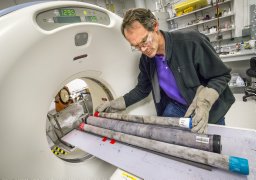 Timothy J. Kneafsey合作论文数Lawrence Berkeley National Laboratory11
 Stefan Finsterle合作论文数9
 M.M. Hu合作论文数Department of Civil Engineering, Faculty of Engineering, The University of Hong Kong7
 Haruko Murakami Wainwright合作论文数Department of Nuclear Science & Engineering, Massachusetts Institute of Technology7
 Chun Chang (常春)合作论文数School of Chemical Engineering, Zhengzhou University7
 Huang Lianjie合作论文数Los Alamos Natl Lab7
 Patrick F Dobson合作论文数7
 Gudmundur Bodvarsson (Bo)合作论文数Lawrence Berkeley National Laboratory7
 Christine Doughty合作论文数Energy Geosciences Division, Hydrogeology Department, E. O. Lawrence Berkeley National Laboratory7
 Jonathan Ajo-Franklin合作论文数Earth Science Division, Lawrence Berkeley National Laboratory7
 Bin Chen合作论文数Imperial College London6
 Elif Agartan Karacaer合作论文数Now at NITEC LLC6
 Chin Fu Tsang合作论文数Lawrence Berkeley National Laboratory USA;Department of Earth Sciences, Uppsala Universitet6
 Yuan Wang (王媛)合作论文数College of Water Conservancy and Hydropower Engineering, Hohai University6
 Jacob Bear合作论文数Department of Environmental, Water and Agriculture Engineering, Faculty of Civil and Environmental Engineering, Technion – Israel Institute of Technology6Jacob Bensabat合作论文数6Preston D. Jordan合作论文数6
 Alain Bonneville合作论文数UMR7154, IPGP/CNRS6
 Yingqi Zhang合作论文数Department of GO Hydrogeology, Lawrence Berkeley National Laboratory;Division of Energy Geosciences, Lawrence Berkeley National Laboratory6T. Chen合作论文数5K. Li合作论文数5J. L. Wagoner合作论文数5Z. Frone合作论文数5D. Vardiman合作论文数5B. Pietzyk合作论文数5S. Porse合作论文数5W. Vandermeer合作论文数5J. Heise合作论文数5A. Nieto合作论文数5D. K. King合作论文数5C. A. Valladao合作论文数5
 Jon Weers合作论文数Natl Renewable Energy Lab, NREL5
 Varahanaresh Sesetty合作论文数University of Oklahoma5L. Boyd合作论文数5B. Johnston合作论文数5
 H. A. Knox合作论文数Pacific Northwest National Laboratory5S. J. Bauer合作论文数5M. Horn合作论文数5E. Metcalfe合作论文数5J. Su合作论文数5
 Dharmendra Kumar合作论文数The University of Oklahoma5J. Zhou合作论文数5




