Urinary free cortisol (UFC) is used to assess disease activity in hypercortisolemic patients. However, reference ranges are often lacking, especially with respect to potential confounding variables. This study analyzed upper limits of normal (ULN, mean + 2SD) for 2 newer immunoassays, using gas chromatography-mass spectrometry (GC-MS) as reference method. Each 10 healthy subjects were grouped by age (18-29; 30-49; >= 50 years), BMI (< 25; >= 25 kg/m(2)), and sex, resulting in a total of 120 controls (60 males; age: 39.3 +/- 1.3 years; BMI: 25.9 +/- 0.4 kg/m(2)). ULN were calculated for a radioimmunoassay (RIA, Immunotech) and an electrochemiluminescence immunoassay (ECLIA, Roche) and applied to 12 hypercortisolemic patients (4 males; age: 53.1 +/- 3.1 years; BMI: 29.1 +/- 1.8 kg/m(2)). To determine degradation, samples were stored at 4 C (without light) or 22 C (with and without light) for 0, 24, and 72 h. Cortisol concentrations were significantly correlated: r = 0.88 for RIA vs. ECLIA, r = 0.75 for RIA vs. GC-MS, and r = 0.77 for ECLIA vs. GC-MS (always p < 0.0001). For each procedure, multiple stepwise regression analysis identified sex as the only significant predictor, resulting in sex-dependent ULN (males vs. females): 294 vs. 208 nmol/24 h (RIA), and 379 vs. 277 nmol/24 h (ECLIA). These ULN classified samples from patients as hypercortisolemic in 100% (RIA) and 95% (ECLIA). Different storage conditions over 72 h did not alter UFC levels significantly. Results of the 3 procedures were well correlated, and the use of assay- and sex-specific ULN allowed excellent identification of hypercortisolic states. UFC is stable over 72 h irrespective of the storage conditions applied.
Background: The diagnosis of growth hormone (GH) deficiency (GHD) in adults is based on provocative testing of GH secretion. The insulin tolerance test (ITT), currently the test of choice, has been criticised for inconvenience, potential side effects, and resources consumption. Since the GHRH plus Arginine (GARG) test has been proposed to be as reliable as the ITT, our aim was to establish normative data for this test, especially with regard to BMI and age.
We demonstrate for the first time the deposition of a zeolite on a substrate from the gas phase based on the formation of zeolites from dry powders in the absence of any kind of a solution phase. This novel technique to form a zeolite on substrates opens a simple route to obtain zeolite thin films wich could be used as catalytic membranes with a defined molecular selectivity, in sensor applications, or in the field of optical coating
ZSM-5 was synthesized by different methods with a gradually decreasing water content ending in a reaction mixture with absolutely dry reagents in form of a powder in the complete absence of a solution phase. Amorphous precursors obtained by drying SiO2*Al2O3 gels at 650°C were transformed into zeolites in the presence of dried NH4F and TPABr. The reaction products were characterized by XRD, REM, TG/DTA, MAS NMR and Electron Micropobe. Pure ZSM-5 or Silicalite-1 was obtained in all cases. Some water is probably formed as a reaction product, but the maximum water pressure is appreciably below the saturation pressure at the given reaction conditions. To explain the formation of a zeolite, we suggest a vapor phase mass transfer process with SiF4 as the mobile species between the solid phase which contains the amorphous Si/Al-precursor and the formed zeolite.
AbstractChemInform is a weekly Abstracting Service, delivering concise information at a glance that was extracted from about 100 leading journals. To access a ChemInform Abstract of an article which was published elsewhere, please select a “Full Text” option. The original article is trackable via the “References” option.
ZSM-5 was synthesized by four methods with a gradually decreasing water content ending in a reaction mixture with absolutely dry reagents in the form of a powder in the complete absence of a solution phase. Amorphous precursors obtained by drying SiO2·A2O3 gels at 650°C were transformed into zeolites in the presence of dried NH4F and TPABr. Some water is probably formed as a reaction product, but the maximum water pressure is appreciably below the saturation pressure under the given reaction conditions. To explain the formation of a zeolite, we suggest a vapor phase mass transfer process with SiF4 as the mobile species between the solid phase, which contains the amorphous Si/Al precursor, and the zeolite formed.
The spatial distribution of aluminum over ZSM-5 crystals was systematically studied using electron microprobing on polished crystals. Crystals synthesized with TPABr as template exhibit a pronounced enrichment of aluminum in the crystal rim, essentially irrespective of the aluminum source employed, although aluminum sources with organic anions are favoring less inhomogeneous profiles. With 1,6-hexanediol or from totally inorganic reaction gels, crystals with completely homogeneous aluminum profiles are obtained, even if the crystals grow larger than 50 μm. In the 1,6-hexanediol system the homogeneous profiles could be changed to profiles similar to the TPABr system by addition of KNO3. The results are explained with the competition between the different cations for silicate and alumosilicate species. As long as alkali ions are present in the synthesis gel, they interact favorably with the alumosilicate species. In TPA-based reactions, the TPA primarily induces the structure, incorporating predominantly silicate species, because the alumosilicate species are blocked by alkali ions. In the absence of TPA, i.e., in hexanediol-based syntheses or in inorganic reaction gels, the structure is induced by Na+ ions which also interact favorably with the alumosilicate species, thus incorporating them into the structure already at a very early stage of the synthesis.
Experiments for determination of the optical constants of sodium and potassium on Na-NaCl, K-KBr, and K-NaCl contact surfaces in the mid-infrared are reported. The results are in agreement with the model of the free electron gas, but yield a decreased electrical conductivity of the metals.
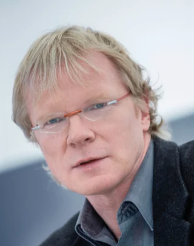 Ferdi Schüth合作论文数Max-Planck-Institut für Kohlenforschung;University of Bochum4
 Stephan Petersenn合作论文数ENDOC Center for Endocrine Tumors3
 Timo Deutschbein合作论文数University Hospital of Essen, University of Duisburg-Essen2
 Konrad Unger合作论文数2Ferdi Schueth合作论文数2Bodo Zibrowius合作论文数2Andrea Jaeger合作论文数2
 Klaus K Unger合作论文数2M. Broecker-Preuss合作论文数2Kk Unger合作论文数1K Mann合作论文数1Bernhard Saller合作论文数1
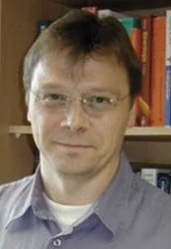 Wolfgang Schmidt合作论文数Max Planck Institute für Kohlenforschung1Ferdi Schuth合作论文数1Karl Mann合作论文数1Stefan A. Wudy合作论文数1
 Martin Bidlingmaier合作论文数1B. Schulz-Dobrick合作论文数1
 Christian J Strasburger合作论文数1S. Reitmaier合作论文数1Michaela F. Hartmann合作论文数1Nicole Unger合作论文数1




