Guest Editor Ramon M. Barnes introduces this year’s themed collection on the Winter Conference on Plasma Spectrochemistry.
Guest Editors, Ramon M. Barnes and José M. Costa-Fernandez, introduce this themed issue dedicated to Alfredo Sanz-Medel.
Ramon Barnes provides an overview of the 2016 Winter Conference.
Ethnic groups from the Atacama Desert (known as Atacamenos) have been exposed to natural arsenic pollution for over 5000years. This work presents an integral study that characterizes arsenic species in water used for human consumption. It also describes the metabolism and arsenic elimination through urine in a chronically exposed population in northern Chile. In this region, water contained total arsenic concentrations up to 1250 mu g L-1, which was almost exclusively As(V). It is also important that this water was ingested directly from natural water sources without any treatment. The ingested arsenic was extensively methylated. In urine 93% of the arsenic was found as methylated arsenic species, such as monomethylarsonic acid [MMA(V)] and dimethylarsinic acid [DMA(V)]. The original ingested inorganic species [As(V)], represent less than 1% of the total urinary arsenic. Methylation activity among individuals can be assessed by measuring primary [inorganic As/methylated As] and secondary methylation [MMA/DMA] indexes. Both methylation indexes were 0.06, indicating a high biological converting capability of As(V) into MMA and then MMA into DMA, compared with the control population and other arsenic exposed populations previously reported.
A graphical abstract is available for this content
The role of sample preparation in trace element determination, including the sequence of analytical steps used to solve an analytical problem, systematic errors, preliminary sample treatment, and conventional digestion methods, is discussed in this chapter. This chapter gives an overview of how to approach an analytical problem and some important steps in obtaining a reliable result. The major steps in the analytical sequence from field sampling to data reduction are treated briefly, and the sources of errors especially from contamination, sample preparation, and sample decomposition are discussed.
Measurement of lead in breast milk is an important public health consideration and can be technically quite challenging. The reliable and accurate determination of trace lead in human breast milk is difficult for several reasons including: potential for contamination during sample collection, storage, and analysis; complexities related to the high fat content of human milk; and poor analytic sensitivity at low concentrations. Breast milk lead levels from previous published studies should therefore be reviewed with caution. Due to the difficulty in identifying a method that would successfully digest samples with 100% efficiency, we evaluated three different digestion procedures including: (1) dry ashing in a muffle furnace, (2) microwave oven digestion, and (3) digestion in high pressure asher. High temperature, high pressure asher digestion was selected as the procedure of choice for the breast milk samples. Trace lead analysis was performed using isotope dilution (ID) inductively coupled plasma mass spectrometry (ICP-MS). Measured lead concentrations in breast milk samples (n = 200) from Mexico ranged from 0.2 to 6.7 ng ml-1. The precision for these measurements ranged from 0.27-7.8% RSD. Use of strict contamination control techniques and of a very powerful digestion procedure, along with an ID-ICP-MS method for lead determination, enables us to measure trace lead levels as low as 0.2 ng ml-1 in milk (instrument detection limit = 0.01 ng ml-1).
A graphical abstract is available for this content
Ramon Barnes considers why the 2010 Winter Conference on Plasma Spectrochemistry was considered one of the best so far. 2010 Winter Conference on Plasma Spectrochemistry, Fort Myers, Florida, US
More than 25 years have passed since the first Winter Conference in San Juan, and the 2006 conference program reinforced the critical role plasma spectrochemistry plays in analytical chemistry today.Attended by more than 550 scientists, the 14th Winter Conference held in North America (January 9-14, 2006, Tucson, Arizona) emphasized developments in trace-element, stable-isotope, and element-speciation analysis during twelve symposia, four poster sessions, five panel discussions, and 37 preconference short courses.Many of these symposia explored new plasma applications, for example advanced materials and their surfaces and interfaces, certified reference materials, clinical ICP-MS, the environmental and geosciences, petroleum materials, pharmaceuticals, and provenance and forensic analyses.Novel plasma sources, new instrumentation, laser-assisted plasma spectrochemistry, and fundamental studies also were featured, of course.More than 200 poster presentations complemented the 25 outstanding invited lectures and 85 contributed lectures.Features of these developments were described recently [1-3] and are summarized below.
The use of tetramethylammonium hydroxide, tertiary amines and strongly alkaline reagents for sample treatment involving extraction and digestion procedures is discussed in this review. The preparation of slurries is also discussed. Based on literature data, alkaline media offer a good alternative for sample preparation involving an appreciable group of analytes in different types of samples. These reagents are also successfully employed in tailored speciation procedures wherein there is a critical dependence on maintenance of chemical forms. The effects of these reagents on measurements performed using spectroanalytical techniques are discussed. Several undesirable effects on transport and atomization processes necessitate use of the method of standard additions to obtain accurate results. It is also evident that alkaline media can improve the performance of techniques such as inductively coupled plasma mass spectrometry and accessories, such as autosamplers coupled to graphite furnace atomic absorption spectrometers.
The analysis for arsenic in hair is commonly used in epidemiological studies to assess exposure to this toxic element. However, poor correlation between total arsenic concentration in hair and water sources have been found in previous studies. Exclusive determination of endogenous arsenic in the hair, excluding external contamination has become an analytical challenge. Arsenic speciation in hair appears as a new possibility for analytical assessing in As-exposure studies. This study applied a relative simple method for arsenic speciation in human hair based on water extraction and HPLC-HG-ICP-MS. The concentration of arsenic species in human hair was assessed in chronically As(V)-exposed populations from two villages (Esquiña and Illapata) of the Atacama Desert, Chile. The arsenic concentrations in drinking water are 0.075 and 1.25 mg L(-1), respectively, where As(V) represented between 92 and 99.5% of the total arsenic of the consumed waters. On average, the total arsenic concentrations in hair from individuals of Esquiña and Illapata were 0.7 and 6.1 microg g(-1), respectively. Four arsenic species, As(III), DMA(V), MMA(V) and As(V), were detected and quantified in the hair extracts. Assuming the found species in extracts represent the species in hair, more than 98% of the total arsenic in hair corresponded to inorganic As. On average, As(III) concentrations in hair were 0.25 and 3.75 microg g(-1) in Esquiña and Illapata, respectively; while, the As(V) average concentrations were 0.15 and 0.45 microg g(-1) in Esquiña and Illapata, respectively. Methylated species represent less than 2% of the extracted As (DMA(V)+ MMA(V)) in both populations. As(III) in hair shows the best correlation with chronic exposure to As(V) in comparison to other species and total arsenic. In fact, concentrations of As(total), As(III) and As(V) in hair samples are correlated with the age of the exposed individuals from Illapata (R= 0.65, 0.69, 0.57, respectively) and with the time of residence in this village (R= 0.54, 0.71 and 0.58, respectively).
 A Krushevska合作论文数21Pc Uden合作论文数20Assad S. Al-Ammar合作论文数20A LASZTITY合作论文数14Dulasiri Amarasiriwardena合作论文数13
 Tracey Jacksier合作论文数Chicago Research Center, Air Liquide13
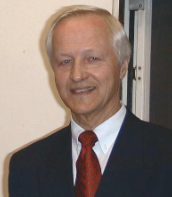 Henryk Matusiewicz合作论文数Wydział Technologii Chemicznej, Politechnika Poznanska11Yecheskel Israel合作论文数10
 Atitaya Siripinyanond合作论文数Faculty of Science, Mahidol University9
 Edward J Stanek合作论文数9M VICZIAN合作论文数8
 Edward Calabrese合作论文数Department of Environmental Health Sciences, School of Public Health and Health Sciences, University of Massachusetts Amherst;Northeast Regional Environmental Public Health Center, University of Massachusetts Amherst8Mark D. Argentine合作论文数7Rajesh K. Gupta合作论文数6
 Chitra Amarasiriwardena合作论文数Department of Environmental Health ,;School of Public Health, Harvard;Department of Environmental Health, Harvard School of Public Health6Sidney Siggia合作论文数6Xiarou Wang合作论文数6
 Yves Gelinas合作论文数Lederle Graduate Research Center, University of Massachusetts5Eva Reitznerová合作论文数4Bd Quimby合作论文数4Charles E. Gilbert合作论文数4
 Pengyuan Yang (杨鹏远)合作论文数State Key Laboratory of Epigenetic Regulation and Intervention, Institute of Biophysics, Chinese Academy of Sciences;University of Chinese Academy of Sciences4Harris Pastides合作论文数4Matthias J. Jahl合作论文数4Henry Foner合作论文数4Pappu S Murty合作论文数4Charly D. Allemand合作论文数4M Kotrebai合作论文数3Qinghong. Lu合作论文数3Chen Zicai合作论文数3ME WASTNEY合作论文数3Kns Subramanian合作论文数3
 George J. Armelagos合作论文数Department of Anthropology, Emory University3
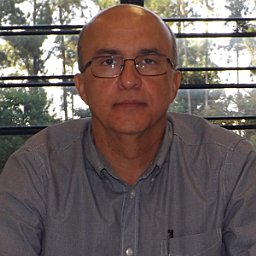 Joaquim Araujo Nobrega合作论文数Departamento de Química, Centro de Ciências Exatas e de Tecnologia, Universidade Federal de São Carlos3
 Xiao-Ru Wang (王晓茹)合作论文数Institute of Botany, The Chinese Academy of Sciences;Department of Ecology and Environmental Science, Umeå University3
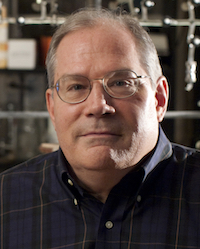 Thomas W. Boutton合作论文数Department of Ecology and Conservation Biology, Texas A&M University3Nada D Kovacic合作论文数3Istvan. Bertenyi合作论文数3
 Peter Fodor合作论文数3Reha K. Tepe合作论文数3
 Michael F. Delaney合作论文数Boston University3Chitra Amarasiriwaradena合作论文数3paul t kostecki合作论文数3Seifollah Nikdel合作论文数3A Duley合作论文数2N. H. TIOH合作论文数2M T Atallah合作论文数2
 Hector Mansilla合作论文数2




