The dangers of COVID-19 remain ever-present worldwide. The asymptomatic nature of COVID-19 obfuscates the signs policy makers look for when deciding to reopen public areas or further quarantine. In much of the world, testing resources are often scarce, creating a need for testing potentially infected individuals that prioritizes efficiency. This report presents an advancement to Beigel and Kasif's Approximate Counting Algorithm (ACA). ACA estimates the infection rate with a number of tests that is logarithmic in the population size. Our newer version of the algorithm provides an extra level of efficiency: each subject is tested exactly once. A simulation of the algorithm, created for and presented as part of this paper, can be used to find a linear regression of the results with R^2 > 0.999. This allows stakeholders and members of the biomedical community to estimate infection rates for varying population sizes and ranges of infection rates.
Pandemics have a profound impact on our world, causing loss of life, affecting our culture and historically shaping our genetics. The response to a pandemic requires both resilience and imagination. It has been clearly documented that obtaining an accurate estimate and trends of the actual infection rate and mortality risk are very important for policy makers and medical professionals. One cannot estimate mortality rates without an accurate assessment of the number of infected individuals in the population. This need is also aligned with identifying the infected individuals so they can be properly treated, monitored and tracked. However, accurate estimation of the infection rate, locally, geographically and nationally is important independently. These infection rate estimates can guide policy makers at both state, national or world level to achieve a better management of risk to society. The decisions facing policy makers are very different during early stages of an emerging epidemic where the infection rate is low, middle stages where the rate is rapidly climbing, and later stages where the epidemic curve has flattened to a low and relatively sustainable rate. In this paper we provide relatively efficient pooling methods to both estimate infection rates and identify infected individuals for populations with low infection rates. These estimates may provide significant cost reductions for testing in rural communities, third world countries and other situations where the cost of testing is expensive or testing is not widely available. As we prepare for the second wave of the pandemic this line of work may provide new solutions for both the biomedical community and policy makers at all levels.
There are languages A such that there is a Pushdown Automata (PDA) that recognizes A which is much smaller than any Deterministic Pushdown Automata (DPDA) that recognizes A. There are languages A such that there is a Linear Bounded Automata (Linear Space Turing Machine, henceforth LBA) that recognizes A which is much smaller than ny PDA that recognizes A. There are languages A such that both A and compliment(A) are recognizable by a PDA, but the PDA for A is much smaller than the PDA for compliment(A). There are languages A1, A2 such that A1,A2,A1 INTERSECT A_2 are recognizable by a PDA, but the PDA for A1 and A2 are much smaller than the PDA for A1 INTERSECT A2. We investigate these phenomenon and show that, in all these cases, the size difference is captured by a function whose Turing degree is on the second level of the arithmetic hierarchy. Our theorems lead to infinitely-often results. For example: for infinitely many $n$ there exists a language An recognized by a DPDA such that there is a small PDA for An, but any DPDA for An is large. We look at cases where we can get almost-all results, though with much smaller size differences.
The limited battery capacities of sensor nodes have become the biggest impediment to the applications of wireless sensor networks (WSNs) over the years. Recent breakthroughs in wireless energy transfer-based rechargeable batteries provide a promising application of mobile vehicles in WSNs. These mobile vehicles act as mobile chargers to transfer energy wirelessly to static sensors in an efficient way. In this paper, we study the mobile charger coverage problem of sensor nodes distributed on a 1-dimensional line and ring. Each sensor needs to be recharged at a given frequency. A mobile charger can charge a sensor after it moves to the location of the sensor. We assume that the mobile charger has an unlimited charging capability, moves at a speed subject to a given limit, and that the charging time is negligible. An optimization problem is then presented on a time-space coverage of sensors so that none of them will run out of energy: (1) What is the minimum number of mobile chargers needed? (2) Given the minimum number of mobile chargers, how should these mobile chargers be scheduled in terms of trajectory planning? Given homogeneous sensors with the same recharging frequency, we provide an optimal solution with a linear complexity in finding the minimum number of charges, as well as the actual schedule. We then examine an extension to heterogeneous sensors and provide a greedy approach that has a constant ratio of 2 to the optimal solutions for a line and ring. Extensive simulations are conducted to verify the competitive performance of the proposed scheme.
The bin packing problem is to find the minimum number of bins of size one to pack a list of items with sizes a 1 ,…, a n in (0,1]. Using uniform sampling, which selects a random element from the input list each time, we develop a randomized $O({n(\log\log n)\over \sum_{i=1}^n a_i}+({1\over \epsilon})^{O({1\over\epsilon})})$ time (1+ε )-approximation scheme for the bin packing problem. We show that every randomized algorithm with uniform random sampling needs $\Omega({n\over \sum_{i=1}^n a_i})$ time to give an (1+ε )-approximation. For each function s (n ): N →N , define ∑(s (n )) to be the set of all bin packing problems with the sum of item sizes equal to s (n ). We show that ∑(n b ) is NP-hard for every b ∈(0,1]. This implies a dense sublinear time hierarchy of approximation schemes for a class of NP-hard problems, which are derived from the bin packing problem. We also show a randomized streaming approximation scheme for the bin packing problem such that it needs only constant updating time and constant space, and outputs an (1+ε )-approximation in $({1\over \epsilon})^{O({1\over\epsilon})}$ time. Let S (δ )-bin packing be the class of bin packing problems with each input item of size at least δ . This research also gives a natural example of NP-hard problem (S (δ )-bin packing) that has a constant time approximation scheme, and a constant time and space sliding window streaming approximation scheme, where δ is a positive constant.
A set A is square-difference free (henceforth SDF) if there do not exist x,y∈A, xy, such that |x-y| is a square. Let sdf(n) be the size of the largest SDF subset of 1,...,n. Ruzsa has shown that sdf(n) = Ω(n^0.5(1+ log_65 7)) = Ω(n^0.733077...) We improve on the lower bound by showing sdf(n) = Ω(n^0.5(1+ log_205 12))= Ω(n^.7443...) As a corollary we obtain a new lower bound on the quadratic van der Waerden numbers.
A set A ⊆ N is square-difference free (henceforth SDF) if there do not exist x, y ∈ A, x 6= y, such that |x − y| is a square. Let sdf(n) be the size of the largest SDF subset of {1, . . . , n}. It is known that n ≤ sdf(n) ≤ O ( n(log log n)2/3 (log n)1/3 )
A set A ⊆ N is square-difference free (henceforth SDF) if there do not exist x, y ∈ A, x 6= y, such that |x − y| is a square. Let sdf(n) be the size of the largest SDF subset of {1, . . . , n}. Ruzsa has shown that sdf(n) = Ω(n65 ) = Ω(n0.733077···) We improve on the lower bound by showing sdf(n) = Ω(n205 ) = Ω(n0.7334···) As a corollary we obtain a new lower bound on the quadratic van der Waerden numbers.
. We show that any 1-round 2-server Private Information Retrieval Protocol where the answers are one bit long must ask questions that are at least n −2 bits long, which is nearly equal to the known n −1 upper bound. This improves upon the approximately 0.25 n lower bound of Kerenidis and deWolf while avoiding their use of quantum techniques.
Let x i ,...,x k be n-bit numbers and T ∈ ℕ. Assume that P 1,...,P k are players such that P i knows all of the numbers exceptx i . They want to determine if $\sum^{k}_{j=1}{\it x}_{j}$ = T by broadcasting as few bits as possible. In [7] an upper bound of $O(\sqrt n )$ bits was obtained for the k=3 case, and a lower bound of ω(1) for k ≥3 when T=Θ(2 n ). We obtain (1) for k ≥3 an upper bound of $k+O((n+\log k)^{1/(\lfloor{\rm lg(2k-2)}\rfloor)})$ , (2) for k=3, T=Θ(2 n ), a lower bound of Ω(loglogn), (3) a generalization of the protocol to abelian groups, (4) lower bounds on the multiparty communication complexity of some regular languages, and (5) empirical results for k = 3.
AbstractA recursive enumerator for a function h is an algorithm f which enumerates for an input x finitely many elements including h(x). f is a k(n)-enumerator if for every input x of length n. h(x) is among the first k(n) elements enumerated by f. If there is a k(n)-enumerator for h then h is called k(n)-enumerable. We also consider enumerators which are only A-recursive for some oracle A.
We present a geometric counting problem that arises in browsing and solve it in constant time per query using nonexhaustive tables. On the other hand, we prove that several closely related problems require exhaustive tables, no matter how much time we allow per query.
There has been much research over the last eleven years that considers the number of queries needed to compute a function as a measure of its complexity. We are interested in the complexity of certain sets in this context. We study the sets ODD ={(x1,..., x n )∶¦A ∩ {x 1,..., x n }¦ is odd} and WMOD(m) ={(x 1,..., x n )∶¦A ∩ {x 1,..., x n}¦≢0 (mod m)}. If A=K or A is semirecursive, we obtain tight bounds on the query complexity of ODD n A and WMOD(m) n A . We obtain lower bounds for A r.e. The lower bounds for A r.e. are derived from the lower bounds for A semirecursive. We obtain that every tt-degree has a set A such that ODD requires n parallel queries to A, and a set B such that ODD can be decided with one query to B. Hence for bounded-query complexity, how information is packaged is more important than Turing degree. We investigate when extra queries add power. We show that, for several nonrecursive sets A, the more queries you can ask, the more sets you can decide; however, there are sets for which more queries do not help at all.
A modular query consists of asking how many (modulo m) of k strings belong to a fixed NP language. Modular queries provide a form of restricted access to an NP oracle. For each k and m, we consider the class of languages accepted by NP machines that ask a single modular query. Han and Thierauf [HT95] showed that these classes coincide with levels of the Boolean hierarchy when m is even or k≤2m, and they determined the exact levels. Until now, the remaining case — odd m and large k — looked quite difficult. We pinpoint the level in the Boolean hierarchy for the remaining case; thus, these classes coincide with levels of the Boolean hierarchy for every k and m. In addition we characterize the classes obtained by using an NP(l) acceptor in place of an NP acceptor (NP(l) is the lth level of the Boolean hierarchy). As before, these all coincide with levels in the Boolean hierarchy.
We present an a.e. complexity hierarchy for nondeterministic time, and show that it is essentially the best result which can be proved using relativizable proof techniques.
The maximum number of strands used is an important measure of a. molecular algorithm's complexity. This measure is also called the space used by the algorithm. We show that every NP problem that can be solved with b(n) bits of nondeterminism can be solved by molecular computation in a polynomial number of steps, with four test tubes, in space 2(b(n)). In addition, we identify a large class of recursive algorithms that can be implemented using bounded nondeterminism. This yields improved molecular algorithms for important problems Like 3-SAT: independent set, and 3-colorability.
Motivated by the question of the relative complexities of the Graph Isomorphism and the Graph Automorphism problems, we define and study the modular graph automorphism problems. These are the decision problems ModkGA which consist, for each k > 1, of deciding whether the number of automorphisms of a graph is divisible by k. The ModkGA problems all turn out to be intermediate in difficulty between Graph Automorphism and Graph Isomorphism. We define an appropriate search version of ModkGA and design an algorithm that polynomial-time reduces the ModkGA search problem to the decision problem. Combining this algorithm with an IP protocol, we obtain a randomized polynomial-time checker for ModkGA, for all k > 1.
We study the fine structure of the classification of sets of natural numbers A according to the number of queries which are needed to compute the n-fold characteristic function of A. A complete characterization is obtained relating the question to finite combinatorics. In order to obtain an explicit description we encounter several interesting combinatorial problems.
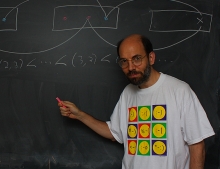 William Gasarch合作论文数University of Maryland Department of Computer Science17
 Lance Jeremy Fortnow合作论文数Department of Computer Science, College of Computing, Illinois Institute of Technology8
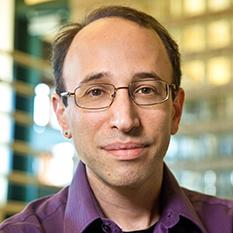 Daniel A. Spielman合作论文数School of Engineering & Applied Science, Yale University;Institute for the Foundations of Data Science, Yale University;Center for Algorithms, Data, and Market Design, Yale University7
 Frank Stephan合作论文数Departments of Mathematics and Computer Science of the National University of Singapore6
 Martin Kummer合作论文数4
 Simon Kasif合作论文数Department of Biomedical Engineering, College of Engineering, Boston University;Center for Advanced Genomic Technology, Boston University;Tel Aviv University4
 Gerd Wechsung合作论文数Universität Jena4
 Steven Rudich合作论文数Department of Computer Science, School of Computer Science, Carnegie Mellon University4jun tarui合作论文数3
 Ming Li合作论文数David R. Cheriton School of Computer Science, University of Waterloo3
 Noga Alon合作论文数Department of Mathematics, Princeton University;Tel Aviv University3
 Manindra Agrawal合作论文数Department of Computer Science and Engineering, Indian Institute of Technology, Kanpur3Lane A. Hemachandra合作论文数University of Rochester;Computer Science Department3
 David Eppstein合作论文数Department of Computer Science, Donald Bren School of Information & Computer Sciences, University of California, Irvine;Center for Algorithms and Theory of Computation, University of California, Irvine;Center for Algorithms, Combinatorics, and Optimization, University of California, Irvine3
 Joan Feigenbaum合作论文数School of Engineering & Applied Science, Yale University;Amazon Web Services3
 Eric Allender合作论文数Department of Computer Science, State University of NJ3U Hertrampf合作论文数2
 Egemen Tanin合作论文数School of Computing and Information Systems, Faculty of Engineering and Information Technology, University of Melbourne2
 Bin Fu合作论文数2Steven Homer合作论文数Boston Univ.2
 Amihood Amir合作论文数Department of Computer Science, Faculty of Exact Sciences, Bar-Ilan University2
 Louxin Zhang (张洛新)合作论文数Department of Mathematics, Faculty of Science, National University of Singapore2
 Harry Buhrman合作论文数Computer Science at University of Amsterdam2
 Alexis Maciel合作论文数Clarkson University;Department of Computer Science2
 Bill Aiello合作论文数University of British Columbia, Vancouver2
 Thomas Thierauf合作论文数Fakultät Elektronik und Informatik, Hochschule Aalen2Nick Reingold合作论文数2
 Robert W. Floyd (罗伯特·弗洛伊德)合作论文数Stanford University2B Shneiderman合作论文数1N Kahale合作论文数1Fang Xiao Zhou合作论文数1A Albicki合作论文数1Peter C. Dibble合作论文数1Adnan Derti合作论文数1
 James Owings合作论文数1MM Bonsangue合作论文数1
 Shafi Goldwasser合作论文数Computer Science & Artificial Intelligence Laboratory, Massachusetts Institute of Technology;Department of Electrical Engineering and Computer Science, Massachusetts Institute of Technology;Weizmann Institute of Science1Georgia Martin合作论文数1Louise Hay合作论文数1
 James Glenn合作论文数Department of Computer Science, Yale University1
 Andrew Chi-Chih Yao (姚期智)合作论文数Institute for Interdisciplinary Information Sciences, Tsinghua University;Shanghai Qi Zhi Institute1
 Max H. Garzon合作论文数Computer Science, The University of Memphis1
 Martín Farach-Colton合作论文数Department of Computer Science and Engineering, Tandon School of Engineering, New York University1
 Efim Kinber合作论文数1
 Lane A. Hemaspaandra合作论文数University of Rochester1
 Luís Caires合作论文数NOVA Laboratory for Computer Science and nformatics;VORTEX-CoLab;Departamento de Informatica, Faculdade de Ciencias e Tecnologia, Universidade Nova de Lisboa1
 Roberto Tamassia合作论文数Department of Computer Science, Brown University;Center for Geometric Computing, Brown University1John Gill合作论文数1




