To study the consequences of hyperglycemia on glucose and nitrogen metabolism in cirrhosis, an hyperglycemic clamp was performed in 5 cirrhotic patients and 5 normal controls during two subsequent periods of 90 min, at 7.78 and then at 13.89 mmol/l. In the first period, glucose infusion and metabolic clearance rates were decreased in cirrhotics vs controls (p less than 0.05). In the second period, this difference between the two groups disappeared because of a more important enhancement in cirrhotics. Baseline plasma C peptide levels and those during hyperglycemia were the same during hyperglycemia in both groups, but plasma insulin level rose more in cirrhotics (p less than 0.05). Baseline insulin secretion following IV glucagon was reduced in cirrhotics vs controls (p less than 0.05), but became normal in the hyperglycemic state. Plasma glucagon levels were enhanced at all times in cirrhotics vs controls (p less than 0.01), but dropped more in cirrhotics vs controls (p less than 0.05). Insulin responsiveness, defined as the "glucose consumption: plasma insulin concentration" ratio was reduced in cirrhotics at 7.78 mmol/l (p less than 0.01), but was the same in both groups at 13.80 mmol/l because of a more important enhancement in cirrhotics, reflecting an improvement of insulin action probably at the post-receptor level and of non-insulin-mediated glucose transport. Hyperglycemia induced a drop in plasma concentration and muscular release of all aminoacids, excepted alanine, between the basal state and the end of the study. Aminoacid concentration rose only in cirrhotics, without any change in muscular output. In the same time, blood ammonia level rose only in cirrhotics, without reduction of muscular uptake.(ABSTRACT TRUNCATED AT 250 WORDS)
The T lymphocyte suppressor cell activity has been evaluated in 33 alcoholic patients compared with 16 normal controls, using an in vitro test. Suppressor T cells were activated with concanavalin A, and suppressor effect was quantified by the inhibition of an autologous B cell culture response to Pokeweed Mitogen. When compared with controls, cirrhotic patients showed a significant defect of suppressor cell activity on B cell production of IgG (20 +/- 3 vs 46 +/- 5 p. 100, p less than 0.001) and IgM (26 +/- 4 vs 56 +/- 8 p. 100, p less than 0.05). In cirrhotic patients, defect of T cell suppressor function was independent of sex and severity of the cirrhosis (Child's staging). This defect was more marked in cirrhotics with serological markers of hepatitis B virus (HBV) infection (n = 11) than in cirrhotics without markers (n = 22) (9 +/- 5 vs 25 +/- 3 p. 100, p less than 0.05; 16 +/- 6 vs 30 +/- 5 p. 100, p less than 0.05 respectively for IgG and IgM production suppression). These results suggest that HBV and lymphocytes interact directly. This interaction could increase the T suppressor cell defect, and explain the promoting role of HBV infection in the constitution of the cirrhosis in alcoholics even when viral replication is not serologically apparent.
Les auteurs rapportent l'observation d'un homme de 60 ans atteint d'uvéite chronique et invalidante. En l'absence de signes neurologiques et compte tenu de signes articulaires et d'une malabsorption isolée, un diagnostic de maladie de Whipple est évoqué et initialement écarté devant la normalité de la biopsie duodénale. Le diagnostic est rectifié secondairement devant les caractères évolutifs de l'uvéite, l'apparition d'une adénopathie et la présence dans un prélèvement vitréen de macrophages contenant des corps PAS+. Sous traitement associant rifampicine et triméthoprime-sulfaméthoxazole, l'uvéite s'est rapidement et totalement améliorée. Les diverses manifestations oculaires de la maladie de Whipple sont évoquées et les traitements actuels discutés d'après les données de la littérature.We report a case of severe chronic bilateral uveitis in a 60-year-old white man without neurological manifestations. Spondylarthritis and isolated malabsorption suggested the diagnosis of Whipple's disease. A normal duodenal biopsy delated the diagnosis, who was secondarly demonstrated an adenopathy biopsy and macrophage study on vitrectomy sample (macrophage distended by periodic acid-Schiff positive material). With 1 year follow-up the uveitis was rapidly and completely cured by an antibiotic association (rifampicin and trimethoprim-sulfamethoxazol). The characteristics of ocular involvement in Whipple's disease and treatment of the disease are discussed.
Primary undifferentiated sarcomas (also called embryonal sarcomas or malignant mesenchymomas) are an exceptional form of cancer of the liver, occurring preferentially in children or adolescents. They can exhibit poor differentiation, embryonal rhabdomyosarcoma being the most frequent. To date, therapeutic success has been reported only rarely. The authors describe the case of a 16 year old boy with primary hepatic sarcoma showing a rhabdomyoblastic differentiation, who is in complete remission two years after total surgical resection and polychemotherapy.
 Michel Doffoel合作论文数119Denis Vetter合作论文数54M Imler合作论文数40A LAIDOUDI合作论文数21A. Charrault合作论文数16
 Dimitri Coumaros合作论文数15Patrick Levy合作论文数14B Peter合作论文数13D Kurtz合作论文数12Réville M合作论文数12Stahl J合作论文数11S Doffoel合作论文数11CM BRANDT合作论文数10Jp Gut合作论文数10Schmutz G合作论文数10
 Jean Pierre Zarski合作论文数University Hospital of Grenoble;CHU de Grenoble10JF BLICKLE合作论文数9Michel Pinget合作论文数9Marc Ledig合作论文数9Paris-Bockel D合作论文数8Simone Mayer合作论文数8R Kieny合作论文数8Kopferschmitt J合作论文数7Paul Mandel合作论文数7F Rohmer合作论文数7B Moyses合作论文数7G. Methlin合作论文数7Jf Grenier合作论文数6ML NORTH合作论文数6R Sapin合作论文数6Marianne H. Dorner合作论文数6
 Jean Frederic Blickle合作论文数6J Tongio合作论文数6JL FINCKER合作论文数5G Ventre合作论文数5Winiszewski P合作论文数5Schlienger Jean-Louis合作论文数5I Carloz合作论文数5J.L. Schlienger合作论文数5Serge Fratte合作论文数5B Audhuy合作论文数4Ml North合作论文数4J Marescaux合作论文数4F Raul合作论文数4M GIRARD合作论文数4Batzenschlager A合作论文数4
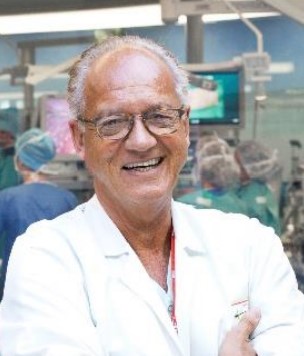 Jacques Marescaux合作论文数Institut de Recherche contre les Cancers de l'Appareil Digestif4




