Rearrangements of chromosome region 12q14-15 affecting the HMGIC gene are a frequent finding in benign solid tumors. Another non-random chromosomal alteration observed in subgroups of several of the tumor entities with 12q14-15 changes are rearrangements of 6p21 resulting in alterations of the HMGIY gene, which have so far not been documented in pleomorphic adenomas of the salivary glands. In our series of 335 pleomorphic adenomas, karyotypic changes affecting chromosomal region 6p21-23 were observed in five tumors all showing either a simple or complex t(6;8)(p21-p23;q12). Molecular cytogenetic studies of two of these tumors revealed that the 6p-breakpoint of this translocation maps distal to HMGIY, not affecting the gene or its closer vicinity. The results strongly suggest that pleomorphic adenomas are the only exception to the rule that entities of benign tumors with HMGIC rearrangements also have subtypes with HMGIY rearrangements. The difference from the other tumors is discussed in terms of tissue specificity of both HMG protein genes.
Background. Cytogenetically, pleomorphic adenomas of the salivary glands (PA) are characterized by two subgroups with clonal aberrations, i.e., aberrations involving 8q12 and 12q13-15. Recent studies revealed that by 12q13-15 aberrations the HMGI-C gene encoding for a member of the so-called high mobility group proteins is rearranged. HMGI-C rearrangements thus seem to be causally related to the genesis of pleomorphic adenomas.Methods. Cytogenetic analysis, FISH, and RACE-PCR were performed for the cytogenetic and molecular characterization of genetic alterations in PA.Results. Cytogenetic studies on 450 PA revealed two main types of clonal cytogenetic abnormalities. Aberrations involving the region 12q13-15 accounted for 13% of the tumors and anomalies involving 8q12 for 23%. Using FISH and 3'RACE-PCR we were able to show that by the 12q13-15 rearrangements the HMGI-C gene or its immediate surroundings were consistently rearranged.Conclusion. Because two main cytogenetic subgroups in PA exist, PA can be subdivided with regard to their molecular etiology and their malignant potential. Possibly, tumors with HMGI-C rearrangements may follow a benign mesenchymal pathway whereas tumors with 8q12 aberrations have a potential for malignant transformation. If this holds true, HMGI-C mutations may be a possible prognostic factor in PA.
Based on the hypothesis that three main cytogenetic subtypes of salivary gland pleomorphic adenomas can be distinguished which may also represent different etiologic entities, we investigated whether these subtypes correspond to clinical, histologic, or biologic features of 220 tumors karyotyped (including 117 tumors with detailed clinical history and histologic subtyping). The following results were obtained. As compared with the group of patients showing salivary gland pleomorphic adenomas with an apparently normal karyotype, the patients in the "8q12-group" were significantly younger (51.1 years versus 39.3 years, p < 0.001). The distribution of histologic subtypes also showed highly significant differences between the groups. Whereas the breakpoint in the 8q12 group was always mapped to a single band, no exact localization of the breakpoint in the group of tumors showing chromosome number 12 abnormalities was possible. In most cases, however, the breakpoints were clustered to 12q15. Finally, all tumors with 8q12 breakpoints showed a characteristic in vitro cellular morphology which was also observed in a few tumors with an apparently normal karyotype but in none of the tumors with the 12q13-15 breakpoint.
Sixty-nine salivary gland pleomorphic adenomas were fully karyotyped by G-banding including 40 tumors previously reported. The cytogenetic results allowed to distinguish between three major chromosomal subgroups characterized by either an apparently normal karyotype or by rearrangements of chromosome 8q12 or by rearrangements of chromosome 12q14-15. Significant correlations of these karyotypic groups with the age of the patients and histologic subgroups of the pleomorphic adenomas were found. Furthermore, our analysis revealed that the three main cytogenetic subgroups showed an uneven geographical distribution. Based on these results we have concluded that the cytogenetic groups represent different etiologic entities.
The results of chromosome analyses performed on 50 pleomorphic salivary gland adenomas in Germany are summarized herein and compared with those obtained on 100 adenomas studied in Sweden. In both series, characteristic or even specific structural chromosomal rearrangements involving either chromosome 8 or 12 were found that allowed the cytogeneticist to distinguish between subgroups. However, the significantly higher percentage of tumors with chromosome abnormalities in the adenomas examined in Germany is particularly noteworthy. In the near future, cytogenetic investigations together with molecular methods will allow investigators to describe basic mechanisms for the development of pleomorphic adenomas in terms of oncogenetics.
Nine of 40 pleomorphic salivary gland adenomas (PSAs) showed clonal aberrations of chromosome 12, with a breakpoint at 12q13----q15. The cytogenetic findings in these cases and those of nine additional cases reported in the literature suggest that this type of aberration is a primary change directly involved in the genesis of PSA.
 J. Bullerdiek合作论文数9
 Sabine Bartnitzke合作论文数9J Haubrich合作论文数7Werner Schloot合作论文数4J G McLeod合作论文数3H H Wolff合作论文数3T. Mohandas合作论文数3G E Sarto合作论文数3O.G. Ward合作论文数3M B Zwi合作论文数3M. Valentine合作论文数3Z Wirschubsky合作论文数3W G Nash合作论文数3R Ionasescu合作论文数3M.G. Bertoglio合作论文数3H Kruyer合作论文数3F Rilke合作论文数3K Davies合作论文数3BL WEBBER合作论文数3AA GREEN合作论文数3David Brook合作论文数3V IONASESCU合作论文数3J Sumegi合作论文数3HR BERESFORD合作论文数3E Etcubanas合作论文数3
 Sigurdur Ingvarsson合作论文数Institute for Experimental Pathology, University of Iceland3
 Brandon Wainwright合作论文数Diamantina Institute, Faculty of Medicine, The University of Queensland3
 Stephen O'Brien合作论文数Department of Biological Sciences, Halmos College of Arts and Sciences, Nova Southeastern University;Laboratory of Genomic Diversity, Center for Computer Technologies, ITMO University3
 Thomas Haaf合作论文数Institute of Human Genetics, Julius-Maximilians-Universitat Wurzburg3
 Peter Scambler合作论文数GOS Institute of Child Health, University College London3
 Anne Bowcock合作论文数Department of Dermatology, Icahn School of Medicine at Mount Sinai;Department of Genetics and Genomic Sciences, Icahn School of Medicine at Mount Sinai;Department of Oncological Sciences, Icahn School of Medicine at Mount Sinai3Eeva Therman合作论文数3M LAMBROU合作论文数3Goran Levan合作论文数3Edwin C. Douglass合作论文数3Charles D. Boyd合作论文数3Burkhard Mayr合作论文数3Eberhard Schwinger合作论文数3
 Marco Pierotti合作论文数Cogentech Srl;IFOM-IEO Campus;Fondazione IRCCS Istituto Nazionale Tumori of Milan3Udo Lohrs合作论文数3R Ellen Magenis合作论文数3
 Nicholas Lench合作论文数Oxagen Ltd.3
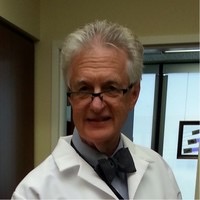 David Parham合作论文数Children's Hospital Los Angeles3Rainer Johannisson合作论文数3
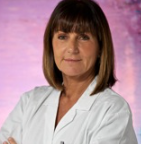 Gabriella Sozzi合作论文数Dipartimento di Oncologia Sperimentale e Medicina Molecolare, Fondazione IRCCS Istituto Nazionale dei Tumori3
 Lloyd J. Old合作论文数Memorial Sloan-Kettering Cancer Center3
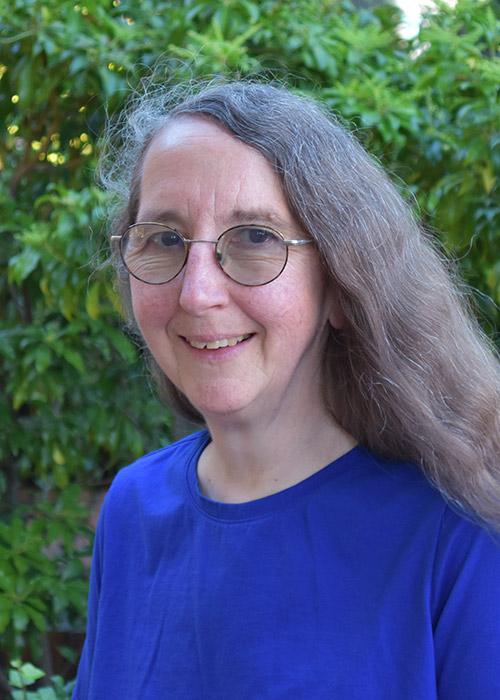 Ellen M. Wijsman (Ellen Wijsman)合作论文数Division of Medical Genetics, Department of Medicine, School of Public Health, University of Washington;Department of Biostatistics, School of Public Health, University of Washington;Department of Genome Sciences, School of Public Health, University of Washington3
 Jane Disney合作论文数Department of Plant Pathology, Pennsylvania State University3Maria Grazia Borrello合作论文数3




