Clustering the nodes of a graph is a cornerstone of graph analysis and has been extensively studied. However, some popular methods are not suitable for very large graphs: e.g., spectral clustering requires the computation of the spectral decomposition of the Laplacian matrix, which is not applicable for large graphs with a large number of communities. This work introduces PASCO, an overlay that accelerates clustering algorithms. Our method consists of three steps: (1) We compute several independent small graphs representing the input graph by applying an efficient and structure-preserving coarsening algorithm. (2) A clustering algorithm is run in parallel onto each small graph and provides several partitions of the initial graph. (3) These partitions are aligned and combined with an optimal transport method to output the final partition. The PASCO framework is based on two key contributions: a novel global algorithm structure designed to enable parallelization and a fast, empirically validated graph coarsening algorithm that preserves structural properties. We demonstrate the strong performance of PASCO in terms of computational efficiency, structural preservation, and output partition quality, evaluated on both synthetic and real-world graph datasets.
Pairwise temporal interactions between entities can be represented as temporal networks, which code the propagation of processes such as epidemic spreading or information cascades, evolving on top of them. The largest outcome of these processes is directly linked to the structure of the underlying network. Indeed, a node of a network at a given time cannot affect more nodes in the future than it can reach via time-respecting paths. This set of nodes reachable from a source defines an out-component, which identification is costly. In this paper, we propose an efficient matrix algorithm to tackle this issue and show that it outperforms other state-of-the-art methods. Secondly, we propose a hashing framework to coarsen large temporal networks into smaller proxies on which out-components are more easily estimated, and then recombined to obtain the initial components. Our graph hashing solution has implications in privacy respecting representation of temporal networks.
Graph anomaly detection have proved very useful in a wide range of domains. For instance, for detecting anomalous accounts (e.g. bots, terrorists, opinion spammers or social malwares) on online platforms, intrusions and failures on communication networks or suspicious and fraudulent behaviors on social networks. However, most existing methods often rely on pre-selected features built from the graph, do not necessarily use local information and do not consider context based anomalies. To overcome these limits, we present CoBaGAD, a Context-Based Graph Anomaly Detector which exploits local information to detect anomalous nodes of a graph in a semi-supervised way. We use Graph Attention Networks (GAT) with our custom attention mechanism to build local features, aggregate them and classify unlabeled nodes into normal or anomaly. Finally, we show that our algorithm is able to detect anomalies with high precision and recall and, outperforms state-of-the-art baselines.
Graph embedding is a technique which consists in finding a new representation for a graph usually by representing the nodes as vectors in a low-dimensional real space. In this paper, we compare some of the best known algorithms proposed over the last few years, according to four structural properties of graphs: first-order and second-order proximities, isomorphic equivalence and community membership. To study the embedding algorithms, we introduced several measures. We show that most of the algorithms are able to recover at most one of the properties and that some algorithms are more sensitive to the embedding space dimension than some others.
Simple ingredients, such as well-defined interactions and couplings for the velocity and orientation of self-propelled objects, are sufficient to produce complex collective behavior in assemblies of such entities. Here, we use assemblies of rodlike robots made motile through self-vibration. When confined in circular arenas, dilute assemblies of these rods act as a gas. Increasing the surface fraction leads to a collective behavior near the boundaries: polar clusters emerge while, in the bulk, gaslike behavior is retained. The coexistence between a gas and surface clusters is a direct consequence of inertial effects as shown by our simulations. A theoretical model, based on surface mediated transport accounts for this coexistence and illustrates the exact role of the boundaries. Our study paves the way towards the control of collective behavior: By using deformable but free to move arenas, we demonstrate that the surface induced clusters can lead to directed motion, while the topology of the surface states can be controlled by biasing the motility of the particles.
Link prediction is a popular research topic in network analysis. In the last few years, new techniques based on graph embedding have emerged as a powerful alternative to heuristics. In this article, we study the problem of systematic biases in the prediction, and show that some methods based on graph embedding offer less biased results than those based on heuristics, despite reaching lower scores according to usual quality scores. We discuss the relevance of this finding in the context of the filter bubble problem and the algorithmic fairness of recommender systems.
Détection et Explication des Anomalies Contextuelles dans les Graphes Attribués La détection d'anomalies dans des données relationnelles représentées sous forme de graphe s'est avérée très utile dans de nombreux domaines différents, par exemple pour détecter des comportements frauduleux sur des plateformes en ligne ou des intrusions dans des réseaux de télécommunications. Cependant, la plupart des méthodes existantes utilisent des caractéristiques créées à la main et n'utilisent pas nécessairement les informations locales. Dans ce but, nous proposons CoBaGAD, un détecteur d’anomalies contextuelles dans les graphes qui utilise l'information locale pour détecter les nœuds anormaux dans un graphe attribué dans une configuration semi-supervisée. CoBaGAD est un réseau neuronal sur graphe doté d'un mécanisme d'attention personnalisé capable de générer une représentation des nœuds, de les agréger et de classer les nœuds non vus pendant l’entraînement. Bien que les méthodes d'apprentissage automatique se soient avérées très utiles dans un large éventail d'applications allant de la vision par ordinateur au traitement du langage naturel et à l'exploration de graphes, un grand nombre de ces approches sont considérées comme des boîtes noires dont les résultats ne peuvent être humainement reliés aux entrées de manière simple. Cela implique un manque de compréhension du modèle sous-jacent et de ses résultats. Dans ce travail, nous présentons une nouvelle méthode pour expliquer, d'une manière compréhensible par l'homme, la décision d'un modèle de boîte noire pour la détection d'anomalies sur des données de graphes attribuées. Plus précisément, nous nous concentrons sur l'explication de la classification des nœuds en apprenant un modèle local interprétable autour d'un nœud à expliquer. Nous montrons que notre méthode peut récupérer l'information qui conduit le modèle à étiqueter un nœud comme anormal.
 Marton Karsai合作论文数4
 Goncalves, Paulo合作论文数ENS Lyon, Univ Lyon4
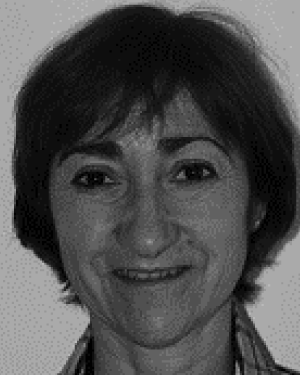 Christine Largeron合作论文数Université de Lyon, Université de Saint-Étienne Jean Monnet4
 Rémi Gribonval合作论文数Laboratoire de l’Informatique du Parallélisme, École Normale Supérieure de Lyon;Inria4
 Pierre Borgnat合作论文数Laboratoire de Physique4
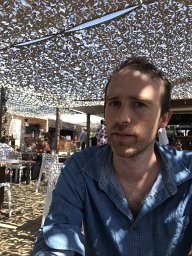 Remy Cazabet合作论文数IRIT, Toulouse University3
 Antoine Deblais合作论文数Univ Amsterdam, Van der Waals Zeeman Inst, Inst Phys, NL-1098 XH Amsterdam, Netherlands2
 Jean Christophe Baret合作论文数Université de Bordeaux/Institut Universitaire de France/Emulseo/Centre National de la Recherche Scientifique2
 Thomas Guerin合作论文数Centre National de la Recherche Scientifique, Université Pierre et Marie Curie2
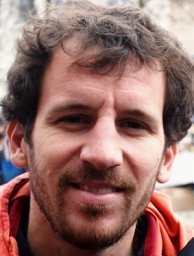 Thomas Barois合作论文数CNRS, Univ Bordeaux2Jean-François Boudet合作论文数2Baptiste Jeudy合作论文数l'universite de St Etienne2
 Juho Lintuvuori合作论文数Department of Chemistry, University of Durham2
 Hamid Kellay合作论文数Centre de Physique Moleculaire Optique et Hertzienne;Cours de la Liberation;Centre de Physique Moleculaire Optique et Hertzienne, Cours de la Liberation2Aakash Sinha合作论文数1Etienne Lasalle合作论文数1
 Titouan Vayer合作论文数Inria1




