Ransomware is one of growing concerns in enterprise and government organizations, because it may cause financial damages or loss of important data. Although there are techniques to detect and prevent ransomware, an evolved ransomware may evade them because they are based on monitoring known behaviors. Ransomware can be mitigated if backup copies of data are retained in a safe place. However, existing backup solutions may be under ransomware's control and an intelligent ransomware may destroy backup copies too. They also incur overhead to storage space, performance and network traffic (in case of remote backup). In this paper, we propose an SSD system that supports automated backup, called Amoeba. In particular, Amoeba is armed with a hardware accelerator that can detect the infection of pages by ransomware attacks at high speed and a fine-grained backup control mechanism to minimize space overhead for original data backup. For evaluation, we extended the Microsoft SSD simulator to implement Amoeba and evaluated it using the realistic block-level traces, which are collected while running the actual ransomware. According to our experiments, Amoeba has negligible overhead and outperforms in performance and space efficiency over the state-of-the-art SSD, FlashGuard, which supports data backup within the device.
This paper presents the design and implementation of a telepresence system, where a mobile manipulator robot is utilized to explore a museum at a remote site, sending live video and audio on demand to a user at the local site. The user's sense of presence is also enhanced through the capability to manipulate objects remotely via the robot gripper. The display system is a television display system that can be worn like a pair of glasses. The head movements of the user are monitored using color tracking, and the displayed images are updated accordingly. This is achieved by interpreting the human head movements and transforming them into control signals for the robot and its mounted color camera. Novel features of the presented system include: utilization of human implicit commands, availability and cost-effectiveness of the system, feeling of presence, and intelligence fusion of the human user with robot's intelligence. The new version of the telepresence system that is currently under development is also presented
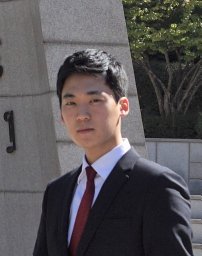 Donghyun Min合作论文数Sogang University1
 DongGyu Park合作论文数Sogang University, Seoul, South Korea1Jinwoo Ahn合作论文数1
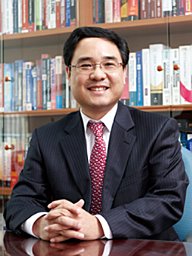 Sungyong Park合作论文数1Ziemer, R.合作论文数1
 Jung-Hee Lee合作论文数Nitride Semiconductor Device Laboratory, Kyungpook National University;Graduate School of Sensor and Display Engineering, Kyungpook National University;School of Electronics Engineering, Kyungpook National University;College of IT Engineering, Kyungpook National University1
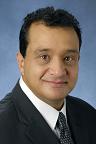 Arvin Agah合作论文数University of KansasElectrical Engineering and Computer Science1
 Youngjae Kim合作论文数Data-Intensive Computing & Systems Laboratory, Department of Computer Science & Engineering, Sogang University;Soteria Systems, LLC.1




