Web Service Composition deals with the (re)use of Web Services to provide complex functionality, inexistent in any single service. Over the state-of-the-art, we introduce a new type of modeling, based on ontologies and relations between objects, which allows us to extend the expressiveness of problems that can be solved automatically.
This paper describes our approach in parsing a K definition. The difficulty of the problem is given by the nature of the K-framework, where the user can define the operational semantics of a language by inserting pieces of concrete syntax in the K code in a natural way. Our main contribution shows how to make use of SDF and the disambiguation mechanisms in the context of K-framework.
This paper describes the \(\mathbb K\) Tool, a system for formally defining programming languages. Formal definitions created using the \(\mathbb K\) Tool automatically yield an interpreter for the language, as well as program analysis tools such as a state-space explorer. The modularity of \(\mathbb K\) and the design of the tool allow one semantics to be used for several applications.
This paper presents a language-independent proof system for reachability properties of programs written in non-deterministic (e.g., concurrent) languages, referred to as all-path reachability logic. It derives partial-correctness properties with all-path semantics (a state satisfying a given precondition reaches states satisfying a given postcondition on all terminating execution paths). The proof system takes as axioms any unconditional operational semantics, and is sound (partially correct) and (relatively) complete, independent of the object language. The soundness has also been mechanized in Coq. This approach is implemented in a tool for semantics-based verification as part of the K framework (http://kframework.org).
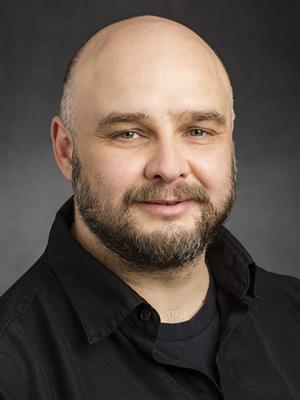 Grigore Rosu合作论文数Department of Computer Science, University of Illinois at Urbana-Champaign;Siebel School of Computing and Data Science, The Grainger College of Engineering, University of Illinois Urbana-Champaign;Runtime Verification, Inc.;Elrond Networks;Spring Labs2
 Traian Florin Șerbănuță合作论文数Faculty of Mathematics and Computer Science, University of Bucharest;Runtime Verification Inc.2
 Liana Tucar合作论文数1
 Paul Diac合作论文数Alexandru Ioan Cuza Univ, Fac Comp Sci, Iasi, Romania1
 David Lazar合作论文数MIT CSAIL1
 Dorel Lucanu合作论文数Faculty of Computer Science , Alexandru Ioan Cuza University1Stefan Ciobaca合作论文数ENS Cachan, CNRS & INRIA1
 Chucky Ellison合作论文数University of Illinois1
 Andrei Stefanescu合作论文数University of Illinois at Urbana-Champaign1Brandon Moore合作论文数1Gheorghe Grigoraş合作论文数Alexandru Ioan Cuza University1
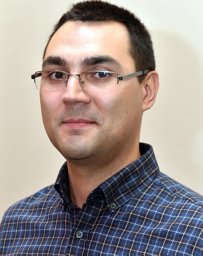 Andrei Arusoaie合作论文数University Alexandru Ioan Cuza of Iaşi1




