Residual flux in drinking water plumbing can lead to many undesirable outcomes, including metallic corrosion and the growth of microbial organisms. Proper selection and flushing of flux are critical parameters in the construction and commissioning of new plumbing systems.
The lead leaching potential of new brass plumbing devices has come under scrutiny as a significant source of lead in drinking water (>300 μg/L) of new buildings around the world. Experiments were conducted using ball valves that were sold as certified and known to have caused problems in practice, in order to better understand how installed products could create such problems, even if they passed "leaching tests" such as National Sanitation Foundation (NSF) Standard 61 Section 8. Diffusion of lead from within the device into water when installed can increase lead leaching by orders of magnitude relative to results of NSF testing, which once only required exposure of very small volumes of water within the device. "Normalization" of the lead-in-water result tended to produce estimates of lead concentration that were much lower than actual lead measured at the tap. Finally, the presence of flux could also dramatically increase lead leaching, whereas high water velocity had relatively little effect.
A rapid reaction between free chlorine and the cupric hydroxide [Cu(OH)2] solids commonly found on pipe walls in premise plumbing can convert free chlorine to chloride and rapidly age Cu(OH)2 to tenorite (CuO). This reaction has important practical implications for maintaining free chlorine residuals in premise plumbing, commissioning of new copper pipe systems, and maintaining low levels of copper in potable water. The reaction stoichiometry between chlorine and Cu(OH)2 is consistent with formation of CuO through a metastable Cu(III) intermediate, although definitive mechanistic understanding requires future research. Natural levels of silica in water (0-30 mg/L), orthophosphate, and higher pH interfere with the rate of this reaction.
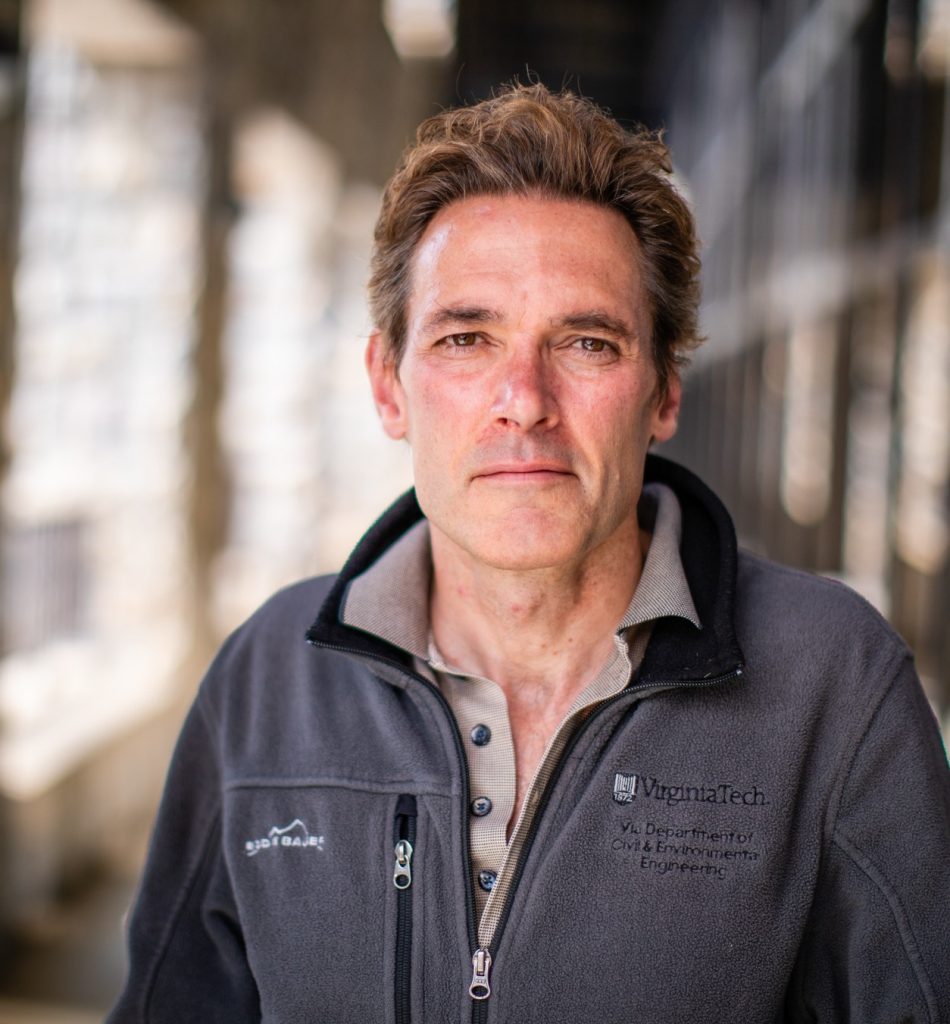 Marc A. Edwards合作论文数The Charles Edward Via, Jr., Department of Civil and Environmental Engineering, College of Engineering, Virginia Polytechnic Institute and State University3
 Jeffrey L. Parks合作论文数3
 Powers Kim A合作论文数1
 Simoni Triantafyllidou合作论文数Virginia Polytechnic Institute and State University, State University1Paolo Scardina合作论文数1Caroline K. Nguyen合作论文数1




