Compared with healthy adults this study has shown a significant reduction in the prevalence of the postprandial retrograde cyclic motor pattern in the distal colon of patients with diarrhea-predominant irritable bowel syndrome. We hypothesize that this altered motility may allow for premature rectal filling which contributes to the postprandial urgency and diarrhea experienced by these patients.
BACKGROUND:The colonic motor patterns associated with gas transit are poorly understood. This study describes the application of high-resolution impedance manometry (HRiM) in the human colon in vivo to characterize distal colonic motility and gas transit; (a) after a meal and (b) after intraluminal gas insufflation into the sigmoid colon.METHODS:HRiM recordings were performed in 19 healthy volunteers, with sensors positioned from the distal descending colon to the proximal rectum. Protocol 1 (n = 10) compared pressure and impedance prior to and after a meal. Protocol 2 (n = 9) compared pressure and impedance before and after gas insufflation into the sigmoid colon (60 mL total volume).KEY RESULTS:Both the meal and gas insufflation resulted in an increase in the prevalence of the 2-8/minute "cyclic motor pattern" (meal: (t(9) = -6.42, P<0.001); gas insufflation (t(8) = -3.13, P = 0.01)), and an increase in the number of antegrade and retrograde propagating impedance events (meal: Z = -2.80, P = 0.005; gas insufflation Z = -2.67, P = 0.008). Propagating impedance events temporally preceded antegrade and retrograde propagating contractions, representing a column of luminal gas being displaced ahead of a propagating contraction. Three participants reported an urge to pass flatus and/or flatus during the studies.CONCLUSIONS AND INFERENCES:Initiation of the 2-8/minute cyclic motor pattern in the distal colon occurs both following a meal and/or as a localized sensorimotor response to gas. The near-absence of a flatal urge and the temporal association between propagating contractions and gas transit supports the hypothesis that the 2-8/minute cyclic motor pattern acts as a physiological "brake" modulating rectal filling.
Background Colonic high-resolution manometry (HRM) has been used to reveal discrete, propagating colonic motor patterns. To help determine mechanisms underlying these patterns, we used HRM to record contractile activity in human distal colon ex vivo. Methods Surgically excised segments of descending (n = 30) or sigmoid colon (n = 4) were immersed in oxygenated Krebs solution at 36 degrees C (n = 34; 16 female; 67.6 +/- 12.4 years; length: 24.7 +/- 3.5 cm). Contractility was recorded by HRM catheters. After 30 minutes of baseline recording, 0.3 mM lidocaine and/or 1 mM hexamethonium were applied. Ascending neural pathways were activated by electrical field stimulation (EFS; 10 Hz, 0.5 ms, 50 V, 5-s duration) applied to the anal end before and after drug application. Results Spontaneous propagating contractions were recorded in all specimens (0.1-1.5 cycles/minute). Most contractions occurred synchronously across all recording sites. In five specimens, rhythmic antegrade contractions propagated across the full length of the preparation. EFS evoked local contractions at the site of stimulation (latency: 5.5 +/- 2.4 seconds) with greater amplitude than spontaneous contractions (EFS; 29.3 +/- 26.9 vs 12.1 +/- 14.8 mm Hg; P = .02). Synchronous or retrograde propagating motor patterns followed EFS; 71% spanned the entire preparation length. Hexamethonium and lidocaine modestly and only temporarily inhibited spontaneous contractions, whereas TTX increased the frequency of contractile activity while inhibiting EFS-evoked contractions. Conclusions and Inferences Our study suggests that the propagated contractions recorded in the organ bath have a myogenic origin which can be regulated by neural input. Once activated at a local site, the contractions do not require the propulsion of fecal content to sustain long-distance propagation.
Percutaneous endoscopic gastrostomy (PEG) tube often remains to be used as a primary modality for feeding in patients with advanced dementia, perhaps due to misconceptions regarding the outcomes. Physicians' perceptions regarding the PEG tubes could be a significant contributing factor globally. A multidisciplinary approach involving the ethics committee can help address the issue. Our survey is focused on gauging physicians' perceptions regarding PEG tube utilization and its global impact on outcomes in dementia.
The pathogenesis of slow transit constipation (STC) remains poorly understood, with intrinsic and extrinsic abnormalities implicated. Here, we present high‐resolution colonic manometry recordings from four STC patients recorded before total colectomy, and subsequently, ex vivo, after excision.
 Phil G Dinning合作论文数Dept Surg, Flinders Univ S Australia5
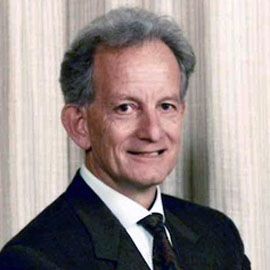 Marcello Costa合作论文数College of Medicine and Public Health, Flinders University5
 Simon J H Brookes合作论文数5
 Lukasz Wiklendt合作论文数HeartAI5
 David Wattchow合作论文数4Lyn Maslen合作论文数3Reizal Mohd Rosli合作论文数3
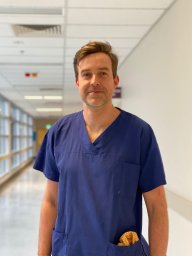 Paul T Heitmann合作论文数College of Medicine and Public Health, Flinders University3Spencer Nick J合作论文数2Krishna Aparanji合作论文数1R Mohd Rosli合作论文数1Naveen Mohandas合作论文数1Dayan de Fontgalland合作论文数1Tiong Cheng Sia合作论文数1
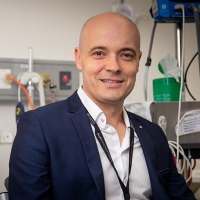 Greg O'Grady合作论文数Auckland Bioengineering Institute, University of Auckland1Omari Taher合作论文数1Tim Hibberd合作论文数Discipline of Surgery and Centre for Neuroscience, Flinders University Adelaide1Venkatakrishnan Leelakrishnan合作论文数1
 John W. Arkwright合作论文数CSIRO Materials Science and Engineering1
 Peter A Bampton合作论文数1
 Nira Paskaranandavadivel合作论文数Auckland Bioengineering Institute, Faculty of Engineering, The University of Auckland1




