Rolling element bearings are regarded as one of the critical components in industrial applications. In order to avoid the malfunctions and awful failures of the machinery, fault diagnosis plays a major role. Also, to increase the efficiency of monitoring systems, conventional diagnostic techniques have been replaced by Artificial Intelligence (AI) based methods. Deep learning (DL) as an advancement in AI, is found to be useful compared to the shallow structured Artificial Neural Networks (ANNs), in addition to the elimination of the need for diagnostic expertise. This paper presents a new 1-Dimensional Deep Convolutional Neural Network (1-D DCNN) based intelligent fault diagnosis method for rolling element bearings. The model is trained and tested using Case Western Reserve University (CWRU) dataset and is designed to classify ten fault classes using the acquired vibration signals. Unlike conventional DCNN architectures, the model does not use Fully connected (FC) layer. Thus, considerable decrease in the number of parameters is achieved and also leads to an increase in classification accuracy and decrease in computation time. This indeed reduces the computation power required and thus eliminates the need for using Graphical Processing Units (GPUs) for training deep learning neural networks, which is a significant contribution of this work.
The performance of the Radial Basis Function Neural Network (RBFNN) in the defect classification of a Rolling Element Bearing (REB) has been investigated in this work. The features (input) required for training the RBFNN have been extracted from the non-overlapping segments of the raw and denoised bearing vibration signals. A kurtosis based wavelet denoising method has been used to reduce the noise components in the vibration signals. The Fisher’s Criterion (FC) has been used to select a few sensitive features and form a reduced feature set. The centers of the RBF units have been optimized using a modified Fuzzy C-Means (FCM) algorithm, viz., Cluster Dependent Weighted FCM (CDWFCM). The performance of the RBFNN has been compared for four training strategies: two types of feature sets (all features and FC selected features) and two types of RBF centers (centers selected randomly and centers selected using CDWFCM). These strategies have also been tested for the bearing vibration signal provided by the Case Western Reserve University database.
Condition monitoring (CM) and fault diagnosis of rolling element bearings is essential for smooth and safe running of machines. Signal analysis is an important component of condition monitoring and fault diagnosis. Wavelet transform (WT) has been widely used for signal analysis, particularly in condition monitoring, for the past several years. WT and its applications and new developments in this area are increasing at a rapid rate. Hence it is essential to review the literature in order to understand the current trends in this new and emerging area of signal processing. In this regard, this paper will review application of WT to CM and fault diagnosis of rolling element bearing (REB). The review will cover some broad areas of research like: time-frequency analysis of signals, fault feature extraction, singularity detection, denoising and various pattern recognition techniques like artificial neural network (ANN), support vector machine (SVM) and Fuzzy logic. This also covers some new and recent developments in the application of WT. A summary of some of the major developments happening in this field is presented at the end.
This article uses the cluster dependent weighted fuzzy C-means based radial basis function neural network for comparing the different dimensionality reduction techniques for the fault diagnosis in the rolling element bearing. The vibration signals from normal bearing, bearing with defect on the inner race, and bearing with defect on the outer race were acquired under one radial load and two shaft speeds. These signals were subjected to the wavelet transform based denoising from which several time and frequency domain features were extracted. Dimensionality reduction techniques, namely, principal component analysis, Fisher's criterion, and separation index, have been used to select the sensitive features. The selected features were used to train and test the radial basis function neural network, where the centers of the radial basis function units have been optimized by the cluster dependent weighted fuzzy C-means and the widths of the radial basis function units have been fixed by trial and error. Finally, a comparison of the dimensionality reduction techniques based on the radial basis function neural network performance is presented.
The monitoring of tool wear is a most difficult task in the case of various metal-cutting processes. Artificial Neural Networks (ANN) has been used to estimate or classify certain wear parameters, using continuous acquisition of signals from multi-sensor systems. Most of the research has been concentrated on the use of supervised neural network types like multi-layer perceptron (MLP), using back-propagation algorithm and Radial Basis Function (RBF) network. In this article, a new constructive learning algorithm proposed by Fritzke, namely Growing Cell Structures (GCS) has been used for tool wear estimation in face milling operations, thereby monitoring the condition of the tool. GCS generates compact network architecture in less training time and performs well on new untrained data. The performance of this network has been compared with that of another constructive learning algorithm-based neural network, namely the Resource Allocation Network (RAN). For the sake of establishing the effectiveness of GCS, results obtained have been compared with those obtained using Multi Layer Perceptron (MLP), which is a standard and widely used neural network.
The wavelet based denoising has proven its ability to denoise the bearing vibration signals by improving the signal-to-noise ratio (SNR) and reducing the root-mean-square error (RMSE). In this paper seven wavelet based denoising schemes have been evaluated based on the performance of the Artificial Neural Network (ANN) and the Support Vector Machine (SVM), for the bearing condition classification. The work consists of two parts, the first part in which a synthetic signal simulating the defective bearing vibration signal with Gaussian noise was subjected to these denoising schemes. The best scheme based on the SNR and the RMSE was identified. In the second part, the vibration signals collected from a customized Rolling Element Bearing (REB) test rig for four bearing conditions were subjected to these denoising schemes. Several time and frequency domain features were extracted from the denoised signals, out of which a few sensitive features were selected using the Fisher's Criterion (FC). Extracted features were used to train and test the ANN and the SVM. The best denoising scheme identified, based on the classification performances of the ANN and the SVM, was found to be the same as the one obtained using the synthetic signal.
Rolling Element Bearings (REBs) play an important role in the condition monitoring of machines. The REBs are the main causes of breakdown of rotating machines. Vibration signal analysis has been extensively used for bearing fault diagnostics. In the efforts towards Intelligent Condition Monitoring and fault diagnostics, Artificial Neural Networks (ANNs) has been widely used. Multi-layer perceptrons (MLPs) are the most commonly used neural network (NN) architectures. Radial Basis Function (RBF) neural network architecture is not widely used for REB diagnostics. They are a relatively new class of NNs which have the advantages of simplicity, ease of implementation, excellent learning and generalization abilities. In this paper, RBF NN architecture has been used for fault diagnostics of REBs using vibration signal features. Using a customized bearing test rig, experiments have been carried out on a deep groove ball bearing namely 6205 under two different speeds and one load condition. The diagnostics is mainly concerned with classifying the bearing into two classes namely ‘Normal’ and ‘Used’. The performances of different learning strategies namely fixed centers (FC) selected at random, self-organized selection of centers using clustering algorithms – Fuzzy C Means (FCM), Density Weighted Fuzzy C Means (DWFCM) & Cluster Dependent Weighted Fuzzy C Means (CDWFCM) in designing the RBF neural network – have been compared. It has been found that basic FCM and CDWFCM give higher performance accuracy when compared to other strategies
We develop, in this paper, a representation of time and events that supports a range of reasoning tasks such as monitoring and detection of event patterns which may facilitate the explanation of root cause(s) of faults. We shall compare two approaches to event definition: the active database approach in which events are defined in terms of the conditions for their detection at an instant, and the knowledge representation approach in which events are defined in terms of the conditions for their occurrence over an interval. We shall show the shortcomings of the former definition and employ a three-valued temporal first order nonmonotonic logic, extended with events, in order to integrate both definitions.
In this paper we emphasize the importance of condition monitoring fault diagnosis and prognosis in modern dynamic systems, if they are to remain healthy, competitive and profitable, and to meet the challenges of the future. We argue that there is an urgent need for deep knowledge based reasoning and analytical capability to effectively deal with various ongoing issues related to systems operations, performances enhancement and failures. We put forward that Knowledge Management plays an important role in an integrative approach to enhance the quality, reliability and safety aspects of such systems in today’s global environment.
 P. Srinivasa Pai合作论文数College of Engineering, Utah State University7
 S G. Vijay合作论文数Manipal Institute of Technology, Manipal University6
 N. S. Sriram合作论文数5
 Nadim Obeid合作论文数Department of Computer Information Systems, King Abdullah II School for Information Technology, The University of Jordan4
 R. Shashank合作论文数1
 A Adarsh Rai合作论文数NMAM Institute of Technology1H. S. Kumar H. S. Kumar合作论文数1Kumar Harvindra Singh合作论文数1T. N. Nagabhushana合作论文数1
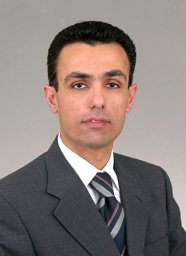 Imad Salah合作论文数King Abdullah II School for Information Technology, The University of Jordan1




