We survey a combinatorial analog to the theory of differential manifolds and real vector bundles, in which the role of real vector spaces and coordinate charts is played by oriented matroids. Work by several people, culminating in a recent result by Daniel Biss, shows that this model for vector bundles is equivalent to the theory of real vector bundles over triangulable base spaces.
Two common ways of using the partially ordered semigroup structure of the reals to model topological spaces are: Defining a distance into IR and using the balls of positive radius about a point as its basic neighborhoods, and Seeing if the space is a subspace of IR. with its interval topology or its upper topology. We show that many po-semigroups can be used in place of IR and in fact: Every topological space is induced by a quasimetric into and set of positives in some po-semigroup, and is also a subspace of a po-semigroup with its upper topology. Also, the following are equivalent for any topological space: It is completely regular. It is induced by a pseudometric into and set of positives in some po-semigroup. It is a subspace of some po-semigroup with set of positives in their induced interval topology. (C) 2018 Published by Elsevier B.V.
In [14] k-metric spaces were defined for certain e-group applications, by weakening the metric triangle inequality. In this article we show that much of the theory of metric spaces, including the Banach fixed point theorem extends to these spaces.
In [14] k-metric spaces were de ned for certain `-group applications, by weakening the metric triangle inequality. In this article we show that much of the theory of metric spaces, including the Banach xed point theorem extends to these spaces.
Multivalued equalities originally arose in the context of the theory of sheaves, while partial metrics originally arose in the context of the theory of domains for denotational semantics. It turns out that multivalued equalities and partial metrics are closely related: one can either consider them equivalent up to the choice of dual notation, or one can formally capture the duality between logical and metric viewpoints by explicitly requiring logical values and distances to be represented by dual structures. Not only does this allow the transfer of the ideas and results between these two fields, but the most interesting situations are those of interplay between logical and metric considerations. The computational understanding of partial metrics as upper bounds and of multivalued equalities as lower bounds is discussed, together with the lower bound counterparts to partial metrics and the corresponding upper bound counterparts to multivalued equalities. It is shown that separated pre-sheaves of sets and functions over complete Heyting algebras can be understood as the pre-sheaves of ultrametrics valued in the corresponding Brouwerian algebras and non-expansive maps of those ultrametrics. It is proposed that the natural logical counterparts for partial metrics valued in non-negative reals are multivalued equalities valued in the quantale of non-positive reals. The issue of canonical partial metrics on higher-order and reflexive Scott domains is revisited. The intuition behind strong triangularity (Vickers form), the computational version of strong triangularity, and weighted quasi-metrics are discussed in the context of quantaloid enrichment.
The intrinsic functions of two variables from a lattice-ordered group to itself that are symmetric and right invariant are called its intrinsic metrics. It is known that these are exactly the functions of the form d(x, y) = n|x - y| for some integer n, and that for \({n \geq 1}\) , the triangle inequality for these functions holds if and only if the group is abelian.
This paper considers metrics valued in abelian ℓ-groups and their induced topologies. In addition to a metric into an ℓ-group, one needs a filter in the positive cone to determine which balls are neighborhoods of their center. As a key special case, we discuss a topology on a lattice ordered abelian group from the metric d G and the positive filter consisting of the weak units of G; in the case of \({\mathbb R^{n}}\) , this is the Euclidean topology. We also show that there are many Nachbin convex topologies on an ℓ-group which are not induced by any positive filter of the ℓ-group.
Let X, Y be sets with quasiproximities (sic)x and (sic)y (where A (sic) B is interpreted as "B isa neighborhood of A"). Let f.g : X -> Y be a pair of functions such that whenever C (sic)y D. then f(-1) vertical bar C vertical bar (sic)x g(-1)vertical bar D vertical bar. We show that there is then a function h : X -> Y such that whenever C (sic)y D. then f(-1)vertical bar C vertical bar (sic)x h(-1)vertical bar D vertical bar, h(-1)vertical bar C vertical bar (sic)x h(-1)vertical bar D vertical bar and h(-1)vertical bar C vertical bar (sic)x g(-1)vertical bar D vertical bar. Since any function It that satisfies h(-1) vertical bar C vertical bar (sic)x h(-1)vertical bar D vertical bar whenever C (sic)y D, is continuous, many classical "sandwich" or "insertion" theorems are corollaries of this result. The paper is written to emphasize the strong similarities between several conceptsthe posets with auxiliary relations studied in domain theory;quasiproximities and their simplification, Urysohn relations; andthe axioms assumed by Katetov and by Lane to originally show some of these results.Interpolation results are obtained for continuous posets and Scott domains. We also show that (bi-)topological notions such as normality are captured by these order theoretical ideas. (C) 2010 Elsevier B.V. All rights reserved.
The three of us have written this note to discuss Mel Henriksenʼs joint paper with us, Joincompact spaces, continuous lattices and C⁎-algebras. In this paper we learned that the space of closed primal ideals of a C⁎-algebra is a continuous lattice, so it is joincompact when equipped with the lower and Scott topologies. In addition to its mathematics, we discuss how Mel brought us into this work, and his and its continuing influence on us.
Bouziad in 1996 generalized theorems of Montgomery (1936) and Ellis (1957), to prove that every Cech-complete space with a separately continuous group operation must be a topological group. We generalize these results in a new direction, by dropping the requirement that the spaces be T(2) or even T(1). Our theorems then become applicable to groups with "asymmetric" topologies, such as the group of real numbers with the upper topology, whose open sets are the open upper rays.We first show a generic Ellis-type theorem for groups with a Hausdorff k-bitopological structure whose symmetrization belongs to a class of k-spaces for which a classical Ellis-type theorem is known. We then develop a number of specific cases, including the following: Let (G,., T) be a group with a topology making multiplication separately continuous, whose k-dual T(k) makes (G, T, T(k)) a Hausdorff k-bispace such that T V T(k) is Cech-complete. Then multiplication is jointly continuous with respect to both T and T(k), and inversion is a homeomorphism between (G, T) and (G, T(k)).
In this paper we modify the generalized quasimetric representation of topological spaces of [21], by weakening the properties required of the set of positive elements, to obtain a similar representation of the category of neighborhood spaces and its subcategories of closure, and of pretopological spaces. Thus we show how these notions also arise from generalized metrics.
In this paper we continue to study the representation of topological spaces in terms of inverse systems of finite spaces. The finite spaces used in this representation are T-0 since these are precisely the spaces in which the topology distinguishes the points. This is an old theme, with important papers dating from the 1930s (see [1] and [4]). The major results of this paper are(1) for each inverse system of finite T-0-spaces and continuous maps, there is an inverse system arising from a directed collection of finite sets of open sets, which has the same limit;(2) the Wallman-type compactifications of a T-1-space are precisely the sets of closed points of an inverse limit of finite T-0-spaces and continuous maps.
Scott models are topological models of complete partial orders used for Tarskian fixed point semantics of the lambda calculus. As of yet there are no methods for deriving Scott models from specifications of the "complete" objects beyond an arbitrary choice. This paper introduces "partial metrics" for generalising a theory of complete objects into a Scott model including partial objects.
In 1957 Robert Ellis proved that a group with a locally compact Hausdorff topology T making all translations continuous also has jointly continuous multiplication and continuous inversion, and is thus a topological group. The theorem does not apply to locally compact asymmetric spaces such as the reals with addition and the topology of upper open rays. We first show a bitopological Ellis theorem, and then introduce a generalization of locally compact Hausdorff, called locally skew compact, and a topological dual, T-k to obtain the following asymmetric Ellis theorem which applies to the example above:Whenever (X, ., T) is a group with a locally skew compact topology making all translations continuous, then multiplication is jointly continuous in both (X, ., T) and (X, ., T-k), and inversion is a homeomorphism between (X, T) and (X, T-k).This generalizes the classical Ellis theorem, because T = T-k when (X, T) is locally compact Hausdorff. (c) 2007 Elsevier B.V. All rights reserved.
We continue the study of the relationship between properties of an inverse spectrum and those of the inverse limit and selected subspaces of its minimal points. It is shown that limits of inverse spectra of joincompact spaces with pairwise continuous bonding maps are connected if and only if the spaces are connected. Since finite T-1-spaces are discrete, there are not enough finite spaces with higher separation properties to obtain the infinite spaces with these properties as limits of inverse systems of such finite spaces. We show that many higher separation properties of the space of minimal points of the inverse limit result from conditions imposed on the bonding maps. This relationship is studied for the separation properties T-1, regularity, complete regularity, normality and hereditary normality.
From 20.08.06 to 25.08.06, the Dagstuhl Seminar 06341 ``Computational Structures for Modelling Space, Time and Causality'' was held in the International Conference and Research Center (IBFI), Schloss Dagstuhl. During the seminar, several participants presented their current research, and ongoing work and open problems were discussed. Abstracts of the presentations given during the seminar as well as abstracts of seminar results and ideas are put together in this paper. The first section describes the seminar topics and goals in general. Links to extended abstracts or full papers are provided, if available.
 Dieter Spreen合作论文数Department of Mathematics, Faculty of Science and Technology, University of Siegen11
 Aaron R. Todd合作论文数11susan andima合作论文数8Melvin Henriksen合作论文数8Homeira Pajoohesh合作论文数8prabudh misra合作论文数7
 Prakash Panangaden合作论文数Department of Computer Science, McGill University;Centre for Intelligent Machines, McGill University;School of Computer Science, Faculty of Science, McGill University7Paul R. Meyer合作论文数Department of Pathology, University of Southern California7Michael B. Smyth合作论文数7gerald itzkowitz合作论文数5summer conference on general topology合作论文数5
 Tat Yung Kong合作论文数Department of Computer Science, Queens College, City University of New York5
 Bob Flagg合作论文数5Steve Matthews合作论文数5R.C. Flagg合作论文数4Richard G. Wilson合作论文数4S. Andima合作论文数4
 Michael Bukatin合作论文数Computer Science Department, Brandeis University3Julian Webster合作论文数3J. Vermeer合作论文数2PR MISRA合作论文数2y kong合作论文数2
 Krzysztof Ciesielski合作论文数Institute of Computer Science, Polish Academy of Sciences2J. Mack合作论文数2
 Douglas Somerset合作论文数2Mary Ellen Rudin合作论文数2Efim Khalimsky合作论文数2
 Frederic Mynard合作论文数Department of Mathmatical Sciences;Georgia Southern University;Department of Mathmatical Sciences, Georgia Southern University2Peter Ruse合作论文数2Alan Dow合作论文数2Peter Nickolas合作论文数2JACK REICHMAN合作论文数1Hpa Kunzi合作论文数1Tom Richmond合作论文数1
 Andrew Smith合作论文数School of Agriculture, Food and Wine, The University of Adelaide1
 John L. Pfaltz合作论文数1
 Achim Jung合作论文数School of Computer Science, The University of Birmingham1Annalisa Crannell合作论文数Mathematics Department, Franklin & Marshall College1Worthen N. Hunsaker合作论文数1
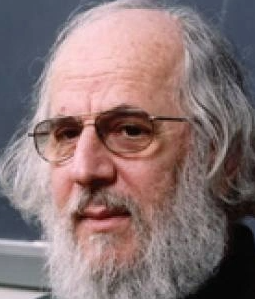 Gabor T. Herman合作论文数Department of Computer Science, Graduate Center, City University of New York1Filiz Yıldız合作论文数Faculty of Science, Hacettepe University1
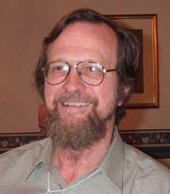 Neil Hindman合作论文数Department of Mathematics, Howard University1
 Alexander V. Evako合作论文数1Marlon Rayburn合作论文数1
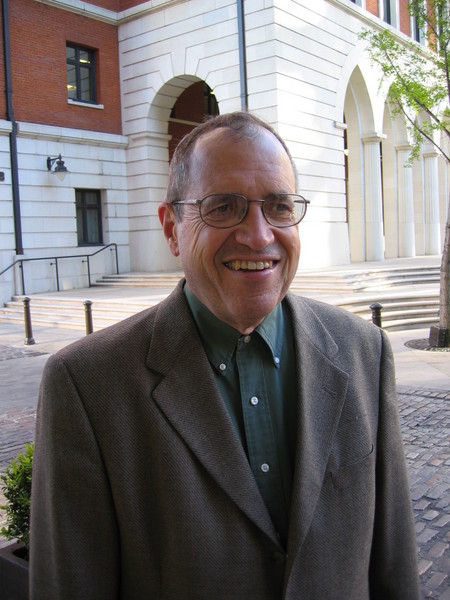 Jimmie D. Lawson合作论文数 Louisiana State University;Department of Mathematics 1W. Charles Holland合作论文数1
 Chris Good合作论文数School of Mathematics, College of Engineering and Physical Sciences, University of Birmingham1
 Strashimir G. Popvassilev合作论文数The City College of New York1Vladimir V. Tkachuk合作论文数1




