Behavioral interactions within the nuclear family play a pivotal role in the emergence of agency: the capacity to regulate physiological, psychological and social needs. While behaviors may develop over days or weeks in line with nervous system maturation, individual behaviors can occur on sub-second time scales making it challenging to track development in lab studies with brief observation periods, or in field studies with limited temporal precision and animal identification. Here we study development in families of gerbils, a highly social rodent, collecting tens of millions of behavior time points and implementing machine learning methods to track individual subjects. We provided maturing gerbils with a large, undisturbed environment between postnatal day 15 and the age at which they would typically disperse from the family unit (day 30). We identified complex and distinct developmental trajectories for food and water acquisition, solitary exploration, and social behaviors, some of which displayed sex differences and diurnal patterns. Our work supports the emergence of well-delineated autonomous and social behavior phenotypes that correlate with specific periods and loci of neural maturation.
In nature, animal vocalizations can provide crucial information about identity, including kinship and hierarchy. However, lab-based vocal behavior is typically studied during brief interactions between animals with no prior social relationship, and under environmental conditions with limited ethological relevance. Here, we address this gap by establishing long-term acoustic recordings from Mongolian gerbil families, a core social group that uses an array of sonic and ultrasonic vocalizations. Three separate gerbil families were transferred to an enlarged environment and continuous 20-day audio recordings were obtained. Using a variational autoencoder (VAE) to quantify 583,237 vocalizations, we show that gerbils exhibit a more elaborate vocal repertoire than has been previously reported and that vocal repertoire usage differs significantly by family. By performing gaussian mixture model clustering on the VAE latent space, we show that families preferentially use characteristic sets of vocal clusters and that these usage preferences remain stable over weeks. Furthermore, gerbils displayed family-specific transitions between vocal clusters. Since gerbils live naturally as extended families in complex underground burrows that are adjacent to other families, these results suggest the presence of a vocal dialect which could be exploited by animals to represent kinship. These findings position the Mongolian gerbil as a compelling animal model to study the neural basis of vocal communication and demonstrates the potential for using unsupervised machine learning with uninterrupted acoustic recordings to gain insights into naturalistic animal behavior.
Understanding the behavioral and neural dynamics of social interactions is a goal of contemporary neuroscience. Many machine learning methods have emerged in recent years to make sense of complex video and neurophysiological data that result from these experiments. Less focus has been placed on understanding how animals process acoustic information, including social vocalizations. A critical step to bridge this gap is determining the senders and receivers of acoustic information in social interactions. While sound source localization (SSL) is a classic problem in signal processing, existing approaches are limited in their ability to localize animal-generated sounds in standard laboratory environments. Advances in deep learning methods for SSL are likely to help address these limitations, however there are currently no publicly available models, datasets, or benchmarks to systematically evaluate SSL algorithms in the domain of bioacoustics. Here, we present the VCL Benchmark: the first large-scale dataset for benchmarking SSL algorithms in rodents. We acquired synchronized video and multi-channel audio recordings of 767,295 sounds with annotated ground truth sources across 9 conditions. The dataset provides benchmarks which evaluate SSL performance on real data, simulated acoustic data, and a mixture of real and simulated data. We intend for this benchmark to facilitate knowledge transfer between the neuroscience and acoustic machine learning communities, which have had limited overlap.
When interacting with their environment, animals must balance exploratory and defensive behavior to evaluate and respond to potential threats. The lateral septum (LS) is a structure in the ventral forebrain that calibrates the magnitude of behavioral responses to stress-related external stimuli, including the regulation of threat avoidance. The complex connectivity between the LS and other parts of the brain, together with its largely unexplored neuronal diversity, makes it difficult to understand how defined LS circuits control specific behaviors. Here, we describe a mouse model in which a population of neurons with a common developmental origin (Nkx2.1-lineage neurons) are absent from the LS. Using a combination of circuit tracing and behavioral analyses, we found that these neurons receive inputs from the perifornical area of the anterior hypothalamus (PeFAH) and are specifically activated in stressful contexts. Mice lacking Nkx2.1-lineage LS neurons display increased exploratory behavior even under stressful conditions. Our study extends the current knowledge about how defined neuronal populations within the LS can evaluate contextual information to select appropriate behavioral responses. This is a necessary step towards understanding the crucial role that the LS plays in neuropsychiatric conditions where defensive behavior is dysregulated, such as anxiety and aggression disorders.
Understanding how genes, drugs and neural circuits influence behavior requires the ability to effectively organize information about similarities and differences within complex behavioral datasets. Motion Sequencing (MoSeq) is an ethologically inspired behavioral analysis method that identifies modular components of three-dimensional mouse body language called 'syllables'. Here, we show that MoSeq effectively parses behavioral differences and captures similarities elicited by a panel of neuroactive and psychoactive drugs administered to a cohort of nearly 700 mice. MoSeq identifies syllables that are characteristic of individual drugs, a finding we leverage to reveal specific on- and off-target effects of both established and candidate therapeutics in a mouse model of autism spectrum disorder. These results demonstrate that MoSeq can meaningfully organize large-scale behavioral data, illustrate the power of a fundamentally modular description of behavior and suggest that behavioral syllables represent a new class of druggable target. By analyzing hundreds of mice treated with a library of neuro- and psychoactive drugs, Wiltschko et al. show that Motion Sequencing can effectively discriminate and categorize drug effects and link molecular targets to behavioral syllables.
Many naturalistic behaviors are built from modular components that are expressed sequentially. Although striatal circuits have been implicated in action selection and implementation, the neural mechanisms that compose behavior in unrestrained animals are not well understood. Here, we record bulk and cellular neural activity in the direct and indirect pathways of dorsolateral striatum (DLS) as mice spontaneously express action sequences. These experiments reveal that DLS neurons systematically encode information about the identity and ordering of sub-second 3D behavioral motifs; this encoding is facilitated by fast-timescale decorrelations between the direct and indirect pathways. Furthermore, lesioning the DLS prevents appropriate sequence assembly during exploratory or odor-evoked behaviors. By characterizing naturalistic behavior at neural timescales, these experiments identify a code for elemental 3D pose dynamics built from complementary pathway dynamics, support a role for DLS in constructing meaningful behavioral sequences, and suggest models for how actions are sculpted over time.
Optogenetics promises precise spatiotemporal control of neural processes using light. However, the spatial extent of illumination within the brain is difficult to control and cannot be adjusted using standard fiber optics. We demonstrate that optical fibers with tapered tips can be used to illuminate either spatially restricted or large brain volumes. Remotely adjusting the light input angle to the fiber varies the light-emitting portion of the taper over several millimeters without movement of the implant. We use this mode to activate dorsal versus ventral striatum of individual mice and reveal different effects of each manipulation on motor behavior. Conversely, injecting light over the full numerical aperture of the fiber results in light emission from the entire taper surface, achieving broader and more efficient optogenetic activation of neurons, compared to standard flat-faced fiber stimulation. Thus, tapered fibers permit focal or broad illumination that can be precisely and dynamically matched to experimental needs.
Optogenetics promises spatiotemporal precise control of neural processes using light. However, the spatial extent of illumination within the brain is difficult to control and cannot be adjusted using standard fiber optics. We demonstrate that optical fibers with tapered tips can be used to illuminate either large brain volumes or dynamically selectable subregions. Remotely adjusting the light input angle to the fiber varies the light-emitting portion of the taper over several millimeters without movement of the implant. We use this mode to activate dorsal versus ventral striatum of individual mice and reveal different effects of each manipulation on motor behavior. Conversely injecting light over the full numerical aperture of the fiber results in light emission from the entire taper surface, achieving broader and more efficient optogenetic activation of neurons when compared to the standard flat-faced fiber stimulation. Thus, tapered fibers permit focal or broad illumination that can be precisely and dynamically matched to experimental needs.
Complex animal behaviors are likely built from simpler modules, but their systematic identification in mammals remains a significant challenge. Here we use depth imaging to show that 3D mouse pose dynamics are structured at the sub-second time-scale. Computational modeling of these fast dynamics effectively describes mouse behavior as a series of reused and stereotyped modules with defined transition probabilities. We demonstrate this combined 3D imaging and machine learning method can be used to unmask potential strategies employed by the brain to adapt to the environment, to capture both predicted and previously hidden phenotypes caused by genetic or neural manipulations, and to systematically expose the global structure of behavior within an experiment. This work reveals that mouse body language is built from identifiable components and is organized in a predictable fashion; deciphering this language establishes an objective framework for characterizing the influence of environmental cues, genes and neural activity on behavior.
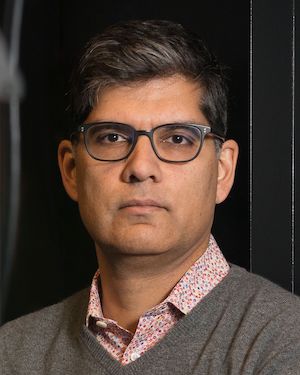 Sandeep Datta合作论文数Blavatnik Institute Neurobiology, Harvard Medical School;Department of Neurobiology, Harvard Medical School;Tenvie Therapeutics;Axiom Labs;Osmo5
 Jeffrey Markowitz合作论文数Boston University;Department of Cognitive and Neural Systems;Science and Technology Center for Adaptive Systems;Science and Technology Center for Adaptive Systems, Boston University4
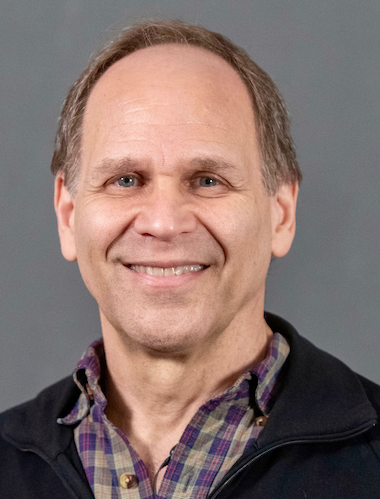 Dan H Sanes合作论文数Center for Neural Science, College of Arts & Science, New York University3
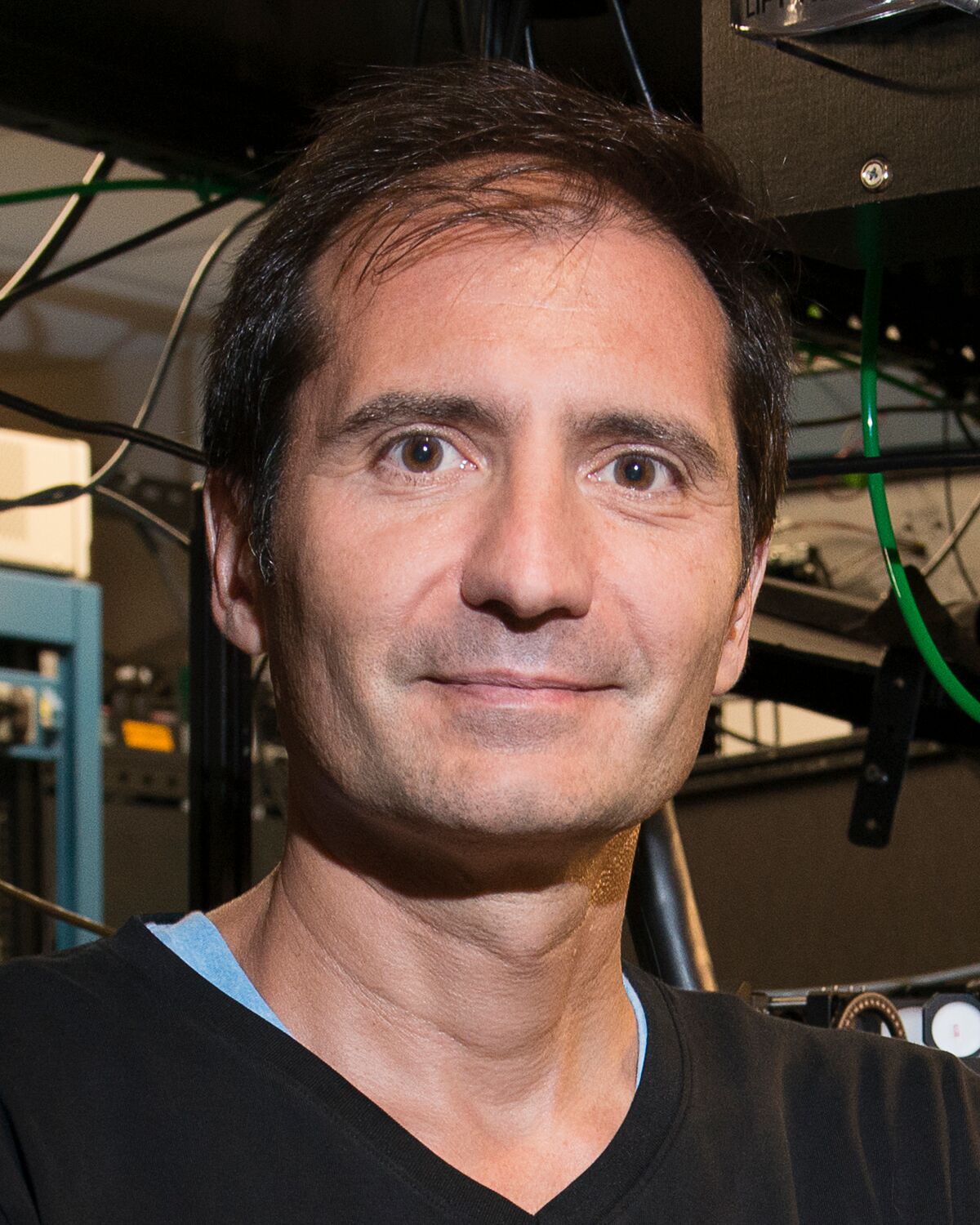 Bernardo Sabatini合作论文数Department of Neurobiology, Harvard Medical School;Kempner Institute for the Study of Natural and Artificial Intelligence, Harvard University3
 Massimo De Vittorio合作论文数2Aman Choudhri合作论文数2
 Mohamed Emara合作论文数Design Department, OTM Servo Mechanism Ltd2Ian Antón Oldenburg合作论文数Department of Molecular and Cell Biology, University of California2Winthrop F Gillis合作论文数Department of Neurobiology, Harvard Medical School2Alexander B Wiltschko合作论文数Google2
 Alex H. Williams合作论文数Volen Center for Complex Systems, Brandeis University2Mandelbaum Gil合作论文数2Andrea Della Patria合作论文数2Pisanello Marco合作论文数Center for Bio-Molecular Nanotechnologies, Istituto Italiano di Tecnologia (IIT),;NNL-National Nanotechnology Laboratory, Università del Salento;Center for Bio-Molecular Nanotechnologies, Università del Salento2Matthew J. Johnson合作论文数2
 Catalin C. Mitelut合作论文数Columbia University2Leonardo Sileo合作论文数2
 Barbara Spagnolo合作论文数Gruppo Villa Maria (GVM) Care and Research Cardiovascular Unit, Villa Maria Cecilia Hospital2
 Ferruccio Pisanello合作论文数Center for Biomolecular Nanotechnologies, Istituto Italiano di Tecnologia2Violet J Ivan合作论文数1Niegil Francis合作论文数1Keiramarie Robertson合作论文数1Marielisa Diez Castro合作论文数1Sarah K Stegmann合作论文数1Steve Vu合作论文数1Aramis Tanelus合作论文数1
 Ayman Zeine合作论文数1
 Rockwell Anyoha合作论文数Department of Neurobiology, Harvard Medical School1
 Bartul Mimica合作论文数Norwegian Univ Sci & Technol, Kavli Inst Syst Neurosci, NO-7489 Trondheim, Norway1
 Stan L. Pashkovski合作论文数Department of Neurobiology, Harvard Medical School, Boston, MA 02115, USA1Christopher Ick合作论文数1Jesse Katon合作论文数1
 Minsuk Hyun合作论文数Department of Neurobiology, Harvard Medical School, Boston, MA, USA1
 Talmo D Pereira合作论文数The Salk Institute of Biological Studies1
 Mala Murthy合作论文数Princeton Neuroscience Institute, Princeton University;Departments of Molecular Biology and Neuroscience, Princeton University1
 Annegret Falkner合作论文数Princeton Neuroscience Institute, Princeton University1
 Iurilli Giuliano合作论文数Department of Neuroscience and Brain Technologies, Istituto Italiano di Tecnologia1
 Ryan P. Adams合作论文数Department of Computer Science, Princeton University1Turrero García Miguel合作论文数Max Planck Institute of Molecular Cell Biology and Genetics, 01307, Dresden, Germany.1Celia C Beron合作论文数Department of Neuroscience, Center for Brain, Behavior &Evolution;Center for Learning and Memory, The University of Texas at Austin;Center for Learning and Memory, The University of Texas at Austin1
 Yajun Xie合作论文数Zhejiang University School of Medicine, Zhejiang Medical University1Harwell Corey C合作论文数1
 David Schneider合作论文数Microbiology & Immunology Department, Stanford University1
 Shay Q Neufeld合作论文数Centre for Research in Neuroscience, Research Institute of the McGill University Health Centre1
 Christopher Reid合作论文数1
 Scott W. Linderman合作论文数Department of Statistics, Stanford University;Wu Tsai Neurosciences Institute, Stanford University1
 Victoria Abraira合作论文数Department of Cell Biology and Neuroscience, School of Arts and Sciences, Rutgers, The State University of New Jersey1
 Tatsuya Tsukahara合作论文数Dept Biol Sci, Univ Tokyo1




