A search is presented for the direct pair production of the stop, the supersymmetric partner of the top quark, that decays through an R-parity-violating coupling to a final state with two leptons and two jets, at least one of which is identified as a b-jet. The data set corresponds to an integrated luminosity of 36.1 fb(-1) of proton-proton collisions at a center-of-mass energy of root s = 13 TeV, collected in 2015 and 2016 by the ATLAS detector at the LHC. No significant excess is observed over the Standard Model background, and exclusion limits are set on stop pair production at a 95% confidence level. Lower limits on the stop mass are set between 600 GeV and 1.5 TeV for branching ratios above 10% for decays to an electron or muon and a b-quark.
A measurement of the fragmentation functions of jets into charged particles in p Pb collisions and pp collisions is presented. The analysis utilizes 28 nb(-1) of p Pb data and 26 pb(-1) of pp data, both at root(TN)-T-s= 5.02 TeV, collected in 2013 and 2015, respectively, with the ATLAS detector at the LHC. The measurement is reported in the centre-of-mass frame of the nucleon-nucleon system for jets in the rapidity range vertical bar y*vertical bar <1.6 and with transverse momentum 45 < p(T) < 260 GeV. Results are presented both as a function of the charged-particle transverse momentum and as a function of the longitudinal momentum fraction of the particle with respect to the jet. The pp fragmentation functions are compared with results from Monte Carlo event generators and two theoretical models. The ratios of the p +Pb to pp fragmentation functions are found to be consistent with unity. (C) 2018 CERN for the benefit of the ATLAS Collaboration. Published by Elsevier B.V.
The production of exclusive gamma gamma -> mu(+)mu(-) events in proton-proton collisions at a centre-of-mass energy of 13 TeV is measured with the ATLAS detector at the LHC, using data corresponding to an integrated luminosity of 3.2 fb(-1). The measurement is performed for a dimuon invariant mass of 12 GeV < m(mu+mu-) < 70 GeV. The integrated cross-section is determined within a fiducial acceptance region of the ATLAS detector and differential cross-sections are measured as a function of the dimuon invariant mass. The results are compared to theoretical predictions both with and without corrections for absorptive effects. (c) 2017 The Author(s). Published by Elsevier B.V.
Bose-Einstein correlations between identified charged pions are measured for $p$+Pb collisions at $\sqrt{s_{\mathrm{NN}}}=5.02$ TeV using data recorded by the ATLAS detector at the LHC corresponding to a total integrated luminosity of $28$ $\mathrm{nb}^{-1}$. Pions are identified using ionization energy loss measured in the pixel detector. Two-particle correlation functions and the extracted source radii are presented as a function of collision centrality as well as the average transverse momentum ($k_{\mathrm{T}}$) and rapidity ($y^{\star}_{\pi\pi}$) of the pair. Pairs are selected with a rapidity $-2<y^{\star}_{\pi\pi}<1$ and with an average transverse momentum $0.1<k_{\mathrm{T}}<0.8$ GeV. The effect of jet fragmentation on the two-particle correlation function is studied, and a method using opposite-charge pair data to constrain its contributions to the measured correlations is described. The measured source sizes are substantially larger in more central collisions and are observed to decrease with increasing pair $k_{\mathrm{T}}$. A correlation of the radii with the local charged-particle density is demonstrated. The scaling of the extracted radii with the mean number of participating nucleons is also used to compare a selection of initial-geometry models. The cross-term $R_\mathrm{ol}$ is measured as a function of rapidity, and a nonzero value is observed with $5.1\sigma$ combined significance for $-1<y^{\star}_{\pi\pi}<1$ in the most central events.
 simon viel合作论文数12P. Kodys合作论文数12
 Yasuhiro Makida (槙田康博)合作论文数Institute of Particle and Nuclear Studies, High Energy Accelerator Research Organization12
 Enrique Kajomovitz合作论文数Department of Physics, Technion, Israel Institute of Technology12
 Walter Lampl合作论文数Department of Physics, College of Science, The University of Arizona12
 Michael Boehler合作论文数Physikalisches Institut, Universität Freiburg12
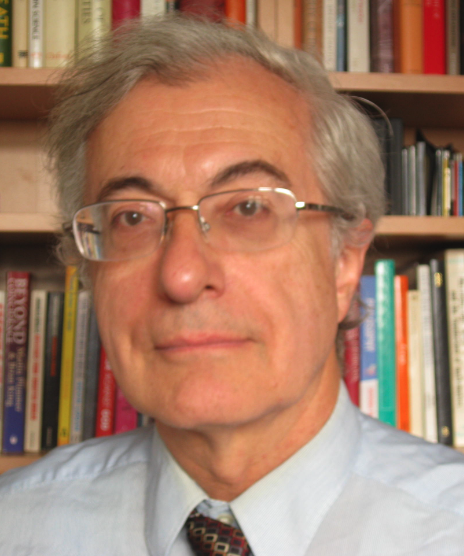 Peter J. Bussey合作论文数School of Physics & Astronomy, University of Glasgow12
 Szymon Gadomski合作论文数Département d'Astronomie, Université de Genève;Department of Particle Physics, University of Geneva12
 Rustem Ospanov合作论文数CERN12tina sfiligoj合作论文数12nathan peter readioff合作论文数12benjamin bordy tannenwald合作论文数12andrey kamenshchikov合作论文数12alexei soloshenko合作论文数12barbara wosiek合作论文数12lukas plazak合作论文数12konstantin zhukov合作论文数12oleksandr viazlo合作论文数12kazuki motohashi合作论文数12helen hayward合作论文数12konrad kleinknecht合作论文数12maria smizanska合作论文数12
 Ourania Sidiropoulou合作论文数12Alessandra Baas合作论文数12
 Dimitris Fassouliotis合作论文数Department of Physics, National and Kapodistrian University of Athens12
 Abdeslam Hoummada合作论文数CERN;Université Hassan II Casablanca;Académie Hassan II des Sciences et Techniques12
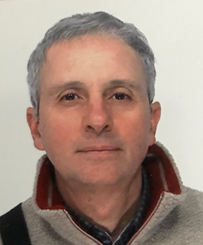 Lorenzo Bellagamba合作论文数Gran Sasso Laboratory, INFN12
 Julien Donini合作论文数Laboratoire de Physique de Clermont Auvergne, Institut National De Physique Nucléaire Et De Physique Des Particules, CNRS;Université Clermont Auvergne12Dai Kobayashi合作论文数12Yasuyuki Okumura合作论文数12J. E. M. Robinson合作论文数12
 Miloš Lokajíček Jr合作论文数Division of Elementary Particle Physics, Particle Physics Department, Institute of Physics of the Czech Academy of Sciences12
 Roberto Iuppa合作论文数Department of Physics, University of Trento12C Amelung合作论文数12
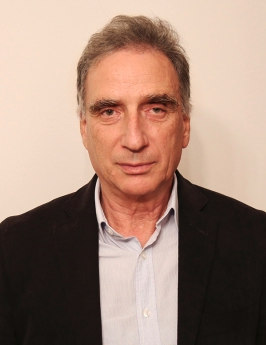 Stavros Maltezos合作论文数Department of Physics, School of Applied Mathematical and Physical Sciences, National Technical University of Athens12
 Faig Ahmadov合作论文数Institute of Physics MSE;Joint Institute for Nuclear Research;CERN12
 Enrico Tassi合作论文数Department of Physics, Università della Calabria12
 Theo Alexopoulos合作论文数Department of Physics, School of Applied Mathematical & Physical Sciences, National Technical University of Athens;Hellenic Open University12Tancredi Carli合作论文数CERN12
 Fabrizio Petrucci合作论文数Dipartimento di Matematica e Fisica, Università Roma Tre12
 Stamatis (Akis) Gkaitatzis合作论文数University of Pisa12
 Sune Jakobsen合作论文数CERN12S. M. Farrington合作论文数12
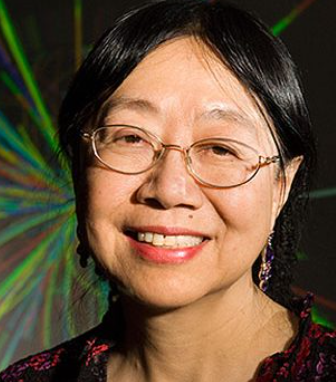 Sau Lan Wu合作论文数Department of Physics, College of Letters & Science, University of Wisconsin-Madison12
 Steven Schramm合作论文数Département de Physique Nucléaire et Corpusculaire, Faculty of Science, Université de Genève12
 Stefano Terzo合作论文数IFAE12
 Alexander Kupčo合作论文数Institute of Physics, Czech Academy of Sciences12
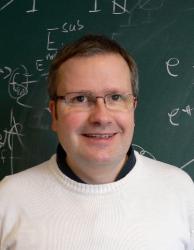 Rainer Stamen合作论文数Kirchhoff Institute for Physics, Universität Heidelberg12francesco guescini合作论文数12




