BackgroundAutoimmunity has been reported in patients with severe COVID-19. We investigated whether antinuclear/extractable-nuclear antibodies (ANAs) were present up to a year after infection, and if they were associated with the development of clinically relevant Post-Acute Sequalae of COVID-19 (PASC) symptoms.MethodsA rapid assessment line immunoassay was used to measure circulating levels of ANA/ENAs in 106 convalescent COVID-19 patients with varying acute phase severities at 3, 6, and 12 months post-recovery. Patient-reported fatigue, cough, and dyspnea were recorded at each timepoint. Multivariable logistic regression model and receiver-operating curves (ROC) were used to test the association of autoantibodies with patient-reported outcomes and pro-inflammatory cytokines.ResultsCompared to age- and sex-matched healthy controls (n=22) and those who had other respiratory infections (n=34), patients with COVID-19 had higher detectable ANAs at 3 months post-recovery (p<0.001). The mean number of ANA autoreactivities per individual decreased from 3 to 12 months (3.99 to 1.55) with persistent positive titers associated with fatigue, dyspnea, and cough severity. Antibodies to U1-snRNP and anti-SS-B/La were both positively associated with persistent symptoms of fatigue (p<0.028, AUC=0.86) and dyspnea (p<0.003, AUC=0.81). Pro-inflammatory cytokines such as tumour necrosis factor alpha (TNFα) and C-reactive protein predicted the elevated ANAs at 12 months. TNFα, D-dimer, and IL-1β had the strongest association with symptoms at 12 months. Regression analysis showed TNFα predicted fatigue (β=4.65, p=0.004) and general symptomaticity (β=2.40, p=0.03) at 12 months.InterpretationPersistently positive ANAs at 12 months post-COVID are associated with persisting symptoms and inflammation (TNFα) in a subset of COVID-19 survivors. This finding indicates the need for further investigation into the role of autoimmunity in PASC.
Abstract RATIONALE: Dyspnea and respiratory impairment are sequelae of COVID-19. OBJECTIVES The objectives of this study were to observe the prevalence and clinical relevance of ventilation (V) and perfusion (Q) impairment, evaluated by ventilation/perfusion-single-photon emission computed tomography-computed tomography (VQ-SPECT-CT), in individuals with no history of lung disease 4-weeks after recovery from noncritical COVID-19. METHODS We enrolled 25 COVID-19 patients’ post-recovery and 11 control subjects. All participants underwent VQ-SPECT-CT using 99mTc-Technegas for V and 99mTc-macroaggregated albumin for Q, spirometry, six-minute-walk-test, blood draw and completed the modified Medical Research Council (mMRC) dyspnea-scale and St. Georges Respiratory Questionnaire (SGRQ). VQ-SPECT-CT was reviewed to report lung function and structure abnormalities and ventilation-heterogeneity was quantified to evaluate associations with symptoms, exercise-capacity and inflammatory markers. MEASUREMENTS AND MAIN RESULTS: Of 25 post-COVID-19 participants, 9 were hospitalized and 16 home-isolated during acute-infection. A total of 88% of hospitalized and 44% of home-isolated participants were reported to have V defects (matched VQ defects: 63% and 44%; mismatched V defects: 38% and 13%), compared to 30% of never-COVID-19 controls (matched VQ defects: 30%, mismatched V defects: 10%) (P = 0.02 and P = 0.68, respectively). Ventilation-heterogeneity was greater in hospitalized (P = 0.003), but not home-isolated participants, compared to the never-COVID-19 controls. Post-COVID-19 ventilation-heterogeneity correlated with the dyspnea-scale (r = 0.45, P = 0.03), SGRQ-score (r = 0.41, P = 0.04), 6MWD (r=-0.49, P = 0.02), SpO2 (P = -0.55, P = 0.005), CT parenchymal opacities (r = 0.42, P = 0.04) and neutrophil percent (r = 0.45, P = 0.04), but not pro-inflammatory cytokines, C-reactive protein or D-dimer. CONCLUSIONS This small functional lung imaging study revealed ventilation impairment in individuals with no history of lung disease recovering from noncritical COVID-19 that was associated with parenchymal opacities, respiratory symptoms and exercise-capacity.
Accumulating evidence suggest that autoimmune phenomena are frequentduring Coronavirus Disease 2019 (COVID-19) and may lead to clinicallyovert disease. The breakdown of immune tolerance and/or impaired immunereconstitution after the initial phase may be involved in thepathogenesis [1]. The ensuing autoimmunity may also be involved inPost-Acute COVID syndrome (PACS) [2]. Herein, we evaluate thecurrent scenario based on anecdotal patient reports of new-onsetautoimmune disease/diagnosis as a sequalae of COVID-19.
 Manali Mukherjee合作论文数School of Pharmacy, University of Nottingham5
 Kiho Son合作论文数Department of Medicine, McMaster University4Kjarsgaard Melanie合作论文数4Nair Parameswaran合作论文数4Zil Patel合作论文数3Terence Ho合作论文数3Carmen Venegas合作论文数3Katherine Radford合作论文数3
 Sarah Svenningsen合作论文数Department of Medical Biophysics, The University of Western Ontario3Kayla Zhang合作论文数2Kate Miyasaki合作论文数2Braeden Cowbrough合作论文数2C. Huang合作论文数Med, McMaster Univ2Dvorkin-Gheva Anna合作论文数Centre for Functional Genomics, McMaster University2
 Brittany Salter合作论文数Department of Medicine, McMaster University2
 Chris Carlsten合作论文数The University of British Columbia2Dawn M. E. Bowdish合作论文数2Susan Waserman合作论文数2Agnes Che Yan Yuen合作论文数1Agnes Yuen合作论文数1Abhiroop Chowdhury合作论文数1
 Sarah Culgin合作论文数1
 Catherine E Farrow合作论文数1Christopher Marriott合作论文数1Maria Xiao合作论文数1Nahal Emami Fard合作论文数1Matthew Lubanovic合作论文数1Ashutosh Thakar合作论文数1James Smith合作论文数1Kevin Soon-Keen Lau合作论文数1M. Jamal合作论文数1X. Ju合作论文数1Ishac Nazy合作论文数McMaster Centre for Transfusion Research, McMaster University1
 Waleed Alhazzani合作论文数Dept Med, McMaster Univ1Tunks Marcel合作论文数1Chagla Zain合作论文数Department of Infectious Diseases, McMaster University1
 Ehsan Haider合作论文数1
 Marek Smieja合作论文数Michael G. DeGroote Institute for Infectious Disease Research, Faculty of Health Sciences, McMaster University;Department of Biomedical Engineering, Faculty of Engineering, McMaster University;Hamilton Health Sciences;St. Joseph's Healthcare Hamilton1
 Narayanaswamy Balakrishnan合作论文数Department of Mathematics and Statistics, McMaster University, Hamilton, Ontario, Canada L8S 4K11Mylinh Duong合作论文数Department of Medicine, McMaster University1
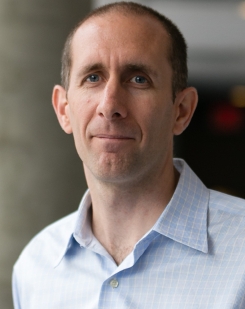 Chris Ryerson合作论文数Centre for Heart Lung Innovation, The University of British Columbia;Division of Respiratory Medicine, Department of Medicine, Faculty of Medicine, The University of British Columbia1Quan-Zhen Li合作论文数Department of Immunology, University of Texas Southwestern Medical Center1Gerard Cox合作论文数1
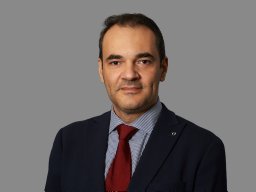 Konstantinos Tselios合作论文数Hippokration General Hospital, Aristotle University of Thessaloniki1
 Mark Larche合作论文数Department of Biochemistry & Biomedical Sciences, Faculty of Health Sciences, McMaster University;Division of Clinical Immunology & Allergy, Department of Medicine, McMaster University1
 Roma Sehmi合作论文数the Department of Medicine, McMaster University1
 Troy Farncombe合作论文数Department of Nuclear Medicine, McMaster University1
 Dan Perri合作论文数Department of Medicine, Faculty of Health Sciences, McMaster University;St. Joseph's Healthcare Hamilton1




