Maize (Zea mays L.) has been underlined as a promising feedstock for sustainable biofuel production. However, the environmental cost of using nitrogen fertilizer for maize cultivation impacts its contribution in reducing the carbon footprint. There is need to optimize nitrogen application without compromising yield or grain quality. The present study investigates the effect of variable nitrogen treatments (no nitrogen N0, half dose NH, full recommended dose NF) on metabolite accumulation, including fibre, starch, protein, zein content and HKW to estimate carbon footprint in selected maize genotypes. Among twenty initial hybrids, five contrasting genotypes including nitrogen use efficient (NUE), nitrogen responsive (NR) and nitrogen use inefficient (NUI) were selected after field screening for detailed analysis. Results revealed that starch and fibre were maximally accumulated at NH, while protein and zein increased linearly with the nitrogen input. This indicates that carbon and nitrogen assimilation have distinct maxima and saturation points with respect to nitrogen application. Notably, NUE genotypes performed stably and retained higher starch at reduced nitrogen doses with lower carbon intensity, suggesting their suitability for low-input, climate-resilient bioethanol production systems. This study highlights the value of integrating genotype selection with optimized nitrogen management to enhance maize-based bioethanol yields while minimizing environmental impact.
Kinnow mandarin production in arid regions is constrained by water-deficit and micronutrient imbalances, particularly iron (Fe) and zinc (Zn). This study evaluated the effects of Fe and Zn deficiency (Fe- and Zn-) and toxicity (Fe + and Zn+) under water-deficit conditions. Eight treatments, including individual and combined Fe/Zn deficiencies and toxicities along with control were assessed under pot conditions. Results revealed that water-deficit combined with Fe and Zn deficiency significantly reduced plant growth, biomass, leaf area, relative water content and chlorophyll concentrations. These effects were more severe under combined deficiencies compared to their individual deficiencies. In contrast, Fe and Zn toxicity enhanced vegetative traits such as leaf area and sprout length but induced abnormal morphogenesis, such as enlarged thorns and water sprouts. Root traits also showed sensitivity to nutrient treatments. Root length and root-shoot ratio increased under Zn toxicity, while specific root length was more severely affected by micronutrients deficiency. Leaf analysis exhibited treatment specific variations, indicating disrupted uptake. Nitrogen and potassium decreased under Fe-Zn deficiency, while phosphorus increased under Zn deficiency but decreased under Zn toxicity. The findings of the study revealed that Fe and Zn status influenced plant performance and nutrient balance under water-deficit conditions, highlighting the importance of balanced micronutrients management in citrus cultivation.
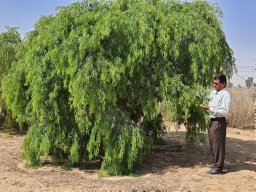
The green immature pods of Prosopis cineraria L. are traditionally consumed as a vegetable, both fresh and dried. However, the mature ripe pods become fibrous and unfit for human consumption, leading to wastage or use as cattle feed. Due to the narrow harvest window, an estimated 20–30
Grain yield in maize (Zea mays L.) is a complex quantitative trait influenced by multiple component traits. Achieving sustainable yield improvement in nutritionally enhanced Quality Protein Maize (QPM) lines under growing population pressure and changing climate requires enhanced genetic gain. This study aimed to dissect the genetic basis of key yield components in 149 QPM inbred lines using five genome-wide association study (GWAS) models. Multi-environment phenotypic evaluation revealed moderate to high heritability and significant genotypic and environmental effects for most traits. GWAS identified a total of 27 stable marker-trait associations (MTAs) distributed across all chromosomes except chromosome 6, including nine pleiotropic loci. Novel genomic bins 3.03-3.04 and 5.01 were associated with kernel length. Functional annotation of potential candidate genes revealed enrichment for processes related to cell elongation, seed development, and sugar transport, with predominant expression in reproductive tissues during early kernel development. The gene Zm00001d039637 encoding GLK14 exhibited pleiotropic effects on kernel length and cob diameter, whereas MADS-box and AP2/EREBP transcription factors were linked to kernel number. Collectively, these results refine the current understanding of kernel development and identify promising genomic regions and functional candidates for deployment in genomics-assisted breeding for yield improvement in maize.
Citrus is one of the most important fruit crops worldwide and belongs to Rutaceae family. Numerous molecular marker systems have been utilized for the characterization of citrus germplasm. However, information on the combined utilization and comparative efficiency of different marker systems in citrus remains limited. Therefore, ten each neutral systems (RAPD and ISSR) along with 36 SCoT and 25 CBDP markers were evaluated to identify the most suitable marker system(s) for the characterization of 19 popular citrus varieties. Among the marker systems evaluated SCoT exhibited the highest mean polymorphic information content (PIC) value (0.42), whereas ISSR showed lowest (0.35). Likewise, the SCoT marker exhibited comparatively higher level of polymorphism than the other marker systems. UPGMA clustering analysis classified the citrus varieties into two major groups with Fairchild and Pearl Tangelo forming an outlier cluster, reflecting their interspecific hybrid nature. Population structure analysis based on RAPD and CBDP markers delineated 19 varieties into three populations, while ISSR and SCoT markers resolved them into eight populations. Analysis of molecular variance (AMOVA) revealed a majority of genetic variation (≥ 90%) resided within populations, while only a small proportion (≤ 5%) was attributed to variation among populations. Although, RAPD and CBDP markers were found to be effective for genotype discrimination, the SCoT marker systems emerged as the most efficient on marker efficiency parameters compared with other markers systems analyzed. The identified markers in this study may serve as valuable tools for citrus germplasm characterizations and effectively utilized in future citrus crop improvement programmes.
Maize (Zea mays L.), a global staple, is often deficient in essential micronutrients and amino acids, contributing significantly to malnutrition. To solve this problem, genetic biofortification has emerged as a practical, cost-effective, convenient, and sustainable approach. Despite numerous QTL mapping studies for micronutrients (such as iron and zinc), only a few of these have been effectively utilized in a breeding program. To bridge this gap, a meta-QTL (MQTL) analysis was conducted using 532 QTLs from 14 published studies. These QTLs were associated with key vitamins (A and E) and minerals (iron, zinc, calcium, copper, manganese, magnesium, phosphorus, potassium, and sulphur). The analysis identified 28 MQTLs distributed across all ten chromosomes of maize. Additionally, 139 candidate genes associated with different minerals and vitamins were also detected. Several known genes encoding for some enzymes involved in biosynthetic pathways were also found to be co-localized with several MQTL, including MQTL 2.1, 2.3, 5.2, 6.1, 6.2, 7.1, 7.2, 8.2, 9.1, 10.1, and 10.2. Furthermore, 161 significant SNPs or marker-trait associations (MTAs) from previous genome-wide association studies (GWAS) also co-localized with as many as 14 MQTLs. By integrating MQTL analysis, GWAS, and gene expression data, this study precisely refines key genomic regions and identifies promising candidate genes, providing the necessary molecular markers to accelerate maize nutritional enhancement via marker-assisted breeding.
Genotype by environment (G×E) interactions are of great interest for breeders to identify test locations and adapted genotypes. In the present study, 20 sub-tropical maize hybrids along with 5 commercial checks were planted at different locations under different ecologies (drought, high temperature, water logging and optimum environments) and evaluated for grain yield through the Best Linear Unbiased Estimations (BLUEs) and the Best Linear Unbiased Predictors (BLUPs). Genotypic and phenotypic correlations were also obtained among the different locations within the diverse ecologies. The trials were conducted during winter 2023 under drought, Spring 2024 under high temperature stress and under water logging during rainy 2023, respectively. The Genotype main effect plus genotype x environment interaction (GGE) biplot indicated that first and second principal components (PC1 and PC2) explained 100% of variation in drought, heat stress, water logging conditions. Under optimal conditions, it explained 75.81% variation. As per BLUE and BLUP, DKC 9144 and BH 417177 under drought, RCRMH 20 was under heat stress and BH 417144 under waterlogging were the best. Dendrogram was generated using Ward’s method of cluster analysis. Genotype RCRMH 20 was identified as the best performing genotype under heat (at locations Begusarai, Godhra and Kolhapur) and at water logging (Ludhiana, Hyderabad and Varanasi) with mean yield of 60.07 q/ha and 50.52 q/ha respectively. Based on these results it is recommended that hybrids namely MFH 2265, BH 417144, RCRMH 20 and BH 417177 may be tested in larger plot size before recommendation for release for commercial cultivation based on their performance in respective zones.
Drought is considered as one of the major limiting factors in sustainable maize production all over the world as it causes yield reduction by an average of 60
The bio-fortification of maize presents a promising approach for improving nutritional security. Considering iron and zinc deficiencies as significant global public health challenges, the present study included the multi-location evaluation of maize elite inbred lines (300) and hybrids (31) to see variability for iron and zinc content, quantify the genotypes-by-environment (GEI) interaction, and identify stable genotypes with high Fe and Zn content. The findings demonstrated significant GEI for both Fe and Zn, indicating diversity among genotypes and environments under study. Environmental effects were higher for Fe than on Zn. Ideal genotypes for Fe included hybrids H21 and H27, along with inbred G107 and G114. For Zn content, H27 and inbred G3, G178, and G9 emerged as the best genotypes. The analysis unveiled multiple mega-environments for Fe and Zn content, suggesting genotype adaptation to specific environmental conditions. These promising genotypes identified can be of great potential in breeding for high Fe and Zn in maize. Understanding the specific genetic and physiological mechanisms underlying the performance of hybrids and inbred lines with high as well as stable Fe and Zn content and winning genotypes within each mega-environment are crucial for targeted breeding strategies.
In spring maize (Zea mays L.) prone to heat stress, especially at terminal stages, understanding the impact of sowing time on important genotypes for heat stress tolerance is crucial to optimize yield. An experiment was conducted during 2020 and 2021 at the Research farm of ICAR-Indian Institute of Maize Research, Ludhiana, Punjab to study the effect of sowing time and genotype interactions on yield and heat stress in spring maize. The experiment was laid out in a split-plot design (SPD) comprised of 4 different sowing dates, viz. 15th February; 25th February; 5th March; and 15th March, and 4 maize genotypes, viz. PMH1; PMH10; CoH(M)6; and CoH(M)8, replicated thrice. Spring maize sown on 15th February gave a higher grain yield (8.5 t/ha). Successive delays of 10, 20, and 30 days in sowing of spring maize caused significant yield penalties of 15%, 24%, and 29%, respectively. Heat stress at flowering was observed with delayed sowing (5th and 15th March), leading to a ~20% yield decline compared to non-stressed conditions (15th February). Furthermore, sowing beyond 15 February resulted in a shortening of vegetative (4–15 days) and reproductive (3–8 days) periods. Spring maize sown on 15 February gave higher water productivity (16–34%) compared to delayed sowings. Among genotypes, PMH 1 recorded a higher yield (8.2 t/ha) under non-stressed conditions with early sowing on 15th February. However, under heat stress, PMH 10 gave a higher yield (6.5 t/ha) sown on 25th February. Overall, it could be concluded that spring maize sowing up to 15th February is the optimum time to avoid heat stress at the flowering stage to achieve higher yield in north-western regions of India.
Study assessed nutritive value (fresh and ensiled samples) and silage quality of various maize byproducts: baby corn husk, whole plant post baby corn picking, whole plant post sweet corn harvesting, whole plant with cobs at silage stage, and whole plant post mature cob harvesting. All the samples/genotypes/hybrids were significantly (p <0.01) different for dry matter (DM), ether extract (EE) and crude protein (CP) at the fodder stage. The highest DM (33.6%) was observed in whole plant, including the grain sample and the least in baby corn husk (14.66%). Similarly, the least CP (3.25%) was observed in the whole plant after harvesting the mature cob, and the highest was in the sweet corn plant (9.36%). The silage pH of samples was in the range of 3.3-4. Baby corn husk as green fodder and silage maintained good quality (DM, CP, NDF, ADF and ash contents), while others followed quality sequence IQPMH 18-2>IBCH 1>Sugar 75> LQPMH 1. This study revealed the potential of utilizing various maize crop byproducts as silage.
Lysine and tryptophan, two essential amino acids, are generally deficient in normal maize but enriched in opaque2 (o2) mutants. However, these o2 mutants are linked to undesirable effects like soft endosperm and yield loss. To circumvent this, researchers introgressed o2 modifiers (Mo2s) into mutant maize and developed Quality Protein Maize (QPM). This study identifies genomic regions linked to Mo2 governing kernel hardness, opacity, and tryptophan content. Two QPM lines (DQL 2104-1 and DQL 2034), contrasting for these traits, were crossed to develop a 138 F2 and 109 F2:3 mapping population. Genotyping with 141 informative SSR markers resulted in 2417.01 cM genetic map with an average marker distance of 20.66 cM between markers. Inclusive composite interval mapping (ICIM) detected 11 QTLs across six different chromosomes: seven QTLs for kernel opacity (chromosomes 1, 2, 4, 7), three for hardness (chromosomes 7, 8, 9), and one for tryptophan (chromosome 9). These QTLs co-localized with candidate genes (opaque1, opaque11, floury1, floury2, floury4, mucronate1, and waxy1). The identified QTLs provide foundational targets for marker-assisted breeding. Few QTLs like qHRD9.1 (PVE = 14.18%) and qTRP9.1 (PVE = 10.69%) are prime candidates for improving hardness and tryptophan. These loci can be pyramided into elite lines using SSR markers; genomic selection could be used to optimize trait stacking. Future fine-mapping and functional studies will refine these regions, accelerating the development of high-yielding QPM with vitreous kernels and enhanced nutritional quality.
Thirty-one sour-type pomegranate genotypes have been evaluated for growth, fruit yield, physico-chemical attributes and anardana quality in randomized complete block design under hot arid climate. Germplasm CIAH PG-1 had highest fruit number/plant 46.92 as well as fruit yield 12.40kg/plant, followed by Gul-e-Shah R. Pink (42.74 fruit number/plant and 10.98kg/plant) and Tujetis EC-104347 (42.75 fruit number/plant and 9.96kg/plant). The highest fruit weight 263.84g was also recorded in CIAH PG-1. The highest aril content (67.71%) was observed in CIAH PG-1 which was statistically at par with Khog and Bedana Seedless. The highest juice acidity was recorded in Tujetis EC-104347 (3.57%), statistically alike CIAH PG-1 (3.50%). The lowest dehydration ratio was observed in CIAH PG-A-3 (2.23), comparable to CIAH PG-A-5 (2.31). Maximum anardana recovery was reported in CIAH PG-1 (2.23kg/plant) which was followed by Tujetis EC-104347 (1.93kg/plant) and Gul-e-Shah Rose Pink (1.82kg/plant). The anardana acidity ranged from 4.63 to 7.99% and the promising germplasms with more than 7% acidity were AHPG H-2, Tujetis EC-104347, CIAH PG-1, Khog, Gul-e-Shah, IC-318712 and Tabest. Based on nine points hedonic scale, CIAH PG-1 received the highest overall acceptable sensory score of 8.67, followed by Tujetis EC-104347 and Gul-e-Shah R. Pink at 8.37 and 8.23 respectively. In conclusion, CIAH PG-1 demonstrated exceptional performance across various matrices, including field performance, anardana recovery, quality and sensory attributes, which establishes it asthe superior choice for quality anardana production. Tujetis EC-104347 and Gul-e-Shah R. Pink also observed suitable option for processing applications and valuable contributors to future breeding programs.
Introduction:Maize stem borer (Chilo partellus) is an important primary pest of the maize crop that feeds on leaves, cobs, and pith, leading to complete damage of the plant and hence lower productivity of maize. Teosinte is a wild progenitor of maize and an important source of genetic variability that possesses diverse alleles for resistance against biotic and abiotic stresses. Therefore, teosinte is a promising candidate for introducing genetic diversity into cultivated maize germplasm by domesticating its wild alleles.Methods:In this study, we investigated the genomic regions in F6 Teosinte derived maize mapping population (recombinant inbred lines) by crossing LM13 with Teosinte (Zea mays sps. parviglumis) during 2020 -2023. The F6 mapping population (89 lines) thus developed was subjected to genotyping by sequencing (GBS), and the polymorphic simple sequence repeat (SSR) markers were found. This population was screened against C. partellus {leaf injury rating (LIR) and % dead heart} during the Kharif seasons of 2023 and 2024 (June to September).Results:The C. partellus infestations showed significant differences among the F6 lines with respect to the measured LIR and % dead heart, where the LIR ranged from 1.7 to 7.7 in the population. The phenotypic and molecular data from the SSR and single-nucleotide polymorphism (SNP) markers were used to map the quantitative trait loci (QTLs). A total of four putative QTLs (qLIR_4.1, qLIR_9.1, qDH_1.1, and qDH_2.1) were identified on chromosomes 4, 9, 1, and 2 respectively for both the traits.Conclusion:These QTLs can be used in marker-assisted breeding to develop hybrids resistant to C. partellus. Based on a literature review, we believe that our study offers a pioneering report on identifying the QTLs associated with C. partellus resistance in maize varieties in Asia. The findings of this study are expected to be of use in the future for fine mapping, expression analyses, and marker tag development for marker-assisted selection aimed at improving maize resistance to pests.
A lackof key amino acids, including lysine, tryptophan and methionine causes nutritional imbalance in maize (Zea mays L.) grain protein. The present investigation was carried out to determine the genetic variation for kernel methionine, lysine and tryptophan content in 25 promising maize inbred lines. ANOVA revealed significant differences between the genotypes for methionine (1.56-2.96%), lysine (1.90-3.68%), and tryptophan (0.51-0.92 %) content. QIL-4-2831 (2.96%), QIL-4-2829 (2.60%), QIL-4-2830 (2.44%), QIL-4-2311(2.42%) and QIL-4-3080 (2.39%) had the highest mean methionine content. The present findings also indicated that there was no significant correlation between methionine and lysine (r=0.14), nor between methionine and tryptophan (r = 0.09). However, lysine and tryptophan were shown to have a positive correlation (r = 0.84**). The high methionine lines can be used for developing high methionine cultivars in future crop improvement programs.
Pomegranate is an ancient fruit renowned for its exceptional nutritional value and is deeply rooted in traditional healthcare systems. In hot arid climate, pomegranates exhibit three distinct flowering seasons, traditionally known as " ambe, mrig and hasta bahar". The choice of bahar to be regulated depends on irrigation water availability, market demand and pest/disease incidence. The present investigation was undertaken to optimize bahar management and induce synchronized flowering during optimal climatic conditions to enhance fruit quality while minimizing fruit cracking through indigenous horticultural techniques such as water stress, pruning, de-blossoming and defoliation using ethephon. Data revealed that indigenous horticultural techniques and ethephon had a significant positive impact on fruit quality and marketable yield of pomegranate. Among horticultural techniques (P), the most favorable results were observed with water stress during June with pruning and de-blossoming, which yielded maximum fruit weight of 216.58 g, 64.58 fruits/plant, and marketable yield of 11.59 kg/plant, all while minimizing fruit cracking to 11.51%. The horticultural techniques in combination with ethephon applications (PxC) involving water stress during June, pruning, de-blossoming, and ethephon (2 mL/l) demonstrated remarkable improvements. This treatment resulted in improved fruit weight of 223.58 g, a marketable yield of 13.63 kg/plant, and the lowest incidence of fruit cracking of 9.42%. These findings allowing synchronized flowering, enhanced fruit quality and market value. These insights contribute to the sustainable pomegranate cultivation in rural areas of Thar desert and further support its role in traditional health-care system.
Globally though yellow maize is more popular, white maize has its own niche in specific parts around the world including Central America, southern United States, northern part of South America, Mexico, Africa and some parts of Asia. However, efforts on white maize improvement are very scarce, particularly in India. The aim of the study was to characterize white maize populations for yield traits and to establish heterotic patterns using molecular markers. Twenty seven white maize populations comprising of 16 from CIMMYT, Mexico, 6 from Srinagar and 5 from NBPGR were characterized for yield traits, viz., NRPE (number of rows per ear), NKPR (number of kernel per row) and HSWT (hundred seed weight), and also characterized using SSR markers. Six populations were identified for higher NRPE; four populations for higher NKPR and five populations with high HSWT. Structure analysis identified three major populations, viz., P1, P2 and P3 consisting five, eleven and ten pure sub-populations, respectively. Principal Coordinate Analysis (PCoA) revealed that all the populations were distributed across the four quadrangles of the scatter plot. Efforts on heterotic grouping identified six populations for NRPE in HG-I (Heterotic Group-I), and three populations in HG-II (Heterotic Group-II). Further, all Indian populations were grouped in cluster A whereas CIMMYT populations are distributed in two different clusters (B and C). The populations were identified for different yield traits belonging to different heterotic groups. The inbred lines derived from these identified populations will have higher yield and will produce superior hybrids upon crossing inbreds from opposite heterotic groups.
 Sujay Rakshit合作论文数Directorate of Maize Research22
 Chikkappa G. Karjagi合作论文数ICAR Indian Inst Maize Res18
 Kumar Bhupender合作论文数Cummings's Lab., Directorate of Maize Research, Pusa Campus, New Delhi, 12, India.15
 d p chaudhary合作论文数ICAR, Indian Inst Maize Res14
 Yashmeet Kaur合作论文数13
 Mukesh Kumar Berwal合作论文数ICAR Res Complex, Cent Inst Arid Hort13
 Abhijit Kumar Das合作论文数School of Mathematical & Computational Sciences, Indian Association for the Cultivation of Science;Department of Spectroscopy, Indian Association for the Cultivation of Science13
 Alla Singh合作论文数ICAR Indian Inst Maize Res12Vishal Singh合作论文数11Jyoti Kaul合作论文数11T. N. Saha合作论文数10
 Pardeep Kumar合作论文数CSK HPKV10
 Shankar Lal Jat合作论文数9K. R. Yathish合作论文数9
 Jagan Singh Gora合作论文数ICAR - Central Institute for Arid Horticulture9
 Priti Sharma合作论文数Sch Agr Biotechnol, Punjab Agr Univ9ganesh b kadam合作论文数ICAR Directorate Floricultural Res8
 Mukri Ganapati合作论文数Department of Genetics and Plant Breeding, University of Agricultural Sciences (UAS),8Usha Nara合作论文数7
 Gunjeet Kumar合作论文数Circuits & Syst. Div., SAMEER Kolkata Centre;c;Circuits & Syst. Div., SAMEER Kolkata Centre7
 Swapnil Singh合作论文数6
 Mukesh K. Choudhary合作论文数Division of Genetics, ICAR-Indian Agricultural Research Institute6
 Sushil Kumar合作论文数Department of Agricultural Biotechnology, Anand Agricultural University6
 J. C. Sekhar合作论文数Winter Nursery, Directorate of Maize Research, Rajendranagar, Hyderabad, 500030 AP, India6
 L.K. Chugh合作论文数Department of Chemistry and Biochemistry, CCS Haryana Agricultural University6Rajani Verma合作论文数5
 Savita Sharma合作论文数5
 Avinash Singode合作论文数ICAR Indian Inst Millets Res5
 Navjot Kaur合作论文数Dept Food Sci & Technol, Punjab Agr Univ5Khushbu Jain合作论文数5
 Santosh Kumar合作论文数ICAR IARI5
 Chet Ram合作论文数ICAR Cent Inst Arid Hort5Dubey Richa合作论文数5
 Karambir S Hooda合作论文数Crop Protection Division, Vivekananda Institute of Hill Agriculture5Dharam Paul合作论文数5
 Yogesh Vikal合作论文数Department of Plant;Genetics and Biotechnology;Punjab Agricultural University;Department of Plant|Genetics and Biotechnology, Punjab Agricultural University5
 Neelam Sunil合作论文数National Bureau of Plant Genetic Resources Regional Station5Shyam Bir Singh合作论文数4Dev Vart合作论文数4
 Baljit Singh合作论文数4
 Pradeep Kumar合作论文数4Shanu Shukla合作论文数4Preeti Goyal合作论文数Dept Biochem, CCS Haryana Agr Univ4girish k s合作论文数4
 Pervez H. Zaidi合作论文数International Maize and Wheat Improvement Center (CIMMYT)4
 Sain Dass合作论文数Directorate of Maize Research4
 D K Samadia合作论文数ICAR, Central Institute for Arid Horticulture4
 O.P. Yadav合作论文数4




