This article takes off from a recent attempt by Walter Scheidel to “collect and analyze bibliometric evidence for the impact of published research in the field of Ancient History”; this, criticized by Nathan Pilkington; and Scheidel, answering with revisions. The contributions of the two are here accepted in their metrics and in their focus on “impact”; but criticisms are advanced against their choices of focus and method. The aim here is to suggest the qualities of work that have earned frequent citation across a wider selection of the exemplary — much wider than the two quoted scholars attempt.
The early centuries in the history of Christian asceticism, and of monasticism to which it gave rise, invite a short and accessible overview. The present article aims to supply this. It relies on a very large sampling of texts, mostly hagiographic. As ascetics are there to be seen described by contemporaries and near-contemporaries, they share many traits which can be grouped under principal headings and frequency of mention. A statistical profile emerges, presented under numerous headings and totals which in turn indicates the ascetics' most salient aims and acts, and helps to explain the course of development of their institutions. The findings challenge a still-famous and almost universally accepted overview offered by Peter Brown (1971). This the present article seeks to replace at the outset, through calling in question Brown's methodological assumptions, and second, in its closing pages, through challenging Brown's picture of the holy man in other, more factual points.
The subject touches on both ancient and modern history. Discussion can most conveniently separate the two, beginning with the practice in question, ancestor worship, emphasizing its grand proportions while leaving detail to the notes and Appendix. The proportions themselves, however, present a striking contrast to the modern treatment, better called neglect, that the cultural phenomenon has received. This contrast invites explanation.
Ancient elites settled on a view of good class relations in particular, how to treat the most needy. The interest of this matter emerged in scholarship of the 1920s and 1930s. Surviving sources indicated three distinct traditions, Roman, Greek, and Oriental. Roman Haves reserved their concerns for the working class, and the manipulation of it for political advantage; Greek Haves competed for social rewards and celebrity, also ignoring the very humblest. Much earlier, Mesopotamian and Egyptian social ethic inculcated active concern for the poor, and this, transmitted to Jews and Christians, eventually overspread the Mediterranean world, the West.
In a journal that declares its mission to promote discussion between historians and social scientists, the most recent report is that, "though almost all historians profess to revere anthropological insights, the lessons of anthropology still seem to pass many by"; and a veteran of the social sciences, recently looking at all of them together, concluded his survey with the suggestion that they should perhaps listen more to each other."It would be interesting to hear from historians," for example, "as to what anthropo logy could do for them."1The invitation is welcome if for no other reason than its opening upon the past.For anthropology alone among social sciences has focused not only on living samples or populations but on those also that appear to be "frozen in time", as a newspaper account might put it.They offer for study ways of life that resemble those of long ago, while being at the same time susceptible to close observation and description in quantifiable, verifiable terms.Yet anthropology and history are sister disciplines, exhibiting much overlap or at least close similarities and dealing with essentially the same subject matter: that is, mankind as individuals but still more in collectivities.Either discipline may, as naturally as the other, take in the empire of Shaka kaSenzangakhona in the Transvaal or, in North America, the long story of Plains warfare.2Other populations, although seen as primitive, nevertheless count their citizens in the tens of thousands, even in the hundreds of thousands: the modern Javanese of Clifford Geertz's studies, or many others of a size with the "nations" at least of ancient and medieval times.3Smaller tribes than these are reported as living for generations more or less constantly at war with everyone around them, and thus have had foreign relations in a conventional sense, if nevertheless hidden below the ordinary historical horizon.Examples include the Nuer, the "warfare societies" of New Guinea, and the much discussed Yanomami.41 Fernández-Armesto (2009) 217; Fish (2000) 552. 2 On Shaka, Ritter (1955) seems to me preferable to D. Wylie's Myth of Iron (2006); on the Plains Indians over some centuries, see Newcomb (1950), writing as an anthropologist; also Voget (1964) 487f.and Nisbett (1990) 259. 3 The Balinese were close to a million in the 1930s, cf.Barnouw (1985) 121; ibid.37 on the Aymara Indians around Lake Titicaca, some 700,000 studied as one whole culture; and note the 350,000 Toraja in Indonesia, Hollan (1988) 55; 300,000 Bantu in western Kenya described by Wagner (1940) 202; and 170,000 Enga in Papua New Guinea, Feil (1988) 101. 4 The ever-raiding Nuer in Evans-Pritchard (1940) 48
Attitudes toward another religion than one’s own can be seen, in settings both modern and ancient, to indicate how they may be subscribed to with a range of feelings and defenses that justify hostility, in the minds of the actors. Defenses, at least, can be clearly identified in the period surrounding the “Edict” of Milan, using public statements of both Christians and non-Christians. As to feelings, they can only be inferred, using the record of both words and actions. The Great Persecution offers much familiar material from a decade pre-313, especially the many imperial declarations relaxing persecution, while the words and actions of both Constantine and Eusebius throw light on the decade post-313. The particular susceptibility of monotheism to intolerance is brought out by Henry Chadwick.
Seen especially in the period 50 BC to 450 AD, in rites and beliefs that succeeded burial and mourning, ancestor worship is known throughout the Mediterranean world chiefly through material remains found at around a hundred sites. A meaningful part of life among hundreds of millions across the chosen period, it nevertheless seemed to the church leadership to challenge their control and beliefs about mortality and, most of all, to involve intolerably gross and disgusting behavior. With imperial aid, it was more or less closed down within a generation, in a campaign led by Saint Augustine.
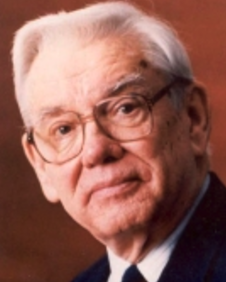
Ramsay MacMullen writes with courage, authority and effect. Few have had the nerve to ask the large question, few could have approached it with the breadth of a distinguished historian who has reflected at length on the social sciences, few can write with his openness and independence of mind, and few have arrived at such an interesting answer. It does MacMullen scant
In Economic Origins of Roman Christianity, as in their earlier works, Robert B. Ekelund, Jr., and Robert D. Tollison propose the forcing of history into the once-favored rational-agent template of economics, as an aid to a better understanding. Their terminology of choice amounts to translation, applied in a novel way. In the circle of Ekelund and Tollison, this approach has given rise in recent decades to an active social-scientific sub-specialty. Since, however, in translation much is lost, why resort to it as a tool of science?
"A vibrant account that puts flesh on the bare bones of early Roman history."---Celia Schultz, University of Michigan The ancient Romans' story down to 264 B.C. can be made credible by stripping away their later myths and inventions to show how their national character shaped their destiny. After many generations of scholarly study, consensus is clear: the account in writers like Livy is not to be trusted because their aims were different from ours in history-writing. They wanted their work to be both improving and diverting. It should grow out of the real past, yes, but if that reality couldn't be recovered, or was uncertain, their art did not forbid invention. It more than tolerated dramatic incidents, passions, heroes, heroines, and villains. If, however, all this resulting ancient fiction and adornment are pruned away, a national character can be seen in the remaining bits and pieces of credible information, to explain the familiar story at least in its outlines. To doubt the written sources has long been acceptable, but this or that detail or narrative section must always be left for salvage by special pleading. To press home the logic of doubt is new. To reach beyond the written sources for a better support in excavated evidence is no novelty; but it is a novelty, to find in archeology the principal substance of the narrative---which is the choice in this book. To use this in turn for the discovery of an ethnic personality, a Roman national character, is key and also novel. What is repeatedly illustrated and emphasized here is the distance traveled by the art or craft of understanding the past---"history" in that sense---over the course of the last couple of centuries. The art cannot be learned, because it cannot be found, through studying Livy and Company. Readers who care about either of the two disciplines contrasted, Classics and History, may find this argument of interest. "Like Thucydides of the hyperactive Athenians and de Tocqueville of the nation-building Americans, MacMullen here draws a character sketch of the early Romans---the men who built Rome, conquered Italy, and created an empire. Based on profound familiarity with history, evidence, and their better-known descendants, attention to what they did and failed to do, remarkable insight, empathy, constructive imagination, and not without humor, he reconstructs the homo Romanus and thus helps us imagine what he was like, and understand why he achieved what he did. This little book is informative, full of important ideas, and delightful to read."---Kurt Raaflaub, Brown University Jacket image: Marcus Fabius and Quintus Tannius. Fresco. Musei Capitolini, Rome, Italy. Courtesy of Scala / Art Resource, NY.."
Constantine’s experience of omens and miracles and use of apotropaic magical symbols, at first pagan then Christian, fits with a long tradition, then strengthening, of such beliefs.
"A vibrant account that puts flesh on the bare bones of early Roman history." ---Celia Schultz, University of Michigan The ancient Romans' story down to 264 B.C. can be made credible by stripping away their later myths and inventions to show how their national character shaped their destiny. After many generations of scholarly study, consensus is clear: the account in writers like Livy is not to be trusted because their aims were different from ours in history-writing. They wanted their work to be both improving and diverting. It should grow out of the real past, yes, but if that reality couldn't be recovered, or was uncertain, their art did not forbid invention. It more than tolerated dramatic incidents, passions, heroes, heroines, and villains. If, however, all this resulting ancient fiction and adornment are pruned away, a national character can be seen in the remaining bits and pieces of credible information, to explain the familiar story at least in its outlines. To doubt the written sources has long been acceptable, but this or that detail or narrative section must always be left for salvage by special pleading. To press home the logic of doubt is new. To reach beyond the written sources for a better support in excavated evidence is no novelty; but it is a novelty, to find in archeology the principal substance of the narrative---which is the choice in this book. To use this in turn for the discovery of an ethnic personality, a Roman national character, is key and also novel. What is repeatedly illustrated and emphasized here is the distance traveled by the art or craft of understanding the past---"history" in that sense---over the course of the last couple of centuries. The art cannot be learned, because it cannot be found, through studying Livy and Company. Readers who care about either of the two disciplines contrasted, Classics and History, may find this argument of interest. "Like Thucydides of the hyperactive Athenians and de Tocqueville of the nation-building Americans, MacMullen here draws a character sketch of the early Romans---the men who built Rome, conquered Italy, and created an empire. Based on profound familiarity with history, evidence, and their better-known descendants, attention to what they did and failed to do, remarkable insight, empathy, constructive imagination, and not without humor, he reconstructs the homo Romanus and thus helps us imagine what he was like, and understand why he achieved what he did. This little book is informative, full of important ideas, and delightful to read." ---Kurt Raaflaub, Brown University Jacket image: Marcus Fabius and Quintus Tannius. Fresco. Musei Capitolini, Rome, Italy. Courtesy of Scala / Art Resource, NY..
Research Article| October 01 2010 Christian Ancestor Worship in Rome RAMSAY MacMULLEN RAMSAY MacMULLEN Search for other works by this author on: This Site Google Journal of Biblical Literature (2010) 129 (3): 597–613. https://doi.org/10.2307/25765954 Cite Icon Cite Share Icon Share Twitter Permissions Search Site Citation RAMSAY MacMULLEN; Christian Ancestor Worship in Rome. Journal of Biblical Literature 1 January 2010; 129 (3): 597–613. doi: https://doi.org/10.2307/25765954 Download citation file: Zotero Reference Manager EasyBib Bookends Mendeley Papers EndNote RefWorks BibTex toolbar search Search Dropdown Menu toolbar search search input Search input auto suggest filter your search All Scholarly Publishing CollectiveSBL PressJournal of Biblical Literature Search Advanced Search The text of this article is only available as a PDF. Article PDF first page preview Close Modal You do not currently have access to this content.
products of the Yeatses’ work’’ (p. viii). She does devote a chapter in the middle of Wisdom of Two to the collaboratively produced system’s effect on W. B. Yeats’s poems and plays, but even in that chapter, Harper’s aim is not so much to show the system in action as it is to illustrate how the poet’s thinking had been permanently altered and complicated by the automatic writing sessions: his worldview had become ‘‘hermaphroditic,’’ shaped by the collaborations in which he and his wife effectively became a single author. For both of the Yeatses, Harper explains, ‘‘the spiritual, the personal, the social, and the literary were never easily separable’’ (p. 98), and that nexus of modes ought to be what draws readers of this journal to Harper’s book.