Joint estimation of surface normals and depth is essential for holistic 3D scene understanding, yet high-resolution prediction remains difficult due to the trade-off between preserving fine local detail and maintaining global consistency. To address this challenge, we propose the Ultra Resolution Geometry Transformer (URGT), which adapts the Visual Geometry Grounded Transformer (VGGT) into a unified multi-patch transformer for monocular high-resolution depth–normal estimation. A single high-resolution image is partitioned into patches that are augmented with coarse depth and normal priors from pre-trained models, and jointly processed in a single forward pass to predict refined geometric outputs. Global coherence is enforced through cross-patch attention, which enables long-range geometric reasoning and seamless propagation of information across patches within a shared backbone. To further enhance spatial robustness, we introduce a GridMix patch sampling strategy that probabilistically samples grid configurations during training, improving inter-patch consistency and generalization. Our method achieves state-of-the-art results on UnrealStereo4K, jointly improving depth and normal estimation, reducing AbsRel from 0.0582 to 0.0291, RMSE from 2.17 to 1.31, and lowering mean angular error from 23.36 degrees to 18.51 degrees, while producing sharper and more stable geometry. The proposed multi-patch framework also demonstrates strong zero-shot and cross-domain generalization and scales effectively to very high resolutions, offering an efficient and extensible solution for high-quality geometry refinement.
Accurate volume and surface area estimation is critical for diverse applications, from marine ecology to medical diagnostics. However, existing methods often suffer from high computational costs and poor performance with sparse and noisy data. We propose a fully feed-forward framework that regresses scale-normalized volume and surface area and their associated uncertainties directly from multi-view images. By fusing 3D point cloud reconstructions with view-aligned 2D features through a graph-based decoder, our model bypasses iterative optimization, ensuring exceptional scalability and rapid inference. Experimental results demonstrate that our approach outperforms state-of-the-art methods, particularly when operating with a low number of input images. Validated across coral monitoring, dietary analysis, and anthropometry, our proposed framework provides a robust, adaptable solution for quantitative shape analysis. This architecture provides a high-speed, scalable alternative for precise geometric estimation from visual data, maintaining high performance even in resource-constrained or sparse-view scenarios.
Effective reef monitoring requires the quantification of coral growth via accurate volumetric and surface area estimates, which is a challenging task due to the complex morphology of corals. We propose a novel, lightweight, and scalable learning framework that addresses this challenge by predicting the 3D volume and surface area of coral-like objects from 2D multi-view RGB images. Our approach utilizes a pre-trained module (VGGT) to extract dense point maps from each view; these maps are merged into a unified point cloud and enriched with per-view confidence scores. The resulting cloud is fed to two parallel DGCNN decoder heads, which jointly output the volume and the surface area of the coral, as well as their corresponding confidence estimate. To enhance prediction stability and provide uncertainty estimates, we introduce a composite loss function based on Gaussian negative log-likelihood in both real and log domains. Our method achieves competitive accuracy and generalizes well to unseen morphologies. This framework paves the way for efficient and scalable coral geometry estimation directly from a sparse set of images, with potential applications in coral growth analysis and reef monitoring.
Generating high-quality stereo videos requires consistent depth perception and temporal coherence across frames. Despite advances in image and video synthesis using diffusion models, producing high-quality stereo videos remains a challenging task due to the difficulty of maintaining consistent temporal and spatial coherence between left and right views. We introduce DissolveStereo, a novel framework for zero-shot stereo video generation that leverages video diffusion priors without requiring paired training data. Our key innovations include a noisy restart strategy to initialize stereo-aware latent representations and an iterative refinement process that progressively harmonizes the latent space, addressing issues like temporal flickering and view inconsistencies. Importantly, we propose the use of dissolved depth maps to streamline latent space operations by reducing high-frequency depth information. Our comprehensive evaluations, including quantitative metrics and user studies, demonstrate that DissolveStereo produces high-quality stereo videos with enhanced depth consistency and temporal smoothness. In terms of epipolar consistency, our method achieves an 11.7
Flow estimation problems are ubiquitous in scientific imaging. Often, the underlying flows are subject to physical constraints that can be exploited in the flow estimation; for example, incompressible (divergence-free) flows are expected for many fluid experiments, while irrotational (curl-free) flows arise in the analysis of optical distortions and wavefront sensing. In this work, we propose a Physics- Inspired Neural Network (PINN) named HDNet, which performs a Helmholtz decomposition of an arbitrary flow field, i.e., it decomposes the input flow into a divergence-only and a curl-only component. HDNet can be trained exclusively on synthetic data generated by reverse Helmholtz decomposition, which we call Helmholtz synthesis. As a PINN, HDNet is fully differentiable and can easily be integrated into arbitrary flow estimation problems.
We present a novel learning-based framework for reconstructing 3D structures from tilt-series cryo-Electron Tomography (cryo-ET) data. Cryo-ET is a powerful imaging technique that can achieve near-atomic resolutions. Still, it suffers from challenges such as missing-wedge acquisition, large data size, and high noise levels. Our framework addresses these challenges by using an adaptive tensorial-based representation for the 3D density field of the scanned sample. First, we optimize a quadtree structure to partition the volume of interest. Then, we learn a vector-matrix factorization of the tensor representing the density field in each node. Moreover, we use a loss function that combines a differentiable tomographic formation model with three regularization terms: total variation, boundary consistency constraint, and an isotropic Fourier prior. Our framework allows us to query the density at any location using the learned representation and obtain a high-quality 3D tomogram. We demonstrate the superiority of our framework over existing methods using synthetic and real data. Thus, our framework boosts the quality of the reconstruction while reducing the computation time and the memory footprint. The code is available at https://github.com/yuanhaowang1213/adaptivetensordf.
Motivation:Tilt-series cryo-electron tomography is a powerful tool widely used in structural biology to study 3D structures of micro-organisms, macromolecular complexes, etc. Still, the reconstruction process remains an arduous task due to several challenges: The missing-wedge acquisition, sample misalignment and motion, the need to process large data, and, especially, a low signal-to-noise ratio. Results:Inspired by the recently introduced neural representations, we propose an adaptive learning-based representation of the density field of the captured sample. This representation consists of an octree structure, where each node represents a 3D density grid optimized from the captured projections during the training process. This optimization is performed using a loss that combines a differentiable image formation model with different regularization terms: total variation, boundary consistency, and a cross-nodes non-local constraint. The final reconstruction is obtained by interpolating the learned density grid at the desired voxel positions. The evaluation of our approach using captured data of viruses and cells shows that our proposed representation is well adapted to handle missing wedges, and improves the signal-to-noise ratio of the reconstructed tomogram. The reconstruction quality is highly improved in comparison to the state-of-the-art methods, while using the lowest computing time footprint. Availability and implementation:The code is available on Github at https://github.com/yuanhaowang1213/adaptivediffgrid_ex.
In this paper, we present Neural Adaptive Tomography (NeAT), the first adaptive, hierarchical neural rendering pipeline for multi-view inverse rendering. Through a combination of neural features with an adaptive explicit representation, we achieve reconstruction times far superior to existing neural inverse rendering methods. The adaptive explicit representation improves efficiency by facilitating empty space culling and concentrating samples in complex regions, while the neural features act as a neural regularizer for the 3D reconstruction. The NeAT framework is designed specifically for the tomographic setting, which consists only of semi-transparent volumetric scenes instead of opaque objects. In this setting, NeAT outperforms the quality of existing optimization-based tomography solvers while being substantially faster.
Neural rendering with implicit neural networks has recently emerged as an attractive proposition for scene reconstruction, achieving excellent quality albeit at high computational cost. While the most recent generation of such methods has made progress on the rendering (inference) times, very little progress has been made on improving the reconstruction (training) times. In this work, we present Neural Adaptive Scene Tracing (NAScenT), the first neural rendering method based on directly training a hybrid explicit-implicit neural representation. NAScenT uses a hierarchical octree representation with one neural network per leaf node and combines this representation with a two-stage sampling process that concentrates ray samples where they matter most near object surfaces. As a result, NAScenT is capable of reconstructing challenging scenes including both large, sparsely populated volumes like UAV captured outdoor environments, as well as small scenes with high geometric complexity. NAScenT outperforms existing neural rendering approaches in terms of both quality and training time.
Tilt-series cryo-electron tomography (cryoET) is an established imaging technique used in several scientific fields to determine samples’ three-dimensional (3D) structures at nearatomic resolutions. However, the motion and misalignment that occur during the acquisition stage are major limiting factors to reaching smaller resolutions. Indeed, they introduce blur and artifacts, which deteriorate the reconstruction quality. In this paper, we propose a joint motion-correction and reconstruction framework to improve the quality of the output volume and, consequently, its resolution. Our framework first estimates the motion field in the sample in order to correct the captured data. Then an iterative plug-and-play prior approach is used to reconstruct the sample. The validation of our approach on real captured datasets shows a good quality reconstruction translated in a resolution improvement.
We propose IntraTomo, a powerful framework that combines the benefits of learning-based and model-based approaches for solving highly ill-posed inverse problems in the Computed Tomography (CT) context. IntraTomo is composed of two core modules: a novel sinogram prediction module, and a geometry refinement module, which are applied iteratively. In the first module, the unknown density field is represented as a continuous and differentiable function, parameterized by a deep neural network. This network is learned, in a self-supervised fashion, from the incomplete or/and degraded input sinogram. After getting estimated through the sinogram prediction module, the density field is consistently refined in the second module using local and non-local geometrical priors. With these two core modules, we show that IntraTomo significantly outperforms existing approaches on several ill-posed inverse problems, such as limited angle tomography with a range of 45 degrees, sparse view tomographic reconstruction with as few as eight views, or super-resolution tomography with eight times increased resolution. The experiments on simulated and real data show that our approach can achieve results of unprecedented quality.
RainbowPIV is a recent imaging technology, proposed for time-resolved 3D-3C fluid velocity measurement using a single RGB camera. It dramatically simplifies hardware setup and calibration procedures as compared to alternative 3D-3C measurement approaches. RainbowPIV combines optical design and tailored reconstruction algorithms, and earlier preliminary studies have demonstrated its ability to extract physically constrained fluid vector fields. This article addresses the issue of limited axial resolution, the major drawback of the original RainbowPIV system. We validate the new system with a direct, quantitative comparison with four-camera Tomo-PIV on experimental data. The reconstructed flow vectors of the two approaches exhibit a high degree of consistency, with the RainbowPIV results explicitly guaranteeing physical properties, such as divergence free velocity fields for incompressible fluid flows.
Despite the impressive performance of Computed Tomography (CT) hardware, there is still a need to push the boundaries of the CT spatial resolution. Super-resolution techniques have been widely used in computer vision to enhance the resolution of 2D and 3D images. They have also been introduced to improve the CT volume resolution. In this work, we propose a flexible framework that produces a higher-resolution 3D volume from low-resolution 2D projections. This framework can be applied to any CT data regardless of the original physical scale and regardless of the target application. It is based on regularization by denoising (RED) approach, where a Non-Linear Anisotropic Diffusion filter is used as the denoiser. We demonstrate our framework on both simulated and captured data, and show good quality reconstruction and a huge memory-footprint improvement in comparison to the state-of-the-art algorithm.
Flash boiling and plume interaction are common phenomena occurring in gasoline direct injection (GDI) spray at throttling and low load engine conditions. Combined with optical engines and low-pressure vessels, several optical techniques, such as backlight imaging, Mie-scattering, and laser sheet imaging have been employed to study the flash boiling morphology. However, in the 2D images resulting from these techniques (projection views or planar imaging), the 3D information is lost. Those methods are then incapable of providing satisfactory information, especially for the study of multi-plume interaction in flash boiling spray, since multi-plume interaction is not a 2D event. This paper reports the implementation of a 4D tomographic reconstruction method from multi-view diffused back illumination (DBI) images, used for the first time in spray characterization. This cost-effective and time-saving method with a simple experimental setup clarifies the 3D spray structure and fuel trajectory change from non-flashing conditions to flare flash conditions, and quantifies the 3D characteristics of individual plumes in non-flash conditions.
Visible light tomography is a promising and increasingly popular technique for fluid imaging. However, the use of a sparse number of viewpoints in the capturing setups makes the reconstruction of fluid flows very challenging. In this paper, we present a state-of-the-art 4D tomographic reconstruction framework that integrates several regularizers into a multi-scale matrix free optimization algorithm. In addition to existing regularizers, we propose two new regularizers for improved results: a regularizer based on view interpolation of projected images and a regularizer to encourage reprojection consistency. We demonstrate our method with extensive experiments on both simulated and real data.
Existing Particle Imaging Velocimetry techniques require the use of high-speed cameras to reconstruct time-resolved fluid flows. These cameras provide high-resolution images at high frame rates, which generates bandwidth and memory issues. By capturing only changes in the brightness with a very low latency and at low data rate, event-based cameras have the ability to tackle such issues. In this paper, we present a new framework that retrieves dense 3D measurements of the fluid velocity field using a pair of event-based cameras. First, we track particles inside the two event sequences in order to estimate their 2D velocity in the two sequences of images. A stereo-matching step is then performed to retrieve their 3D positions. These intermediate outputs are incorporated into an optimization framework that also includes physically plausible regularizers, in order to retrieve the 3D velocity field. Extensive experiments on both simulated and real data demonstrate the efficacy of our approach.
A method for tracking moving particles (112) in a fluid (114). The method includes illuminating (800) the moving particles (112) with an illumination sequence of patterns (200) generated by a light projector (120); measuring (802) with a single camera (110) light intensities reflected by the moving particles (112); calculating (806), based on the measured light intensity, digital coordinates (x', y', z') of the moving particles (112); determining (810) a mapping function f that maps the digital coordinates (x', y', z') of the moving particles (112) to physical coordinates (x, y, z) of the moving particles (112); and calculating (812) the physical coordinates (x, y, z) of the moving particles (112) based on the mapping function f. The illumination sequence of patterns is generated with a single wavelength, and light emitted by the projector is perpendicular to light received by the single camera.
The characterization of sands detailed in this paper has been performed in order to support the in-flight radiometric performance assessment of space-borne optical sensors over the so-called Pseudo-Invariant Calibration Sites (PICS). Although the physical properties of PICS surface are fairly stable in time, the signal measured from space varies with the illumination and the viewing geometries. Thus, there is a need to characterize the spectro-directional properties of PICS. This could be done on a broad scale, thanks to multi-spectral multi-directional space-borne sensors such as the POLDER instrument (with old data). However, interpolating or extrapolating the spectro-directional reflectance measured from space to spectral bands of another sensor is not straightforward. The hyperspectral characterization of sand samples collected within or nearby PICS could contribute to a solution. In this context, a set of 31 sand samples was compiled. The BiConical Reflectance Factor (BCRF), linked to Bidirectional Reflectance Distribution Function (BRDF), was measured between 0.4 and 2.5 µm, over a half hemisphere when the amount of sand in the sample was large enough and for only a single fixed angular configuration for small samples. These optical measurements were complemented by grain size distribution measurements and mineralogical analysis and compiled together with previously published measurements in the so-called PICSAND database, freely available online.
Computed tomography has emerged as the method of choice for scanning complex shapes as well as interior structures of stationary objects. Recent progress has also allowed the use of CT for analyzing deforming objects and dynamic phenomena, although the deformations have been constrained to be either slow or periodic motions. In this work we improve the tomographic reconstruction of time-varying geometries undergoing faster, non-periodic deformations. Our method uses a warp-and-project approach that allows us to introduce an essentially continuous time axis where consistency of the reconstructed shape with the projection images is enforced for the specific time and deformation state at which the image was captured. The method uses an efficient, time-adaptive solver that yields both the moving geometry as well as the deformation field. We validate our method with extensive experiments using both synthetic and real data from a range of different application scenarios.
 Wolfgang Heidrich合作论文数Computational Imaging Group, Visual Computing Center, King Abdullah University of Science and Technology;Computer, Electrical and Mathematical Science and Engineering Division, King Abdullah University of Science and Technology11
 Peter Wonka合作论文数Computer, Electrical and Mathematical Science and Engineering Division, King Abdullah University of Science and Technology10
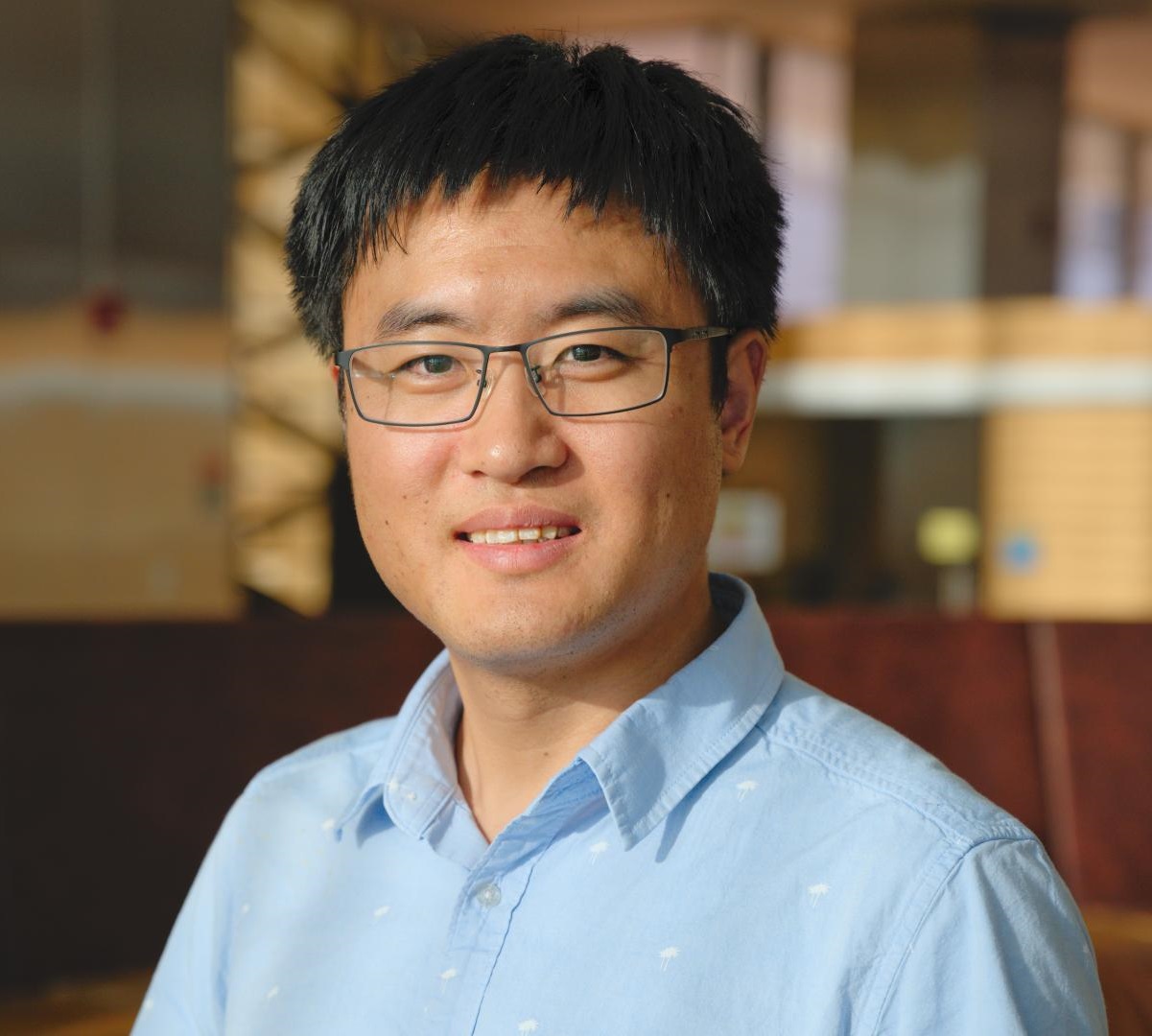 Guangming Zang合作论文数Computational Imaging Group, Visual Computing Center, King Abdullah University of Science and Technology8
 Jinhui Xiong合作论文数Meta Reality Labs7
 Yuanhao Wang合作论文数6
 Andres A. Aguirre-Pablo合作论文数King Abdullah Univ Sci & Technol KAUST, Div Phys Sci & Engn, Thuwal 239556900, Saudi Arabia6
 Sigurdur Thoroddsen合作论文数Division of Physical Sciences & Engineering, King Abdullah University of Science and Technology;High-Speed Fluids Imaging Laboratory, King Abdullah University of Science and Technology6
 Abdulrahman B. Aljedaani合作论文数King Abdullah University Of Science And Technology, Kingdom of Saudi Arabia5Rui Li合作论文数Facebook4Darius Rückert合作论文数Univ Erlangen Nurnberg, Erlangen, Germany3
 Ran Tao合作论文数KAUST3
 Gilles Lubineau合作论文数Laboratory of Mechanics of Composites for Energy and Mobility, King Abdullah University of Science and Technology;Physical Science and Engineering Division, King Abdullah University of Science and Technology3
 Qiang Fu合作论文数King Abdullah University of Science and Technology3
 Pierre-Yves Foucher合作论文数The French Aerospace Lab, ONERA3
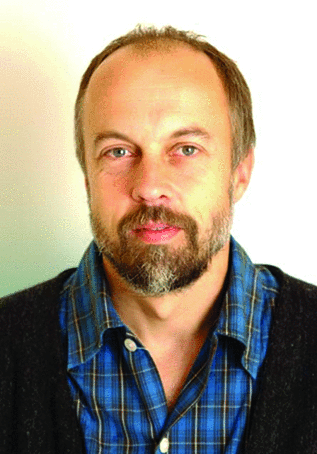 Xavier Briottet合作论文数ONERA/DOTA3
 Jian Shi合作论文数2
 Jianguo Du合作论文数2Thomas H. G. Vidal合作论文数ACRI ST2Marc-Andre Gagnon合作论文数2
 Xiong Dun合作论文数Visual Computing Center, King Abdullah University of Science and Technology2
 William Roberts合作论文数Physical Science and Engineering Division, King Abdullah University of Science and Technology2
 Zhenyu Li (李震宇)合作论文数King Abdullah University of Science and Technology1Thomas Rivière合作论文数1Khaled Abu-Jbara合作论文数1
 Miao Qi合作论文数1
 Mustapha Ouhssain合作论文数Biological and Environmental Sciences and Engineering Division, Technology, Red Sea Research Center, King Abdullah University of Science and Technology, Thuwal, Saudi Arabia1
 Malika Kheireddine合作论文数Red Sea Research Center, King Abdullah University for Science and Technology1
 Mykola Lavreniuk合作论文数Space Res Inst NASU SSAU, Kiev, Ukraine1
 Balaji Mohan合作论文数Corresponding author.1
 Mohamed M. Sabry Aly合作论文数School of Computer Science and Engineering, Nanyang Technological University1
 Congli Wang (王丛立)合作论文数Department of Computer Science, Princeton University1
 Francoise Viallefont合作论文数1
 Bennett Anthony合作论文数KAUST1Scott Skeen合作论文数Sandia National Laboratories1
 Muxingzi Li合作论文数INRIA Sophia Antipolis1
 Tiegang Fang合作论文数Department of Mechanical and Aerospace Engineering, North Carolina State University1
 Marc Bouvet合作论文数1François Lemaître合作论文数1
 Jaeheon Sim合作论文数Department of Aerospace Engineering;University of Michigan;Department of Aerospace Engineering, University of Michigan1
 Biswarup Choudhury合作论文数Indian Institute of Technology Bombay1Cédric Bacour合作论文数Laboratoire des Sciences du Climat et de l'Environnement;NOVELTIS1
 Veronique Achard合作论文数1
 Mohamed Alaa El-Dien Aly合作论文数Visual Computing Center, KAUST;Computer Engineering Department, Cairo University;Seeloz Inc.1
 Zhenyu Li (李震宇)合作论文数Advanced Imaging and Intelligent Analysis Laboratory, Computing Faculty, Harbin Institute of Technology1Laurent Poutier合作论文数1




