The colonization of Mars presents extraordinary challenges, including radiation exposure, low atmospheric pressure, and toxic regolith. Recent advancements in synthetic biology and genetic engineering offer unprecedented opportunities to address these obstacles by utilizing terrestrial extremophiles and engineered organisms. This paper examines the potential for creating symbiotic relationships between terrestrial microbes and hypothetical Martian life forms, should they exist, to support a sustainable human presence on Mars. Inspired by natural examples of endosymbiosis, such as mitochondria and chloroplasts, we propose methods to engineer life forms capable of enduring Martian conditions. Key components include experimental designs, laboratory simulations, and bioengineering approaches essential to this endeavor. The ethical, political, and technological challenges of introducing engineered life to Mars are critically evaluated, with an emphasis on international collaboration and robust planetary protection policies. This research underscores engineered symbiosis as a transformative strategy for enabling life to adapt and thrive on Mars while advancing humanity's aspirations for interplanetary habitation and exploration. By addressing these challenges, this work highlights a path toward sustainable life on Mars, reflecting both scientific ingenuity and ethical stewardship.
Deep reinforcement learning (RL) has been shown to be effective in producing approximate solutions to some vehicle routing problems (VRPs), especially when using policies generated by encoder-decoder attention mechanisms. While these techniques have been quite successful for relatively simple problem instances, there are still under-researched and highly complex VRP variants for which no effective RL method has been demonstrated. In this work we focus on one such VRP variant, which contains multiple trucks and multi-leg routing requirements. In these problems, demand is required to move along sequences of nodes, instead of just from a start node to an end node. With the goal of making deep RL a viable strategy for real-world industrial-scale supply chain logistics, we develop new extensions to existing encoder-decoder attention models which allow them to handle multiple trucks and multi-leg routing requirements. Our models have the advantage that they can be trained for a small number of trucks and nodes, and then embedded into a large supply chain to yield solutions for larger numbers of trucks and nodes. We test our approach on a real supply chain environment arising in the operations of Japanese automotive parts manufacturer Aisin Corporation, and find that our algorithm outperforms Aisin's previous best solution.
Noisy intermediate-scale quantum (NISQ) hardware is almost universally incompatible with full-scale optimization problems of practical importance which can have many variables and unwieldy objective functions. As a consequence, there is a growing body of literature that tests quantum algorithms on miniaturized versions of problems that arise in an operations research setting. Rather than taking this approach, we investigate a problem of substantial commercial value, multi-truck vehicle routing for supply chain logistics, at the scale used by a corporation in their operations. Such a problem is too complex to be fully embedded on any near-term quantum hardware or simulator; we avoid confronting this challenge by taking a hybrid workflow approach: we iteratively assign routes for trucks by generating a new binary optimization problem instance one truck at a time. Each instance has $\sim 2500$ quadratic binary variables, putting it in a range that is feasible for NISQ quantum computing, especially quantum annealing hardware. We test our methods using simulated annealing and the D-Wave Hybrid solver as a place-holder in wait of quantum hardware developments. After feeding the vehicle routes suggested by these runs into a highly realistic classical supply chain simulation, we find excellent performance for the full supply chain. Our work gives a set of techniques that can be adopted in contexts beyond vehicle routing to apply NISQ devices in a hybrid fashion to large-scale problems of commercial interest.
Problem instances of a size suitable for practical applications are not likely to be addressed during the noisy intermediate-scale quantum (NISQ) period with (almost) pure quantum algorithms. Hybrid classical-quantum algorithms have potential, however, to achieve good performance on much larger problem instances. We investigate one such hybrid algorithm on a problem of substantial importance: vehicle routing for supply chain logistics with multiple trucks and complex demand structure. We use reinforcement learning with neural networks with embedded quantum circuits. In such neural networks, projecting high-dimensional feature vectors down to smaller vectors is necessary to accommodate restrictions on the number of qubits of NISQ hardware. However, we use a multi-head attention mechanism where, even in classical machine learning, such projections are natural and desirable. We consider data from the truck routing logistics of a company in the automotive sector, and apply our methodology by decomposing into small teams of trucks, and we find results comparable to human truck assignment.
Vehicle routing problems and other combinatorial optimization problems have been approximately solved by reinforcement learning agents with policies based on encoder-decoder models with attention mechanisms. These techniques are of substantial interest but still cannot solve the complex routing problems that arise in a realistic setting which can have many trucks and complex requirements. With the aim of making reinforcement learning a viable technique for supply chain optimization, we develop new extensions to encoder-decoder models for vehicle routing that allow for complex supply chains using classical computing today and quantum computing in the future. We make two major generalizations. First, our model allows for routing problems with multiple trucks. Second, we move away from the simple requirement of having a truck deliver items from nodes to one special depot node, and instead allow for a complex tensor demand structure. We show how our model, even if trained only for a small number of trucks, can be embedded into a large supply chain to yield viable solutions.
(Withdrawn) This work describes an efficient user-side method of calibrating and correcting quantum annealing computers. For quantum annealing computers based on the Ising model, the method measures the residual bias of the h and J coefficients. Once measured, these biases can then be nulled in subsequent runs for any problem of interest. This method also returns a temperature for each qubit based on the measured versus the expected qubit distributions computed from a Boltzmann distribution model.
The new strategic partnership between the United States and India is creating opportunities for security cooperation. A key element in this partnership—U.S.-India space cooperation—will most likely become the defining relationship for international space cooperation around which other space-faring nations will posture. The Indian space program is rapidly developing world-class capabilities and presents itself as a worthy partner. The U.S. space program should be able to provide innovative ideas for fruitful collaboration. Despite these propitious circumstances, there are potential obstacles of cost, security, and risk. The biggest obstacle, however, might simply be bureaucratic intransigence and inertia. The opportunity is here, now, for the United States and India each to add an important new jewel to their crown of international space cooperation activities. Most importantly, this new space partnership should enhance the security and prosperity of the United States, India, and the world.
Although faced with the new global challenges of terrorism and peer competition, the USA has been slow to adapt its cold war forces, and newer ‘warfighter’ strategy to meet them. Cyberspace and outer space offer the means to do this, via ‘responsive’ microsatellites and low-cost launchers, and broadband internet information and education services. The US military leadership is, however, not well enough versed in these technologies, with senior personnel largely lacking a space or technical background and having little appetite for change. If the USA is successfully to meet current challenges, it must first create a leadership that is technologically capable and philosophically attuned to change.
As the USA, Europe and other nations embark on a new voyage of exploration to the Moon, Mars and beyond, they should lay the foundations and establish precedents that invite a host of participants and followers. We argue that international cooperation, driven by foreign-policy and cost-sharing considerations, has taken a prominent role but must be pragmatically and flexibly balanced with economic and strategic self-interest. Since exploration visions are likely to differ, the steps each country will pursue, the funding provided, and schedules followed will also differ. To support an enduring exploration vision, it will be important to remain flexible to changing priorities and amenable to the inclusion of new, non-traditional participants. Open-systems principles and metaprinciples should be employed at all levels—hardware, software, programmatic, political and cultural. Equally important, national leadership and decision makers should be mindful of the potential pitfalls that might undermine the venture. While the new vision inspires us all, it will take creativity, resourcefulness, hard work and cooperation to succeed.
Spacepower is a critical element supporting the US national security strategy. As more nations gain access to technology, there is growing concern that space capabilities will be increasingly vulnerable to attack. However, a more insidious problem looms. For the last decade, the development and acquisition of US national security space systems have become more and more troubled with cost overruns and schedule delays. This grave situation has caught the attention of national security leadership and the US Congress. Panels of experts have proposed a litany of remedies. In this paper we explain and illustrate the importance of enhancing space power to better support national security needs and caution that many of the proposed acquisition solutions address symptoms, not the primary cause. As history as shown…if the US offers an inviting target, it may well pay the price of attack. With the growing commercial and national security use of space, US assets in space and on the ground offer just such targets. The US is an attractive candidate for a ‘Space Pearl Harbor’. 1 Report of the Commission to Assess United States National Security Space Management and Organization, Pursuant to Public Law 106–65, January 11, 2001, available at <. This report is often referred to as the Space Commission Report. This is the way the world ends This is the way the world ends This is the way the world ends Not with a bang but a whimper. 2 T.S. Eliot, ‘The Hollow Men’, 1925.
The strengthening of alliances through cooperative military activities is a long-established tradition for land, sea and air forces. With the rise of spacepower over the last 50 years, and the growing number of spacefaring and space-using nations, military space programs provide new opportunities for military-to-military cooperation. Military space programs often represent the most technical and secretive of capabilities and there may be risks in sharing the inner workings of these capabilities, even with trusted allies. Is there a way to share the benefits of these strategically and tactically important capabilities in a manner that enhances the peace, justice and security of all stakeholders? Many nations around the world are answering ‘yes’ to this question as they enter into agreements on cooperative space projects for commercial, environmental and military security. More and more they are using their space programs to realign the old balance of power and create new common interests. As the number of spacefaring nations increase and the number of space users grow around the globe, the traditional space powers, such as the United States, need to reconsider how to integrate military space cooperation in their strategies of strengthening alliances and building common interest.
The most widely accepted model for the structure of cometary meteoroids is a dustball with grains bound together by a more volatile substance [1]. In this paper we estimate the size distribution of dustball grains from meteor flare duration, using image intensified CCD records of 1998 Leonid meteors. Upon the assumption of simultaneous release of dustball grains at the beginning of the flare, numerical atmospheric ablation models suggest that the dustball grains in these Leonids are of the order of 10(-5) to 10(-4) kg, which is somewhat larger than estimates obtained by other methods. If the dustball grain sizes determined here are representative of cometary meteoroid structure in general, only the most massive (O and B0) type stars could eject these grains into interstellar space by radiation pressure forces.
We report here evidence for significant transverse spread of the light production region in bright Leonid meteors. One Leonid meteor has an apparent spread in the light production region of about 600 m perpendicular to the flight path for the meteor, that transverse spread persisting for at least 0.3 s. We have also detected short-duration, jet-like features emanating from a bright Leonid meteor recorded in 1998. These jet-like features have maximum spatial dimensions up to 1.9 km. While we cannot definitively rule out instrumental artefacts as a cause for these jet-like features, they may be evidence of motion contributing to the observed spatial spread in the light production region.
Two-station electro-optical observations of the 1998 Leonid shower are presented. Precise heights and light curves were obtained for 79 Leonid meteors that ranged in brightness (at maximum luminosity) from +0.3 to +6.1 astronomical magnitude. The mean photometric mass of the data sample was 1.4 x 10(-6) kg. The dependence of astronomical magnitude at peak luminosity on photometric mass and zenith angle was consistent with earlier studies of faint sporadic meteors. For example, a Leonid meteoroid with a photometric mass of similar to1.0 x 10(-7) kg corresponds to a peak meteor luminosity of about +4.5 astronomical magnitudes. The mean beginning height of the Leonid meteors in this sample was 112.6 km and the mean ending height was 95.3 km. The highest beginning height observed was 144.3 km. There is relatively little dependence of either the first or last heights on mass, which is indicative of meteoroids that have clustered into constituent grains prior to the onset of intensive grain ablation. The height distribution, combined with numerical modelling of the ablation of the meteoroids, suggests that silicate-like materials are not the principal component of Leonid meteoroids and hints at the presence of a more volatile component. Light curves of many Leonid meteors were examined for evidence of the physical structure of the associated meteoroids: similar to the 1997 Leonid meteors, the narrow, nearly symmetric curves imply that the meteoroids are not solid objects. The light curves are consistent with a dustball structure.
We present the first simulations of non-head-on (grazing) collisions of binary black holes in which the singularities are excised from the simulation. Initially equal mass m black holes (spinning or not) are separated by approximately 10m and with impact parameter approximately 2m. Evolutions to t approximately 35m are obtained where two separate horizons are present for t approximately 3.8m; then a single enveloping horizon forms indicating that the holes merged. Apparent horizon area estimates suggest gravitational radiation of about 2%-3% of the total mass. The evolutions end after a moderate amount of time because of instabilities.
Binary black-hole interactions provide potentially the strongest source of gravitational radiation for detectors currently under development. We present some results from the Binary Black Hole Grand Challenge Alliance three-dimensional Cauchy evolution module. These constitute essential steps towards modeling such interactions and predicting gravitational radiation waveforms. We report on single black-hole evolutions and the first successful demonstration of a black hole moving freely through a three-dimensional computational grid via a Cauchy evolution: a hole moving near 6M at 0.1c during a total evolution of duration near 60M.
 Simon P. Worden合作论文数Sacramento Peak Observatory Air Force Cambridge Research Laboratories11
 A.G. LeBlanc合作论文数4J. Winicour合作论文数4
 Peter Brown合作论文数4R. A. Matzner合作论文数4
 Luis Lehner合作论文数Perimeter Institute for Theoretical Physics;Canadian Institute for Advanced Research4
 Robert Hawkes合作论文数Physics Department, Mount Allison University4Takanori Ide合作论文数Product Engineering Department No. 1, AISIN AW Co. Ltd4
 Roberto Gomez合作论文数Department of Physics and Astronomy;University of Pittsburgh;Department of Physics and Astronomy, University of Pittsburgh4Mijan F. Huq合作论文数Center for Gravitational Physics & Geometry;Department of Astronomy & Astrophysics;Pennsylvania State University4
 Pablo Laguna合作论文数Department of Physics, The University of Texas at Austin;Oden Institute, The University of Texas at Austin;School of Physics, College of Sciences, Georgia Institute of Technology4
 Joan Masso合作论文数3LE Kidder合作论文数3P. E. Saylor合作论文数3P. Papadopoulos合作论文数3R. L. Marsa合作论文数3W Landry合作论文数3B. Szilagyi合作论文数3T. Montague合作论文数3M.D. Campbell合作论文数3K. Camarda合作论文数3Takafumi Suzuki合作论文数3t haupt合作论文数3
 Matthew Choptuik合作论文数Department of Physics & Astronomy, Faculty of Science, The University of British Columbia3
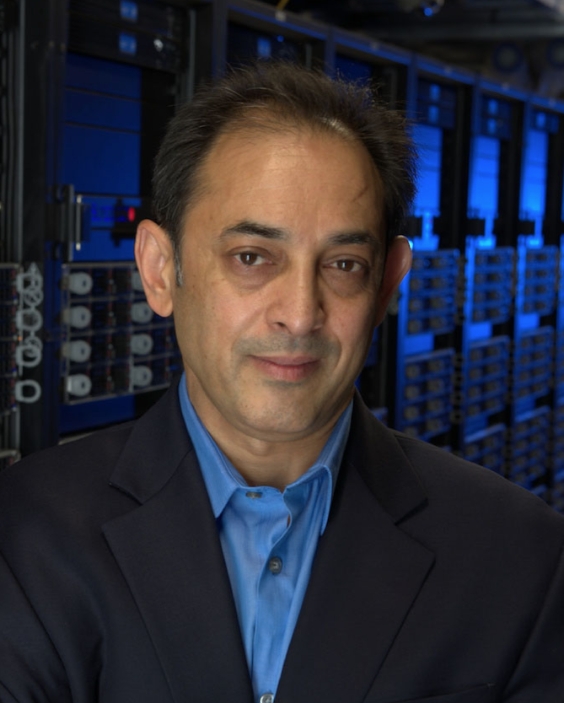 Manish Parashar合作论文数Scientific Computing and Imaging Institute, University of Utah;Kahlert School of Computing, University of Utah;Department of Computer Science, Rutgers University3
 Luciano Rezzolla合作论文数Institute for Theoretical Physics, Goethe University;Trinity College Dublin3Lee Samuel Finn合作论文数Georgia Institute of Technology3A. Anderson合作论文数3
 Maurice H. P. M. Van Putten合作论文数Sejong University/School of Physics, Korea Institute for Advanced Study3P. Walker合作论文数3
 Saul A. Teukolsky合作论文数The Division of Physics, Mathematics and Astronomy, California Institute of Technology;Department of Physics, The College of Arts & Sciences, Cornell University3
 Stuart L. Shapiro合作论文数Department of Astronomy, College of Liberal Arts & Sciences, University of Illinois at Urbana-Champaign;Department of Physics, The Grainger College of Engineering, University of Illinois at Urbana-Champaign3
 Thomas W. Baumgarte合作论文数Department of Physics and Astronomy, Bowdoin College3
 Sanjit Mitra合作论文数Inter-University Centre for Astronomy and Astrophysics3
 Geoffrey Fox合作论文数Department of Physics, College of Arts and Sciences, Indiana University;Department of Intelligent Systems Engineering, Indiana University;Community Grid Laboratory, Indiana University;Digital Science Center of Pervasive Technology Institute;School of Engineering and Applied Science, University of Virginia3
 Larry Smarr合作论文数Jacobs School of Engineering, University of California, San Diego;California Institute for Telecommunications and Information Technology3James W. York合作论文数Department of Physics, Cornell University3Faisal Saied合作论文数3
 Mark Scheel合作论文数The Division of Physics, Mathematics and Astronomy, California Institute of Technology3
 Steven R. Brandt合作论文数Division of Computer Science and Engineering, Louisiana State University;Center for Computation and Technology, Louisiana State University3Andrew M. Abrahams合作论文数Center for Radiophysics and Space Research;Cornell University;Center for Radiophysics and Space Research, Cornell University3
 M. E. Rupright合作论文数University of North Carolina3Janet a Lenaghan合作论文数3
 Scott Klasky合作论文数Scientific Computing Group within the National Center for Computational Sciences (NCCS)3Peter Anninos合作论文数3
 Edward Seidel合作论文数University of Wyoming3
 Gregory B. Cook合作论文数Department of Physics, Wake Forest University3
 Nigel Bishop合作论文数Department of Mathematics;Applied Mathematics and Astronomy;University of South Africa;Department of Mathematics, University of South Africa3
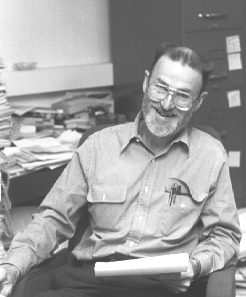 James Browne合作论文数CODE
POEMS3
James Browne合作论文数CODE
POEMS3




