ABSTRACTObjectivesSomatic symptom and related disorders (SSRDs) are complex disorders that are commonly encountered in tertiary paediatric settings. Despite this, little is known about ED use prior to hospital admission. We aimed to describe the pattern of ED use in a cohort of children and adolescents who were subsequently admitted to hospital with SSRD and to identify factors associated with ED presentations.MethodWe conducted a retrospective review of the electronic medical records of 123 patients admitted with SSRD to ascertain their ED contact in the 12 months preceding their initial admission. Documentation about patient and presentation characteristics, ED management and discharge recommendations were recorded. Descriptive statistics, including Fisher's Exact Test, were used.ResultsOur patient group (65.9% female) had a median age of 14.3 years (range 7.3–18.3 years). Patient and presentation characteristics differed little by frequency of presentation to the ED; the symptom of pain was the only significant factor associated with the multiple ED presentations (P = 0.015). Documentation of a possible SSRD presentation in ED was significantly associated with the recommendation for mental health follow‐up (P = 0.005), however engagement with mental healthcare at the time of a patient's initial admission was uncommon.ConclusionsChildren and adolescents with SSRD who go on to have a hospital admission present frequently to EDs, especially in the setting of pain symptoms. Training of ED clinicians in diagnosing SSRD appears indicated, as is the development of local care pathways that may obviate the need for hospital admission in at least some patients.
School suspension in adolescence has been shown to predict homelessness in young adulthood, suggesting that it may be a point of intervention to reduce young adult homelessness. Under zero tolerance policies, school suspension is more common in the United States relative to Australia. Multilevel modeling of cross-national longitudinal data from the International Youth Development Study tested prospective associations between adolescent problem behaviors, student-perceived likelihood of suspension/expulsion, school-level behavior management policy, and young adult homelessness. Population-based samples of participants from Washington State (United States) and Victoria (Australia) were surveyed at ages 13, 14, 15 (2002-2004), and 25 years (2014-15; n = 1945; 51% female). Over half of the young adults who reported homelessness within the previous year at age 25 had experienced school suspension. Individual-level school suspension in middle school predicted young adult homelessness. Higher levels of adolescent rebelliousness, non-violent and violent antisocial behavior, and substance use predicted a higher likelihood of school suspension at the person-level and were indirectly related to increased risk for homelessness at age 25. School behavior management policy was not related to a history of school suspension at either the person- or school-level once individual factors were controlled. Findings demonstrate the importance of school suspension as a risk factor for future homelessness and suggest that prevention programming that aims to mitigate substance use, antisocial behaviors, and school suspension may help to reduce young adult homelessness.
Mental health literacy interventions in school settings are growing in number and scope, yet challenges in user engagement and real-world implementation persist. The Decode Mental Health and Wellbeing Program (Decode) is a novel and innovative mental health literacy program for teachers and students that harnesses the power of social media platform-style content delivery and lived experience influencers to engage young people. Using a multi-site, multi-informant, pre-post cohort study design over a 4-week implementation period, Decode was evaluated in five Victorian government and Catholic primary and secondary schools (years 5–8) in Victoria, Australia. Data collected using surveys (teacher n = 14, student n = 159) and focus groups/interviews (teacher n = 14, student n = 41) provided insights into the program’s feasibility (acceptability, implementation) and impact. Findings indicated that Decode was acceptable to both teachers (86
BackgroundHealth promotion interventions that are developed and evaluated by researchers and other external providers are at risk of not being sustained beyond the initial implementation period. When delivered by a lay school health worker, the SEHER study of a whole-school health promotion intervention in Bihar, India was found to be feasible, acceptable and effective in improving school climate and student health behaviors. The objective of this case study is to describe the decision-making processes, barriers, and enablers to continuing the SEHER intervention following its official closure. MethodsFor this exploratory qualitative case study, data were collected from four government-run secondary schools, two of which continued SEHER and two of which discontinued it after official closure. Thirteen school staff were interviewed, and 100 girls and boys (aged 15-18 years old) participated in eight focus groups discussing their experiences of the process of continuing the intervention (or discontinuing) following its official closure. Thematic analysis was conducted in NVivo 12 using grounded theory. ResultsNo school sustained the intervention as originally delivered in the research trial. In two schools, the intervention was adapted by selecting sustainable components, whereas in two others it was discontinued altogether. We identified four interrelated themes that explained the complex decision-making process, barriers, and enablers related to program continuation: (1) understanding of the intervention philosophy among school staff; (2) school capabilities to continue with intervention activities; (3) school attitudes and motivation about implementing the intervention, and; (4) the education policy environment and governance structures. Suggestions for overcoming barriers included adequate resource allocation; training, supervision, and support from external providers and the Ministry of Education; and formal government approval to continue the intervention. ConclusionSustaining this whole-school health promotion intervention in low-resource school settings in India depended on individual, school and government factors as well as external support. These findings suggest that health interventions will not necessarily become embedded in a school's operations merely because they are designed as a whole-school approach or because they are effective. Research should identify the resources and processes required to balance planning for future sustainability while awaiting trial results about an intervention's effectiveness.
EDITORIAL article Front. Psychiatry, 23 October 2023Sec. Adolescent and Young Adult Psychiatry Volume 14 - 2023 | https://doi.org/10.3389/fpsyt.2023.1307350
BackgroundDuring adolescence, sleep and circadian timing shift later, contributing to restricted sleep duration and irregular sleep-wake patterns. The association of these developmental changes in sleep and circadian timing with cognitive functioning, and consequently academic outcomes, has not been examined prospectively. The role of ambient light exposure in these developmental changes is also not well understood. Here, we describe the protocol for the Circadian Light in Adolescence, Sleep and School (CLASS) Study that will use a longitudinal design to examine the associations of sleep-wake timing, circadian timing and light exposure with academic performance and sleepiness during a critical stage of development. We also describe protocol adaptations to enable remote data collection when required during the COVID-19 pandemic.MethodsApproximately 220 healthy adolescents aged 12–13 years (school Year 7) will be recruited from the general community in Melbourne, Australia. Participants will be monitored at five 6 monthly time points over 2 years. Sleep and light exposure will be assessed for 2 weeks during the school term, every 6 months, along with self-report questionnaires of daytime sleepiness. Circadian phase will be measured via dim light melatonin onset once each year. Academic performance will be measured via national standardised testing (National Assessment Program-Literacy and Numeracy) and the Wechsler Individual Achievement Test—Australian and New Zealand Standardised Third Edition in school Years 7 and 9. Secondary outcomes, including symptoms of depression, anxiety and sleep disorders, will be measured via questionnaires.DiscussionThe CLASS Study will enable a comprehensive longitudinal assessment of changes in sleep-wake timing, circadian phase, light exposure and academic performance across a key developmental stage in adolescence. Findings may inform policies and intervention strategies for secondary school-aged adolescents.Ethics and disseminationEthical approval was obtained by the Monash University Human Research Ethics Committee and the Victorian Department of Education. Dissemination plans include scientific publications, scientific conferences, via stakeholders including schools and media.Study datesRecruitment occurred between October 2019 and September 2021, data collection from 2019 to 2023.
Abstract Background School connectedness reflects the quality of students’ engagement with peers, teachers, and learning in the school environment. It has attracted attention from both the health and education sectors as a potentially modifiable protective factor for common mental health problems. However, the extent to which school connectedness may prevent the onset of youth depression or anxiety or promote their remission is unclear. This systematic review examined evidence for prospective relationships between school connectedness and depression and anxiety, and the effect of interventions to improve school connectedness on depression and anxiety. Methods We searched MEDLINE, PsycINFO, PubMed, and ERIC electronic databases for peer-reviewed quantitative longitudinal, or intervention studies published from 2011–21 in English examining relationships between school connectedness and anxiety and/or depression. Participants were 14–24 years old when depression and anxiety outcomes were assessed in any education setting in any country. We partnered with five youth advisers (aged 16–21 years) with lived experience of mental health problems and/or the schooling system in Australia, Indonesia, and the Philippines to ensure that youth perspectives informed the review. Results Our search identified 3552 unique records from which 34 longitudinal and 2 intervention studies were ultimately included. Studies were primarily from the United States of America (69.4%). Depression and anxiety outcomes were first measured at 14 years old, on average. Most studies found a significant protective relationship between higher levels of school connectedness and depressive and/or anxiety symptoms; more measured depression than anxiety. A few studies found a non-significant relationship. Both intervention studies designed to increase school connectedness improved depression, one through improvements in self-esteem and one through improvements in relationships at school. Conclusions These findings suggest that school connectedness may be a novel target for the prevention of depression and anxiety. We were not able to determine whether improving school connectedness promotes remission in young people already experiencing depression and anxiety. More studies examining anxiety, diagnostic outcomes, and beyond North America are warranted, as well as intervention trials. Trial registration PROSPERO 2021 CRD42021270967.
Objectives To assess how clinicians discuss the diagnosis of somatic symptom and related disorders (SSRDs) in patients admitted to a children's hospital and explore the effect of parent and patient acceptance of the diagnosis on recovery. Study design In this cross-sectional study, we reviewed the electronic medical records of pediatric admissions diagnosed with SSRD over 18 months. All diagnostic discussions with patients and families were analysed to identify concepts used by clinicians within these discussions and the extent of parent and patient acceptance of the diagnosis. Recovery status up to 12 months after diagnosis was also identified. Acceptance and recovery were categorized as "full," "partial," or "none." Results Ninety-five of 123 (77.2%) patients (median age 14.3 years, range 7.3-18.3) had at least 1 diagnostic discussion recorded. Clinical explanations within the diagnostic discussion spanned a variety of concepts, with the most common being a description of somatization (62%). Full parent acceptance of the diagnosis of SSRD was more likely when discussions involved two parents (P = .002). Full acceptance of the diagnosis by at least 1 parent was associated with complete functional recovery in their children (OR 8.94, 95% CI 2.24, 35.9, P = .002). In contrast, there was no significant association between full acceptance by patients and their recovery. Conclusion The influence of parent acceptance of the diagnosis of SSRD reinforces the importance of therapeutic engagement with families, as well as with children and adolescents.
Adolescent sleep problems including insufficient sleep, poor-quality sleep, and related daytime impairments are common in adolescents, who are particularly susceptible to experiencing these problems owing to a “perfect storm” of neurodevelopmental and psychosocial factors that are unique to this stage of life. In fact, adolescent sleep problems commonly co-occur with depression and anxiety, and likely share complex bidirectional relationships over time. Evidence indicates that sleep problems, particularly insomnia, often precede the emergence of the onset of depression in adolescents, and may mediate the sequential comorbidity between anxiety and depression. An important future direction is to explore sleep improvement interventions tailored to the unique developmental needs of adolescents, which may represent a novel approach to prevent adolescent onset mental disorders.
Early onset adolescent depression is related to poor prognosis and a range of psychiatric and medical comorbidities later in life, making the identification of a priori risk factors for depression highly important. Increasingly, dysregulated levels of immune and neuroendocrine markers, such as C-reactive protein (CRP) and cortisol, have been demonstrated as both precursors to and consequences of depression. However, longitudinal research with adolescent populations is limited and demonstrates mixed immuno-endocrine-depression links. This study explored the putative bidirectional relationship between salivary measures of cortisol and CRP, including the novel Cort:CRP ratio, and depression. Participants from the randomized control trial ‘Sleep and Education: learning New Skills Early’ (SENSE) Study were 122 adolescents at risk for depression (73 females) aged 12 to 16 years (M=12.71 years, SD=1.01 years) assessed at baseline (T1), post-intervention (T2), and a two-year follow-up (T3). Logistic regression results demonstrated that adolescents with higher T1 Cort:CRPmorn ratio levels were two-fold more likely to develop a first-onset depressive disorder from T2 to T3 as compared to adolescents with lower Cort:CRPmorn ratio levels, β=0.73, t(36)=2.15, p=.04, OR=2.08. This effect was not moderated by treatment condition (β=-1.38, t(13)=-1.33, p=.20) and did not change when controlling for known risk factors for depression, including sex, age, body-mass index, socio-economic status, T1 anxiety disorder, nor T1 sleep disturbance, anxiety, or depressive symptoms (β=0.91, t(31)=2.14, p=.04). Results highlight potential immuno-endocrine dysregulation as an underlying risk factor for adolescent first-onset depression, and may inform the development of targeted, preventative biobehavioral treatment strategies for youth depression.
World PsychiatryVolume 20, Issue 2 p. 151-152 EditorialFree Access Rediscovering the mental health of populations George C. Patton, Centre for Adolescent Health, Murdoch Children's Research Institute, Parkville, VIC, Australia Department of Paediatrics, Melbourne Medical School, University of Melbourne, Melbourne, VIC, AustraliaSearch for more papers by this authorMonika Raniti, Centre for Adolescent Health, Murdoch Children's Research Institute, Parkville, VIC, Australia Department of Paediatrics, Melbourne Medical School, University of Melbourne, Melbourne, VIC, AustraliaSearch for more papers by this authorNicola Reavley, Melbourne School of Population and Global Health, University of Melbourne, Melbourne, VIC, AustraliaSearch for more papers by this author George C. Patton, Centre for Adolescent Health, Murdoch Children's Research Institute, Parkville, VIC, Australia Department of Paediatrics, Melbourne Medical School, University of Melbourne, Melbourne, VIC, AustraliaSearch for more papers by this authorMonika Raniti, Centre for Adolescent Health, Murdoch Children's Research Institute, Parkville, VIC, Australia Department of Paediatrics, Melbourne Medical School, University of Melbourne, Melbourne, VIC, AustraliaSearch for more papers by this authorNicola Reavley, Melbourne School of Population and Global Health, University of Melbourne, Melbourne, VIC, AustraliaSearch for more papers by this author First published: 18 May 2021 https://doi.org/10.1002/wps.20842Citations: 1AboutSectionsPDF ToolsRequest permissionExport citationAdd to favoritesTrack citation ShareShare Give accessShare full text accessShare full-text accessPlease review our Terms and Conditions of Use and check box below to share full-text version of article.I have read and accept the Wiley Online Library Terms and Conditions of UseShareable LinkUse the link below to share a full-text version of this article with your friends and colleagues. Learn more.Copy URL Share a linkShare onEmailFacebookTwitterLinked InRedditWechat The principles of prevention espoused by G. Rose1 have underpinned many modern successes in health care. In areas such as cardiometabolic diseases, injuries and violence, and substance abuse, shifting the community distribution of risk factors has become the primary strategy. The ensuing reductions in disease burden have been striking. Psychiatry remains an outlier. Over decades, the quality of clinical care has been improved, greater funding has been attracted, more and better trained mental health professionals have been grown, and the governance of mental health care has been upgraded2. However, the emphasis in recent initiatives in high-income countries has been overwhelmingly a further extension of treatment: early clinical intervention has been the dominant initiative taken up in government investments into the mental health of young people3. Yet, this continuing expansion of government expenditure, prescribing of antidepressants and availability of psychological services has still not been accompanied by reductions in the prevalence of common mental disorders3. While it remains possible that this in part reflects a continuing failure to scale minimally-sufficient treatments, the evidence from other fields of medicine suggests that a more likely explanation is the lack of scalable risk-focused prevention strategies. This failure to embrace population-based approaches to prevention in psychiatry is understandable. Most clinicians find the endorsement of population perspectives difficult. For them, the individual is the unit of study1. For psychiatry, the opacity of pathophysiological processes has supported the tendency to focus on interventions directed at the individual. Recent excitement about progress in genetics and neuroscience has reinforced this tendency, with both major research funding agencies and the pharmaceutical industry emphasizing the individual over the social context. In this scenario, the paper by Fusar-Poli et al in this issue of the journal4 raises questions around the optimal strategies for prevention in psychiatry. The overwhelming emphasis to date across common mental disorders, psychosis and bipolar disorder has been on individuals at high risk by virtue of early clinical symptoms or genetic predisposition. These selective and indicated approaches to prevention have targeted subjects at the tail of the distribution, with an aim of reducing the likelihood of transition to clinical caseness. However, this emphasis on individuals has been accompanied by a failure to address structural and social determinants. E. Durkheim's work, well over a century ago, drew the conclusion that suicide rates are stable and distinctive characteristics of populations. He viewed suicide as a collective phenomenon in which personal factors are less important than the social context. Similarly, strategies focused on the social, economic and regulatory context that bring a reduction in average alcohol consumption have been far more successful in reducing levels of alcohol use disorders than individually targeted interventions5. This principle that actions to reduce modest risks in a large group will generate greater benefits than targeting conspicuous risks in a small number should guide the prevention of mental disorders. One challenge is that most risks for mental disorders lie outside the direct influence of the health sector. For young people, social determinants of mental health derive from inequitable gender norms, shifts in family structure and function, culture and religion, economic development and its consequences, digital technology, urbanization and planetary change. These social and structural determinants shape peer, family and community relationships, accessibility of service systems, the likelihood of experiencing major external events, as well as risks related to lifestyle and individual behaviour. For mental disorders, as for the physiological processes underpinning physical health, there are also sensitive periods in which risks are more likely to become embedded and when prevention will be more effective. The COVID-19 pandemic illustrates the influence of social and structural factors on the mental health of all age groups, but particularly the young. It also illustrates areas where psychiatry should be acting. The effects of lifestyle risk factors for mental disorders, including physical inactivity, screen time, irregular sleep and poor diets, have been enhanced. Even more profound have been the shifts in relationships, with disruption to friendships and peer interactions, heightened worries about and sometimes conflict with family members, confinement to home and loss of the social milieu of schools, including extracurricular activities. In taking prevention in psychiatry forward, there are further lessons to be drawn from other areas of medicine1. Epidemiology remains the underpinning discipline of public health, and, for psychiatry, epidemiology should adopt both life-course and population perspectives. However, psychiatric epidemiology remains in a parlous state, particularly for children and young people. Global coverage for even basic estimates of prevalence lies under seven percent, with rates in low- and middle-income countries substantially lower, and 124 countries having absolutely no data6. Coverage of risk factors is even weaker. As noted by Fusar-Poli et al, a life-course perspective on mental health is essential4. Yet, a life-course perspective would ideally extend across generations, given that familial clustering is the clearest of all risk factors. Beyond genetics, there are malleable intergenerational risk factors for mental disorders, ranging from the biological (e.g., epigenetic) through to the structural (e.g., inequitable gender norms), including those risks that become embedded prior to conception7. Longer-term perspectives derived from prospective life-course studies have the potential to guide prevention research and policy, particularly when combined with powerful new analytic tools for causal inference. Recent intervention trials provide grounds for optimism. Schools will be one important context for prevention. Children and young people spend close to half their waking hours in school and education. Policy-makers increasingly understand that poor student mental health affects learning and academic achievement. There are now examples from both high- and low-resource settings that interventions promoting a positive school social climate and reducing bullying can substantially reduce symptoms of common mental disorder8. Other promising platforms include those based in local communities (e.g., girls clubs) and the new social environments created by digital media. Interventions well beyond those traditionally regarded as the focus for prevention of mental disorders will also be important. Cash transfers have been widely adopted by governments in other areas of health and social policy, and seem to bring reductions in symptoms of mental disorder and promotion of well-being in low-resource settings where psychological interventions based on cognitive behaviour therapy have little or no effect9. Such findings suggest the value of inclusion of mental health into trials of non-mental health interventions. The dramatic deterioration in community mental health during the COVID-19 pandemic heightens the imperative for psychiatry to shift beyond its comfort zone of the individual patient, and engage with the social, structural and political determinants of mental health. References 1 Rose G. The strategy of preventive medicine. Oxford: Oxford University Press, 1992. Google Scholar 2 Priebe S, Burns T, Craig TK. Br J Psychiatry 2013; 202: 319- 20. CrossrefPubMedWeb of Science®Google Scholar 3 Jorm AF, Patten SB, Brugha TS et al. World Psychiatry 2017; 16: 90- 9. Wiley Online LibraryPubMedWeb of Science®Google Scholar 4 Fusar-Poli P, Correll CU, Arango C et al. World Psychiatry 2021; 20: 200- 21. Wiley Online LibraryPubMedGoogle Scholar 5 Rose G. In: P Williams, G Wilkinson, K Rawnsley (eds). The scope of epidemiological psychiatry. London: Routledge, 1989: 77- 85. Google Scholar 6 Erskine HE, Baxter AJ, Patton G et al. Epidemiol Psychiatr Sci 2017; 26: 395- 402. CrossrefCASPubMedWeb of Science®Google Scholar 7 Patton G, Olsson C, Skirbekk V et al. Nature 2018; 554: 458- 66. CrossrefCASPubMedWeb of Science®Google Scholar 8 Shinde S, Weiss HA, Varghese B et al. Lancet 2018; 392: 2465- 77. CrossrefPubMedWeb of Science®Google Scholar 9 McGuire J, Kaiser C, Bach-Mortensen A. https://doi.org/10.31235/osf.io/ydr54. Google Scholar Citing Literature Volume20, Issue2June 2021Pages 151-152 ReferencesRelatedInformation
In the past year, the effect of the COVID-19 pandemic on schools has reinforced the profound links between children's health, wellbeing, and learning. In addition to deleterious effects on student engagement, learning outcomes, and educational transitions, there is growing evidence of the impact of school closures on children's and adolescents' emotional distress and mental health. 1 Viner RM Bonell C Drake L et al. Reopening schools during the COVID-19 pandemic: governments must balance the uncertainty and risks of reopening schools against the clear harms associated with prolonged closure. Arch Dis Child. 2021; 106: 111-113 Crossref PubMed Scopus (54) Google Scholar There are also concerns that students with mental health disorders are at greater risk of permanently disengaging from education, negatively affecting their future earning potential. Social inequalities risk being similarly compounded in other contexts, with growing fears that family socioeconomic pressures are contributing to students not returning to school due to pressures to work or marry. At no other time has there been such an appreciation of the value of schools as sites for academic and social learning, and settings that can enhance student health and wellbeing.
Inflammatory markers including C-Reactive Protein (CRP) are increasingly used within research and clinical settings. Yet, varying methodologies for cleaning immunoassay data with out of range (OOR) samples may alter characteristic levels of CRP, thereby obscuring interpretation and reliability. This study investigated the influence of eight immunoassay OOR data treatment techniques on salivary CRP (sCRP) samples from at-risk adolescents. Participants from the ‘Sleep and Education: learning New Skills Early’ (SENSE) Study were 86 adolescents at-risk for depression (50 female), aged 14.29 years (SD=1.04). ANOVA results showed no statistically significant differences in average morning (F(7, 590)=1.24, p=.28) and evening (F(7, 599)=1.29, p=.25) values produced by each OOR data cleaning technique. However, varying techniques produced differences in the magnitude of Pearson’s correlations between consecutive saliva samples (r’s between .27 – .78), and influenced the significance of a sCRP diurnal pattern; two techniques produced statistically higher morning than evening sCRP levels (t(85)=2.70, p=.01 and t(85)=2.67, p=.01), whereas six techniques failed to find statistical differences between morning and evening sCRP levels (p’s >.05). Varying techniques also produced statistically divergent associations between sCRP and age and depressive symptoms. Results from this study provide evidence for the temporal stability of sCRP among adolescents, show winsorization as an effective OOR data management technique, and highlight the influence of methodological decisions in cleaning salivary biomarker data and the need for consistency within the field.
This paper presents a research protocol for a quasi-experimental crossover trial of an outdoor adventure program for Year 9 school students in Australia. Previous studies have reported a range of positive outcomes of outdoor camps and adventure programs but warrant cautious interpretation due to limitations in research methods typically employed. This study takes place over a period of 36 months and examines a purpose-designed, seven-day outdoor program (camp) intended to promote positive adjustment in young people. Up to 400 participants (ages 14–16 years) will be recruited from across two Victorian secondary schools. Outcome measures include self-reported social and emotional health, and teacher-reported ratings of academic performance and school conduct. Results will be of interest to educators internationally and those involved in improving social and emotional health in adolescents.
Study Objectives The Pittsburgh Sleep Quality Index (PSQI) is a widely used self-report questionnaire that assesses general sleep quality. This study aimed to validate the single-factor scoring structure and related psychometric properties in the English language version of the PSQI in community-based adolescents. Methods Participants were 889 (352 males, 39.6%) students (age M = 15.71 ± 1.57; 12.08-18.92 years) recruited from 14 Australian secondary schools. Participants completed the PSQI, Center for Epidemiological Studies-Depression (CES-D) scale, and Spence Children's Anxiety Scale (SCAS). Exploratory factor analysis (EFA) and confirmatory factor analysis (CFA) of PSQI component scores were performed on two independent random half-samples (i.e. cross-validation approach). The internal consistency of PSQI components and convergent validity of the PSQI global score with CES-D and SCAS total scores were also assessed. Results EFA yielded a single-factor model. CFA of the single-factor model in a separate sample yielded acceptable model fit to the data after important relationships were modeled. Namely, modification indices suggested improved model fit by correlating residual scores of PSQI components of sleep duration and sleep efficiency, and sleep efficiency and sleep latency. Internal consistency was acceptable (Cronbach's α = 0.73). The PSQI global score had moderate-to-large positive correlations with CES-D (r = 0.58) and SCAS (r = 0.45) total scores, demonstrating good convergent validity with emotional problems as predicted. Conclusions The findings validate the single-factor scoring structure of the PSQI in an adolescent sample and highlight important covariation between poor sleep duration, efficiency, and latency in this age group. Further validation studies are required to determine an appropriate PSQI clinical cut-off score for adolescents.
BACKGROUND:The aim of this study was to test moderators of therapeutic improvement in an adolescent cognitive-behavioral and mindfulness-based group sleep intervention. Specifically, we examined whether the effects of the program on postintervention sleep outcomes were dependent on participant gender and/or measures of sleep duration, anxiety, depression, and self-efficacy prior to the interventions. METHOD:Secondary analysis of a randomized controlled trial conducted with 123 adolescent participants (female = 59.34%; mean age = 14.48 years, range 12.04-16.31 years) who had elevated levels of sleep problems and anxiety symptoms. Participants were randomized into either a group sleep improvement intervention (n = 63) or group active control 'study skills' intervention (n = 60). The sleep intervention ('Sleep SENSE') was cognitive behavioral in approach, incorporating sleep education, sleep hygiene, stimulus control, and cognitive restructuring, but also had added anxiety-reducing, mindfulness, and motivational interviewing elements. Components of the active control intervention ('Study SENSE') included personal organization, persuasive writing, critical reading, referencing, memorization, and note taking. Participants completed the Pittsburgh Sleep Quality Index (PSQI), Spence Children's Anxiety Scale (SCAS), Center for Epidemiologic Studies Depression Scale (CES-D), and General Self-Efficacy Scale (GSE) and wore an actigraph and completed a sleep diary for five school nights prior to the interventions. Sleep assessments were repeated at postintervention. The trial is registered with the Australian New Zealand Clinical Trials Registry (ACTRN12612001177842; http://www.anzctr.org.au/TrialSearch.aspx?searchTxt=ACTRN12612001177842&isBasic=True). RESULTS:The results showed that compared with the active control intervention, the effect of the sleep intervention on self-reported sleep quality (PSQI global score) at postintervention was statistically significant among adolescents with relatively moderate to high SCAS, CES-D, and GSE prior to the intervention, but not among adolescents with relatively low SCAS, CES-D, and GSE prior to the intervention. The results were consistent across genders. However, the effects of the sleep intervention on actigraphy-measured sleep onset latency and sleep diary-measured sleep efficiency at postintervention were not dependent on actigraphy-measured total sleep time, SCAS, CES-D, or GSE prior to the intervention. CONCLUSIONS:This study provides evidence that some sleep benefits of adolescent cognitive-behavioral sleep interventions are greatest among those with higher levels of anxiety and depressive symptoms, suggesting that this may be an especially propitious group to whom intervention efforts could be targeted. Furthermore, adolescents with lower levels of self-efficacy may need further targeted support (e.g. additional motivational interviewing) to help them reach treatment goals.
OBJECTIVE:The aim of this study was to test whether a cognitive-behavioral and mindfulness-based group sleep intervention would improve behavior problems in at-risk adolescents, and whether these improvements were specifically related to improvements in sleep. METHOD:Secondary analysis of a randomized controlled trial conducted with 123 adolescent participants (female = 60%; mean age = 14.48, range 12.04-16.31 years) who had high levels of sleep problems and anxiety symptoms. Participants were randomized into either a sleep improvement intervention (n = 63) or an active control "study skills" intervention (n = 60). Participants completed sleep and behavior problems questionnaires, wore an actiwatch and completed a sleep diary for five school nights, both before and after the intervention. RESULTS:Parallel multiple mediation models showed that postintervention improvements in social problems, attention problems, and aggressive behaviors were specifically mediated by moderate improvements in self-reported sleep quality on school nights, but were not mediated by moderate improvements in actigraphy-assessed sleep onset latency or sleep diary-measured sleep efficiency on school nights. CONCLUSION:This study provides evidence, using a methodologically rigorous design, that a cognitive-behavioral and mindfulness-based group sleep intervention improved behavior problems in at-risk adolescent by improving perceived sleep quality on school nights. These findings suggest that sleep interventions could be directed towards adolescents with behavior problems. CLINICAL TRIAL REGISTRATION:This study was part of The SENSE Study (Sleep and Education: learning New Skills Early). URL: ACTRN12612001177842; http://www.anzctr.org.au/TrialSearch.aspx?searchTxt=ACTRN12612001177842&isBasic=True.
This systematic review and meta-analysis examined the efficacy of adolescent cognitive–behavioral sleep interventions. Searches of PubMed, PsycINFO, CENTRAL, EMBASE, and MEDLINE were performed from inception to May 1, 2016, supplemented with manual screening. Nine trials were selected (n = 357, mean age = 14.97 years; female = 61.74%). Main outcomes were subjective (sleep diary/questionnaire) and objective (actigraphy) total sleep time (TST), sleep onset latency (SOL), sleep efficiency (SE), and wake after sleep onset (WASO). There were a small number of randomized controlled trials (RCTs; n = 4) and a high risk of bias across the RCTs; therefore, within sleep condition meta-analyses were examined (n = 221). At post-intervention, subjective TST improved by 29.47 min (95% CI 17.18, 41.75), SOL by 21.44 min (95% CI −30.78, −12.11), SE by 5.34% (95% CI 2.64, 8.04), and WASO by a medium effect size [d = 0.59 (95% CI 0.36, 0.82)]. Objective SOL improved by 16.15 min (95% CI −26.13, −6.17) and SE by 2.82% (95% CI 0.58, 5.07). Global sleep quality, daytime sleepiness, depression, and anxiety also improved. Gains were generally maintained over time. Preliminary evidence suggests that adolescent cognitive–behavioral sleep interventions are effective, but further high-quality RCTs are needed. Suggestions for further research are provided.
Anxiety, depression, and sleep disturbance have been shown to affect biological health by dysregulating the hypothalamic-pituitary-adrenal (HPA) axis, immune system, and vasculature of the heart, which may worsen psychological health and medical issues. Previous research has shown that sleep may serve as a mediating factor between psychological and medical disease, suggesting that treatment for sleep may reverse or even prevent future adverse psychobiological health outcomes. This project is the first to investigate the neuroendocrine, immune, and cardiovascular benefits of sleep among an at-risk for depression adolescent sample within a longitudinal, randomized control trial investigating the effectiveness of a 7-week mindfulness-based sleep intervention. Participants (n = 144) were adolescents aged 12–18 who endorsed sleep and anxiety issues, known risk factors for depression onset. Participants were randomized into either a 7-week mindfulness-based sleep intervention or a 7-week study skills (active control) intervention. At both pre-intervention (T1) and two-year post-intervention follow-up (T2) time points (currently ongoing until January 2017), participants provided 6 saliva samples across two days to measure salivary biomarkers of stress and inflammation including cortisol and C-Reactive Protein (CRP), and were assessed via a cardiovascular health test measuring blood pressure, heart rate variance, and endothelial functioning, objective and subjective measures of sleep including Actigraphy and the Pittsburgh Sleep Quality Index (PSQI) as well as other mood questionnaires, and a semi-structured diagnostic clinical diagnostic interview. We expect a series of independent samples t-tests and ANOVA results will show an improvement among participants in the sleep intervention group from T1 to T2 in neuroendocrine, immune, and cardiovascular measures as compared to their baseline levels, as well as to participants in the control group, and that these improvements will be mediated by the degree of improvement across objective and subjective measures of sleep. This research will improve our understanding of the biologically protective nature of sleep, inform clinical treatment decisions, and serve as an accessible sleep treatment option for at-risk adolescents while simultaneously improving psychobiological health and possibly preventing future medical complications. The project is supported by a National Health and Medical Research Council (NHMRC)-funded grant (APP1027076).
 Nicholas Allen合作论文数Department of Psychology, College of Arts and Sciences, University of Oregon;Center for Digital Mental Health, University of Oregon;Center for Translational Neuroscience, University of Oregon17
 Waloszek Joanna M合作论文数14
 John Trinder合作论文数14
 Greg Murray合作论文数Swinburne University of Technology12
 Matthew J. Blake合作论文数Eucalyptus Psychol10
 Orli Schwartz合作论文数Centre for Youth Mental Health, Faculty of Medicine, Dentistry and Health Sciences, The University of Melbourne10
 Julian Simmons合作论文数Melbourne School of Psychological Sciences, Faculty of Medicine, Dentistry and Health Sciences, The University of Melbourne9
 Laura Blake合作论文数Melbourne Sch Psychol Sci, Univ Melbourne8Elizabeth Landau合作论文数Melbourne Sch Psychol Sci, Univ Melbourne7
 Ronald E. Dahl合作论文数School of Public Health, University of California, Berkeley;Institute of Human Development, University of California, Berkeley7Paul Dudgeon合作论文数7
 Susan Sawyer合作论文数Department of Paediatrics, School of Medicine, The University of Melbourne;Centre for Adolescent Health, Royal Children's Hospital Melbourne6
 George Patton合作论文数Melbourne Medical School, The University of Melbourne;Murdoch Children’s Research Institute5
 Michelle Byrne合作论文数Turner Institute for Brain and Mental Health, School of Psychological Sciences, Monash University5
 Richard R. Bootzin合作论文数Sleep Research Laboratory, Department of Psychology, The University of Arizona4Michael J. Woods合作论文数3Christian Nicholas合作论文数Melbourne School of Psychological Sciences, Faculty of Medicine, Dentistry and Health Sciences, The University of Melbourne3
 Neil O'Brien-Simpson合作论文数2
 Ruth Frances Aston合作论文数Melbourne Graduate School of Education, The University of Melbourne2Aaron Wiggins合作论文数2
 Sachin Shinde合作论文数2
 Dana Mcmakin合作论文数Dept Psychiat, Univ Pittsburgh2
 Reavley Nicola J合作论文数Melbourne School of Population and Global Health2Stephen Hearps合作论文数1B. Bei合作论文数1J. Trinder合作论文数1Lauren M. Rose合作论文数1
 Amit Sharma合作论文数1
 Sinh Lu合作论文数1Evangelos Chachos合作论文数1
 Divyangana Rakesh合作论文数Melbourne Neuropsychiatry Centre, The University of Melbourne and Melbourne Health1
 Simone Darling合作论文数1
 Julia E Stone合作论文数Sch Psychol Sci, Monash Univ1
 Gabriel J. Merrin合作论文数Syracuse Univ1
 Toumbourou John W合作论文数Sch Psychol, Deakin Univ1Court Andrew J合作论文数1
 Andrew J. K. Phillips合作论文数Brigham and Women's Hospital and Division of Sleep Medicine, Harvard Medical School1
 Jessica Heerde合作论文数School of Psychology, Australian Catholic University1
 George J. Youssef合作论文数School of Psychology, Deakin University1Rachel Smith合作论文数1Frank Oberklaid合作论文数1Michael G Woods合作论文数1
 Jennifer Bailey Lundberg合作论文数1
 Lisa Sheeber合作论文数Oregon Research Institute1Harriet Hiscock合作论文数1
 Shanthakumar Wilson Rajaratnam合作论文数Turner Institute for Brain and Mental Health, School of Psychological Sciences, Monash University1
 Steven W. Lockley合作论文数Department of Medicine, Brigham and Women's Hospital, Harvard Medical School1
 Mary A Carskadon合作论文数Department of Psychiatry and Human Behavior, Warren Alpert Medical School, Brown University1
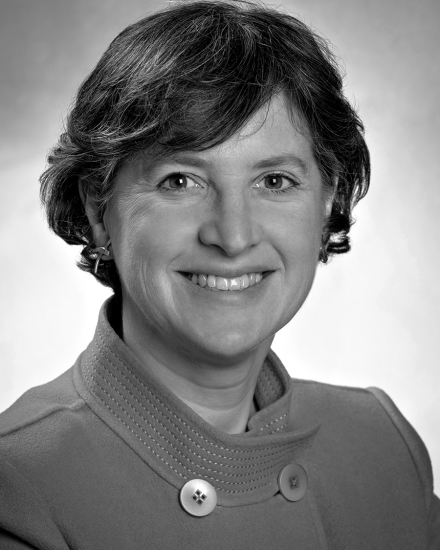 Elizabeth B Klerman合作论文数Dept. of Medicine, Brigham & Women's Hospital1




