Wav2vec 2.0 is a state-of-the-art speech recognition model which maps speech audio waveforms into latent representations. The largest version of wav2vec 2.0 contains 317 million parameters. Hence, the inference latency of wav2vec 2.0 will be a bottleneck in production, leading to high costs and a significant environmental footprint. To improve wav2vec's applicability to a production setting, we explore multiple model compression methods borrowed from the domain of large language models. Using a teacher-student approach, we distilled the knowledge from the original wav2vec 2.0 model into a student model, which is 2 times faster, 4.8 times smaller than the original model. More importantly, the student model is 2 times more energy efficient than the original model in terms of CO2 emission. This increase in performance is accomplished with only a 7% degradation in word error rate (WER). Our quantized model is 3.6 times smaller than the original model, with only a 0.1% degradation in WER. To the best of our knowledge, this is the first work that compresses wav2vec 2.0.
Testing is an important part of tackling the COVID-19 pandemic. Availability of testing is a bottleneck due to constrained resources and effective prioritization of individuals is necessary. Here, we discuss the impact of different prioritization policies on COVID-19 patient discovery and the ability of governments and health organizations to use the results for effective decision making. We suggest a framework for testing that balances the maximal discovery of positive individuals with the need for population-based surveillance aimed at understanding disease spread and characteristics. This framework draws from similar approaches to prioritization in the domain of cyber-security based on ranking individuals using a risk score and then reserving a portion of the capacity for random sampling. This approach is an application of Multi-Armed-Bandits maximizing exploration/exploitation of the underlying distribution. We find that individuals can be ranked for effective testing using a few simple features, and that ranking them using such models we can capture 65% (CI: 64.7%-68.3%) of the positive individuals using less than 20% of the testing capacity or 92.1% (CI: 91.1%-93.2%) of positives individuals using 70% of the capacity, allowing reserving a significant portion of the tests for population studies. Our approach allows experts and decision-makers to tailor the resulting policies as needed allowing transparency into the ranking policy and the ability to understand the disease spread in the population and react quickly and in an informed manner.
OBJECTIVE:In Hebrew online health communities, participants commonly write medical terms that appear as transliterated forms of a source term in English. Such transliterations introduce high variability in text and challenge text-analytics methods. To reduce their variability, medical terms must be normalized, such as linking them to Unified Medical Language System (UMLS) concepts. We present a method to identify both transliterated and translated Hebrew medical terms and link them with UMLS entities.MATERIALS AND METHODS:We investigate the effect of linking terms in Camoni, a popular Israeli online health community in Hebrew. Our method, MDTEL (Medical Deep Transliteration Entity Linking), includes (1) an attention-based recurrent neural network encoder-decoder to transliterate words and mapping UMLS from English to Hebrew, (2) an unsupervised method for creating a transliteration dataset in any language without manually labeled data, and (3) an efficient way to identify and link medical entities in the Hebrew corpus to UMLS concepts, by producing a high-recall list of candidate medical terms in the corpus, and then filtering the candidates to relevant medical terms.RESULTS:We carry out experiments on 3 disease-specific communities: diabetes, multiple sclerosis, and depression. MDTEL tagging and normalizing on Camoni posts achieved 99% accuracy, 92% recall, and 87% precision. When tagging and normalizing terms in queries from the Camoni search logs, UMLS-normalized queries improved search results in 46% of the cases.CONCLUSIONS:Cross-lingual UMLS entity linking from Hebrew is possible and improves search performance across communities. Annotated datasets, annotation guidelines, and code are made available online (https://github.com/yonatanbitton/mdtel).
In a global setting, texts contain transliterated names from many cultural origins. Correct transliteration depends not only on target and source languages but also, on the source language of the name. We introduce a novel methodology for transliteration of names originating in different languages using only monolingual resources. Our method is based on a step of noisy transliteration and then ranking of the results based on origin specific letter models. The transliteration table used for noisy generation is learned in an unsupervised manner for each possible origin language. We present a solution for gathering monolingual training data used by our method by mining of social media sites such as Facebook and Wikipedia. We present results in the context of transliterating from English to Hebrew and provide an online web service for transliteration from English to Hebrew
The increasing need to calibrate and validate multiscale numerical models cries out for new experimental devices and methodologies. This paper presents an experimental measurement device of the lateral displacement of concrete specimens having noncylindrical cross section under uniaxial compression testing. This study provides the experimental and data monitoring methodologies needed for the calibration and validation of multiscale models. The system’s intrinsic innovation relates to its ability to measure lateral displacement of noncylindrical concrete specimens. This paper demonstrates its implementation for rectangular cross sections, whereas other shapes require minor modifications. The main challenge of obtaining reliable measurements concerns the attachment of the gauges to specific spots along the specimen during loading. Trying to validate the suggested setup using a digital imaging correlation (DIC) setup failed due to separation of the monitored surface from the rest of the specimen. Therefore, the setup was validated by a test on an aluminum specimen with known mechanical properties. Finally, the methodology has been applied to calibrate and validate mesoscale numerical simulations using the lattice discrete particle model.
In the context of the Electronic Health Record, automated diagnosis coding of patient notes is a useful task, but a challenging one due to the large number of codes and the length of patient notes. We investigate four models for assigning multiple ICD codes to discharge summaries taken from both MIMIC II and III. We present Hierarchical Attention-GRU (HA-GRU), a hierarchical approach to tag a document by identifying the sentences relevant for each label. HA-GRU achieves state-of-the art results. Furthermore, the learned sentence-level attention layer highlights the model decision process, allows easier error analysis, and suggests future directions for improvement.
We present a system to enable speaker separation and identification, designed to operate without requiring any effort from the end-user. In the system, single channel conversations are transformed into i-vectors, clustered into speakers and matched to a database of known speakers. Enrollment is automatic and a voice print is constructed for the recording user, taking advantage of the meta-data identifying that user's conversations. Further information is used when available from other information sources such as video and the ASR transcribed content to identify speakers. We describe the system architecture, novel unsupervised enrollment algorithm and describe the difficulties encountered in solving this problem.
Query-Focused Summarization (QFS) summarizes a document cluster in response to a specific input query. QFS algorithms must combine query relevance assessment, central content identification, and redundancy avoidance. Frustratingly, state of the art algorithms designed for QFS do not significantly improve upon generic summarization methods, which ignore query relevance, when evaluated on traditional QFS datasets. We hypothesize this lack of success stems from the nature of the dataset. We define a task-based method to quantify topic concentration in datasets, i.e., the ratio of sentences within the dataset that are relevant to the query, and observe that the DUC 2005, 2006 and 2007 datasets suffer from very high topic concentration. We introduce TD-QFS, a new QFS dataset with controlled levels of topic concentration. We compare competitive baseline algorithms on TD-QFS and report strong improvement in ROUGE performance for algorithms that properly model query relevance as opposed to generic summarizers. We further present three new and simple QFS algorithms, RelSum, ThresholdSum, and TFIDF-KLSum that outperform state of the art QFS algorithms on the TD-QFS dataset by a large margin.
Word embedding vectors are used as input for a variety of tasks.Choosing the right model and features for producing such vectors is not a trivial task and different embedding methods can greatly affect results.In this paper we repurpose the "Pyramid Method" annotations used for evaluating automatic summarization to create a benchmark for comparing embedding models when identifying paraphrases of text snippets containing a single clause.We present a method of converting pyramid annotation files into two distinct sentence embedding tests.We show that our method can produce a good amount of testing data, analyze the quality of the testing data, perform test on several leading embedding methods, and finally explain the downstream usages of our task and its significance.
This research presents a novel uniaxial compression test system for concrete specimens. The motivation for this development comes from the need to calibrate and validate multi-scale numerical methods for the analysis of concrete structures, a research field which requires new experimental systems for concrete. The aim of this study is to offer an experimental methodology and to develop an experimental uniaxial compression system which provides the results needed for the calibration and validation of multi-scale models. The uniqueness of the suggested experimental system is related to its ability to measure the lateral displacements of a specimen with a rectangular cross section. The main challenges to achieving reliable results using electro-mechanical means are concerned with attachment of the lateral gauges so that it can follow the targeted spot with progressing longitudinal deformation. The unique experimental system developed for this study was found to be accurate and was validated by comparing macroscopic experimental results such as: displacements, modulus of elasticity and Poisson's ratio with the literature on concrete and aluminum specimens.
The clinical notes in a given patient record contain much redundancy, in large part due to clinicians' documentation habit of copying from previous notes in the record and pasting into a new note. Previous work has shown that this redundancy has a negative impact on the quality of text mining and topic modeling in particular. In this paper we describe a novel variant of Latent Dirichlet Allocation (LDA) topic modeling, Red-LDA, which takes into account the inherent redundancy of patient records when modeling content of clinical notes. To assess the value of Red-LDA, we experiment with three baselines and our novel redundancy-aware topic modeling method: given a large collection of patient records, (i) apply vanilla LDA to all documents in all input records; (ii) identify and remove all redundancy by chosing a single representative document for each record as input to LDA; (iii) identify and remove all redundant paragraphs in each record, leaving partial, non-redundant documents as input to LDA; and (iv) apply Red-LDA to all documents in all input records. Both quantitative evaluation carried out through log-likelihood on held-out data and topic coherence of produced topics and qualitative assessement of topics carried out by physicians show that Red-LDA produces superior models to all three baseline strategies. This research contributes to the emerging field of understanding the characteristics of the electronic health record and how to account for them in the framework of data mining. The code for the two redundancy-elimination baselines and Red-LDA is made publicly available to the community.
Update summarization is a form of multidocument summarization where a document set must be summarized in the context of other documents assumed to be known.Efficient update summarization must focus on identifying new information and avoiding repetition of known information.In Query-focused summarization, the task is to produce a summary as an answer to a given query.We introduce a new task, Query-Chain Summarization, which combines aspects of the two previous tasks: starting from a given document set, increasingly specific queries are considered, and a new summary is produced at each step.This process models exploratory search: a user explores a new topic by submitting a sequence of queries, inspecting a summary of the result set and phrasing a new query at each step.We present a novel dataset comprising 22 querychains sessions of length up to 3 with 3 matching human summaries each in the consumerhealth domain.Our analysis demonstrates that summaries produced in the context of such exploratory process are different from informative summaries.We present an algorithm for Query-Chain Summarization based on a new LDA topic model variant.Evaluation indicates the algorithm improves on strong baselines.
Background Online Consumer Health websites are a major source of information for patients worldwide. We focus on another modality, online physician advice. We aim to evaluate and compare the freely available online expert physicians’ advice in different countries, its scope and the type of content provided. Setting Using automated methods for information retrieval and analysis, we compared consumer health portals from the US, Canada, the UK and Israel (WebMD,NetDoctor,AskTheDoctor and BeOK). The evaluated content was generated between 2002 and 2011. Results We analyzed the different sites, looking at the distribution of questions in the various health topics, answer lengths and content type. Answers could be categorized into longer broad-educational answers versus shorter patient-specific ones, with different physicians having personal preferences as to answer type. The Israeli website BeOK, providing 10 times the number of answers than in the other three health portals, supplied answers that are shorter on average than in the other websites. Response times in these sites may be rapid with 32% of the WebMD answers and 64% of the BeOK answers provided in less than 24 hours. The voluntary contribution model used by BeOK and WebMD enables generation of large numbers of physician expert answers at low cost, providing 50,000 and 3,500 answers per year, respectively. Conclusions Unlike health information in online databases or advice and support in patient-forums, online physician advice provides qualified specialists’ responses directly relevant to the questions asked. Our analysis showed that high numbers of expert answers could be generated in a timely fashion using a voluntary model. The length of answers varied significantly between the internet sites. Longer answers were associated with educational content while short answers were associated with patient-specific content. Standard site-specific guidelines for expert answers will allow for more desirable content (educational content) or better throughput (patient-specific content).
BACKGROUND:The increasing availability of Electronic Health Record (EHR) data and specifically free-text patient notes presents opportunities for phenotype extraction. Text-mining methods in particular can help disease modeling by mapping named-entities mentions to terminologies and clustering semantically related terms. EHR corpora, however, exhibit specific statistical and linguistic characteristics when compared with corpora in the biomedical literature domain. We focus on copy-and-paste redundancy: clinicians typically copy and paste information from previous notes when documenting a current patient encounter. Thus, within a longitudinal patient record, one expects to observe heavy redundancy. In this paper, we ask three research questions: (i) How can redundancy be quantified in large-scale text corpora? (ii) Conventional wisdom is that larger corpora yield better results in text mining. But how does the observed EHR redundancy affect text mining? Does such redundancy introduce a bias that distorts learned models? Or does the redundancy introduce benefits by highlighting stable and important subsets of the corpus? (iii) How can one mitigate the impact of redundancy on text mining?RESULTS:We analyze a large-scale EHR corpus and quantify redundancy both in terms of word and semantic concept repetition. We observe redundancy levels of about 30% and non-standard distribution of both words and concepts. We measure the impact of redundancy on two standard text-mining applications: collocation identification and topic modeling. We compare the results of these methods on synthetic data with controlled levels of redundancy and observe significant performance variation. Finally, we compare two mitigation strategies to avoid redundancy-induced bias: (i) a baseline strategy, keeping only the last note for each patient in the corpus; (ii) removing redundant notes with an efficient fingerprinting-based algorithm. (a)For text mining, preprocessing the EHR corpus with fingerprinting yields significantly better results.CONCLUSIONS:Before applying text-mining techniques, one must pay careful attention to the structure of the analyzed corpora. While the importance of data cleaning has been known for low-level text characteristics (e.g., encoding and spelling), high-level and difficult-to-quantify corpus characteristics, such as naturally occurring redundancy, can also hurt text mining. Fingerprinting enables text-mining techniques to leverage available data in the EHR corpus, while avoiding the bias introduced by redundancy.
Age is an important factor when considering phenotypic changes in health and disease. Currently, the use of age information in medicine is somewhat simplistic, with ages commonly being grouped into a small number of crude ranges reflecting the major stages of development and aging, such as childhood or adolescence. Here, we investigate the possibility of redefining age groups using the recently developed Age-Phenome Knowledge-base (APK) that holds over 35,000 literature-derived entries describing relationships between age and phenotype. Clustering of APK data suggests 13 new, partially overlapping, age groups. The diseases that define these groups suggest that the proposed divisions are biologically meaningful. We further show that the number of different age ranges that should be considered depends on the type of disease being evaluated. This finding was further strengthened by similar results obtained from clinical blood measurement data. The grouping of diseases that share a similar pattern of disease-related reports directly mirrors, in some cases, medical knowledge of disease–age relationships. In other cases, our results may be used to generate new and reasonable hypotheses regarding links between diseases.
The Electronic Health Record (EHR) contains information useful for clinical, epidemiological and genetic studies. This information of patient symptoms, history, medication and treatment is not completely captured in the structured part of the EHR but is often found in the form of freetext narrative. A major obstacle for clinical studies is finding patients that fit the eligibility criteria of the study. Using EHR in order to automatically identify relevant cohorts can help speed up both clinical trials and retrospective studies (Restificar, Korkontzelos et al. 2013). While the clinical criteria for inclusion and exclusion from the study are explicitly stated in most studies, automating the process using the EHR database of the hospital is often impossible as the structured part of the database (age, gender, ICD9/10 medical codes, etc.’) rarely covers all of the criteria. Many resources such as UMLS (Bodenreider 2004), cTakes (Savova, Masanz et al. 2010), MetaMap (Aronson and Lang 2010) and recently richly annotated corpora and treebanks (Albright, Lanfranchi et al. 2013) are available for processing and representing medical texts in English. Resource poor languages, however, suffer from lack in NLP tools and medical resources. Dictionaries exhaustively mapping medical terms to the UMLS medical meta-thesaurus are only available in a limited number of languages besides English. NLP annotation tools, when they exist for resource poor languages, suffer from heavy loss of accuracy when used outside the domain on which they were trained, as is well documented for English (Tsuruoka, Tateishi et al. 2005; Tateisi, Tsuruoka et al. 2006). In this work we focus on the problem of classifying patient eligibility for inclusion in retrospective study of the epidemiology of epilepsy in Southern Israel. Israel has a centralized structure of medical services which include advanced EHR systems. However, the free text sections of these EHR are written in Hebrew, a resource poor language in both NLP tools and handcrafted medical vocabularies. Epilepsy is a common chronic neurologic disorder characterized by seizures. These seizures are transient signs and/or symptoms of abnormal, excessive, or hyper synchronous neuronal activity in the brain. Epilepsy is one of the most common of the serious neurological disorders (Hirtz, Thurman et al. 2007).
Syntactic parsers have made a leap in accuracy and speed in recent years. The high order structural information provided by dependency parsers is useful for a variety of NLP applications. We present a biomedical model for the EasyFirst parser, a fast and accurate parser for creating Stanford Dependencies. We evaluate the models trained in the biomedical domains of EasyFirst and Clear-Parser in a number of task oriented metrics. Both parsers provide stat of the art speed and accuracy in the Genia of over 89%. We show that Clear-Parser excels at tasks relating to negation identification while EasyFirst excels at tasks relating to Named Entities and is more robust to changes in domain.
When porting parsers to a new domain, many of the errors are related to wrong attachment of out-of-vocabulary words. Since there is no available annotated data to learn the attachment preferences of the target domain words, we attack this problem using a model of selectional preferences based on domain-specific word classes. Our method uses Latent Dirichlet Allocations (LDA) to learn a domain-specific Selectional Preference model in the target domain using un-annotated data. The model provides features that model the affinities among pairs of words in the domain. To incorporate these new features in the parsing model, we adopt the co-training approach and retrain the parser with the selectional preferences features. We apply this method for adapting Easy First, a fast non-directional parser trained on WSJ, to the biomedical domain (Genia Treebank). The Selectional Preference features reduce error by 4.5% over the co-training baseline.
Several methods have been proposed for detecting insertion/deletions (indels) from chromatograms generated by Sanger sequencing. However, most such methods are unsuitable when the mutated and normal variants occur at unequal ratios, such as is expected to be the case in cancer, with organellar DNA or with alternatively spliced RNAs. In addition, the current methods do not provide robust estimates of the statistical confidence of their results, and the sensitivity of this approach has not been rigorously evaluated. Here, we present CHILD, a tool specifically designed for indel detection in mixtures where one variant is rare. CHILD makes use of standard sequence alignment statistics to evaluate the significance of the results. The sensitivity of CHILD was tested by sequencing controlled mixtures of deleted and undeleted plasmids at various ratios. Our results indicate that CHILD can identify deleted molecules present as just 5% of the mixture. Notably, the results were plasmid/primer-specific; for some primers and/or plasmids, the deleted molecule was only detected when it comprised 10% or more of the mixture. The false positive rate was estimated to be lower than 0.4%. CHILD was implemented as a user-oriented web site, providing a sensitive and experimentally validated method for the detection of rare indel-carrying molecules in common Sanger sequence reads.
 Michael Elhadad合作论文数Institute for Applied AI Research, Faculty of Computer and Information Science, Ben-Gurion University of the Negev;Department of Computer Science, Ben-Gurion University of the Negev13
 Tal Baumel合作论文数4
 Noémie Elhadad合作论文数Data Science Institute, Columbia University;Department of Biomedical Informatics, Vagelos College of Physicians and Surgeons, Columbia University4
 Ohad Birk合作论文数3
 Gili Lifshitz Sherzer合作论文数2
 Jumana Nassour合作论文数2Jason Levy合作论文数2
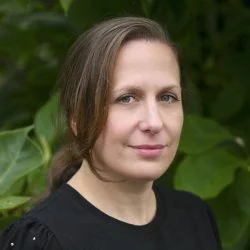 Nophar Geifman合作论文数Digital Health Research Cluster, School of Health Sciences, University of Surrey;Veterinary Health Innovation Engine2
 Erez Gal合作论文数2
 Vered Chalifa-Caspi合作论文数The National Institute for Biotechnology in the Negev, Ben-Gurion University of the Negev2
 Yoav Goldberg合作论文数Department of Computer Science and Artificial Intelligence, Faculty of Exact Sciences, Bar Ilan University2Eitan Rubin合作论文数Department of Plant Genetics;Weizmann Institute of Science;Department of Plant Genetics, Weizmann Institute of Science2Avitan Gefen合作论文数National Institute for Biotechnology in the Negev (NIBN),, Ben-Gurion University2Michael Elhadad合作论文数1Tamar Schifter合作论文数1Ilana Tuil合作论文数1Russell Levy合作论文数1
 Afawi Zaid合作论文数Sackler Sch Med, Tel Aviv Univ1
 Hagit Grushka Cohen合作论文数Ben-Gurion University of the Negev1
 Seidt Jeremy D合作论文数Department of Mechanical and Aerospace Engineering, The Ohio State University College of Engineering1
 Yonatan Bitton合作论文数Google Research1
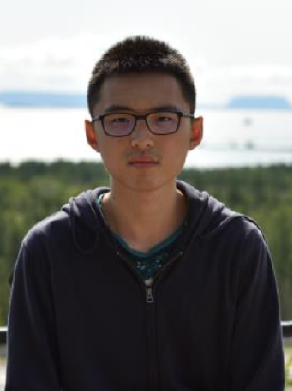 Zilun Peng合作论文数Babbly1
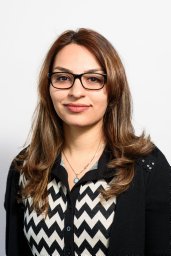 Parinaz Sobhani合作论文数Univ Ottawa1Zhidkov Ilia合作论文数1Moran-Gilad J合作论文数Respiratory Diseases Department, Centre for Infectious Disease Surveillance and Control1
 Eitan Bachmat合作论文数1
 Orgad Keller合作论文数Department of Computer Science, Bar-Ilan University1
 Lior Rokach合作论文数Department of Software and Information Systems Engineering, Faculty of Engineering Sciences, Ben-Gurion University of the Negev1Zamir Shorer合作论文数1James Kevin Chipman合作论文数1
 Vadim Fraifeld合作论文数Center for Multidisciplinary Research on Aging, Ben-Gurion University of the Negev1
 Bracha Shapira合作论文数Department of Software and Information Systems Engineering, Ben-Gurion University of the Negev;Sparks AB1
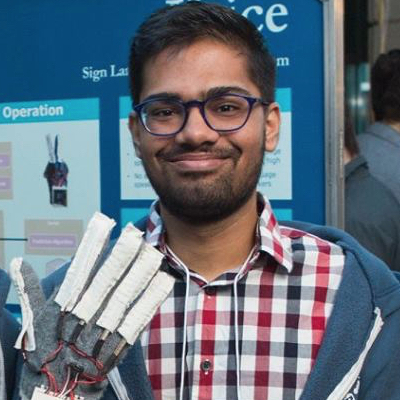 Akshay Budhkar合作论文数Spine AI1Iddo Aviram合作论文数1
 Tim Williams合作论文数School of Biosciences, The University of Birmingham1Moshe Tom合作论文数1Meirav Auslander合作论文数1Arie Budovsky合作论文数1
 Dan Mishmar合作论文数UC Irvine-Center for Molecular & Mitochondrial Medicine & Genetics, UC San Diego1




