Crop row detection is a vital task in precision agriculture. Earlier works for solving this task follow traditional computer vision based methodologies. However, in recent years deep learning based approaches are being adopted for solving this task. Among various deep learning methodologies, semantic segmentation has found to be most successful for obtaining meaningful representation of images in a plethora of domains, such as, medical image analysis and autonomous driving. Scene parsing is a subcategory of semantic segmentation where all objects of interest in a scene are color coded as a way to simultaneously classify and localize their presence. In this way, scene parsing technique is a very good fit for solving crop row detection task; However, no existing research has yet ventured this direction. In this work we investigate the performance of five latest semantic segmentation methodologies on real-life crop row datasets for solving the crop row detection task. Our experimental results validate that most of the semantic segmentation methods provide substantially good results for solving the crop row detection task; Importantly, LinkNet architecture provides the best results among the competitors. We also discuss various reallife challenges for solving crop row detection in real-life scenarios.
Detecting crop rows from video frames in real time is a fundamental challenge in the field of precision agriculture. Deep learning based semantic segmentation method, namely U-net, although successful in many tasks related to precision agriculture, performs poorly for solving this task. The reasons include paucity of large scale labeled datasets in this domain, diversity in crops, and the diversity of appearance of the same crops at various stages of their growth. In this work, we discuss the development of a practical real-life crop row detection system in collaboration with an agricultural sprayer company. Our proposed method takes the output of semantic segmentation using U-net, and then apply a clustering based probabilistic temporal calibration which can adapt to different fields and crops without the need for retraining the network. Experimental results validate that our method can be used for both refining the results of the U-net to reduce errors and also for frame interpolation of the input video stream.
Magnetic nanoparticles (MNPs) have been a powerful tool in recent biomedical and environmental research. MNPs have widespread uses, ranging from DNA extraction using magnetic bioseparation to hypothermic killing of cancerous cells. Apart from their use in magnetic hyperthermia and magnetic bioseparation, MNPs can be used as drug delivery systems (DDSs). Conventional DDSs are prone to various challenges such as premature release of the drug, off- target delivery, low efficiency in drug loading, and interaction with the natural immune system of human body. Many of these issues can be ameliorated by incorporating MNPs into the DDS, which can be further developed into a magnetic nanocomposite (MNC). These MNCs have better targeting efficiency and higher drug-loading efficacy due to large surface area and are responsive to external magnetic stimuli. As well as improving drug delivery efficiency, these MNCs can be utilized as a theranostics platform to simultaneously diagnose and treat the diseased area. Unique magnetic properties such as low toxicity, high magnetic saturation, and stability in biological solutions make MNPs an excellent choice for targeted drug delivery vehicle and good agents for photodynamic therapy. At the forefront of modern genetic engineering, MNPs are being used in the revolutionary gene editing tool CRISPR-Cas9 system to increase the efficacy of gene editing via increasing gene delivery efficiency. In this chapter we will briefly discuss various aspects of MNPs and their synthesis as well as functionalization of the particles to incorporate them into different MNCs and their biomedical application. We will also discuss the use of MNPs in imaging modalities, which provide an efficient theranostics module against different types of diseases such as cancer.
Solving problems with Artificial intelligence in a competitive manner has long been absent in Bangladesh and Bengali-speaking community. On the other hand, there has not been a well structured database for Bengali Handwritten digits for mass public use. To bring out the best minds working in machine learning and use their expertise to create a model which can easily recognize Bengali Handwritten digits, we organized Bengali.AI Computer Vision Challenge.The challenge saw both local and international teams participating with unprecedented efforts.
To benchmark Bengali digit recognition algorithms, a large publicly available dataset is required which is free from biases originating from geographical location, gender, and age. With this aim in mind, NumtaDB, a dataset consisting of more than 85,000 images of hand-written Bengali digits, has been assembled. This paper documents the collection and curation process of numerals along with the salient statistics of the dataset.
—Hand written digits are the basic starting point for a complete optical character recognition system. If a system can detect hand written numbers, then immediately it has a range of possibilities for practical applications. It also provides important insight on how to extend the system to recognize characters and scopes for improvement. So, with a vision to create a complete functioning OCR for Bengali language, we have assembled a large dataset (85,000+ images) of hand-written Bengali digits collected from various sources. The goal of this data-set is to create a Bengali digit recognizer capable of high accuracy and noise tolerance. The data-set is meant to be the start of a series of datasets aimed at furthering natural language processing research on Bengali.
 Reasat Tahsin合作论文数Department of Electrical Engineering and Computer Science, Vanderbilt University3
 Samiul Alam合作论文数3
 Ahmed Imtiaz Humayun合作论文数Rice University;Bengali.AI3
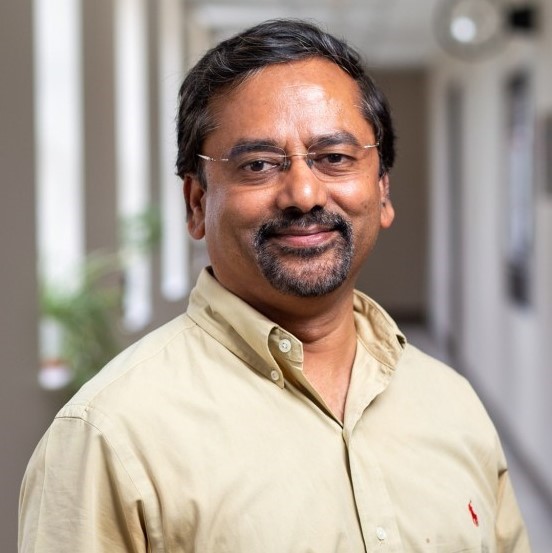 Sohel Anwar合作论文数Purdue School of Engineering & Technology, Indiana University-Purdue University Indianapolis2
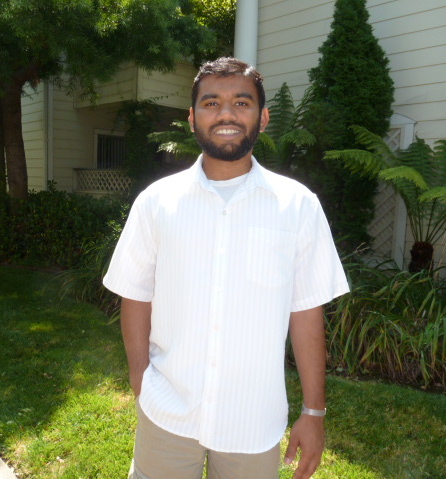 Mohammad Al Hasan合作论文数Indiana University Purdue University indianapolis2
 Md. Mukter Hossain合作论文数1
 Manash Kumar Mandal合作论文数Khulna University of Engineering & Technology (KUET),1
 Isteaque Ahmed合作论文数Department of Chemical and Environmental Engineering, University of Cincinnati1
 Muzahidul I. Anik合作论文数Dept Chem Engn, Univ Rhode Isl1
 Sharif Amit Kamran合作论文数Human-Machine Perception Laboratory, Department of Computer Science and Engineering, University of Nevada, Reno, Reno, Nevada, United States.1
 Veera Rajendran合作论文数Equipment Technologies1Imran Hossain合作论文数1
 Fuad Rahman合作论文数BCL Technologies Inc.1




