Due to its ability to remain hidden in a system for an extended period while gathering sensitive information, Advanced Persistent Threat (APT) is one of the most dangerous types of cyberattacks. This study aims to compare several deep learning (DL) models, including CNN-1D, CNN-2D, ANN, DNN, RNN, LSTM, and Bi-LSTM, for the detection of APT malware using the DAPT2020 and Unraveled datasets, and their performance is evaluated with standard classification metrics. The goal of this research is to identify the most effective model for detecting APT malware. Accuracy, recall, F1-score, and precision are used to evaluate the model. The CNN-1D model achieved the highest accuracy, with scores of $98.64 \%, 96.57 \%$, $98.95 \%$, and $97.74 \%$ for accuracy, recall, F1-score, and precision, respectively, on DAPT2020, while LSTM achieved the highest on the Unraveled dataset with scores of 99.95%, 97.91%, $98.82 \%$, and 98.36%.
Cloud provides users with the convenience of utilizing resources for data storage and processing. However, the ongoing need of the infrastructure raises challenges and demands more competitive services such as low latency requirement resulting in the emergence of fog and edge devices. Frequent concerns surface in provisioning services including whether a device is reliable and capable which is further addressed using trust management. Therefore, this paper proposed a research endeavor to introduce a dynamic method of assessing trust, irrespective of the specific application or service being utilized. The focus of the paper is on the establishment of the foundation and framework of fog/edge computing using dynamic trust management as the fundamental elements for the development of the system. Experiments using iFogSim were also conducted to assess the performance in terms of the latency, packet drop and energy consumption.
The COVID-19 pandemic has presented numerous challenges around the world, including lockdowns, remote working and studying, and travel restrictions imposed by governments to curb the spread of the virus. As vaccines have become more widely available, restrictions have begun to ease for those vaccinated. Many countries use paper-based COVID-19 vaccination certificates to prove vaccination status. However, traditional certificates are vulnerable to forgery and counterfeiting. We developed a blockchain-based system where vaccination certificates are stored and accessed via smart contracts on an Ethereum blockchain. The certificates are stored in a tamper-proof, decentralized manner, ensuring secure verification of vaccination status. This research project successfully designed and implemented a system that securely stores and verifies vaccination certificates using blockchain, demonstrating the benefits of this approach. According to our knowledge, this is the first kind of research initiative in Brunei to develop a blockchain-based immutable COVID-19 Vaccination certificate. Despite its advantages, blockchain still has its flaws, particularly in scalability and adoption, which should be considered for further optimization of the proposed system.
Liquified petroleum gas (LPG) is one of the most popular home cooking sources in Brunei and other parts of the world where gas price is cheaper than electric price. However, LPG is highly inflammable and can easily cause fire and explosion if there is a leakage. When the gas finishes at an odd time, it will be difficult to order and get a new cylinder. There are two main objectives of this IoT-based research project. The first one is to monitor the usage of the gas and place an order through a mobile application when the gas level goes below a threshold value. The second one is to detect any gas leakage and close the knob of the cylinder when the gas leakage level goes above a threshold value and activate an alarm. This system also sends an automatic alert notification to the user through the mobile application. Apart from the mobile application, a simple web interface was also created to record the values from the sensors.
Over the years, flood and drought events are some of the common primary impacts of climate change. Local water experts believe that water-related risks are often caused by prolonged droughts and flash floods in Brunei Darussalam. Besides these two occurrences, the water quality of the river is also drastically affected. This study investigates the feasibility of implementing a real-time monitoring system of water quality in the river. It aims to confront one of the century-long problems of flood and address the lack of a real-time warning system. The system utilizes a cost-effective and efficient monitoring system that consists of identified water quality sensors to be used that can automatically detect and act as an early warning and notify the Department of Water Services (DWS) for any form of abnormalities in water quality. The system will be useful for the authorities in the Water Treatment Plant as it will provide useful information that can help them in performing the necessary treatment accordingly, especially in the event of heavy rainfall. The use of IoT allows the connections among devices to gather and transmit data remotely in the defined environmental applications.
Views Icon Views Article contents Figures & tables Video Audio Supplementary Data Peer Review Share Icon Share Twitter Facebook Reddit LinkedIn Tools Icon Tools Reprints and Permissions Cite Icon Cite Search Site Citation Muhammad Fauzan Haji Salleh, Wida Susanty Haji Suhaili, Ravi Kumar Patchmuthu; Smart waste bin system using beacon technology. AIP Conference Proceedings 10 January 2023; 2643 (1): 040022. https://doi.org/10.1063/5.0114950 Download citation file: Ris (Zotero) Reference Manager EasyBib Bookends Mendeley Papers EndNote RefWorks BibTex toolbar search Search Dropdown Menu toolbar search search input Search input auto suggest filter your search All ContentAIP Publishing PortfolioAIP Conference Proceedings Search Advanced Search |Citation Search
The Internet of Things is an advanced technology that connects devices worldwide, making them smart, aware of their surroundings, and able to offer sophisticated services and applications to improve daily activities. This paper reviews the possible sensors and automation needed for giant freshwater prawn rearing and issues that can arise. The Internet of Things encompasses the hardware, software, and communication infrastructure that enables real-time monitoring and automation in the rearing of giant freshwater prawn. The features of the system include measuring water quality parameters using sensors, notifying users when the water quality parameter falls below or rises above the optimum value, a historical data set of the water parameters, and manual and conditional actuators. A pilot study was conducted to test the capabilities of the Internet of Things on giant freshwater prawn post-larvae. The results of this study suggest that the sensors' readings are 97.6% similar to the manual tests. Despite the noticeable limitations, this study suggests that the potential of the Internet of Things in rearing giant freshwater prawn is limitless. The system can effectively monitor water quality parameters, feed consumption, and other environmental parameters.
Climate Change is significantly a concern to the agriculture industry as its exposure and vulnerability have an adverse impact on the agricultural output. The development and growth of agricultural sectors will contribute to the Brunei Vision 2035 aim of achieving a dynamic and sustainable economy. However., because of the inability to adapt to climate change., growth has begun to slow down in recent years. Thus., cultivated crops are adversely impacted and destroyed during wet seasons. So., to prevent this issue., a small-scale project is devised to help save crops from heavy rains and increased temperatures. By applying this technological approach can automate the weather-controlling process to help small-scale farmers or individuals efficiently manage the farm., increase production capabilities., support a sustainable economy, and plan future tasks accordingly. An Internet of Things (IoT) research prototype was developed to simulate rooftop farming and automate weather monitoring and controlling. This includes implementing a web application where the data received from the wireless sensor is stored in the database.
Aquaculture is one of the emerging industries capable of closing the demand and supply gap for aquatic products. However, the current method of farming is facing sustainability challenges due to its resource-intensive nature, particularly in terms of water and feed usage. Additionally, the rapid growth of the aquaculture sector has led to issues such as overfeeding. The Department of Fisheries Brunei Darussalam has introduced several initiatives to boost the output of aquaculture. With assistance from the Department of Fisheries and Hiseaton Fisheries Ltd, this study aims to implement an IoT-based system to monitor water quality to culture marine species, in particular Sea Bass & Giant Freshwater Prawn, a popular choice for aquaculture in Asia. These species have a high environmental tolerance for thriving in both marine and freshwater. Traditional water monitoring has been a standard way to measure water quality in aquaculture industries in Brunei Darussalam. Water quality is the most important factor that determines the growth rate and health of aquatic creatures. The proposed setup employs a Recirculating Aquaculture System together with the Internet of Things in the rearing of Sea Bass and Giant Freshwater prawns by monitoring the water quality parameters, automating the feeding schedule, and regulating the water quality.
Data Security and privacy is one of the serious issues in internet-based computing like cloud computing, mobile computing and Internet of Things (IoT). This security and privacy become manifolded in IoT because of diversified technologies and the interaction of Cyber Physical Systems (CPS) used in IoT. IoTs are being adapted in academics and in many organizations without fully protecting their assets and also without realizing that the traditional security solutions cannot be applied to IoT environment. This paper explores a comprehensive survey of IoT architectures, communication technologies and the security and privacy issues of them for a new researcher in IoT. This paper also suggests methods to thwart the security and privacy issues in the different layers of IoT architecture.
Smart farming has proved to increase productivity and ease of monitoring in the agriculture industry. Aquafarming with smart technology can also help to increase productivity and improve quality in competitive shrimp farming. Shrimp is one of the popular seafood and the demand for healthy seafood is on the rise throughout the world. Brunei is exploring different technologies to improve the productivity of quality shrimps. Currently, Brunei is having tough challenges in producing quality shrimps with cost-effectiveness due to the shortage of laborers and the Covid-19 pandemic. Water quality parameters are important for the production of quality shrimps. Salinity, pH, dissolved oxygen, temperature, turbidity, hardness, and other gas compounds are the important water quality parameters that play an important role in freshwater shrimp farming. Currently, these parameters are monitored and maintained manually by aquafarms in Brunei. To improve the quality and production of freshwater shrimps, we developed an IoT-based prototype to monitor the important water quality parameters such as pH value, temperature, and turbidity and automatically adjusted these parameters within the threshold values when they deviate. This also helps to reduce the mortality rate of shrimps in aquafarming by identifying the diseases early and treating them.
LPG gas cylinders are the most popular home cooking source in Brunei and other parts of the world. However, LPG gas is highly inflammable and can easily cause fire or explosion if there is a leakage and if it is not monitored. When the gas runs out at odd time, it can be difficult to order. This IoT based system first monitors the usage of the gas and places an order to the gas supplier when the gas level goes below a threshold value. It also detects any gas leakage and automatically closes the knob of the cylinder when the gas leakage level goes above a threshold value. This system also sends automatic alert notifications to the user through mobile application. Web interface and mobile application are also created to monitor and place order to the supplier.
In the recent years, ransomware becomes one of the quickest, safest and profitable cybercrimes. Ransomware is a kind of rancorous malware which uses different techniques including cryptography to encrypt user files and then demand the user to pay ransom to decrypt back. It is a kind of cyber-attack which targets individuals, companies and even government sectors. This research paper provides insight into ransomware types, attack stages, attack vectors and handling techniques. This research paper is targeted to create awareness in ransomware for public and also for researchers to further explore.
The energy consumption footprint of Passive Optical Networks (PONs) is high due to its widespread deployment. Therefore, a large and growing body of literature has investigated how energy consumption in PONs can be minimized. Existing research indicates that sleep mode is an effective means for reducing energy consumption in PONs. There is also a growing number of contributions that demonstrate the importance of integrating PON with Software-defined Networking (SDN). Such integration facilitates a programmable PON, which can dynamically adjust its operation on-the-fly based on the decision made by a SDN controller. The most important limitations in the previous energy-efficient PON research lies in the fact that they failed to address how the energy saving and traffic performance can be fed in real-time into the network operation decision process. Digital Twin (DT) is an emerging field of research in the communication networking area. DT can bridge between real and virtual world making a significant contribution in defining optimal operation of the network. Therefore, in this paper, we propose a Digital-twin-assisted Software-defined PON framework in order to feed the network performance data in real-time to the network operation decision support system, which aims at maximizing energy conservation while meeting quality of service, and control PON infrastructure on-the-fly. Our DT based solution also integrates a supervised learning Autoregressive Integrated Moving Average (ARIMA) method for making traffic arrival forecasts based on time series traffic traces. The initial findings of our research based on a C++ discrete event simulator show that the proposed solution successfully reduces energy consumption while meeting traffic delay requirements in a PON.
We have been witnessing a rapid growth of blockchain usage in different sectors in our society, including cryptocurrency, and healthcare. In this paper, we propose a blockchain-based reward system to encourage students to submit the teaching feedback. We developed a proof-of-concept application in order to demonstrate how our proposed reward system works. Additionally, a smart contract experimentation is carried out based on the automation framework we introduced as a part of the solution. We demonstrate in this paper that the proof of concept and the automation framework we developed facilitate transaction integrity and immutability.
Mobile Cloud Computing has the expertise to combine the services offered to mobile gadgets and the concept of cloud computing together. There are several amnesties of clouds rendered to Mobile Cloud Computing. Those amnesties are used to dispense tasks to the users. There is a strenuous task done by Mobile Clouds which will send and receive data in a stipulated time. There are several issues to be addressed here such as heterogeneity, bandwidth issues, scalability, etc. Load balancing is one of a primary issue must be dealt with the highest priority in Mobile Cloud Computing. The static and dynamic algorithms are responsible to dispense the load evenly to the available VMs. In this research paper, an offline algorithm is planned to balance the under-utilized and over-utilized processors in MCC.
Most of the poultry farms in Brunei are manually monitored and controlled. Temperature, humidity, air quality level, lighting, ventilation and food feeding are the important factors that are needed to be monitored and controlled. These factors are directly related to the poultry production. Currently, the mortality rate of broiler chicken in Brunei is higher than the normal rate. This research project is aim to produce healthy chickens and reduce the mortality rate of chicken to improve the productivity in Brunei by automating the process of monitoring and maintaining the temperature, humidity, air quality level and food feeder effectively using Internet of Things (IoT) and Wireless Sensor Networks (WSN). A prototype was created using IoT and WSN technologies and the above parameters were tested against threshold values. When these parameters exceeded the threshold values, corrective processes are initiated automatically that can help to reduce the mortality rate of chickens in the farm. This system also sends automatic alert notification to the user through SMS, Email and WhatsApp. A Web interface is also created to monitor and display these parameters.
Cloud computing is emerging as one of the powerful computing technologies in the field of Information Technology due to its flexibility and cost reduction. This paper provides a detailed survey on security issues of the services provided by cloud computing and solutions to mitigate them. The main objective of this paper is to empower a new researcher to figure out the concepts of cloud computing, the services provided by them, and the security issues in the services. It also provides solutions to avoid or mitigate the different security issues which occur in the services provided by cloud computing. Additionally, it provides insight into the cloud computing model proposed by the National Institute of Standards and Technology (NIST), data stages and data security basics in a multi-tenant environment. This paper explores the different security methods proposed by different researchers and analyzes them.
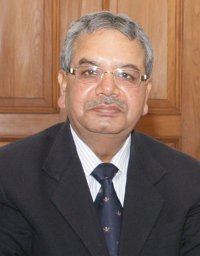
 Ashutosh Kumar Singh合作论文数Department of Computer Applications, National Institute of Technology, Kurukshetra11
 Au Thien Wan合作论文数7
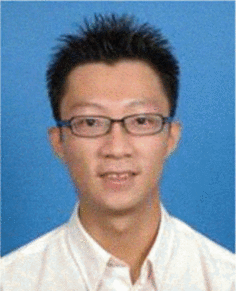
 Anand Mohan合作论文数6
 Kwang Leng Goh合作论文数6
 Wida Susanty Suhaili合作论文数Univ Teknol Brunei, Sch Comp & Informat, Jalan Tungku Link, BE-1410 Gadong, Brunei5
 Herbert Raj合作论文数5
 P. Jelciana合作论文数4
 Sharul T. Tajuddin合作论文数School of Computing and Informatics, Universiti Teknologi Brunei3
 Fatin Hamadah Rahman合作论文数School of Computing and Informatics, Universiti Teknologi Brunei (UTB), Gadong, Brunei Darussalam2
 Shahriar Shams合作论文数Department of Civil and Environmental Engineering;Islamic University of Technology;Department of Civil and Environmental Engineering, Islamic University of Technology2
 S.H. Shah Newaz合作论文数Information Communications University2Thien-Wan Au合作论文数1Haji Mahran Dr Haji Morsidi合作论文数1Rasyidah Ismail合作论文数1Ismit Mohamad合作论文数1
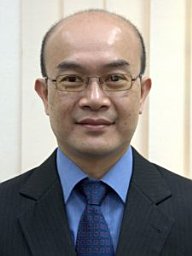 Mohammad Saiful Omar合作论文数School of Computing and Informatics, Universiti Teknologi Brunei1
 Nazmus Nafi合作论文数Sch. of Electr. Eng. &Comput. Sci., Univ. of Newcastle;c;Sch. of Electr. Eng. & Comput. Sci., Univ. of Newcastle1
 Fawaz AL-Hazemi合作论文数1
 Alex Goh Kwang Leng合作论文数1S. Rajagopalan合作论文数1
 Krishna Kumar Singh合作论文数Department of Computer Applications, National Institute of Technology1
 Ibrahim Venkat合作论文数School of Computer Sciences, Universiti Sains Malaysia1




