An α-Pu sample was studied in its "as-received" and "sputtered" state by both X-ray photoelectron spectroscopy (XPS) and time-of-flight secondary ion mass spectroscopy (ToF-SIMS). Analysis of the "as-received" surface indicated significant carbon and oxygen, with oxygen signal pertaining to plutonium dioxide (PuO2) and sesquioxide (Pu2O3). The "sputtered" clean metal surface was then dosed with hydrogen (H2) gas at 300 K and found to nucleate hydride species (PuHx). Interestingly, H2 was observed to be critical for nucleation of carbides (PuxCy) by acting as a catalyst for Pu's reaction with background gases. Because Pu metal has a high affinity for oxygen, reoxidation occurred under UHV, forming PuxOy and disrupting both PuHx and PuxCy growth. Observations from the experiments were modeled for the α-Pu(020) surface, illustrating the ability of H2 to readily dissociate onto sputtered and speciated surfaces at 300 K. The projected density of states from these calculations were compared to experiments, showing good agreement between the Pu 5f, 6d, and 7s states and the H 1s, O 2p, and C 2p valence states. Overall, the above results indicated that the formed hydride layer is unstable at 300 K in UHV conditions.
The implementation of optimal strictly localized atomic orbitals basis for plutonium (Pu) using normconserving pseudopotential density-functional theory (DFT) is presented. The basis set was applied to the alpha, 0, gamma , 8, 8', and E phases of Pu, 8-Pu surface, and 8-PuGa alloys. The computed properties of the Pu phases and 8-Pu surface were in good agreement with both available experimental data and prior DFT calculations based on plane-wave methodologies. Results for the 8-PuGa alloys were also in good agreement with experimental data. The reliability of the basis set was further demonstrated by using ab initio molecular dynamics to model the diffusion coefficient and activation barrier for atomic diffusion in a 8-PuGa alloy.
The high temperature face-centered-cubic delta phase of plutonium (FCC 6-Pu) is metallurgically important in industrial applications and can be stabilized at room temperature by alloying with small amounts of gallium (Ga). Therefore, it is of fundamental interest to elucidate the factors that govern the 6-Pu-Ga interactions via the electronic structure to understand the stabilization mechanism of the FCC phase. We employed density functional theory to systematically model the change in the structural and electronic properties with increasing Ga concentrations of 6-Pu-Ga alloys. The results indicate that structural optimizations with an applied cubic symmetry constraint are sufficient to describe the alloy properties. The variations in Pu-Pu and Pu-Ga bond lengths and the lattice disorder induced by the Ga substitution at Pu sites are in qualitative agreement with previously published experimental EXAFS data. Additionally, in accordance with the experimental results, the atomic volume decreases as the Ga concentration increases. The alloy formation energy decreases as the Ga concentration increases, indicating an increase in stability and an exothermic alloying reaction. The Pu-Ga electronic interaction is governed principally by hybridization between the Pu 6d and Ga 4p states, with decreasing Pu 5f states at the Fermi energy with increasing Ga content due to the increase of Ga-Pu-Ga bonds within the lattice.
This paper presents a large-scale ab initio simulation study of amorphous silicon hydride (a-Si1-xHx) with an emphasis on the structure and properties of the material across a range of hydrogen concentration by combining accelerated molecular dynamics (MD) simulations with first-principles density-functional calculations. The accelerated MD scheme relied on classical metadynamics, which enabled the development of 2500+ high-quality structural models of a-Si1-xHx, with system sizes ranging from 150 to 6000 atoms and hydrogen concentrations vary from 6 to 20 at. %. The resulting amorphous networks were found to be completely free from any coordination defects and that they all exhibited a pristine band-gap in their electronic spectrum. The microstructural properties of hydrogen distributions were examined with an emphasis on the presence of isolated and clustered environments of hydrogen atoms. The results were compared with experimental data obtained from X-ray diffraction, infrared spectroscopy and nuclear magnetic resonance studies.
The experimental and calculated Raman spectrum of PuCl 3 has been reported for the first time. PuCl 3 is a primary species found in plutonium metal refinement, specifically in pyrochemical salt processes including multicycle direct oxide reduction, metal chlorination, and electrorefining. As such, Raman signatures of PuCl 3 could serve as potential forensic indicators of material process history. A novel technique for synthesizing PuCl 3 from the in situ chlorination of plutonium metal with HCl was developed to establish these signatures. Cerium metal surrogates were utilized to ensure optimization of the plutonium experiments and to minimize personnel exposure, and all experiments were carried out in a Raman reaction chamber designed for air‐tight, high vacuum environments. In situ Raman spectroscopy was employed in conjunction with density functional theory (DFT) to investigate the vibrational modes of PuCl 3 . Associated mixed oxy and hydroxyl phases are also reported. The combined Raman and DFT results have eliminated inconsistencies in Raman mode assignments for the MX 3 family of metal chlorides having P6 3 /m symmetry, and IR modes derived from the DFT calculations are additionally presented. The data observed in this study are of potential interest to nuclear forensic analyses, nuclear sample aging, nuclear energy, plutonium processing, and stockpile stewardship.
This paper presents a first-principles study of the Debye-Waller factor and the Debye temperature for amorphous silicon ($a$-Si) from lattice-dynamical calculations and direct molecular-dynamics simulations using density-functional theory (DFT). The effects of temperature and structural disorder on the intensity of the diffraction maxima and the vibrational mean-square displacement (MSD) of Si atoms are studied in the harmonic approximation, with particular emphasis on the bond-length disorder, the presence of coordination defects, and microvoids in $a$-Si networks. It has been observed that the MSDs associated with tetrahedrally-bonded Si atoms are considerably lower than their dangling-bond counterparts -- originating from isolated and vacancy-induced clustered defects -- and those on the surface of microvoids, leading to an asymmetric non-gaussian tail in the distribution of atomic displacements. An examination of the effect of anharmonicity on the MSD at high temperatures using direct $ab$ $initio$ molecular-dynamics simulations (without the harmonic approximation) suggests that the vibrational motion in $a$-Si is practically unaffected by anharmonic effects at temperatures below 400 K, as far as the present DFT calculations are concerned. The Debye temperature of $a$-Si is found to be in the range of 488--541 K from specific-heat and MSD calculations using first-principles lattice-dynamical calculations in the harmonic approximation, which matches closely with the experimental value of 487--528 K obtained from specific-heat measurements of $a$-Si at low temperatures.
The paper presents an $ab$ $initio$ study of temperature-induced nanostructural evolution of hydrogen-rich voids in amorphous silicon. By using large $a$-Si models, obtained from classical molecular-dynamics simulations, with a realistic void-volume density of 0.2%, the dynamics of Si and H atoms on the surface of the nanometer-size cavities were studied and their effects on the shape and size of the voids were examined using first-principles density-functional simulations. The results from $ab$ $initio$ calculations were compared with those obtained from using the modified Stillinger-Weber potential. The temperature-induced nanostructural evolution of the voids was examined by analyzing the three-dimensional distribution of Si and H atoms on/near void surfaces using the convex-hull approximation, and computing the radius of gyration of the corresponding convex hulls. A comparison of the results with those from the simulated values of the intensity in small-angle X-ray scattering of $a$-Si/$a$-Si:H in the Guinier approximation is also provided, along with a discussion on the dynamics of bonded and non-bonded hydrogen in the vicinity of voids.
X-ray diffraction, Amorphous silicon, Multi-objective optimization, Monte Carlo methods. This paper addresses a difficult inverse problem that involves the reconstruction of a three-dimensional model of tetrahedral amorphous semiconductors via inversion of diffraction data. By posing the material-structure determination as a multiobjective optimization program, it has been shown that the problem can be solved accurately using a few structural constraints, but no total-energy functionals/forces, which describe the local chemistry of amorphous networks. The approach yields highly realistic models of amorphous silicon, with no or only a few coordination defects (≤1%), a narrow bond-angle distribution of width 9–11.5°, and an electronic gap of 0.8–1.4 eV. These data-driven information-based models have been found to produce electronic and vibrational properties of a -Si that match accurately with experimental data and rival that of the Wooten-Winer-Weaire models. The study confirms the effectiveness of a multiobjective optimization approach to the structural determination of complex materials, and resolves a long-standing dispute concerning the uniqueness of a model of tetrahedral amorphous semiconductors obtained via inversion of diffraction data.
We present an information-based total-energy optimization method to produce nearly defect-free structural models of amorphous silicon. Using geometrical, structural, and topological information from disordered tetrahedral networks, we have shown that it is possible to generate structural configurations of amorphous silicon, which are superior than the models obtained from conventional reverse Monte Carlo and molecular dynamics simulations. The new data-driven hybrid approach presented here is capable of producing atomistic models with structural and electronic properties which are on a par with those obtained from the modified Wooten-Winer-Weaire (WWW) models of amorphous silicon. Structural, electronic, and thermodynamic properties of the hybrid models are compared with the best dynamical models obtained from using machine-intelligence-based algorithms and efficient classical molecular dynamics simulations, reported in the recent literature. We have shown that, together with the WWW models, our hybrid models represent one of the best structural models so far produced by total-energy-based Monte Carlo methods in conjunction with experimental diffraction data.
We present a computational study of void-induced microstructure in amorphous silicon (a-Si) by generating ultra-large models of a-Si with a void-volume fraction of 0.3%, as observed in small-angle X-ray scattering (SAXS) experiments. The relationship between the morphology of voids and the intensity of scattering in SAXS has been studied by computing the latter from the Fourier transform of the reduced pair-correlation function and the atomic-form factor of amorphous silicon. The effect of low-temperature annealing on scattering intensities and the microstructure of voids has been addressed, with particular emphasis on the shape and size of voids, by studying atomic rearrangements on void surfaces and computing the average radius of gyration of the voids from the spatial distribution of surface atoms and the intensity plots in the Guinier approximation. The study suggests that low-temperature annealing can lead to considerable restructuring of void surfaces, which is clearly visible from the three-dimensional shape of the voids but it may not necessarily reflect in one-dimensional scattering-intensity plots.
The static structure factor of amorphous silicon (a-Si) models, containing 400,000 atoms with a density of 2.25 g.cm, has been studied by generating atomistic models using classical molecular-dynamics simulations. The behavior of the structure factor, S(Q), in the limit Q -> 0, is examined to determine the degree of hyperuniformity in a-Si and is compared with the results with those from earlier simulations and small-angle X-ray scattering experiments. The study suggests that the computed value of the relative variance of the number of atoms at large distances, and hence S(Q -> 0), lies in the range from 0.00736 to 0.00758, which is very close to the experimental value of 0.0076 +/- 0.0005, obtained from an extrapolation of transmission X-ray scattering data in the small-angle region. The non-zero value of the structure factor S(0) in a-Si can be attributed to density fluctuations on a very large length scale, which is a characteristic property of the structural and topological ordering of silicon atoms in the amorphous state.
The putative ground-state structures of 13-atom Cu and Ag clusters have been studied using ab initio molecular-dynamics (AIMD) based on density-functional theory (DFT). An ensemble of low-energy configurations, collected along the AIMD trajectory and optimized to nearest local minimum-energy configurations, were studied. An analysis of the results suggests the existence of low-symmetric bilayer structures as strong candidates for the putative ground-state structure of Cu 13 and Ag 13 clusters. These bilayer structures are markedly different from a buckled bi-planar (BBP) configuration and energetically favorable, by about 0.4-0.5 eV, than the latter proposed earlier by others. Our study reveals that the structure of the resulting putative global-minimum configuration is essentially independent of the nature of basis functions (i.e., plane waves vs. pseudoatomic orbitals) employed in the calculations, for a given exchange-correlation functional. The structural configurations obtained from plane-wave-based DFT calculations show a noticeably tighter or dense first-shell of Cu and Ag atoms. A comparison of our results with recent full-potential DFT simulations is presented.
The structural, vibrational, and electronic properties of Ni40Pd40P20 bulk metallic glass have been studied using ab initio molecular-dynamics simulations and total-energy optimization. Structural analyses of the resulting ab initio models show the presence of a few to no PP bonds and two main building blocks, consisting of tricapped trigonal prism (TTP) and capped square anti-prism (CSAP) with P as the center of these blocks. The computed Pd and Ni K-edge spectra of extended X-ray absorption fine structure (EXAFS) are found to be in good agreement with experimental data. The configurational averaged static structure factor and the generalized vibrational density of states are also observed to be in good agreement with experimental data.
Diffraction data play an important role in the structural characterizations of solids. While reverse Monte Carlo (RMC) and similar methods provide an elegant approach to (re)construct a three-dimensional model of noncrystalline solids, a satisfactory solution to the RMC problem is still not available. Following our earlier efforts, we present here an accurate structural solution of the inverse problem by developing an information-driven inverse approach (INDIA). The efficacy of the approach is illustrated by choosing amorphous silicon as an example, which is particularly difficult to model using total-energy-based relaxation methods. We demonstrate that, by introducing a subspace optimization technique that sequentially optimizes two objective functions (involving experimental diffraction data, a total-energy functional, and a few geometric constraints), it is possible to produce models of amorphous silicon with very little or no coordination defects and a pristine gap around the Fermi level in the electronic spectrum. The structural, electronic, and vibrational properties of the resulting INDIA models are shown to be fully compliant with experimental data from x-ray diffraction, Raman spectroscopy, differential scanning calorimetry, and inelastic neutron scattering measurements. A direct comparison of the models with those obtained from the Wooten-Winer-Weaire approach and from recent high-quality molecular-dynamics simulations is also presented.
In this paper, we provide evidence that low density nano-porous amorphous carbon (a-C) consists of interconnected regions of amorphous graphene (a-G). We include experimental information in producing models, while retaining the power and accuracy of ab initio methods with no biasing assumptions. Our models are highly disordered with predominant sp2 bonding and ring connectivity mainly of sizes 5-8. The structural, dynamical and electronic signatures of our 3-D amorphous graphene are similar to those of monolayer amorphous graphene. We predict an extended x-ray absorption fine structure (EXAFS) signature of amorphous graphene. Electronic density of states calculations for 3-D amorphous graphene reveal similarity to monolayer amorphous graphene and the system is non conducting.
It is widely accepted in the materials modeling community that defect-free realistic networks of amorphous silicon cannot be prepared by quenching from a molten state of silicon using classical or ab initio molecular-dynamics (MD) simulations. In this work, we address this long-standing problem by producing nearly defect-free ultra-large models of amorphous silicon, consisting of up to half a million atoms, using classical MD simulations. The structural, topological, electronic, and vibrational properties of the models are presented and compared with experimental data. A comparison of the models with those obtained from using the modified Wooten-Winer-Weaire bond-switching algorithm shows that the models are on par with the latter, which were generated via event-based total-energy relaxations of atomistic networks in the configuration space. The MD models produced in this work represent the highest quality of amorphous-silicon networks so far reported in the literature using MD simulations.
We present a computational study of small-angle x-ray scattering (SAXS) in amorphous silicon ($a$-Si) with particular emphasis on the morphology and microstructure of voids. The relationship between the scattering intensity in SAXS and the three-dimensional structure of nanoscale inhomogeneities or voids is addressed by generating large high-quality $a$-Si networks with 0.1%--0.3% volume concentration of voids, as observed in experiments using SAXS and positron annihilation spectroscopy. A systematic study of the variation of the scattering intensity in the small-angle scattering region with the size, shape, number density, and the spatial distribution of the voids in the networks is presented. Our results suggest that the scattering intensity in the small-angle region is particularly sensitive to the size and the total volume fraction of the voids, but the effect of the geometry or shape of the voids is less pronounced in the intensity profiles. A comparison of the average size of the voids obtained from the simulated values of the intensity, using the Guinier approximation and Kratky plots, with that of the same from the spatial distribution of the atoms in the vicinity of void surfaces is presented.
We present a first-principles study of the formation and structure of microvoids in device-quality models of hydrogenated amorphous silicon (a-Si:H). Using a combination of classical metadynamics and first-principles density-functional calculations, which is capable of generating large a-Si:H models with a linear size of several nanometers and a realistic hydrogen distribution, we examine the morphology and compute the number density of microvoids at low and high concentrations of hydrogen. The results of our calculations are compared with experimental data from small-angle x-ray scattering and hydrogen and implanted-helium effusion measurements. Our study suggests that the number density of microvoids is of the order of (7-8) x 10(18) cm(-3) for device-quality models with (8-10)-at. % H, and which increases to (1-3) x 10(19) cm(-3) with an increase of hydrogen content to 18 at. %. We find the morphology of the microvoids to be highly complex with a radius of gyration varying from 2.7 to 5.0 angstrom for very large models. The spatial distributions of microvoids at low and high concentrations are strongly influenced by the presence of isolated and interconnected voids, respectively, which are consistent with the results from hydrogen and implanted-helium effusion measurements. The simulation methodology and results presented here have direct applications in large-scale modeling of a-Si:H/c-Si heterojunctions with intrinsic thin-layer technology for the development of next-generation silicon solar cells and resistive switching mechanisms in ultra-low-power nonvolatile memory devices, such as chalcogenide- or oxide-based conductive bridging random-access-memory devices.
We present a force-biased Monte Carlo (FMC) method for structural modeling of the transition-metal clusters of Fe, Ni, and Cu with sizes of 13, 30, and 55 atoms. By employing the Finnis-Sinclair potential for Fe and the Sutton-Chen potential for Ni and Cu, the total energy of the clusters is minimized using the local gradient of the potentials in Monte Carlo simulations. The structural configurations of the clusters, obtained from the biased Monte Carlo approach, are analyzed and compared with the same configurations from the Cambridge Cluster Database (CCD) upon relaxation of the clusters using the first-principles density-functional code NWCHEM. The results show that the total-energy value and the structure of the FMC clusters are essentially identical to the corresponding value and the structure of the CCD clusters. A comparison of the NWCHEM-RELAX FMC and CCD structures is presented by computing the pair-correlation function, the bond-angle distribution, the coordination number of the first-coordination shell, and the Steinhardt bond-orientational order parameter, which provide information about the two-and three-body correlation functions, the local bonding environment of the atoms, and the geometry of the clusters. An atom-by-atom comparison of the FMC and CCD clusters is also provided by superposing one set of clusters onto another, and the electronic properties of the clusters are addressed by computing the density of electronic states.
 Parthapratim Biswas合作论文数30Asok K. Ray合作论文数21
 David Drabold合作论文数Nanoscale & Quantum Phenomena Institute, College of Arts and Sciences, Ohio University18
 Eric J. Bylaska合作论文数Pacific Northwest National Laboratory11
 Stephen Elliott合作论文数Physical and Theoretical Chemistry Laboratory, Department of Chemistry, University of Oxford10
 Wibe de Jong合作论文数Materials Sciences Division, Lawrence Berkeley National Laboratory;Atom Computing10
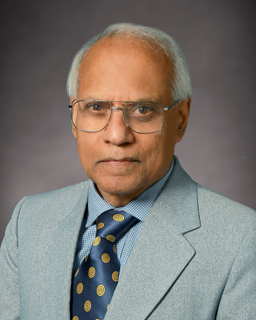 Asok Ray合作论文数Department of Mechanical Engineering, College of Engineering, Pennsylvania State University;Center for Acoustics and Vibration, College of Engineering, Pennsylvania State University9
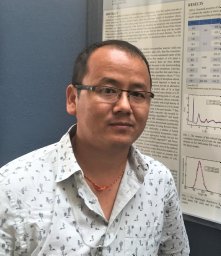 Dil K. Limbu合作论文数Department of Chemistry and Environmental Science, New Jersey Institute of Technology5
 Durga Paudel合作论文数Dept Phys & Astron, Univ Southern Mississippi4
 Muhammad N. Huda合作论文数3
 Shafaq Moten合作论文数3
 Sarah Hernandez合作论文数Physics Department, University of Texas at Arlington3
 Devilal Dahal合作论文数2
 Samuel O Odoh合作论文数Dept Chem, Univ Manitoba2
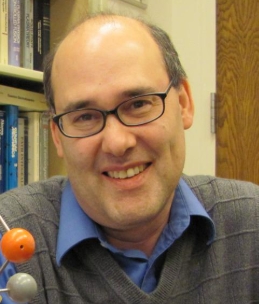 Gregory Schenter合作论文数Pacific Northwest National Laboratory2Li Ma合作论文数2
 Pratik P. Dholabhai合作论文数Department of Physics, The University of Texas at Arlington2
 Niri Govind合作论文数Pacific Northwest National Laboratory2Eugene S. Ilton合作论文数Pacific Northwest National Laboratory2Donald F. Johnson合作论文数Department of Chemistry, Princeton University2D. N. Tafen合作论文数1Alexa B. Hanson合作论文数1Harsh Arya合作论文数1
 Enrique R. Batista合作论文数Center for Nonlinear Studies, Los Alamos National Laboratory1shafaq amdanimoten合作论文数1Nicholas T. Hubley合作论文数1
 Paule Dagenais合作论文数1
 Megan Hoover合作论文数Environmental Engineering and Earth Sciences Department, Clemson University1Prabath Wanaguru合作论文数Department of Physics, The University of Texas at Arlington1Sajib Barman合作论文数1Pranab Parimal Biswas合作论文数1
 Bishal Bhattarai合作论文数Dept Phys, Missouri Univ Sci & Technol1Roxanne Tutchton合作论文数1Brian L. Scott合作论文数Los Alamos National Laboratory1
 Jochen Autschbach合作论文数Department of Chemistry, College of Arts and Sciences, University at Buffalo1
 Sebastien N. Kerisit合作论文数Pacific Northwest National Laboratory1
 Laurent J. Lewis合作论文数Département De physique, Faculté Des Arts Et Des Sciences, Université De Montreal1S Chakraborty合作论文数1Ping Yang合作论文数Theoret Div, Los Alamos Natl Lab1Somilkumar J Rathi合作论文数Department of Physics, University of Texas at Arlington1Sjoerd Roorda合作论文数1




