Previous research on depictions of crime in cartoons has focused on violent crimes and psychopathic offenders. However, much of this research has focused on male crime fighters working alone with virtually no studies examining gender differences in crime fighting strategies or motives for offending. We fill this gap in the literature by examining cartoon crime fighting teams and the role gender plays in criminal depictions. Our results show: the presence of female crime fighters (1) generally produced more realistic portrayals of crime, (2) resulted in a range of nonviolent crime fighting techniques, and (3) produced fewer offenders motivated by power.
This chapter explores immigration from Eastern Europe in the early 20th century and the theoretical debates that emerged to explain potential linkages between immigration and crime, from social Darwinist explanations to Social Disorganization Theory and the Chicago School of ecological thought. In recent decades, heated public rhetoric overstated the claim that Latino immigration raises crime in the United States. On the whole, Latino immigrants neither import crime into the United States nor drive up crime rates in local communities. But for its part, early 21st-century criminological research was also incorrect. In countering the anti-immigration rhetoric, researchers overstated the negative association between immigration and homicide. Indeed, the rosy hypothesis that Latino immigration caused the great American crime decline is incorrect. The "all-is-well" narrative, that in retrospect applies only to apply to old, established destinations, rings decidedly hollow in new Latino destinations. There, Latino immigrants experience comparatively high levels of violent victimization. This duality in the Latino migrant and settlement experience requires a more encompassing explanation without an appeal to paradoxes or exceptions (i.e., the Latino Paradox). Instead, the Chicago School's ecological framework, which explained immigration a century before, still offers a durable framework to understand why the same people, separated into old and new destinations, experience different social lives.
The current study examines newspaper reports of looting to answer two questions: (1) how was looting framed by U.S. newspapers during the COVID-19 pandemic and (2) did any looting actually occur? Looting after natural disasters, particularly hurricanes, has recently received increased attention in scholarly research. The crisis caused by the pandemic of SARS-CoV2 (hereafter COVID-19), while not a natural disaster, has provided many of the same opportunities for looting that have been previously observed following natural disasters. Our findings suggest looting charges were widely used, particularly in California, but that little actual looting took place. In fact, most of those situations referred to as “looting” were traditional property crimes that were treated as looting to enhance the penalty for the action. We conclude by discussing the implications of our findings for researchers and policymakers.
George Floyd’s murder by a Minnesota police officer sparked outrage, protests, and a re-evaluation of racial inequities in America. Within criminology, we argue, that re-evaluation should include the Latino Paradox, the idea that Latino communities are an exception—a paradox—in that, while they face economic deprivation, they also possess a magical something that makes them resistant to social problems like crime. Unfortunately, this compels the more delicate question; what is the deficiency in Black communities that makes them so vulnerable to crime? However, as we argue here, the Latino Paradox forces a false comparison. Its assumptions with respect to crime are factually incorrect, it demeans Blacks by neglecting their historical context, it romanticizes the Latino experience, and it misdirects policy making. It also leads to lazy theorizing by suggesting that the Latino Paradox forces a re-evaluation of a major criminology theory, Social Disorganization. Indeed, Social Disorganization Theory can adequately explain past and present links between immigration and crime. In light of these problems, it is time to drop the Latino Paradox as an explanation for the race/ethnic differences in crime.
Previous macro-level studies of rape have only examined the relationship between gender inequality or socioeconomic status and possible exposure to rapists. The current study overcomes the limitations of previous research by using Social Disorganization Theory, Evolutionary Psychology, and Backlash Hypothesis to simultaneously measure the three key components of RAT. Our analysis predicts victim/offender disaggregated rape counts in U.S. counties using the U.S. Census data and the National Incident Based Reporting System (NIBRS). Our findings reveal the following: (1) Evolutionary Psychology and Backlash Hypothesis variables were not significant as individual predictors for most of the tested models, (2) Social Disorganization variables were positive and significant in most models, and (3) the Evolutionary Psychology-RAT framework was a poor predictor of all types of rape. Our findings reveal the strength of the Backlash Hypothesis as a predictor of rape, as well as the importance of measuring the components of RAT fully and simultaneously.
A growing body of research has recently been devoted to quantifying research productivity both on the part of individuals, as well as the prestige that individual productivity levels bring to departments. Only recently has research begun to examine what journals criminologists are most likely to cite in their scholarly research. In this study, we rank the most influential journals cited in Criminology for the years 1969-1973, 1989-1993, and 2009-2013. Our analyses suggest Criminology quickly became the most cited journal, followed by JRCD and Justice Quarterly. Furthermore, the influence of sociological journals has remained strong, but has clearly diminished over time.
Despite over a century of research examining the macro-level link between religion and suicide, only recently has research examined this important relationship for Latinos within the United States. Such research has grown more essential in light of the growing geographic diversification of Latinos in the United States over the past two decades with increasing settlement beyond traditional Latino communities and into "new destinations." Therefore, our aim was to answer two key questions: (1) What is the impact of the religious context on Latino suicide across emerging and traditional points of settlement? and (2) Are religious contextual characteristics associated with Latino suicide differently for native- or foreign-born Latinos in each of these types of communities? Our results suggest that (1) religion has no impact on Latino suicide in traditional destinations, (2) only Catholicism negatively impacts foreign-born Latino suicide in new destinations, and (3) native-born Latinos' suicide is negatively impacted by Catholicism, mainline Protestantism, and evangelical Protestantism. We discuss the implications of these findings.
This analysis merges data on women listed on National Women’s Soccer League (NWSL) season rosters between 2013 and 2018 with 2000 U.S. Census data to examine socioeconomic, racial, and geographic indicators for players’ hometowns, measured as the places they attended high school. We compare hometown indicators against national averages and between players based on career longevity and national federation subsidization status. Findings show that players’ hometowns are whiter and less black or Latino, more suburban, and less socioeconomically disadvantaged than the national average, with higher per capita, median household, and median family incomes. Subsidized players, compared to the non-subsidized, and multi-year players, compared to single-year players, come from hometowns that are less black and less socioeconomically disadvantaged, with higher per capita and median household incomes. A lower percent of subsidized player hometowns are city centres compared to those of the non-subsidized.
Recent research has found a link between the presence of violent content, movie ratings, and ticket sales, but has left several questions unanswered. The current study attempts to answer these questions by examining the level of adult content in 2,094 popular movies between 1992 and 2012. We find that the amount of violent content is a significant predictor of ticket sales, but only in non-R rated movies. Furthermore, we find evidence that violent content has been increasing in non-R rated movies and this increase is likely due to changes in MPAA ratings standards. We discuss the implications of our findings.
MARIA ABASCAL MABEL ABRAHAM SETH ABRUTYN GABRIEL ACEVEDO PETER ACHTERBERG RADHA ADHIKARI JAE WAN AHN MARIA AKCHURIN RICHARD D. ALBA ARTHUR S. ALDERSON MARYAM ALEMZADEH SCOTT W. ALLARD KEERA ALLENDORF RACHEL ALLISON JUTTA ALLMENDINGER ZACK ALMQUIST DAVID L. ALTHEIDE CLAIRE ALTMAN ANTHONY ALVAREZ EDWIN AMENTA WEIHUA AN JOEL ANDREAS MEGAN ANDREW KENNETH T. ANDREWS RONALD ANGEL HILLARY ANGELO SNEHA ANNAVARAPU AMY ANSELL ROBERT J. ANTONIO RAWAN MAZEN ARAR MARIANA C. ARCAYA NOAH ARJOMAND ELIZABETH A. ARMSTRONG BRIAN ARONSON ASAD L. ASAD NOAH ASKIN PATRIK ASPERS ANSON AU
The United States experienced a dramatic decline in crime during the 1990s. A number of explanations for this decline have been put forth, including demographic shifts, economic trends, stricter gun control laws, and changes in drug markets. A widely reported explanation is that the surge of immigration during the 1990s was the main cause for that decade's crime decline. Although the claim has received considerable attention, it has yet to be tested empirically using national-level data. In order to fully test the immigration-1990s crime decline relationship, we use national-level homicide and Census data from 1990 to 2000. Our results reveal four key findings: (1) crime declined for nearly all groups during the 1990s; (2) non-Latino blacks contributed the most to the crime decline, by a wide margin; (3) both overall and black homicide declined the least in areas with the highest levels of immigration; and (4) we find no evidence that immigration indirectly lowered non-immigrant crime rates by revitalizing communities. We conclude by discussing the implications of our findings.
Amidst both a resurgent interest in the impact of religion on social problems like crime, including its contextual effects, as well as scholarship directed toward the immigration-crime intersection, the current study examines how different religious traditions impact known violent offending uniquely in traditional versus emerging immigrant destinations. To do so, we employ negative binomial models regressing homicides, robberies, and aggravated assaults on adherence to three major religious traditions (mainline Protestant, evangelical Protestant, and Catholic), as well as immigration and other key macro-structural controls. We disaggregate our analysis for three types of United States counties in 2010: emerging, traditional, and other immigrant destinations. We find that religious traditions vary in their relationship with known violence across destination types: Catholic adherence is protective against crime (net of controls) only in established immigrant destinations, but evangelical Protestant adherence is associated with higher levels of robbery and aggravated assault in the same locales. Religious adherence has no links to violence in emerging immigrant destinations. Broadly, our findings reveal that the religious context is an important part of the evolving story of immigration, though it is multifaceted and context-dependent.
The negative effects of violent content in movies have recently been a hot topic among both researchers and the general public. Despite growing concern, violence in movies has persisted over time. Few studies have examined why this pattern continues. To fill this gap in the literature, we examine how Motion Picture Association of America (MPAA) movie rating descriptors predict ticket sales of 2,094 movies from 1992 to 2012. We test the validity of three theoretical models: (1) the reflective model, (2) the reactance model, and (3) the market model. We find that violent content is linked neither to violence in the broader U.S. culture (i.e., the reflective model) nor to a psychological reactance by adolescents (i.e., the reactance model). Rather, we find, especially among PG-13 (parents strongly cautioned) movies, that violent content leads to increased ticket sales, suggesting that market demand (i.e., audience preferences) is responsible for continued violent content. We discuss the implications of our findings.
The turn of the twentieth century brought important demographic shifts among Latinos, including increasing settlement of both foreign-born and domestic Latinos into "new destination" regions and communities with little previous exposure to such populations. In turn, some scholars find higher rates of Latino victimization in these new destination communities, but there is little empirical research exploring whether and how these same locales fare today. Our goal is to address this gap in the literature by examining how lethal violence against Latinos in new immigrant destination communities has changed over the 2000 to 2010 decade. Using data from the National Vital Statistics System, we construct hybrid fixed-and random-effects models to examine the predictors of changes in Latino homicide victimization over time. Results suggest that (1) despite the turmoil of the Great Recession, new destinations experienced a sizable drop in Latino victimization, (2) this drop has resulted in new destinations now having lower levels of Latino victimization than other destination types, and (3) 70% of this change is attributable to changes in Latino family structure, including married and extended families, as well as changes in language use in new destinations. We conclude by discussing our findings and their implications for researchers and policymakers.
In the late 1990s and early 21st century, a series of school shootings and public perceptions that schools were becoming increasingly violent and out-of-control focused public and scholarly attention on the issues of disorder, antisocial behavior, and crime within schools (Noguera 1995). Events such as the Sandy Hook Elementary School mass murder continue to contribute to public fears, although students or teachers in kindergarten to grade 12 schools have a low risk of being injured in such events (Robers et al. 2015). A range of violence reduction strategies has been proposed to reduce the likelihood of future tragedies, and some interest groups and policymakers have advocated that armed guards be placed in every United States school (for review of this discussion, see Kupchik, Brent, and Mowen 2015).Although much of the attention about school-based crime has focused on high-profile violent events, most police-reported incidents occurring at schools are minor offenses such as theft, drug use, and vandalism (Robers et al. 2015). There are also several aggressive acts-such as bullying and minor assaults-that are also prevalent (Robers et al. 2015). In the past, these acts were handled informally by school administrators through counseling and school-related sanctions such as suspensions. Today, however, there is a growing acknowledgment of the serious short- and long-term repercussions of these acts of violence on youngsters, including reducing their self-confidence as well as contributing to anxiety and depression (Malecki et al. 2015). Moreover, there is evidence that some victimized students have responded with violence and several school shooters have been described as victims of bullying (Leary et al. 2003; Vossekuil et al. 2004; Wike and Fraser 2009). Gerard et al. (2015: 13), for example, found that 93% of school shooters 18 years and younger "reported feeling depressed and/or having suicidal ideation." As a result, there is a growing interest in reducing these acts of intimidation, incivility, and violence. There is, however, a lack of consensus on how to best respond to these acts, and whether involving the justice system creates more problems than it solves.Since the mid-1990s, school administrators and justice system officials have introduced several strategies to ameliorate these problems. Less intrusive measures include controlling access to school grounds and buildings, requiring students to wear uniforms or enforcing strict dress codes. More intrusive measures, such as having students pass through metal detectors, employing drug sniffing dogs, carrying out random searches for contraband and using security cameras to monitor school activities, have also been implemented. Robers and colleagues (2015) found that these measures have been used in an increasing number of schools over the past decade. A more controversial order maintenance strategy in schools in recent years has been expanding the presence of school resource officers (SROs).Theriot (2009: 281) observes that while SROs have been used since the mid-1900s, their presence in schools has increased since the 1990s. Although these police officers were initially well-accepted in schools, there has been growing concern that they engage in net-widening, where youngsters now entering the juvenile justice system would have previously been handled informally by school administrators. This net widening has led to the concept of the "school-to-prison pipeline," which was the focus of a Northeastern University's Institute of Race and Justice symposium in 2003. In that symposium, Wald and Losen (2003) argued that the introduction of increasing safety measures, police officers in schools, and the use of zero tolerance policies had a disproportionate impact on minority students. They claimed that these measures had resulted in increased suspensions, school failure, and entry into the juvenile justice system, all of which have been identified as pathways toward adult incarceration (Christle, Jolivette, and Nelson, 2005), and that these measures have disproportionately affected students of color. …
Since the publication of Durkheim's Suicide more than a century ago, researchers have been examining the relationship between religion and suicide, and race/ethnicity and suicide. However, no study has examined how religion influences U.S. Latino suicide rates. This study fills a gap in the literature by applying three competing theses to the study of Latino suicide. Results show that (1) religious contextual variables significantly affect Latino suicide rates, (2) U.S.-born Latinos benefit from religious communities, regardless of denomination or measurement used, and (3) foreign-born Latinos only benefit from Catholic adherents and homogeneity.
Despite widespread perceptions of elite US sport as meritocratic, there is little empirical research on the social origins of those who play college and professional sports in the US or how these vary by race. We use the case of American football, linking Entertainment and Sports Programming Network’s national recruit rankings data on incoming college football players from 2007–2016 (N=929) with 2000 US Census data. Our study compares hometown socioeconomic and demographic indicators for black and white college athletes and then for those drafted into the National Football League. Findings show that the socioeconomic and demographic profiles of the hometowns producing elite football athletes vary by both athlete race and draft status. Black draftees come from denser, more socioeconomically disadvantaged and blacker hometowns than black non-drafted athletes, while white draftees come from less socioeconomically disadvantaged hometowns than white non-drafted athletes.
Recently, scholars have sought to learn more about scholarly activity within the fields of criminology and criminal justice (CCJ). Research in this area has examined which departments have the most productive faculty, which scholars are the most productive, and which journals are the most prestigious. However, no study of which we are aware has determined what journals criminologists are most likely to cite in their scholarly research. In this study, we rank the most influential journals by the number of times those journals were cited between 2009 and 2013 in Criminology, the Journal of Research in Crime and Delinquency, and Justice Quarterly. Our analyses suggest that Criminology is clearly the most influential CCJ journal in terms of citations, while the American Sociological Review, the Journal of Research in Crime and Delinquency, and the American Journal of Sociology remain influential in CCJ as well.
Media reports and prior research suggest that undocumented Latino migrants are disproportionately robbed because they rely on a cash-only economy and they are reluctant to report crimes to law-enforcement (the Walking ATM phenomenon). From this we generate two specific research questions. First, we probe for an immigration spillover effect - defined as increased native and documented Latino robbery victimization due to offenders' inability to distinguish between the statuses of potential victims. Second, we examine the oft-repeated claim that Blacks robbers disproportionately target Latino victims. Using National Incident-Based Reporting System (NIBRS) data from 282 counties, results show (1) support for an immigration spillover effect but, (2) no support for the claim that Latinos are disproportionately singled out by Black robbers. We discuss the implications of our findings.
In this article, we use 3 years of youth court data from a southeastern state to examine whether referrals that originated from school resource officers (SROs) involve greater proportions of less serious offenses than referrals from other sources. Referrals from SROs during the 3-year period were similar to referrals by law enforcement outside of school for status and serious offenses. SROs were less likely than law enforcement officers outside of school to refer juveniles for minor offenses during the 3-year period. Our findings suggest that schools, not solely police in schools, make a large contribution to the number of juveniles referred to the juvenile justice system for less serious offenses. Implications for policy and future research are also discussed.
 Edward Shihadeh合作论文数13
 David C. May合作论文数Correctional & Juvenile Justice Services, Eastern Kentucky University5
 Casey T. Harris合作论文数Department of Sociology and Crime, Law, and Justice, The Pennsylvania State University4
 Rachel Allison合作论文数Department of Sociology, Mississippi State University3
 Nicole E. Rader合作论文数Department of Sociology, Mississippi State University3
 Angela Robertson合作论文数Social Sci Res Ctr, Mississippi State Univ2
 Ben Feldmeyer合作论文数Pennsylvania State University2
 Jessica Collett合作论文数1
 Ethan Stokes合作论文数1Irene Bloemraad合作论文数1VINCENT BUSKENS合作论文数1Piper Coutinho-Sledge合作论文数1Richard Alba合作论文数1Maria Akchurin合作论文数1
 Makeela J. Wells合作论文数Mississippi State University1Max Besbris合作论文数1Boróka Bó合作论文数1
 Peter Catron合作论文数Univ Washington1Patrick Bergemann合作论文数Paul Merage Sch Business, Univ Calif Irvine1
 Brenden Beck合作论文数Dept Sociol, Univ Colorado1
 Caitlyn Collins合作论文数Dept Sociol, Washington Univ St Louis1
 Kristen Stives合作论文数Dept Criminal Justice, Auburn Univ1
 Jessica McCrory Calarco合作论文数Department of Sociology, Indiana University Bloomington1
 Daniel DellaPosta合作论文数Penn State Univ, Dept Sociol & Criminol, University Pk, PA 16802 USA1Hillary Angelo合作论文数1Irene Browne合作论文数1
 Stefan Bargheer合作论文数Aarhus Inst Adv Studies1
 Christof Brandtner合作论文数Dept Sociol, 1155 E 60th St, Chicago, IL 60637 USA1Barış Büyükokutan合作论文数1
 Joel Best合作论文数University of Delaware Newark1
 Shyon Baumann合作论文数Department of Sociology, Munk School of Global Affairs & Public Policy, University of Toronto1
 Delia Baldassarri合作论文数Department of Sociology, College of Arts & Science, New York University1
 Maria Abascal合作论文数Department of Sociology, College of Arts & Science, New York University1
 Jennie E. Brand合作论文数Department of Sociology, University of California, Los Angeles1
 Anthony S. Chen合作论文数Department of Political Science, Weinberg College of Arts and Sciences, Northwestern University1
 Julia Behrman合作论文数Weinberg College of Arts and Sciences, Northwestern University1
 Andrei Boutyline合作论文数Department of Sociology, College of Literature, Science, and the Arts, University of Michigan-Ann Arbor1
 Elizabeth A. Armstrong合作论文数Department of Sociology, College of Literature, Science, and the Arts, University of Michigan-Ann Arbor1
 Joel Andreas合作论文数Department of Sociology, Krieger School of Arts & Sciences, Johns Hopkins University1
 James N. Baron合作论文数Yale School of Management, Yale University1Sneha Annavarapu合作论文数The Department of Sociology, The University of Chicago1
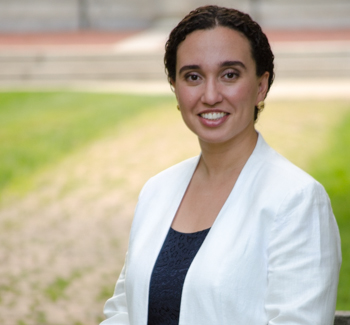 Mabel Abraham合作论文数Management Division, Columbia Business School, Columbia University1
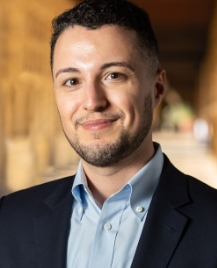 Asad L. Asad合作论文数Department of Sociology, Stanford University1
 Daw Jonathan K合作论文数1
 Robert Crosnoe合作论文数Department of Sociology, College of Liberal Arts, The University of Texas at Austin1
 Mariana Arcaya合作论文数Community Innovators Lab, Department of Urban Studies and Planning, School of Architecture and Planning, Massachusetts Institute of Technology1Donna Bobbitt-Zeher合作论文数1
 Keera Allendorf合作论文数University of Wisconsin-Madison1Johan Chu合作论文数California Institute of Technology1




