We report a comparative study using knowledge space theory (KST) to assess the impact of a hands-on laboratory exercise that used molecular model kits to emphasize the connections between a plane of symmetry, chirality, and isomerism in an introductory organic chemistry course. The experimental design compared three groups of students-two that carried out the laboratory exercise (treatment groups) and one that did not (control group). Our assessments revealed that all three groups made significant improvements in their understanding of chirality and isomerism, but that the two treatment groups showed more improvements than the control group. The KST analysis showed that the acquisition of the skills for finding a plane of symmetry in a molecule came late in the students' critical learning pathways, which indicated that this was difficult for many students. Students were unfamiliar with this type of reasoning, and our studies revealed that the laboratory exercise was useful in teaching the method to introductory organic chemistry students.
Using the concept of stoichiometry we examined the ability of beginning college chemistry students to make connections among the molecular, symbolic, and graphical representations of chemical phenomena, as well as to conceptualize, visualize, and solve numerical problems. Students took a test designed to follow conceptual development; we then analyzed student responses and the connectivities of their responses, or the cognitive organization of the material or thinking patterns, applying knowledge space theory (KST). The results reveal that the students' logical frameworks of conceptual understanding were very weak and lacked an integrated understanding of some of the fundamental aspects of chemical reactivity. Analysis of response states indicates that the overall thinking patterns began with symbolic representations, moved to numerical problem solving, and then lastly to visualization: the acquisition of visualization skills comes later in the knowledge structure. The results strongly suggest the need fo...
ADVERTISEMENT RETURN TO ISSUEPREVArticleNEXTFollowing the Development of the Bonding Concept Using Knowledge Space TheoryMare Taagepera , Ramesh Arasasingham , Frank Potter , Arash Soroudi , and Giang Lam View Author Information Department of Chemistry, University of California Irvine, Irvine, CA 92697-2025Cite this: J. Chem. Educ. 2002, 79, 6, 756Publication Date (Web):June 1, 2002Publication History Received3 August 2009Published online1 June 2002Published inissue 1 June 2002https://pubs.acs.org/doi/10.1021/ed079p756https://doi.org/10.1021/ed079p756research-articleACS PublicationsRequest reuse permissionsArticle Views439Altmetric-Citations10LEARN ABOUT THESE METRICSArticle Views are the COUNTER-compliant sum of full text article downloads since November 2008 (both PDF and HTML) across all institutions and individuals. These metrics are regularly updated to reflect usage leading up to the last few days.Citations are the number of other articles citing this article, calculated by Crossref and updated daily. Find more information about Crossref citation counts.The Altmetric Attention Score is a quantitative measure of the attention that a research article has received online. Clicking on the donut icon will load a page at altmetric.com with additional details about the score and the social media presence for the given article. Find more information on the Altmetric Attention Score and how the score is calculated. Share Add toView InAdd Full Text with ReferenceAdd Description ExportRISCitationCitation and abstractCitation and referencesMore Options Share onFacebookTwitterWechatLinked InRedditEmail Other access optionsGet e-Alertsclose SUBJECTS:Cross-disciplinary concepts,Electron density,Materials,Organic chemistry,Students Get e-Alerts
Paramagnetic iron(III) and diamagnetic gallium(III) porphyrin complexes with axial allyl and vinyl ligands have been prepared by the addition of an organo-Grignard reagent to (porphyrin)(MCl)-Cl-III in toluene-d(8) solution for in situ observation by H-1 NMR spectroscopy. The products are considerably less stable to chromatography and to warming to room temperature than are their alkyl counterparts. The spectral data indicate that the allyl and vinyl groups are coordinated in an eta(1)-fashion for the iron complexes at low temperatures (-80 to -40 degrees C) and for the gallium complexes. Purple blocks of {(tetra(p-anisyl)porphyrin)Ga(vinyl)}.2.5benzene crystallize in the space group P2(1)/n with a = 11.654(3), b = 18.960(6), c = 23.916(6) Angstrom, beta = 97.69 degrees at 130 K with Z = 4. Refinement of 9202 reflections, 668 parameters and 18 restraints yielded wR2 = 0.2041 and a conventional R1 = 0.071 for 6434 reflections with I > 2 sigma I. The structure shows that the gallium center is five-coordinate with a single, eta(1)-vinyl group as the axial ligand. Remarkably, in view of the tendency of related dioxygen ligands in porphyrin complexes to show four-fold disorder, the vinyl group is fully ordered. Dioxygen reacts with {(tetra(p-tolyl) porphyrin) Fe-III (allyl)} at -80 degrees C to produce {(tetra(p-tolyl)porphyrin) Fe-III (OH)} and acrolein, O=CH-CH=CH2, the expected products of insertion of dioxygen into an Fe-C sigma-bond. (C) 1997 Elsevier Science S.A.
The phosphodiesters of 4,4'-methylenebis(3-hydroxy-2-naphthoic acid) (4) and 3-carboxy-2,2'-dihydroxy-diphenylmethane (5) are constrained into a cyclic structure such that the oxygens of the two o-carboxy groups of 4 and the single o-carboxy group of 5 have restricted stereospecific positions with an o-CO2- oxygen to phosphorus distance of 3.7 Angstrom. In the hydrolysis of 4, P-31 NMR and HPLC data show the existence of an intermediate cyclic acyl phosphate in the g,g conformation. The O-18 isotopic effects on P-31 chemical shifts show incorporation of two O-18 atoms in the product H3PO4. This observation is consistent with intramolecular o-CO2- nucleophilic attack on phosphorus to provide an acyl phosphate intermediate which undergoes hydrolytic cleavage by HO-/(HO-)-O-18 attack on phosphorus (one O-18 incorporation) to provide a phosphate monoester which also undergoes hydrolysis with a second O-18 incorporation on phosphorus. For hydrolysis of 4, the pH vs log k(obsd) profile, the values of the deuterium solvent kinetic isotope effect, and the activation entropy accord a mechanism which involves intramolecular attack of o-CO2- on the phosphate phosphorus assisted by the o-CO2H as a general acid catalyst, The latter can involve o-CO2H hydrogen bonding to the -(PO2-)- oxygen(s) and/or leaving phenolic oxygen. At neutrality, 4 hydrolyzes ca. 10(4) fold faster than 5 which only has one o-carboxy group and 10(8)-10(9)-fold faster than diphenyl phosphate.
ADVERTISEMENT RETURN TO ISSUEPREVArticleNEXTParticipation of Two Carboxyl Groups in Phosphodiester Hydrolysis. 2. A Kinetic, Isotopic, and 31P NMR Study of the Hydrolysis of a Phosphodiester with Carboxyl Groups Fixed in an Attack ConformationThomas C. Bruice, Andrei Blasko, Ramesh D. Arasasingham, and Jang-Seob KimCite this: J. Am. Chem. Soc. 1995, 117, 49, 12070–12077Publication Date (Print):December 1, 1995Publication History Published online1 May 2002Published inissue 1 December 1995https://doi.org/10.1021/ja00154a006RIGHTS & PERMISSIONSArticle Views237Altmetric-Citations10LEARN ABOUT THESE METRICSArticle Views are the COUNTER-compliant sum of full text article downloads since November 2008 (both PDF and HTML) across all institutions and individuals. These metrics are regularly updated to reflect usage leading up to the last few days.Citations are the number of other articles citing this article, calculated by Crossref and updated daily. Find more information about Crossref citation counts.The Altmetric Attention Score is a quantitative measure of the attention that a research article has received online. Clicking on the donut icon will load a page at altmetric.com with additional details about the score and the social media presence for the given article. Find more information on the Altmetric Attention Score and how the score is calculated. Share Add toView InAdd Full Text with ReferenceAdd Description ExportRISCitationCitation and abstractCitation and referencesMore Options Share onFacebookTwitterWechatLinked InReddit PDF (3 MB) Get e-AlertscloseSupporting Info (2)»Supporting Information Supporting Information Get e-Alerts
ADVERTISEMENT RETURN TO ISSUEPREVArticleNEXTHydrolysis of a Phosphate Diester by Simultaneous Carboxylate and Carboxyl Group Participation in a Rigid System with Kinetically Unfavorable Rotamers Frozen OutThomas C. Bruice, Andrei Blasko, Ramesh D. Arasasingham, Jang-Seob Kim, and Mark E. PetyakCite this: J. Am. Chem. Soc. 1995, 117, 12, 3639–3640Publication Date (Print):March 1, 1995Publication History Published online1 May 2002Published inissue 1 March 1995https://doi.org/10.1021/ja00117a044Request reuse permissionsArticle Views73Altmetric-Citations5LEARN ABOUT THESE METRICSArticle Views are the COUNTER-compliant sum of full text article downloads since November 2008 (both PDF and HTML) across all institutions and individuals. These metrics are regularly updated to reflect usage leading up to the last few days.Citations are the number of other articles citing this article, calculated by Crossref and updated daily. Find more information about Crossref citation counts.The Altmetric Attention Score is a quantitative measure of the attention that a research article has received online. Clicking on the donut icon will load a page at altmetric.com with additional details about the score and the social media presence for the given article. Find more information on the Altmetric Attention Score and how the score is calculated. Share Add toView InAdd Full Text with ReferenceAdd Description ExportRISCitationCitation and abstractCitation and referencesMore Options Share onFacebookTwitterWechatLinked InReddit PDF (777 KB) Get e-Alertsclose Get e-Alerts
The mechanism for the bimolecular reaction of meso-tetrakis(2,6-dichlorophenyl)porphinato-oxo-manganese(IV), [(Cl8TPP)MnIV(O)], with alkenes has been investigated by kinetics and product identification. Kinetic studies were carried out with 11 alkenes (trans-4-methoxystilbene, cis-4-methoxystilbene, 1,4-diphenyl-1,3-butadiene, 4-methoxystyrene, 1,1-diphenylethylene, 4-methylstyrene, 2,3-dimethyl-2-butene, trans-stilbene, cis-stilbene, styrene, 4-acetoxystyrene) in methylene chloride solution (30-degrees-C) in air. The reactivities of the alkenes show that the trans alkenes are slightly more reactive than their cis isomers and that electron releasing substituents slightly favor the reaction. The second-order rate constant values (k2) correlate well with the potentials for the 1e- oxidation (E1/2) of the alkenes. The slope of the linear plot of log k2 vs E1/2 for the series of alkenes (slope = -0.89 V-1) indicate that a mechanism of epoxidation involving rate-determining formation of an alkene derived pi-cation-radical is unlikely. For the reaction with substituted styrenes, the linear free-energy relationship of log k2 vs sigma+ (rho+ = -0.99) supports a transition state with very little charge separation. Product yields determined for the reactions with cis-stilbene, trans-stilbene, 2,3-dimethyl-2-butene, cis-4-methoxystilbene, and trans-4-methoxystilbene are in accord with a mechanism involving the formation of a (porph)Mn(III)OCC. radical intermediate. Thus, the products of cis-stilbene oxidation under aerobic conditions are cis-stilbene oxide (7%), trans-stilbene oxide (5%), and benzaldehyde (3%). Comparison with the reactions carried out under conditions favoring the transiently stable manganese(V)-oxo species showed more efficient epoxidation with a greater degree of stereospecificity. In a search for radical intermediates the cis olefinic substrate (Z)-1,2-bis(trans-2,trans-3-diphenylcyclopropyl)ethene was used as a radical trap. While no epoxide products were found, a polar oxygen-containing product resulting from the opening of one trans-2,trans-3-diphenylcyclopropyl ring by a cyclopropylcarbinyl to homoallylcarbinyl radical rearrangement (CPCRR) was detected supporting the formation of a neutral carbon radical species.
AbstractChemInform is a weekly Abstracting Service, delivering concise information at a glance that was extracted from about 100 leading journals. To access a ChemInform Abstract of an article which was published elsewhere, please select a “Full Text” option. The original article is trackable via the “References” option.
Several water- and non-water-soluble symmetrical and unsymmetrical quadruply aza bridged closely interspaced cofacial bis(5,10,15,20-tetraphenylporphyrin)s have been synthesized and fully characterized by 2D H-1-H-1 NMR (COSY), 2D C-13-H-1 NMR, FABMS, UV/vis, IR, and fluorescence spectral techniques. It was established, on the basis of H-1 NMR, UV/vis, and emission spectrophotometries, that tetrakis[m,m-(methylene(m-pyridinesulfonyl)imino)methylene]-strati-bis-(5,10,15,20-tetraphenylporphyrin) (5), tetrakis[m,m-(methylene(m-pyridiniumsulfonyl)imino)methylene]-strati-bis-(5,10,15,20-tetraphenylporphyrin) chloride (7), and tetrakis[m,m-(methylene(p-toluenesulfonyl)imino)methylene]-strati-bis(5,10,15,20-tetraphenylporphyrin) (11) exist in more than one conformation in DMSO and in only one symmetrical conformation in CHCl3. The biszinc and tetraprotonated 5, 7, and 11 exist in one conformation regardless of the solvent. These observations have been attributed to an interaction between DMSO and the pyrrolic N-H protons of the porphyrin cores which is inhibited by metalation (Zn2+) or protonation of the porphyrin moiety. Molecular dynamics calculations reveal that the intracavity interactions of 5 with DMSO are more important than the intercavity interactions which result in discrete, unsymmetrical conformations of the dimer. In contrast, tris[m,m-(methylene(m-pyridinesulfonyl)imino)methylene]-mono((((methylene-oxy)carbonyl)oxy)methylene-strati-bis(5,10,15,20-tetraphenylporphyrin) (6), tetrakis[m,m-(methylenecyanoimino)-methylene]-strati-bis(5,10,15,20-tetraphenylporphyrin) (8), tris[m,m-(methylenecyanoimino)methylene]-mono((((methyleneoxy)carbonyl)oxy)methylene)-strati-bis(5,10,15,20-tetraphenylporphyrin) (9), and tetrakis[m,m-(methylene(formamido)imino)methylene]-strati-bis(5,10,15,20-tetraphenylporphyrin) (10) do not show any conformational changes upon switching from chloroform to DMSO. This is attributed to the long interplanar distances calculated for the porphyrin dimers which prevent any intracavity coordination of DMSO with both porphyrin moieties. H-1 NMR variable-temperature experiments of porphyrin dimer 5 in DMSO show that the conformation of the dimer is greatly affected by temperature. While at room temperature 5 exists in more than one conformation, at higher temperatures (150-degrees-C) only one conformation is populated. It is proposed that at room temperature, the existence of a hydrogen-bonding network between DMSO and the dimer results in more than one conformation, while at higher temperatures the network is destroyed to furnish an average conformation.
The second-order rate constants (k(ly)) for reactions of [meso-tetrakis(2,6-dimethyl-3-sulfonatophenyl)porphinato]manganese(III) hydrate [(1)MnIII(X)2, X = H2O or HO-] with t-BuOOH and (Ph)(MC)2COOH have been determined in aqueous solution in the pH range 7.3-12.6. The pH dependencies of k(ly) were fitted to a kinetic expression (eq 2) that was similar to that shown previously to describe the pH dependence of the reaction of (1)MnIII(X)2 with (Ph)2(MeOCO)COOH. Comparison of the very similar pH-rate profiles for t-BuOOH, (Ph)(Me)2COOH, and (Ph)2(MeOCO)COOH (ROOH) showed that the log of the second-order rate constants exhibits only a modest dependency on the acidity of the ROH leaving group (-0.32 for the pH 7.3-10.0 range) as would be expected of a homolytic reaction. Product analysis on the reactions with t-BuOOH in the absence of the ABTS trapping agent provided (Me)2CO (60-70%) as the major product with the remainder of the oxidant recovered as t-BuOH (12%), t-BuOOMe, (t-BuO)2, MeOH, and HCHO. The product distributions showed no significant dependence on the pH of the reaction solutions. In the presence of ABTS (Me)2CO is formed in 5% yield, and the main product is t-BuOH (89%). These findings are consistent with a mechanism involving the homolytic (but not heterolytic) cleavage of the O-O bond of manganese(III)-coordinated alkyl hydroperoxide. Addition of imidazole to the reaction of (I)MnIII(X)2 with t-BuOOH resulted in a approximately 4-10-fold enhancement in the rate of reaction. The pH dependence of log k(lm) for the reaction in the presence of imidazole, from pH 5.3 to 12.6, was found to be in accord with that determined previously for (Ph)2(MeOCO)COOH. The product distribution for the reactions in the presence of imidazole showed significant dependence on the pH of the reaction mixtures. At pH 7.8 and 10.0 the product profiles were only consistent with a homolytic mechanism for the O-O bond cleavage where the major product was (Me)2CO (63-67%), with the remainder being t-BuOH (19%), t-BuOOMe (13-16%), (t-BuO)2, MeOH, and HCHO. At pH 12.6, the yield of t-BuOH (63%) increased dramatically with concomitant decreases in the yields of (Me)2CO (34%), t-BuOOMe (4%), (t-BuO)2, MeOH, and HCHO. The latter product distribution finds explanation in a change in mechanism of the O-O bond cleavage from homolysis to heterolysis as a result of the proton dissociation of the manganese(III)-coordinated ImH (i.e., (1)MnIII(OOR)(ImH) --> [(1)MnIII(OOR)(Im)]-). The acidity dependences of the 1e- oxidation and reduction potentials of (1)MnIII(X) (ImH) have been used to determine the acid ionization constants for the mono-imidazole-ligated (1)MnIII(H2O)(ImH), (1)MnIII(H2O)(ImH), and (1)MnIV(H2O)(ImH) species. The change in 1e- oxidation potentials with pH has also been compared to the change in rate constants with pH for reactions occurring in the presence and absence of imidazole.
The reactions of (Ph)2(MeOCO)COOH with two water-soluble non-mu-oxo dimer-forming manganese(III) porphyrins, [meso-tetrakis(2,6-dimethyl-3-sulfonatophenyl)porphinato]manganese(III) hydrate, [(1)Mn(III)(X)2], and [meso-tetrakis(2,6-dichloro-3-sulfonatophenyl)porphinato]manganese(III) hydrate [(2)Mn(III)(X)2, where X = HO- or H2O], have been examined in aqueous solution [30-degrees-C; mu = 0.2 (with NaNO3); pH 5.3-12.6] and compared to the reaction with the iron porphyrin (1)Fe(III)(X)2. Kinetic studies were carried out in the presence and absence of imidazole, with the sodium salt of 2,2'-azinobis(3-ethylbenzthiazoline-6-sulfonic acid) (ABTS) as a trap for higher valent manganese porphyrin intermediates. Reactions were found to be first-order in both [(porph)Mn(III)(X)2]i and [(Ph)2(MeOCO)COOH]i and independent of [ABTS]i and buffer concentrations {H2PO4-/HPO4(2-) (pH 7.3), HCO3-/CO3(2-) (pH 9.8), and 2,4,6-trimethylpyridine.H+/2,4,6-trimethylpyridine (pH 8.4 and 7.5)}. Thus, the reactions are not subject to general base or general acid catalysis. A plot of the log of the pH-dependent second-order rate constant (k(ly)) vs pH may be fit by an equation (eq 8) derived by assumption of steady state in the reactive species (porph)Mn(III)(OH)((Ph)2(MeOCO)COOH)/(porph)Mn(III)(H2O)((Ph)2(MeOCO)COO) and [(porph)Mn(III)(OH)((Ph)2(MeOCO)COO)]-. Product analysis in the absence of ABTS provided 9% yield of (Ph)2CO and 81% yield of (Ph)2(MeOCO)COH. In the presence of the ABTS trap (Ph)2CO is formed in 12% yield, and the main product is again (Ph)2(MeOCO)COH (55%). In reactions with (1)Mn(III)(X)2 and (2)Mn(III)(X)2 (pH 5.3-12.6) a high spin, d3, manganese(IV) intermediate (mu = 3.90-mu-B at 295 K) was observed. A comparison of the log k(ly) vs pH profiles for the reaction of (1)Mn(III)(X)2 and (1)Fe(III)(X)2 with (Ph)2(MeOCO)COOH showed that k(ly) values are comparable at high pH while at lower pH, (1)Fe(III)(X)2 is far more reactive. This difference in log k(ly) vs pH profiles for (1)Mn(III)(X)2 vs (1)Fe(III)(X)2 finds explanation in the differing pH dependence of potentials for le- reduction of Mn(IV) and Fe(IV) species. Addition of imidazole resulted in an enhancement in the rate of reaction. Apparent equilibrium constants were determined at various values of pH for monoligation of imidazole, and the dependence of rate on pH was employed to show that the reactive intermediates are (i) low pH, [(1)Mn(III)(ImH)((Ph)2(MeOCO)COOH)]+; (ii) intermediate pH, (1)Mn(III)(Im)((Ph)2(MeOCO)COOH)/(1)Mn(III)(ImH)((Ph)2(MeOCO)COO); and (iii) high pH, [(1)Mn(III)(Im)((Ph)2(MeOCO)COO)]-. Imidazole ligation provided at most a rate enhancement of approximately 100-fold.
We have proposed, in previous studies, that the rate-limiting step in the oxidation of alkenes by hypervalent metal-oxo porphyrin species is the formation of a charge-transfer (CT) complex. The CT complex then partitions, dependent upon the alkene and the metal, to various oxidation products as epoxide and carbocation radical. In this paper we provide evidence that a carbocation radical intermediate is formed on oxidation of (Z)-1,3-bis(trans-2,trans-3-diphenylcyclopropyl)ethene (1-Z) by (Br8TPP)Cr(V)(O)(X). We also show that formation of carbocation radical is not rate-limiting. Oxidation of 1-Z by (Br8TPP)Cr(V)(O)(X) in the presence of the nonoxidative electrolyte (n-Bu)4NBF4 provides as the major product a mixture of the two isomeric (3E,5E)-1,8-dichloro-1,2,7,8-tetraphenylocta-3,5-diene (referred to as trans,trans-diene) and (3E,5Z) 1,8-dichloro-1,2,7,8-tetraphenylocta-3,5-diene (referred to as trans,cis-diene). Detailed H-1 NMR decoupling and 2-D COSY provided the assigned structures for trans,trans-diene and trans,cis-diene. The same diene mixture is obtained as the major product (and same ratio of the configurational isomers) on 1e- oxidation of 1-Z by controlled-potential bulk electrolysis (CPBE) in CH2Cl2 using the nonoxidative (n-Bu)4NBF4 as the supporting electrolyte. This shows that the oxidation of 1-Z by (Br8TPP)Cr(V)(O)(X) provides both trans,trans-diene and trans,cis-diene by way of an intermediate carbocation radical. The diene products arise from carbocation radical by opening one cyclopropyl ring via a cyclopropylcarbinyl to homoallylcarbinyl radical rearrangement, while the other cyclopropyl ring opens in a cyclopropylcarbinyl to homoallylcarbinyl carbocation rearrangement. In contrast to the oxidation of 1-Z by (Br8TPP)Cr(V)(O)(X) in the presence of the nonoxidative electrolyte (n-Bu)4NBF4, which provides the mixture of dienes plus (Br8TPP)Cr(IV)(O), oxidation of 1-Z by (Br8TPP)Cr(V)(O)(X) in the presence of the cooxidant (n-Bu)4NClO4 provides trans-2,trans-3-diphenylcyclopropanecarboxaldehyde as a major product plus the immediate product (Br8TPP)Cr(III)(X). Since the second-order rate constants are much the same for the reaction of 1-Z with (Br8TPP)Cr(V)(O)(X) in the presence of (n-Bu)4NBF4 or (n-Bu)4NClO4, it is concluded that the rate-limiting step for reaction of 1-Z with (Br8TPP)Cr(V)(O)(X) precedes and is separate from the product-forming reactions. The intermediate in the formation of a carbocation radical on 1e- oxidation of an alkene is most reasonably a CT complex.
ADVERTISEMENT RETURN TO ISSUEPREVArticleNEXTReaction of hydroxide ion with manganese(III) tetramesitylporphyrin and the oxidation states of manganese tetramesitylporphyrinsRamesh D. Arasasingham and Thomas C. BruiceCite this: Inorg. Chem. 1990, 29, 7, 1422–1427Publication Date (Print):April 1, 1990Publication History Published online1 May 2002Published inissue 1 April 1990https://pubs.acs.org/doi/10.1021/ic00332a028https://doi.org/10.1021/ic00332a028research-articleACS PublicationsRequest reuse permissionsArticle Views382Altmetric-Citations46LEARN ABOUT THESE METRICSArticle Views are the COUNTER-compliant sum of full text article downloads since November 2008 (both PDF and HTML) across all institutions and individuals. These metrics are regularly updated to reflect usage leading up to the last few days.Citations are the number of other articles citing this article, calculated by Crossref and updated daily. Find more information about Crossref citation counts.The Altmetric Attention Score is a quantitative measure of the attention that a research article has received online. Clicking on the donut icon will load a page at altmetric.com with additional details about the score and the social media presence for the given article. Find more information on the Altmetric Attention Score and how the score is calculated. Share Add toView InAdd Full Text with ReferenceAdd Description ExportRISCitationCitation and abstractCitation and referencesMore Options Share onFacebookTwitterWechatLinked InRedditEmail Other access optionsGet e-Alertsclose Get e-Alerts
ADVERTISEMENT RETURN TO ISSUEPREVArticleNEXTReactions of aryliron(III) porphyrins with dioxygen. Formation of aryloxyiron(III) and aryliron(IV) complexesRamesh D. Arasasingham, Alan L. Balch, Rebecca L. Har, and Lechoslaw Latos-GrazynskiCite this: J. Am. Chem. Soc. 1990, 112, 21, 7566–7571Publication Date (Print):October 1, 1990Publication History Published online1 May 2002Published inissue 1 October 1990https://pubs.acs.org/doi/10.1021/ja00177a018https://doi.org/10.1021/ja00177a018research-articleACS PublicationsRequest reuse permissionsArticle Views182Altmetric-Citations44LEARN ABOUT THESE METRICSArticle Views are the COUNTER-compliant sum of full text article downloads since November 2008 (both PDF and HTML) across all institutions and individuals. These metrics are regularly updated to reflect usage leading up to the last few days.Citations are the number of other articles citing this article, calculated by Crossref and updated daily. Find more information about Crossref citation counts.The Altmetric Attention Score is a quantitative measure of the attention that a research article has received online. Clicking on the donut icon will load a page at altmetric.com with additional details about the score and the social media presence for the given article. Find more information on the Altmetric Attention Score and how the score is calculated. Share Add toView InAdd Full Text with ReferenceAdd Description ExportRISCitationCitation and abstractCitation and referencesMore Options Share onFacebookTwitterWechatLinked InRedditEmail Other access optionsGet e-Alertsclose Get e-Alerts
 Alan Balch合作论文数Department of Chemistry, University of California, Davis11
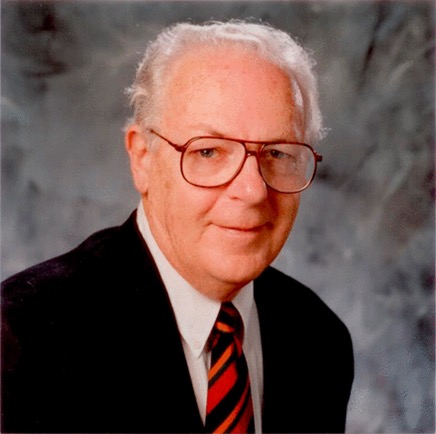 Thomas C. Bruice合作论文数Department of Chemistry & Biochemistry, College of Letters and Science, University of California Santa Barbara10
 Cr Cornman合作论文数4
 Lechosław Latos Grażyński合作论文数Department of Chemistry, University of Wrocław/Polish Academy of Sciences4Ingrid Martorell合作论文数Departament d’Enginyeria Quı́mica, Universitat Rovira i Virgili4
 Marilyn Olmstead合作论文数Department of Chemistry, University of California, Davis3Jang-Seob Kim合作论文数3Franklin Potter合作论文数3
 Andrei Blasko合作论文数3g x he合作论文数2Rl Hart合作论文数2Mare Taagepera合作论文数2Bl Gonzalez合作论文数1
 Rafik Karaman合作论文数1GN LAMAR合作论文数UNIV CALIF DAVIS, DEPT CHEM, DAVIS, CA 95616 USA1
 Susan King合作论文数1Mw Renner合作论文数1Js Deropp合作论文数1aaron m kearney合作论文数1Jason Wu合作论文数Chemical and Biomolecular Engineering, University of California Berkeley1Guo Hua Zhang合作论文数1Arash Soroudi合作论文数1Orn Almarsson合作论文数1Andrei Blaskó合作论文数1David N. Ford合作论文数Department of Civil Engineering;Texas A&M University;Department of Civil Engineering, Texas A&M University1Giang Lam合作论文数1Theresa M. Mcintire合作论文数1Stacy Lonjers合作论文数1Mark E. Petyak合作论文数1Seungwon Jeon合作论文数1Shane L. Phillips合作论文数1Ken Eguchi合作论文数1




