Eu2SnS4, Sr2SnS4, and Sr2GeSe4 have been synthesized by heating the elements or binary precursors at 1073 K and their crystal structures were determined by single crystal methods. Eu2SnS4 crystallizes with a new structure type (Pnma, a = 11.187(2), b = 8.768(2), c = 7.538(2) Angstrom, Z = 4), consisting of distorted [SnS4](4-) tetrahedra and sevenfold coordinated Eu2+ ions. Sr2SnS4 and gamma-Sr2GeSe4 are isostructural and form a new structure type likewise (Ama2, Z = 4, Sr2SnS4: a = 9.977(1), b = 10.311(2), c = 7.243(1) Angstrom, Sr2GeSe4: a = 10.284(2),b = 10.543(2), c = 7.41 (1) Angstrom) with more regular tetrahedral anions and strontium coordinated by seven and eight chalcogen atoms, respectively. Eu2SnS4 is a Curie-Weiss paramagnet (7.80(2) mu(B)/Eu; theta = 4.2(2) K) and orders antiferromagnetically at T-N = 5.5(2) K with a magnetization of 6.56(5) PB/Eu at 5.5 1 The divalent nature of europium is also evident from Eu-151 Mossbauer spectra which show a single signal at an isomer shift of - 12.2(l) mm/s at 78 K. Full magnetic hyperfine field splitting (19.5(2) T at the europium nuclei) is observed at 4.2 K. The Sn-119 spectrum shows one signal at 1.25(9) mm/s subject to quadrupole splitting of 0.76(2) mm/s. At 4.2 K a transferred hyperfine field of 3(1) T is detected at the tin site.
The new carbides Ln7Ru2C11 (Ln = Dy, Ho, Er, and Tm) were prepared by arc-melting and subsequent annealing. Their crystal structure was determined for Er7Ru2C11 from single-crystal X-ray data. It is orthorhombic with a very pronounced subcell of space group Amma and a superstructure of space group Pnma with the same cell dimensions: a = 1950.6(2) pm, b = 345.96(4) pm, c = 1650.3(2) pm; Z = 4. The structure refinements in the two space groups resulted in residuals of R = 0.030 (1074 structure factors, 50 variable parameters) and R = 0.026 (1343 F's, 91 variables), respectively. The structure contains isolated carbon atoms and C2 pairs with C - C distances varying between 128(2) pm and 136(2) pm approximately corresponding to double bonds. One half of the Ru atoms forms Ru(C2)4 units in the subcell which split to RuC6 and C2 units in the superstructure. The other half of the Ru atoms forms polymeric groups of composition RUC3. The magnetic susceptibility of Er7Ru2C11 shows Curie-Weiss behavior with complex field-dependent antiferromagnetic order at low temperatures. The experimentally determined magnetic moment per Er atom of mu(exp) = 9.1(+/- 0.1) mu(B) is only slightly lower than the moment of mu(eff) = 9.58 mu(B) expected for an Er3+ ion. The ruthenium-carbon polyanions do not seem to carry magnetic moments.
ADVERTISEMENT RETURN TO ISSUEPREVArticleNEXTBand structure and bonding of erbium rhodium carbide (Er8Rh5C12) and other carbides with C2 pairsStephen Lee, Wolfgang Jeitschko, and Rolf Dieter HoffmannCite this: Inorg. Chem. 1989, 28, 22, 4094–4104Publication Date (Print):November 1, 1989Publication History Published online1 May 2002Published inissue 1 November 1989https://pubs.acs.org/doi/10.1021/ic00321a013https://doi.org/10.1021/ic00321a013research-articleACS PublicationsRequest reuse permissionsArticle Views92Altmetric-Citations16LEARN ABOUT THESE METRICSArticle Views are the COUNTER-compliant sum of full text article downloads since November 2008 (both PDF and HTML) across all institutions and individuals. These metrics are regularly updated to reflect usage leading up to the last few days.Citations are the number of other articles citing this article, calculated by Crossref and updated daily. Find more information about Crossref citation counts.The Altmetric Attention Score is a quantitative measure of the attention that a research article has received online. Clicking on the donut icon will load a page at altmetric.com with additional details about the score and the social media presence for the given article. Find more information on the Altmetric Attention Score and how the score is calculated. Share Add toView InAdd Full Text with ReferenceAdd Description ExportRISCitationCitation and abstractCitation and referencesMore Options Share onFacebookTwitterWechatLinked InRedditEmail Other access optionsGet e-Alertsclose Get e-Alerts
ADVERTISEMENT RETURN TO ISSUEPREVArticleNEXTCrystal structure and properties of the rare-earth-metal rhodium carbides R8Rh5C12 (R = yttrium, gadolinium-thulium)Rolf Dieter Hoffmann, Wolfgang Jeitschko, Manfred Reehuis, and Stephen LeeCite this: Inorg. Chem. 1989, 28, 5, 934–938Publication Date (Print):March 1, 1989Publication History Published online1 May 2002Published inissue 1 March 1989https://pubs.acs.org/doi/10.1021/ic00304a025https://doi.org/10.1021/ic00304a025research-articleACS PublicationsRequest reuse permissionsArticle Views104Altmetric-Citations15LEARN ABOUT THESE METRICSArticle Views are the COUNTER-compliant sum of full text article downloads since November 2008 (both PDF and HTML) across all institutions and individuals. These metrics are regularly updated to reflect usage leading up to the last few days.Citations are the number of other articles citing this article, calculated by Crossref and updated daily. Find more information about Crossref citation counts.The Altmetric Attention Score is a quantitative measure of the attention that a research article has received online. Clicking on the donut icon will load a page at altmetric.com with additional details about the score and the social media presence for the given article. Find more information on the Altmetric Attention Score and how the score is calculated. Share Add toView InAdd Full Text with ReferenceAdd Description ExportRISCitationCitation and abstractCitation and referencesMore Options Share onFacebookTwitterWechatLinked InRedditEmail Other access optionsGet e-AlertscloseSupporting Info (1)»Supporting Information Supporting Information Get e-Alerts
 Rainer Poettgen合作论文数Institut für Anorganische und Analytische Chemie, Universität Münster3
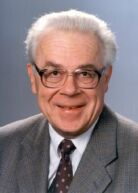 Wolfgang Jeitschko合作论文数Institut für Anorganische Chemie;Westfälischen Wilhelms-Universität Münster3
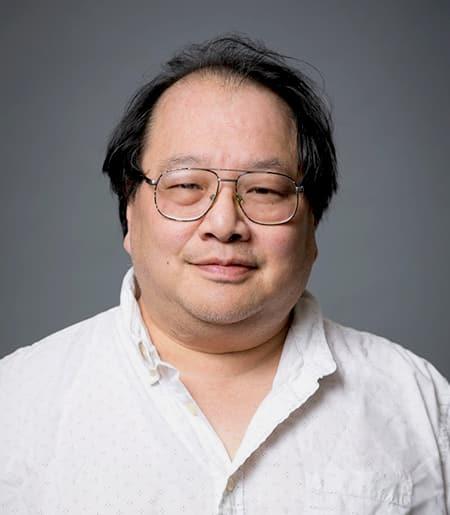 Stephen Lee (李中汉)合作论文数Department of Chemistry and Chemical Biology, College of Arts & Sciences, Cornell University2
 Ute Ch. Rodewald合作论文数Institut für Anorganische und Analytische Chemie, Universität Münster2
 M. Tampier合作论文数1
 R.K. Mishra合作论文数1Ym Kalychak合作论文数1
 Bernd-Dieter Mosel Dr合作论文数1
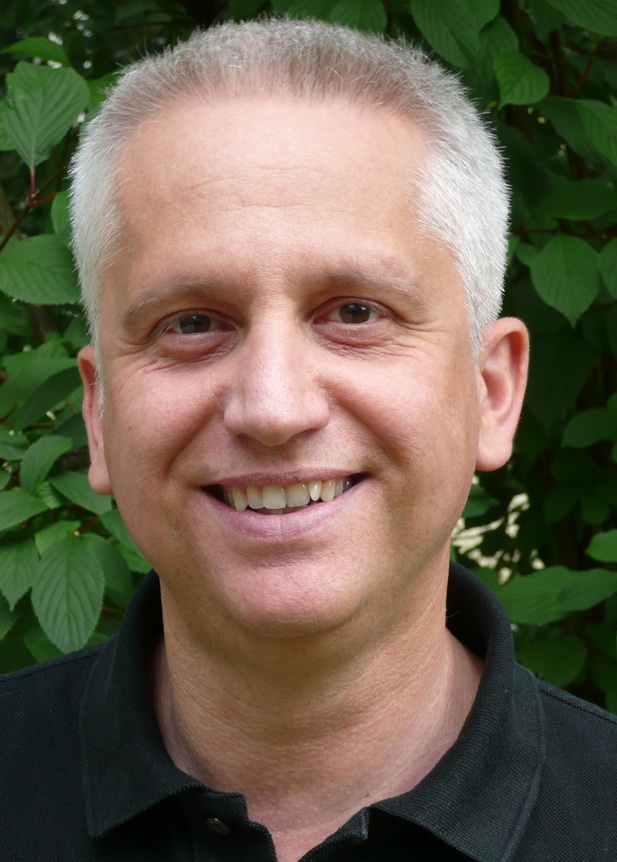 Dirk Johrendt合作论文数Department Chemie, Fakultät für Chemie und Pharmazie, Ludwig-Maximilians-Universität München1Jan F. Riecken合作论文数1Yaroslav V. Galadzhun合作论文数1
 Matthias Eul合作论文数Institut für Anorganische und Analytische Chemie and NRW Graduate School of Chemistry, Universität Münster1
 Dariusz Kaczorowski合作论文数Institute of Low Temperatures and Structure Research, Polish Academy of Sciences1Falko M. Schappacher合作论文数Institut für Anorganische und Analytische Chemie, Universität Münster1Dirk Niepmann合作论文数1Birgit Heying合作论文数1Manfred H. Moeller合作论文数1U. E. Musanke合作论文数1Vasyl I. Zaremba合作论文数Inorganic Chemistry Department, Ivan Franko National University of Lviv1Manfred Reehuis合作论文数Helmholtz Zentrum Berlin1




