Researchers must navigate several trade-offs when deciding which population sequencing method to use. The decision between reduced representation approaches and whole genome sequencing (WGS) impacts marker density, sequencing depth and costs per sample, which will in turn affect the power to accurately characterise certain genomic features, such as regions of the genome exhibiting signals of selection. To investigate the effect of sequencing method on the detection of putatively adaptive regions, we compared selection scan analyses of a set of restriction site-associated DNA sequencing (RADseq) datasets for the common myna ( Acridotheres tristis ) with a WGS dataset with fewer individuals. Although selection scan statistics were found to be correlated between datasets, no common outliers were found when using outlier thresholds typically applied in such studies. We compared allele frequencies and genotypes across datasets and found that discordances were due to missing markers, different individuals sampled or erroneous genotyping. Most importantly, two regions with strong signals of selection identified through WGS data were missed in the lower density dataset, and population-specific allelic dropout, which can result from restriction enzyme cut site loss in RADseq, created false signals of selection in these datasets. Our results highlight the advantages of WGS over RADseq when used for selection scan analyses, especially for highly structured populations such as those observed in many invasive or endangered species.
The tree-kangaroos (genus Dendrolagus) are specialized arboreal macropodids now confined to the rainforests of New Guinea and northeastern Queensland, Australia. Within New Guinean Dendrolagus, a distinct Doria’s group has been recognized since 1936. However, establishing the species limits and inter-relationships within the group has long been hampered by limited sampling. In this study we supplement published genetic data from high quality tissue samples with molecular data generated from museum specimens to improve taxon sampling and geographic coverage within the Doria’s group to enhance our understanding of their evolutionary history. This included the addition of the previously unsampled D. mayri (holotype and only known specimen) and additional specimens of D. dorianus and D. notatus. DNA sequence data were generated from three mitochondrial loci and six distinct Doria’s group lineages were identified: D. dorianus, D. notatus, D. stellarum, D. scottae, D. cf. stellarum and D. mayri. Phylogenetic analysis improved the resolution of relationships within the Doria’s group, with D. dorianus being recovered as the sister to all other taxa. Surprisingly, D. mayri and D. cf. stellarum were monophyletic and formed a sister group to the three other species (D. notatus, D. stellarum and D. scottae). This indicates that the molecular affinities of D. cf. stellarum, from the Sudirman Range, Central Cordillera, lie with D. mayri (isolated on the Wondiwoi Peninsula to the west) rather than true D. stellarum from the Star Mountains further east along the Central Cordillera. The molecular divergence between D. cf. stellarum and D. mayri (3.8% sequence divergence) is less than that reported between other Dendrolagus species (> 4.7%). Therefore, D. cf. stellarum is best regarded as a differentiated population of D. mayri and should be referred to as D. cf. mayri pending further studies. This finding means that D. stellarum (sensu stricto) does not occur on the Maokop (Central Cordillera mountains east of the Baliem Valley, West Papua).
Despite sequencing advances, genomic resources remain uneven and rarely comparable by design. Turning today’s genomes into analysis-ready resources requires species-dense sampling anchored in natural history collections. Large-scale genome initiatives are transforming biodiversity genomics, but genomes remain taxonomically sparse and difficult to compare across species. Kapli and colleagues argue that natural history collections should play a central role in building species-dense genomic resources, creating the foundation needed for comparative and predictive biodiversity genomics.
For genetic data to be used in forensic casework, it has to be produced within a controlled environment that follows strict quality standards. However, recent reviews have suggested that wildlife forensic laboratories are behind in the development and adherence to appropriate standards for casework. This paper will address these concerns by documenting the standards that have been produced, highlighting the systems of assessment and competency testing available, and reviewing the status of validated reference genetic databases. Networks of dedicated wildlife forensic scientists across the globe, represented in part by the author list for this paper, illustrate the strides taken to build capacity in this field, and an ongoing commitment to present quality wildlife forensic evidence in court.
Koalas are arboreal herbivorous marsupials, endemic to Australia. During the late 1800s and early 1900s, the number of koalas declined dramatically due to hunting for their furs. In addition, anthropogenic activities have further decimated their available habitat, and decreased population numbers. Here, we utilize 37 historic and 25 modern genomes sampled from across their historic and present geographic range, to gain insights into how their population structure and genetic diversity have changed across time; assess the genetic consequences of the period of intense hunting, and the current genetic status of this iconic Australian species. Our analyses reveal how genome-wide heterozygosity has decreased through time and unveil previously uncharacterized mitochondrial haplotypes and nuclear genotypes in the historic dataset, which are absent from today's koala populations.
The capacity for dispersal is an important determinant of a species’ resilience to decline from the serial extinction of local populations. Dispersal of animals can be difficult to measure directly but population genetics provides a powerful tool for identifying dispersal limits. This study used microsatellite markers to investigate population structuring of the white-fronted chat (Epthianura albifrons) across its geographic range. Because the species is threatened in the north-eastern part of its range, the primary aim was to identify barriers limiting dispersal. Isolation by distance was not apparent across the 3000 km mainland range but populations on three oceanic islands, and two mainland sites surrounded by urbanisation, were genetically distinct from each other and the other mainland sites. The small populations that were surrounded by urbanised land had significantly lower genetic diversity (allelic diversity and heterozygosity) than the other mainland populations, with the oceanic island populations showing intermediate levels of diversity. These results suggest that although being a partially nomadic species, which facilitates its dispersal over continuous habitat, the species does not have the flight capacity of some other small passerines and is sensitive to habitat discontinuity. Populations inhabiting small areas of coastal saltmarsh in areas with large human populations are likely to face increasing threat levels.
In an era of global climate change, biodiversity conservation is receiving increased attention. Conservation efforts are greatly aided by genetic tools and approaches, which seek to understand patterns of genetic diversity and how they impact species health and their ability to persist under future climate regimes. Invasive species offer vital model systems in which to investigate questions regarding adaptive potential, with a particular focus on how changes in genetic diversity and effective population size interact with novel selection regimes. The common myna (Acridotheres tristis) is a globally invasive passerine and is an excellent model species for research both into the persistence of low-diversity populations and the mechanisms of biological invasion. To underpin research on the invasion genetics of this species, we present the genome assembly of the common myna. We describe the genomic landscape of this species, including genome wide allelic diversity, methylation, repeats, and recombination rate, as well as an examination of gene family evolution. Finally, we use demographic analysis to identify that some native regions underwent a dramatic population increase between the two most recent periods of glaciation, and reveal artefactual impacts of genetic bottlenecks on demographic analysis.
Invasive species offer uniquely replicated model systems to study rapid adaptation. The common myna (Acridotheres tristis) has been introduced to over a dozen countries and is classified as one of the most invasive birds in the world. Their multiple invasions provide an opportunity to identify repeated adaptation, as invasive populations originated from multiple source populations. We compared whole-genome resequencing data from 80 individuals from four native and seven invasive populations, representing two independent introduction pathways. Results from two different selection scan methods were combined and identified a strongly selected region on chromosome 8 that spans two copies of AMY2A, part of the alpha-amylase gene family, a putative ncRNA and an insertion-deletion structural variant (SV) that contains an ERVK transposable element (TE). Outlier SNPs and the SV are polymorphic in native populations, but fixed or close-to-fixed in the two invasive pathways, with the fixation of the same alleles in two independent lineages providing evidence for parallel selection on standing variation. Intriguingly, the second copy of AMY2A has a non-conservative missense mutation at a phylogenetically conserved site. This mutation, alongside variation in the SV, TE and ncRNA, provide possible routes for changes to protein function or expression. AMY2A has been associated with human commensalism in house sparrows, and genes in this family have been linked to adaptation to high-starch diets in humans and dogs. This study illustrates the value of replicated analyses within and across species to understand rapid adaptation at the molecular level.
Tree-kangaroos (genus Dendrolagus) are a morphologically distinctive genus of specialized, arboreal macropodids confined to the wet forests of New Guinea and northeast Australia. A distinct Goodfellow’s group, containing up to four species, has long been recognized. Resolving the relationships of taxa within the group has been hampered by limited samples of most taxa. Here we supplement published genetic data from high quality tissue samples with molecular data generated from museum specimens to improve taxon and geographic coverage. This includes specimens of the previously unsampled D. g. goodfellowi, the holotype and paratype of D. deltae, and additional specimens of D. matschiei, D. spadix and D. g. buergersi. DNA sequence data were generated from three mitochondrial loci. Phylogenetic analysis improved the resolution of relationships within the Goodfellow’s group, with the morphologically similar D. g. goodfellowi and D. g. buergersi being recovered as sister taxa, while D. pulcherrimus was the sister to the closely related, but morphologically and ecologically distinct, D. spadix and D. matschiei. Despite being sister to D. g. buergersi, D. g. goodfellowi was highly divergent. However, the two are morphologically very similar and we recommend retaining the taxonomic status quo (recognizing them as two subspecies of a single species) until improved sampling and a more thorough analysis is possible. The problematic D. deltae was confirmed as a junior synonym of D. matschiei.
The common myna (Acridotheres tristis) is one of the most invasive bird species in the world, yet its colonisation history is only partly understood. We identified the introduction history and population structure, and quantified the genetic diversity of myna populations from the native range in India and introduced populations in New Zealand, Australia, Fiji, Hawaii, and South Africa, based on thousands of single nucleotide polymorphism markers in 814 individuals. We were able to identify the source population of mynas in several invasive locations: mynas from Fiji and Melbourne, Australia, were likely founded by individuals from a subpopulation in Maharashtra, India, while mynas in Hawaii and South Africa were likely independently founded by individuals from other localities in India. Our findings suggest that New Zealand mynas were founded by individuals from Melbourne, which, in turn, were founded by individuals from Maharashtra. We identified two genetic clusters among New Zealand mynas, divided by New Zealand’s North Island’s axial mountain ranges, confirming previous observations that mountains and thick forests may form barriers to myna dispersal. Our study provides a foundation for other population and invasion genomic studies and provides useful information for the management of this invasive species.
Life on Earth has evolved from initial simplicity to the astounding complexity we experience today. Bacteria and archaea have largely excelled in metabolic diversification, but eukaryotes additionally display abundant morphological innovation. How have these innovations come about and what constraints are there on the origins of novelty and the continuing maintenance of biodiversity on Earth? The history of life and the code for the working parts of cells and systems are written in the genome. The Earth BioGenome Project has proposed that the genomes of all extant, named eukaryotes-about 2 million species-should be sequenced to high quality to produce a digital library of life on Earth, beginning with strategic phylogenetic, ecological, and high-impact priorities. Here we discuss why we should sequence all eukaryotic species, not just a representative few scattered across the many branches of the tree of life. We suggest that many questions of evolutionary and ecological significance will only be addressable when whole-genome data representing divergences at all of the branchings in the tree of life or all species in natural ecosystems are available. We envisage that a genomic tree of life will foster understanding of the ongoing processes of speciation, adaptation, and organismal dependencies within entire ecosystems. These explorations will resolve long-standing problems in phylogenetics, evolution, ecology, conservation, agriculture, bioindustry, and medicine.
Decrypting the rearrangements that drive mammalian chromosome evolution is critical to understanding the molecular bases of speciation, adaptation, and disease susceptibility. Using 8 scaffolded and 26 chromosome-scale genome assemblies representing 23/26 mammal orders, we computationally reconstructed ancestral karyotypes and syntenic relationships at 16 nodes along the mammalian phylogeny. Three different reference genomes (human, sloth, and cattle) representing phylogenetically distinct mammalian superorders were used to assess reference bias in the reconstructed ancestral karyotypes and to expand the number of clades with reconstructed genomes. The mammalian ancestor likely had 19 pairs of autosomes, with nine of the smallest chromosomes shared with the common ancestor of all amniotes (three still conserved in extant mammals), demonstrating a striking conservation of synteny for ∼320 My of vertebrate evolution. The numbers and types of chromosome rearrangements were classified for transitions between the ancestral mammalian karyotype, descendent ancestors, and extant species. For example, 94 inversions, 16 fissions, and 14 fusions that occurred over 53 My differentiated the therian from the descendent eutherian ancestor. The highest breakpoint rate was observed between the mammalian and therian ancestors (3.9 breakpoints/My). Reconstructed mammalian ancestor chromosomes were found to have distinct evolutionary histories reflected in their rates and types of rearrangements. The distributions of genes, repetitive elements, topologically associating domains, and actively transcribed regions in multispecies homologous synteny blocks and evolutionary breakpoint regions indicate that purifying selection acted over millions of years of vertebrate evolution to maintain syntenic relationships of developmentally important genes and regulatory landscapes of gene-dense chromosomes.
Climatic and evolutionary processes are inextricably linked to conservation. Avoiding extinction in rapidly changing environments often depends upon a species' capacity to adapt in the face of extreme selective pressures. Here, we employed exon capture and high-throughput next-generation sequencing to investigate the mechanisms underlying population structure and adaptive genetic variation in the koala (Phascolarctos cinereus), an iconic Australian marsupial that represents a unique conservation challenge because it is not uniformly threatened across its range. An examination of 250 specimens representing 91 wild source locations revealed that five major genetic clusters currently exist on a continental scale. The initial divergence of these clusters appears to have been concordant with the Mid-Brunhes Transition (~430 to 300 kya), a major climatic reorganisation that increased the amplitude of Pleistocene glacial-interglacial cycles. While signatures of polygenic selection and environmental adaptation were detected, strong evidence for repeated, climate-associated range contractions and demographic bottleneck events suggests that geographically isolated refugia may have played a more significant role in the survival of the koala through the Pleistocene glaciation than in situ adaptation. Consequently, the conservation of genome-wide genetic variation must be aligned with the protection of core koala habitat to increase the resilience of vulnerable populations to accelerating anthropogenic threats. Finally, we propose that the five major genetic clusters identified in this study should be accounted for in future koala conservation efforts (e.g., guiding translocations), as existing management divisions in the states of Queensland and New South Wales do not reflect historic or contemporary population structure.
A global international initiative, such as the Earth BioGenome Project (EBP), requires both agreement and coordination on standards to ensure that the collective effort generates rapid progress toward its goals. To this end, the EBP initiated five technical standards committees comprising volunteer members from the global genomics scientific community: Sample Collection and Processing, Sequencing and Assembly, Annotation, Analysis, and IT and Informatics. The current versions of the resulting standards documents are available on the EBP website, with the recognition that opportunities, technologies, and challenges may improve or change in the future, requiring flexibility for the EBP to meet its goals. Here, we describe some highlights from the proposed standards, and areas where additional challenges will need to be met.
Maintenance of genetic diversity within species is a key objective of biodiversity conservation, and small, isolated populations are particularly vulnerable to genetic erosion. Conservation management actions such as predator removal, captive breeding and reintroduction can facilitate numerical recovery of a population, but species often remain at risk from depleted genetic diversity and inbreeding. We investigated dispersal, genetic bottlenecks and genetic population structuring in the island‐dwelling Lord Howe woodhen, a species that came perilously close to extinction in the 1970s. Analyses of mark‐resighting records and variable genetic markers (single‐nucleotide polymorphisms) collected from the contemporary population and 100‐year‐old museum specimens found strong evidence of restricted dispersal at fine spatial scales, with both the contemporary and historic populations exhibiting strong population structuring between mountain and lowland/slopes sites. Additionally, genetic comparison of the contemporary population and historic specimens demonstrated a decline in genetic diversity over the past century. Specifically for the Lord Howe woodhen, we recommend ongoing genetic monitoring and translocations to increase genetic diversity within the re‐established lowland subpopulation. More generally, our results demonstrate how pronounced genetic erosion can arise in species subject to human persecution and predation by introduced predators, and how genetic fragmentation of natural populations can be present at fine geographical scales (less than hundreds of metres). Moreover, without prior information about genetic structure and subsequent genetic monitoring, conservation management can have unexpected negative consequences for the genetic health of populations. Therefore, genetic monitoring and management early in the recovery of populations is desirable to maximize their adaptive potential.
As the global biodiversity crisis deepens, with increasing habitat fragmentation and a changing climate, innovative options for conserving species are being explored. One such conservation action is genetic rescue: introduction of new alleles to promote population fitness. However, for critically endangered species where only one viable population remains, options for introducing new alleles are limited. Interspecies hybridization offers a potential solution but requires resolution of evolutionary relationships, a sound understanding of species biology, social license, and permissive legislative frameworks. Here, we show how phylogenetics and species biology can inform genetic rescue options for the orange‐bellied parrot (OBP; Neophema chrysogaster ), a critically endangered Australian bird with one small remaining wild population. Our phylogenetic analysis of mitochondrial genomes and nuclear loci for all congeneric species provided strong support for OBPs being the sister species to a group comprising elegant, rock, and blue‐winged parrots. Accounting for species distribution, behavior, and ecology, a captive trial of interspecific hybridization with the blue‐winged parrot is recommended, including assessment of the fitness of hybrid individuals. Introduction of new alleles into the OBP genome would achieve the conservation goal of improving genetic diversity in a critically endangered species. Concurrently, legislative issues will need to be resolved.
X chromosome inactivation (XCI) mediated by differential DNA methylation between sexes is an iconic example of epigenetic regulation. Although XCI is shared between eutherians and marsupials, the role of DNA methylation in marsupial XCI remains contested. Here, we examine genome-wide signatures of DNA methylation across fives tissues from a male and female koala ( Phascolarctos cinereus ), and present the first whole-genome, multi-tissue marsupial ‘methylome atlas’. Using these novel data, we elucidate divergent versus common features of representative marsupial and eutherian DNA methylation. First, tissue-specific differential DNA methylation in koalas primarily occurs in gene bodies. Second, females show significant global reduction (hypomethylation) of X chromosome DNA methylation compared to males. We show that this pattern is also observed in eutherians. Third, on average, promoter DNA methylation shows little difference between male and female koala X chromosomes, a pattern distinct from that of eutherians. Fourth, the sex-specific DNA methylation landscape upstream of Rsx , the primary lnc RNA associated with marsupial XCI, is consistent with the epigenetic regulation of female-specific (and presumably inactive X chromosome-specific) expression. Finally, we use the prominent female X chromosome hypomethylation and classify 98 previously unplaced scaffolds as X-linked, contributing an additional 14.6 Mb (21.5%) to genomic data annotated as the koala X chromosome. Our work demonstrates evolutionarily divergent pathways leading to functionally conserved patterns of XCI in two deep branches of mammals.
The pink cockatoo (Lophochroa leadbeateri; or Major Mitchell's cockatoo) is one of Australia's most iconic bird species. Two subspecies based on morphology are separated by a biogeographical divide, the Eyrean Barrier. Testing the genetic basis for this subspecies delineation, clarifying barriers to gene flow and identifying any cryptic genetic diversity will likely have important implications for conservation and management. Here, we used genome-wide single nucleotide polymorphisms (SNPs) and mitochondrial DNA data to conduct the first range-wide genetic assessment of the species. The aims were to investigate the phylogeography of the pink cockatoo, to characterize conservation units and to reassess subspecies boundaries. We found consistent but weak genetic structure between the two subspecies based on nuclear SNPs. However, phylogenetic analysis of nuclear SNPs and mitochondrial DNA sequence data did not recover reciprocally monophyletic groups, indicating incomplete evolutionary separation between the subspecies. Consequently, we have proposed that the two currently recognized subspecies be treated as separate management units rather than evolutionarily significant units. Given that poaching is suspected to be a threat to this species, we assessed the utility of our data for wildlife forensic applications. We demonstrated that a subspecies identification test could be designed using as few as 20 SNPs.
The illegal wildlife trade (IWT) is a lucrative, clandestine trade that endangers animal welfare, damages native biodiversity and undermines the rule of law. Despite enhanced law enforcement focus and increased litigation, the illicit trade of wildlife and wildlife products has continued to flourish. The increase in the IWT can be attributed to a lack of identifiable relationships, risk functions and reward systems specific to each stakeholder in this illicit market. The increase in the IWT indicates that domestic and international regulations are not effective in their intent of preventing the illegal trade of various wildlife species. Without a clear understanding of stakeholder relationships, resources will continue to be wasted on ineffective prevention and detection methods with regards to the IWT. Law enforcement strategies rely on identifying key stakeholders in the IWT as well as their perceived motivations, risks, and relationships. These definitions may provide further insight into the motivations driving these individuals participating in this illicit market and may contribute to more successful interventions. Stakeholders and their associated roles within the IWT have been defined to serve as a tool to understand the various risk/reward utility functions in global markets. This study provides a framework support for policy makers by establishing baseline risk/reward systems for each stakeholder which can be built upon as intelligence surrounding these stakeholders increases. This article is categorized under: Jurisprudence and Regulatory Oversight > Communication Across Science and Law Jurisprudence and Regulatory Oversight > Interdisciplinary Collaboration
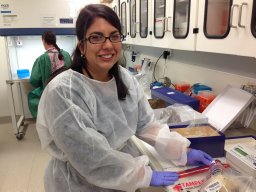 Frankham Greta J合作论文数Department of Zoology, University of Melbourne26
 Mark Eldridge合作论文数Australian Museum17
 Kyle M Ewart合作论文数Australian Museum Research Institute15
 Andrew Gordon King合作论文数Australian Museum, Australian Museum Res Inst15
 Alex D Greenwood合作论文数11
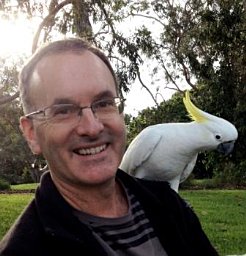 Richard E. Major合作论文数Terrestrial Ecology, Australian Museum10
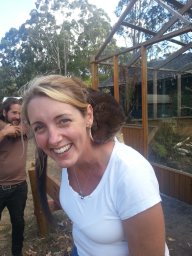 Carolyn J Hogg合作论文数9
 David E. Alquezar-Planas合作论文数Centre for GeoGenetics, University of Copenhagen;Centre for GeoGenetics, University of Copenhagen8
 Peter Timms合作论文数Institute of Health and Biomedical Innovation, Queensland University of Technology8
 Nathan Lo合作论文数School of Life and Environmental Sciences, Faculty of Science, The University of Sydney7
 Kristofer M. Helgen合作论文数Natl Museum Nat Hist, Smithsonian Inst7
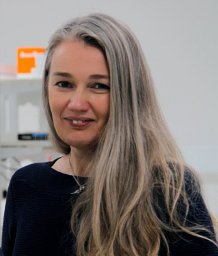 Linda E. Neaves合作论文数7
 Dennison Siobhan合作论文数6
 Matthew Hobbs合作论文数Faculty of Veterinary Science, University of Sydney6
 Pye Geoffrey W合作论文数5
 Katherine Belov合作论文数School of Life and Environmental Sciences, Faculty of Science, University of Sydney5
 Philip Starks合作论文数Department of Biology, School of Arts and Sciences, Tufts University5
 Rob Ogden合作论文数Tepnel Research Products and Services5Tim Flannery合作论文数4
 Adam Polkinghorne合作论文数4
 Zhiliang Chen合作论文数Hong Kong Polytechnic University4
 Catherine Grueber合作论文数School of Life and Environmental Sciences, Faculty of Science, The University of Sydney4
 Potter Sally合作论文数School of Earth &Environmental Science and Australian Centre for Evolutionary Biology and Biodiversity, University of Adelaide;School of Earth & Environmental Science and Australian Centre for Evolutionary Biology and Biodiversity, University of Adelaide4
 Kyriakos Tsangaras合作论文数Leibniz Institute for Zoo and Wildlife Research4
 Ueland Maiken合作论文数Faculty of Science, University of Ontario Institute of Technology4Lott M J合作论文数4
 Belinda Wright合作论文数4
 Marc Wilkins合作论文数The University of New South Wales4
 Annabel Whibley合作论文数Cambridge Institute of Medical Research4Georgina M. Cooke合作论文数4Leo Joseph合作论文数3Kamolphat Atsawawaranunt合作论文数3Donald J. Colgan合作论文数3Kristine E. Nielson合作论文数3Katherine G W Hill合作论文数3
 Adrian Linacre合作论文数College of Science and Engineering, Flinders University3Amber Gillett合作论文数3
 Simon Ho合作论文数School of Life and Environmental Sciences, The University of Sydney3
 Anna Santure合作论文数School of Biological Sciences, Faculty of Science, The University of Auckland3
 Shari L. Forbes合作论文数Department of chemistry, biochemistry and physics, Université du Québec à Trois-Rivières3Ross H. Crozier合作论文数3
 Kerstin Lindblad-Toh合作论文数Department of Medical Biochemistry and Microbiology, Uppsala University;Broad Institute3Ross McEwing合作论文数3Alfred L. Roca合作论文数Laboratory of Genomic Diversity;Basic Research Program;Laboratory of Genomic Diversity|Basic Research Program3
 Steven Delean合作论文数School of Tropical Environment Studies and Georaphy, James Cook University3
 Zoe A. Doubleday合作论文数Marine Research Laboratories;Tasmanian Aquaculture & Fisheries Institute;University of Tasmania;Private Bag 49;Tasmanian Aquaculture & Fisheries Institute, University of Tasmania3
 Federica Di Palma合作论文数Broad Institute, Cambridge, Massachusetts 02142, USA3
 Bronwyn May Gillanders (Bronwyn M. Gillanders)合作论文数School of Biological Sciences, Faculty of Sciences, Engineering and Technology, The University of Adelaide;Environment Institute, The University of Adelaide3Karen-Ann Gray合作论文数3




